42CrMo4 vs SCM440: Are These Alloy Steel Grades Interchangeable?
📑 Table of Contents
- 🔍 42CrMo4 vs SCM440: An Overview of Both Grades
- 🧪 Chemical Composition: Similarities and Differences
- 📋 Standards and Grade Designations
- ⚙️ Mechanical Properties and Performance
- 🔥 Heat Treatment Differences
- 🏭 Applications: When to Choose Each Grade
- 🔄 Can SCM440 Replace 42CrMo4 in Industrial Purchasing?
- 🛒 What Buyers Should Check Before Ordering
- 🏢 Otai Alloy Steel Supply and Service
- ❓ Frequently Asked Questions
42CrMo4 and SCM440 are chromium-molybdenum alloy steels widely used in machinery, automotive components, shafts, gears, and other applications that require strength and toughness. Because their chemical compositions and engineering characteristics are similar, buyers often consider them potential alternatives when sourcing alloy steel from different countries.
However, similar properties do not automatically make two steel grades interchangeable. 42CrMo4 belongs to the European EN standard system, while SCM440 follows the Japanese JIS system. Their chemical composition limits, technical delivery requirements, and mechanical property specifications are not completely identical. Buyers should therefore compare the applicable standards, product dimensions, delivery conditions, and inspection results before approving a substitution.
This comparison explains where the two grades overlap, where they differ, and how procurement teams can make a technically sound purchasing decision.
🔍 42CrMo4 vs SCM440: An Overview of Both Grades
42CrMo4 and SCM440 belong to the chromium-molybdenum family of low-alloy steels. Both contain carbon, chromium, and molybdenum as important alloying elements. This combination provides hardenability and supports a useful balance of strength, toughness, and fatigue performance after suitable heat treatment.
Manufacturers use both grades for components that experience mechanical stress, repeated loading, or demanding operating conditions. Typical products include transmission parts, shafts, gears, connecting components, and industrial machinery parts.
What is 42CrMo4?
42CrMo4 is a European alloy steel grade with material number 1.7225. It is commonly specified under EN 10083-3 and its successor standards for steels used in quenching and tempering applications. The designation identifies a medium-carbon chromium-molybdenum steel.
Industrial buyers often select 42CrMo4 when they need alloy steel for components that require high strength and good toughness. Depending on the product form, dimensions, and delivery condition, suppliers may offer it in annealed, normalized, or quenched-and-tempered conditions.
For product details, buyers can refer to Otai 42CrMo4 alloy steel.
What is SCM440?
SCM440 is a Japanese chromium-molybdenum alloy steel grade specified under the JIS standard system, particularly JIS G 4053 for machine structural steels. It has a similar alloying concept to 42CrMo4 and is widely used for high-strength mechanical components.
SCM440 is also commonly associated with AISI 4140 and other international Cr-Mo steel designations. However, these cross-references indicate technical similarity rather than automatic compliance with every requirement of another standard.
For SCM440-related product inquiries, see Otai’s EN19 alloy steel product reference. Confirm the exact grade and governing specification before placing an order.
Quick comparison
| Comparison item | 42CrMo4 | SCM440 |
|---|---|---|
| Standard system | European EN | Japanese JIS |
| Material number | 1.7225 | No directly corresponding EN material number |
| Steel family | Chromium-molybdenum alloy steel | Chromium-molybdenum alloy steel |
| Main alloying elements | Carbon, chromium, molybdenum | Carbon, chromium, molybdenum |
| Common delivery conditions | Annealed, normalized, +QT | Annealed, normalized, quenched and tempered |
| Typical applications | Shafts, gears, mechanical parts | Shafts, gears, automotive and machinery parts |
The two grades are close engineering counterparts. Nevertheless, buyers should treat them as separate standard designations until the technical requirements and substitution approval have been checked.
🧪 Chemical Composition: Similarities and Differences
Chemical composition is one of the first points buyers should examine when comparing 42CrMo4 and SCM440. Both grades contain similar levels of chromium and molybdenum, which explains much of their overlapping engineering performance. However, their permitted carbon and other element limits are not identical.
Standard chemical composition comparison
The following table summarizes commonly referenced composition limits for 42CrMo4 under EN 10083-3 and SCM440 under JIS G 4053. These values represent standard-based limits, not the actual chemical analysis of every supplied heat. Buyers should always check the applicable standard edition and the material test certificate for the ordered product.
| Element | 42CrMo4 (%) | SCM440 (%) | Comparison |
|---|---|---|---|
| Carbon (C) | 0.38–0.45 | 0.38–0.43 | SCM440 has a narrower, lower maximum |
| Silicon (Si) | ≤ 0.40 | 0.15–0.35 | Different specification limits |
| Manganese (Mn) | 0.60–0.90 | 0.60–0.90 | Same stated range in these references |
| Phosphorus (P) | ≤ 0.025 | ≤ 0.030 | Different maximum limits |
| Sulfur (S) | ≤ 0.035 | ≤ 0.030 | Different maximum limits |
| Chromium (Cr) | 0.90–1.20 | 0.90–1.20 | Same stated range |
| Molybdenum (Mo) | 0.15–0.30 | 0.15–0.30 | Same stated range |
Note: Composition limits can depend on the applicable standard edition, product specification, and analysis type. Verify the governing document before using this table as an acceptance criterion.
Carbon content: An important difference
The carbon range for 42CrMo4 extends to 0.45%, while the commonly referenced SCM440 range ends at 0.43%. This difference means that a heat meeting the 42CrMo4 carbon limit may exceed the SCM440 maximum.
Carbon influences hardness, strength, hardenability, and the response to heat treatment. Although the two grades have overlapping carbon ranges, buyers should not assume that every 42CrMo4 heat satisfies SCM440 chemistry requirements. The reverse substitution also requires checking all relevant elements.
Chromium and molybdenum: Why the grades perform similarly
Both grades have the same commonly specified chromium range of 0.90–1.20% and molybdenum range of 0.15–0.30%. Chromium supports hardenability and wear-related performance, while molybdenum contributes to hardenability and helps maintain strength during tempering.
These shared alloying ranges help explain why the grades often perform similarly in comparable heat treatment conditions. However, composition alone cannot establish identical mechanical properties. Product size, heat treatment, microstructure, and testing requirements also influence the final result.
Standard limits are not the same as actual MTC results
Buyers should distinguish three types of chemical composition information:
- Standard composition limits: The permitted ranges or maximum values defined by the applicable material standard.
- Typical analysis: Representative values published by a steel mill or supplier. These values do not replace standard limits.
- Actual heat analysis: The measured chemical composition for the specific production heat, normally reported on the material test certificate.
When evaluating a proposed substitution, compare the actual MTC chemistry against the acceptance limits of the required grade. A supplier’s general datasheet or typical analysis is not sufficient evidence that a particular batch complies with another standard.
📋 Standards and Grade Designations
One of the most important differences between 42CrMo4 and SCM440 is the standard system behind each designation. A grade name identifies a material within a particular standard framework. That framework may define chemical composition, product dimensions, delivery conditions, hardenability, mechanical properties, testing, and inspection requirements.
42CrMo4 under the European standard system
42CrMo4 is associated with material number 1.7225 and the European EN standard family. EN 10083-3 is a widely referenced historical specification for alloy steels used in quenching and tempering. EN ISO 683-2 is a later standard reference for relevant alloy steels.
When purchasing 42CrMo4, buyers should identify the exact standard and edition stated in the drawing, purchase order, or technical agreement. A supplier’s use of the grade name alone does not confirm compliance with every requirement of a particular standard.
SCM440 under the Japanese standard system
SCM440 is specified under the JIS system, particularly JIS G 4053 for machine structural steel. The standard establishes its own composition requirements and technical conditions. These requirements overlap with those of 42CrMo4 but do not match every limit.
This distinction matters when a customer drawing specifically calls for JIS SCM440. A supplier should not change the material designation to 42CrMo4 simply because the grades are commonly compared in international trade.
Related international grade references
Several other alloy steel grades are frequently included in cross-reference discussions. They can help buyers identify potential alternatives, but each designation still needs to be checked against its own standard.
| Grade | Common standard system | Relationship to 42CrMo4 / SCM440 |
|---|---|---|
| 42CrMo4 | EN | European designation, material number 1.7225 |
| SCM440 | JIS | Close Japanese counterpart |
| AISI 4140 | AISI / SAE | Commonly compared Cr-Mo alloy steel |
| 42CrMo | GB/T | Chinese Cr-Mo alloy steel designation |
| EN19 / 709M40 | BS | Related British designation; verify the specific specification |
Cross-reference charts are useful for initial supplier discussions. They should not replace a formal material approval, especially when the product forms, heat treatment conditions, or mechanical requirements differ.
⚙️ Mechanical Properties and Performance
42CrMo4 and SCM440 can achieve comparable mechanical performance when manufacturers process them under suitable conditions. Both grades are commonly used in quenched-and-tempered applications where strength and toughness matter. Nevertheless, buyers should compare the property requirements in the relevant standards rather than assume that the same grade-family designation guarantees identical results.
Tensile strength and yield strength
Tensile strength measures the maximum stress a material can withstand during a tensile test before fracture. Yield strength indicates the stress at which permanent deformation begins under the test conditions.
Both grades can achieve high strength after appropriate quenching and tempering. However, the specified values depend on the applicable standard, delivery condition, product form, and ruling or cross-sectional size. A mechanical property value measured on a small test specimen should not automatically be applied to a much thicker product.
Hardness and wear-related performance
Hardness is an important purchasing parameter for components exposed to contact, friction, or surface deformation. Both 42CrMo4 and SCM440 can reach a range of hardness levels through heat treatment.
Buyers should specify the required hardness range and test method. Brinell and Rockwell values use different scales, so they should not be compared directly without a recognized conversion method. Surface hardness may also differ from core hardness, particularly in large sections or surface-hardened components.
Toughness and fatigue resistance
Strength alone does not determine whether a steel component will perform reliably. Toughness describes the material’s ability to absorb energy before fracture, while fatigue resistance concerns its response to repeated or cyclic loading.
Both grades can provide useful toughness and fatigue performance when the material quality, heat treatment, surface condition, and component design are appropriate. Actual results still depend on the test temperature, specimen orientation, section size, and manufacturing history.
Why a single mechanical property table can be misleading
Some online comparison tables present one tensile strength or hardness value for each grade. Such tables may help with preliminary research, but they often omit the conditions behind the figures.
Before comparing two quotations, confirm whether both values refer to the same:
- Product form, such as plate, bar, or forging.
- Delivery condition, such as annealed or quenched and tempered.
- Dimension or ruling section size.
- Test method and specimen orientation.
- Applicable standard and acceptance requirements.
For a fair comparison, use mechanical test results from the actual supplied material or a clearly defined standard requirement. This approach is more reliable than comparing general grade descriptions.
🔥 Heat Treatment Differences
Heat treatment has a major influence on the final properties of both 42CrMo4 and SCM440. Their similar chromium-molybdenum alloy systems allow them to respond to comparable treatment routes, but the exact process should follow the relevant material specification and the manufacturer’s qualified procedure.
Annealing
Annealing generally softens the steel and improves machinability. Manufacturers may supply annealed material when customers need to remove a substantial amount of material during machining or prepare components for later heat treatment.
For both grades, the final hardness after annealing depends on the heating and cooling procedure, starting condition, and product dimensions. Buyers should specify the required hardness rather than rely on the word “annealed” alone.
Normalizing
Normalizing involves heating the steel into the appropriate transformation range and cooling it in air under controlled conditions. The process can refine the microstructure and adjust mechanical properties.
Normalized 42CrMo4 or SCM440 may suit applications that do not require the same strength level as a specified quenched-and-tempered condition. However, the two delivery conditions should not be treated as equivalent without checking the actual property requirements.
Quenching and tempering
Quenching heats the steel to its specified austenitizing range and then cools it rapidly in a selected medium. This process can produce a hard martensitic structure. Tempering follows quenching to adjust hardness, improve toughness, and reduce internal stresses.
Both grades are commonly used in quenched-and-tempered applications. The selected tempering temperature affects the balance between hardness, strength, and toughness. A lower tempering temperature generally retains more hardness, while a higher temperature usually reduces hardness and improves toughness.
Why identical treatment temperatures do not guarantee identical results
Even when a heat treatment provider uses similar nominal temperatures for both grades, the final properties may vary. Heating rate, holding time, cooling medium, section size, furnace loading, and quenching conditions all influence the result.
Large sections also cool at different rates between the surface and the core. This can create hardness differences through the cross-section. If a component requires a specific through-hardness or mechanical property level, the buyer should define the test location and acceptance criteria before processing.
For this reason, buyers should compare the final hardness and mechanical test results rather than assume that the same heat treatment schedule makes 42CrMo4 and SCM440 identical.
🏭 Applications: When to Choose Each Grade
Because 42CrMo4 and SCM440 have similar alloying systems and engineering characteristics, their application areas overlap considerably. Both can serve in mechanical components that require strength, toughness, and resistance to repeated loading.
Common applications for 42CrMo4
42CrMo4 is widely used in European engineering and manufacturing supply chains. Typical applications include:
- Industrial shafts and drive components.
- Gears and transmission parts.
- High-strength bolts and mechanical fasteners, where the specification permits.
- Crankshafts and other automotive components.
- Hydraulic and heavy machinery components.
- Machine parts exposed to repeated mechanical loads.
Its availability under European material specifications can make it a practical choice for projects that follow EN-based drawings or purchasing standards.
Common applications for SCM440
SCM440 is widely used in Japanese and international machinery manufacturing. Common applications include:
- Automotive shafts and transmission components.
- Gears and mechanical drive parts.
- Industrial machinery components.
- High-strength connecting parts.
- Machine components requiring quenching and tempering.
- Parts that may require induction hardening or other surface treatment.
For projects based on JIS drawings or Japanese material specifications, SCM440 is often the more straightforward designation to purchase and inspect.
Which grade is better for your application?
Neither grade is universally better. The right choice depends on the engineering specification and the supply chain supporting the project.
| Project requirement | Practical starting point | What to verify |
|---|---|---|
| European drawing specifies EN 42CrMo4 | 42CrMo4 | Standard edition, delivery condition, and test requirements |
| Japanese drawing specifies JIS SCM440 | SCM440 | JIS compliance and actual MTC results |
| Alternative grade is proposed by a supplier | Evaluate both grades | Chemistry, properties, dimensions, and customer approval |
| High-strength mechanical component | Either may be suitable | Required strength, toughness, hardness, and section size |
| Component needs extensive machining | Consider the softer delivery condition | Machining allowance and subsequent heat treatment plan |
The most efficient selection process starts with the drawing and service requirements. Buyers should not change a specified grade solely because another designation appears similar in an online cross-reference chart.
🔄 Can SCM440 Replace 42CrMo4 in Industrial Purchasing?
SCM440 can be a potential alternative to 42CrMo4 in some applications, but it should not be treated as an automatic one-to-one replacement. Their composition ranges overlap and their engineering properties are similar. However, the applicable standards do not impose identical requirements in every area.
When substitution may be practical
A substitution may be technically acceptable when the component design allows equivalent materials and the proposed SCM440 meets all relevant requirements. The buyer and engineering team should compare chemical composition, mechanical properties, delivery condition, product dimensions, and inspection requirements.
For example, a project may permit alternative chromium-molybdenum steels if the supplier provides supporting documentation and the customer approves the change. In this situation, SCM440 may be considered after a documented technical review.
When direct substitution is not appropriate
Direct substitution is not appropriate when the drawing, contract, or regulatory requirement explicitly mandates 42CrMo4 under a particular EN specification and does not allow alternatives. The same principle applies when a customer requires JIS SCM440.
Substitution also needs careful review when the component has strict fatigue, impact, strength, or through-hardness requirements. A small difference in chemistry or delivery condition may affect whether the proposed material meets the design acceptance criteria.
A practical substitution checklist
Before accepting SCM440 in place of 42CrMo4, buyers should complete the following checks:
- Confirm the governing specification. Identify the standard and edition required by the drawing or purchase contract.
- Compare chemical composition. Check the actual heat analysis against the required grade limits, including carbon, silicon, manganese, phosphorus, sulfur, chromium, and molybdenum.
- Check the delivery condition. Confirm whether both materials are annealed, normalized, quenched and tempered, or supplied in another agreed condition.
- Compare mechanical properties. Review tensile strength, yield strength, elongation, impact requirements, and hardness where applicable.
- Consider product dimensions. Confirm that the required properties can be achieved for the actual thickness or section size.
- Review inspection documents. Check the MTC, traceability, testing method, and any additional inspection requirements.
- Obtain written approval. Secure approval from the responsible customer, design authority, or quality department before changing the specified grade.
How to write a clear purchasing request
When buyers are open to alternative grades, the RFQ should identify the original requirement and explain the approval process. This helps suppliers propose a suitable option without changing the material specification without permission.
For example, a purchasing inquiry can state:
“Required material: 42CrMo4 to the specified EN standard and delivery condition. SCM440 may be proposed as an alternative only if the supplier provides a chemical composition comparison, mechanical test results, relevant inspection documents, and confirmation of compliance with the agreed technical requirements. No substitution is permitted without written approval.”
This approach gives suppliers room to offer alternatives while keeping the buyer in control of technical acceptance.
🛒 What Buyers Should Check Before Ordering
For international alloy steel procurement, the grade name is only one part of the purchasing specification. Buyers should provide enough information for the supplier to identify the correct product, confirm availability, and quote the required condition and services.
1. Specify the grade and standard
State whether the requirement is 42CrMo4 or SCM440 and identify the applicable standard. If the project permits alternatives, explain the approval procedure. Avoid writing only “42CrMo4 / SCM440” without clarifying whether either grade is acceptable.
2. Confirm the product form and dimensions
Specify whether you need steel plate, round bar, flat bar, or another product form. For plate orders, provide thickness, width, length, and quantity. These details influence stock availability, cutting plans, processing costs, and transportation arrangements.
For thick sections, also consider whether the application requires uniform properties through the cross-section. Surface test results alone may not establish core performance.
3. Define the delivery condition
Confirm whether the material should be supplied annealed, normalized, quenched and tempered, or in another specified condition. If you require a particular hardness or mechanical property range, include the acceptance criteria and test method.
This step is especially important when comparing quotations. A lower-priced annealed plate and a quenched-and-tempered plate are not equivalent offers if the finished component requires a specified QT condition.
4. Request the material test certificate
The material test certificate should provide traceability to the supplied heat and the relevant test results. Depending on the order, buyers may need:
- Steel grade and applicable standard.
- Heat number and actual chemical composition.
- Delivery condition.
- Mechanical test results, where required.
- Hardness results and test method, where specified.
- Ultrasonic testing or other inspection reports, if included in the order.
- Third-party inspection documents, if agreed before production or shipment.
5. Compare processing and total purchasing cost
The lowest material price does not always produce the lowest total cost. Cutting, machining, heat treatment, inspection, packaging, and freight can all affect the final purchasing budget.
For example, a supplier that offers customized cutting may reduce the buyer’s internal processing workload. A material supplier that can coordinate inspection and export packaging may also simplify communication and shipment planning.
6. Check delivery time and export packaging
Confirm the actual stock status, production lead time, cutting schedule, and expected dispatch date. For international shipments, discuss rust prevention, bundling, wooden cases, marking, and loading requirements before order confirmation.
A complete RFQ helps suppliers provide a more accurate quotation and reduces misunderstandings during production and delivery.
🏢 Otai Alloy Steel Supply and Service
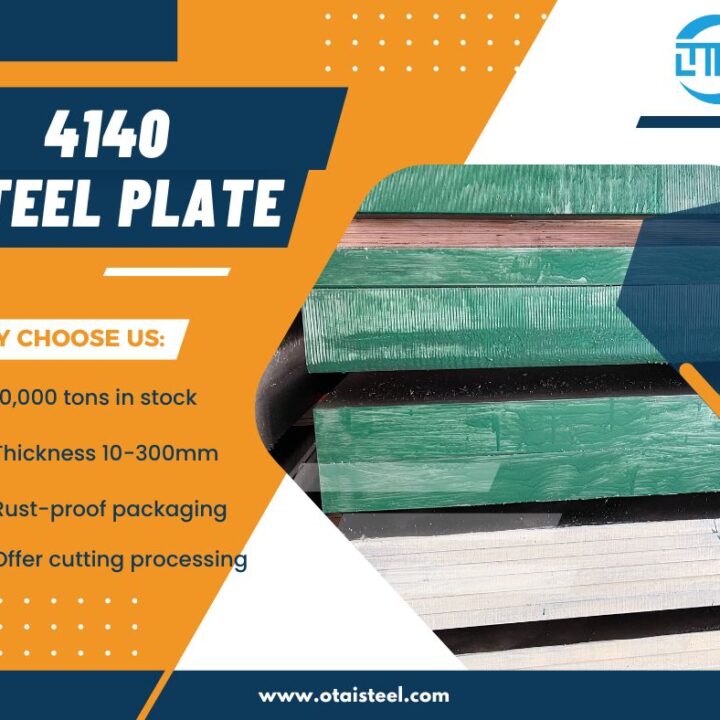
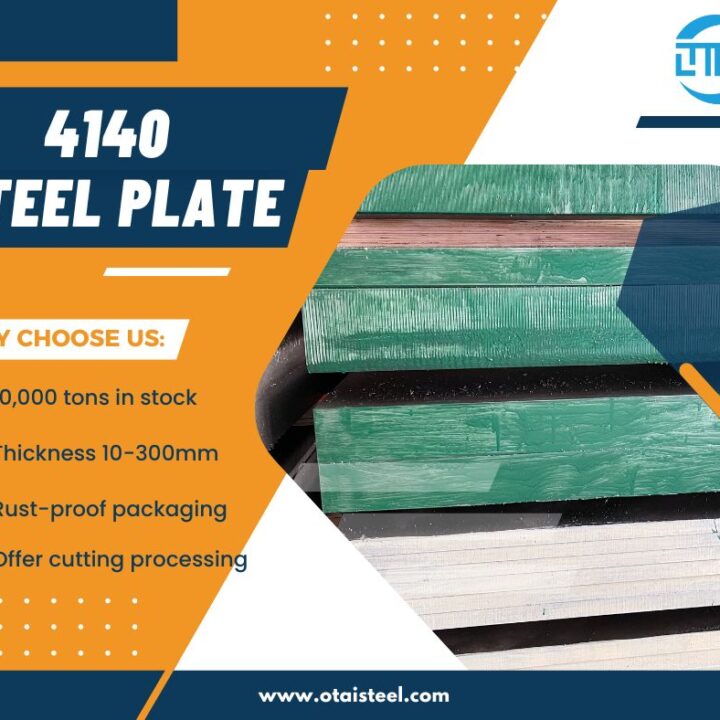
- 42CrMo4 / SCM440 plate stock: Otai’s stated combined 42CrMo4 / SCM440 / 4140 plate thickness range is 4–380 mm. Confirm the exact grade, dimensions, delivery condition, quantity, and current stock before ordering.
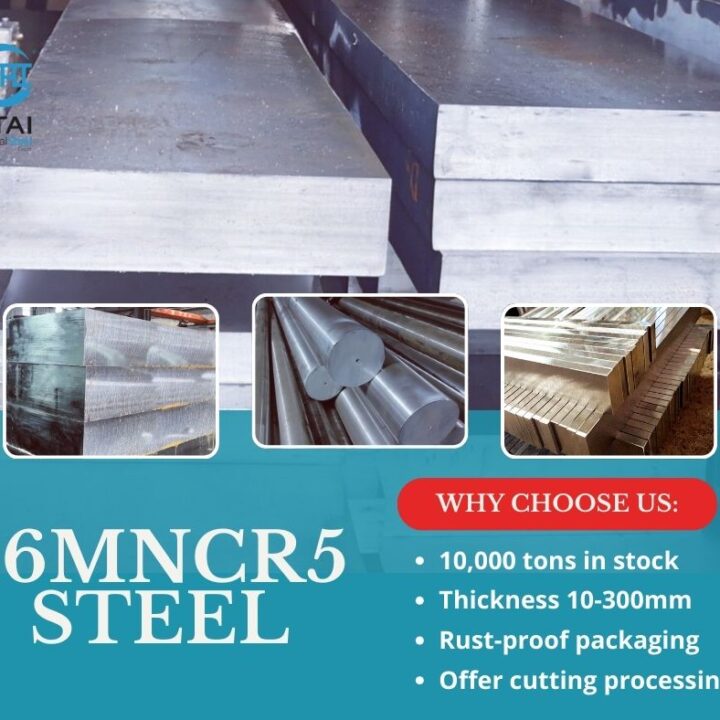
- Inventory capacity: More than 10,000 tons of steel inventory supports a wide range of alloy steel and tool steel purchasing requirements.
- Cutting equipment: 20 saw-cutting machines support customized plate dimensions and cutting requirements.
- Precision processing: CNC machining and grinding services help customers obtain products closer to their required dimensions and tolerances.
- One-stop service: Cutting, machining, processing coordination, and export packaging can be arranged according to project requirements.
- Quality documentation: Material test certificates and traceability documentation support purchasing verification and incoming inspection.
- Additional inspection: Ultrasonic testing and third-party inspection can be discussed and arranged when required and agreed before the order.
- International supply experience: Otai has exported steel products to customers in more than 54 countries since 1999.
- Export packaging: Anti-rust protection, steel strapping, bundling, and wooden packaging can be arranged according to product and shipping requirements.
- Supply coordination: Stock-based supply and processing services help buyers coordinate material procurement, reduce unnecessary handling, and manage purchasing costs.
❓ Frequently Asked Questions
1. Are 42CrMo4 and SCM440 the same steel?
No. They are closely related chromium-molybdenum alloy steels with overlapping chemical composition ranges and similar engineering applications. However, 42CrMo4 follows the European EN system, while SCM440 follows the Japanese JIS system. Their standard requirements are not completely identical.
2. Can SCM440 replace 42CrMo4?
SCM440 may replace 42CrMo4 in applications where the engineering specification permits an alternative and the proposed material meets all required chemical, mechanical, dimensional, and inspection criteria. Buyers should obtain approval from the responsible customer or design authority before substitution.
3. What is the main chemical difference between 42CrMo4 and SCM440?
One important difference is the carbon range. Commonly referenced limits are 0.38–0.45% for 42CrMo4 and 0.38–0.43% for SCM440. Their chromium and molybdenum ranges are similar, but other element limits also differ. Always check the applicable standard and actual MTC chemistry.
4. Which grade has better mechanical properties, 42CrMo4 or SCM440?
Neither grade is universally stronger or better. Both can achieve comparable performance under suitable heat treatment conditions. Actual mechanical properties depend on product dimensions, delivery condition, heat treatment, and test requirements. Compare the specified and certified values for the actual material rather than relying on the grade name.
5. Are 42CrMo4, SCM440, and AISI 4140 interchangeable?
They are commonly compared as related chromium-molybdenum alloy steels, but they belong to different standard systems. Their chemistry and technical requirements do not match in every detail. Treat them as potential alternatives, not automatic equivalents, and verify the applicable specifications before purchasing or approving a substitution.