SCM440 vs 42CrMo4: Are They Equivalent for Industrial Applications?
📑 Table of Contents
- 🔍 1. SCM440 vs 42CrMo4: Are They Really Equivalent?
- 🧪 2. Chemical Composition Comparison
- 📊 3. Standards, Designations and Specifications
- ⚙️ 4. Mechanical Properties and Heat Treatment
- 🏭 5. Applications: Where Can You Use Each Grade?
- 🔄 6. Can 42CrMo4 Replace SCM440?
- 📐 7. Stock Sizes, Product Forms and Processing
- 📋 8. MTC and Inspection Requirements for Equivalent Materials
- 💰 9. How Grade Selection Affects Your Purchasing Decision
- 🏢 Otai SCM440 and 42CrMo4 Supply Support
- ❓ SCM440 vs 42CrMo4 FAQ
🔍 1. SCM440 vs 42CrMo4: Are They Really Equivalent?
SCM440 and 42CrMo4 are two closely related chromium-molybdenum alloy steels used for demanding industrial components. Their chemical composition, hardenability and typical applications overlap significantly, which is why suppliers and buyers often list them together as corresponding or equivalent grades.
However, SCM440 and 42CrMo4 are not literally the same specification. SCM440 belongs to the Japanese JIS system, while 42CrMo4 belongs to the European EN system. Each standard defines its own chemical composition limits, mechanical requirements, product conditions and testing provisions.
This distinction becomes important when a drawing, customer specification or purchasing document names one specific grade. A supplier may identify 42CrMo4 as a practical alternative to SCM440, but the buyer should still compare the applicable standards before approving substitution.
| Item | SCM440 | 42CrMo4 |
|---|---|---|
| Main standard system | JIS | EN |
| Common designation | SCM440 | 42CrMo4 / 1.7225 |
| Steel family | Cr-Mo alloy structural steel | Cr-Mo alloy structural steel |
| Typical applications | Shafts, gears, machinery components | Shafts, gears, machinery components |
| General relationship | Closely related grades, but substitution requires specification review | |
For ordinary engineering applications, the two grades can provide very similar performance when the material condition and heat treatment meet the design requirements. For safety-critical or tightly controlled projects, however, the buyer should not approve an alternative based only on an “equivalent steel” table.
The practical purchasing answer is therefore: SCM440 and 42CrMo4 are closely corresponding grades, but they should not be treated as automatically interchangeable in every application.
🧪 2. Chemical Composition Comparison
Chemical composition explains why SCM440 and 42CrMo4 perform so similarly. Both grades use carbon, chromium and molybdenum to develop strength, hardenability and wear resistance after appropriate heat treatment.
Commonly referenced JIS SCM440 chemistry includes carbon at approximately 0.38–0.43%, while EN 10083-3 42CrMo4 specifies carbon at approximately 0.38–0.45%. Both grades commonly specify chromium at 0.90–1.20% and molybdenum at 0.15–0.30%.
| Element | SCM440, commonly referenced JIS range | 42CrMo4, commonly referenced EN range |
|---|---|---|
| C | 0.38–0.43% | 0.38–0.45% |
| Si | 0.15–0.35% | ≤0.40% |
| Mn | 0.60–0.85% | 0.60–0.90% |
| Cr | 0.90–1.20% | 0.90–1.20% |
| Mo | 0.15–0.30% | 0.15–0.30% |
| P | ≤0.030% | ≤0.035% |
| S | ≤0.030% | ≤0.035% |
The figures above represent commonly referenced standard ranges and limits; they should not be treated as one universal chemistry for every mill or every heat. The applicable standard and edition should control the purchasing specification, while the actual MTC should confirm the chemistry of the supplied heat.
The small differences in carbon, manganese, silicon, phosphorus and sulfur limits do not automatically mean that one grade will perform differently in every application. Instead, they show why a buyer should compare the actual specification when evaluating a substitution.
For example, if your customer specifies SCM440 with a particular chemical range and mechanical-property requirement, a supplier should compare the proposed 42CrMo4 heat against those requirements. Simply writing “42CrMo4 = SCM440” on a quotation does not provide enough technical evidence.
📊 3. Standards, Designations and Specifications
The biggest difference between SCM440 and 42CrMo4 is not their general metallurgical purpose. It is the standard system behind each designation.
SCM440 comes from the Japanese JIS system and commonly appears in specifications for chromium-molybdenum alloy structural steel. 42CrMo4 belongs to the European EN system and carries material number 1.7225.
| Specification | SCM440 | 42CrMo4 |
|---|---|---|
| Designation system | Japanese JIS | European EN |
| Common material designation | SCM440 | 42CrMo4 |
| Material number | Not represented by the EN 1.7225 system | 1.7225 |
| Typical product context | Alloy structural steel products | Quenched-and-tempered alloy steel products |
Equivalent-grade charts are useful during sourcing because they quickly identify materials with similar alloy designations. They are especially helpful when a buyer must source material internationally and the original grade is difficult to obtain locally.
Nevertheless, an equivalent-grade chart should be treated as a starting point for technical comparison, not as automatic approval for substitution. The final decision should consider the complete specification, including mechanical properties, product form, size range, delivery condition, heat treatment and testing.
This distinction becomes even more important when the steel forms part of a regulated or safety-critical assembly. In those cases, the engineering department or end customer may need to approve the alternative before purchasing.
⚙️ 4. Mechanical Properties and Heat Treatment
SCM440 and 42CrMo4 can achieve high strength because both grades respond well to quenching and tempering. Their chromium and molybdenum content improves hardenability, while carbon contributes to hardness and strength.
The final mechanical properties do not come from the grade designation alone. Section size, heat-treatment cycle, cooling conditions and tempering temperature all influence the result.
| Property / Factor | SCM440 | 42CrMo4 | Buyer Consideration |
|---|---|---|---|
| Hardenability | High | High | Important for thick sections |
| Strength after Q&T | High | High | Confirm the required mechanical values |
| Toughness | Good when properly treated | Good when properly treated | Depends on section and heat treatment |
| Machinability | Good in suitable annealed condition | Good in suitable annealed condition | Confirm delivery condition |
For quenched-and-tempered material, buyers should specify the required tensile strength, yield strength, elongation, impact properties or hardness according to the governing standard and application.
Do not assume that two materials with the same nominal grade family will deliver identical mechanical values at every thickness. European product standards can specify property requirements according to product form and section size, so the purchase specification should identify the relevant dimensions.
Heat treatment also affects dimensional stability. If the component requires precision machining after hardening, discuss machining allowance and the heat-treatment route before ordering the raw material.
For many general machinery components, SCM440 and 42CrMo4 can therefore provide very similar engineering performance. The important issue is whether the supplied material satisfies the exact mechanical and dimensional requirements of your component.
🏭 5. Applications: Where Can You Use Each Grade?
Because SCM440 and 42CrMo4 have similar alloy systems and performance characteristics, they appear in many of the same industrial applications.
| Application | Why These Grades Are Used | Key Procurement Requirement |
|---|---|---|
| Shafts | Strength, toughness and hardenability | Diameter, Q&T condition and mechanical properties |
| Gears | Strength and fatigue resistance | Heat treatment and hardness |
| Pins and fasteners | High strength and wear resistance | Mechanical properties and dimensional tolerance |
| Heavy machinery components | Hardenability and load-bearing capacity | Section size and internal quality |
| Automotive components | Strength-to-weight and fatigue performance | Customer specification and traceability |
For example, an engineering team designing a shaft may select SCM440 because the original drawing follows JIS specifications. A European customer may specify 42CrMo4 for a similar shaft because the project uses EN standards.
Neither choice is automatically “better.” The correct grade depends on the engineering specification, manufacturing process, availability and approval requirements.
From a procurement perspective, this similarity creates an opportunity. If your original grade is unavailable, a corresponding grade may provide a practical sourcing route. However, the technical department should approve the substitution before the purchasing team changes the grade on the order.
🔄 6. Can 42CrMo4 Replace SCM440?
In many general engineering applications, 42CrMo4 can be considered as a practical alternative to SCM440 because their alloy systems and performance characteristics are closely related.
However, “can be considered equivalent” does not mean “can always replace it without approval.” The substitution decision should follow a technical comparison.
| Check Before Substitution | Why It Matters |
|---|---|
| Chemical composition | Confirms that the proposed heat meets the required chemistry |
| Mechanical properties | Confirms strength, toughness and hardness requirements |
| Product form | Plate, bar and other forms can follow different standards |
| Section size | Mechanical requirements can depend on thickness or diameter |
| Heat treatment | Different cycles and conditions can change final properties |
| Customer approval | Required for controlled or safety-critical applications |
| MTC | Provides evidence for the actual supplied heat |
If the original drawing specifies SCM440, the safest sourcing process is to send the drawing or material specification to the supplier. The supplier can then compare 42CrMo4 against the actual requirement rather than making a generic equivalence claim.
Conversely, if the customer specification allows equivalent international grades, 42CrMo4 may provide an effective sourcing option. The final quotation should clearly identify the proposed grade and standard so the buyer knows exactly what material the supplier intends to deliver.
This process is especially useful for international procurement because different regions often use different standards for technically similar steels.
📐 7. Stock Sizes, Product Forms and Processing
Once the technical comparison shows that either grade can meet the application requirements, availability becomes an important purchasing factor.
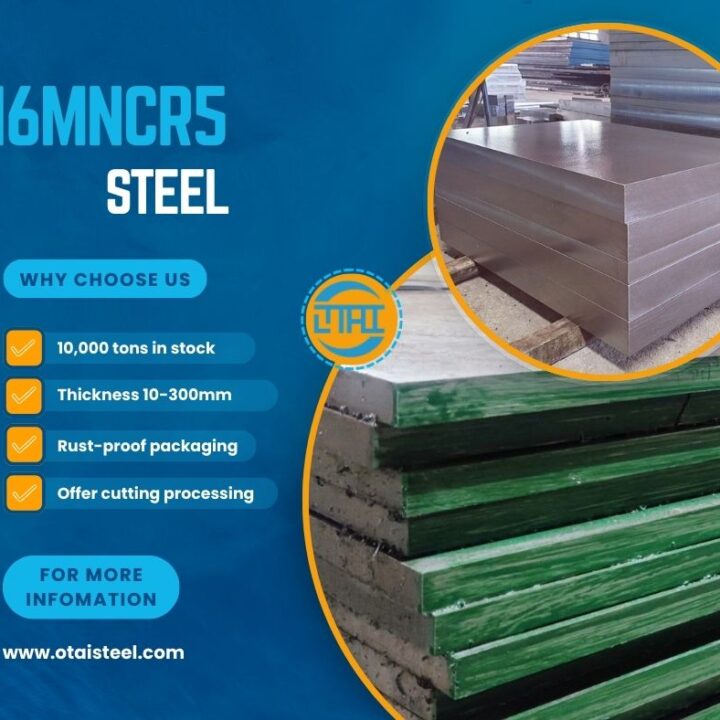
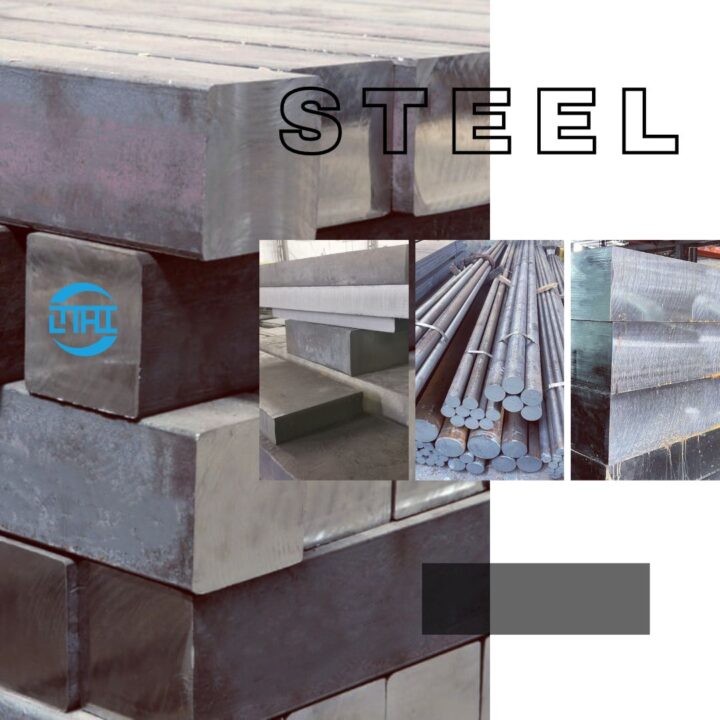
For current Otai inventory, SCM440 steel plate is available in 4–380 mm thickness, SCM440 quenched-and-tempered plate in 13–200 mm thickness, and SCM440 round bar in 14–500 mm diameter. Exact availability still depends on the required dimensions, quantity and delivery schedule.
| SCM440 Product | Current Stock Range | Typical Use |
|---|---|---|
| SCM440 steel plate | 4–380 mm thickness | Machined plates and industrial components |
| SCM440 QT plate | 13–200 mm thickness | High-strength components |
| SCM440 round bar | Ø14–500 mm | Shafts, pins and machined components |
Otai also supplies 42CrMo4 as part of its Cr-Mo alloy steel range. When comparing SCM440 and 42CrMo4 for an actual project, buyers should request confirmation of the exact product form and dimensions rather than relying only on a general website supply range.
Cutting can further affect the purchasing decision. If the finished component requires several rectangular blanks, provide the cutting list with your RFQ. The supplier can then determine whether current plate stock can satisfy the complete requirement and whether sufficient machining allowance remains.
CNC machining and grinding may also be useful when the project requires tighter dimensions. Combining material supply with processing can reduce the number of suppliers involved and simplify export preparation.
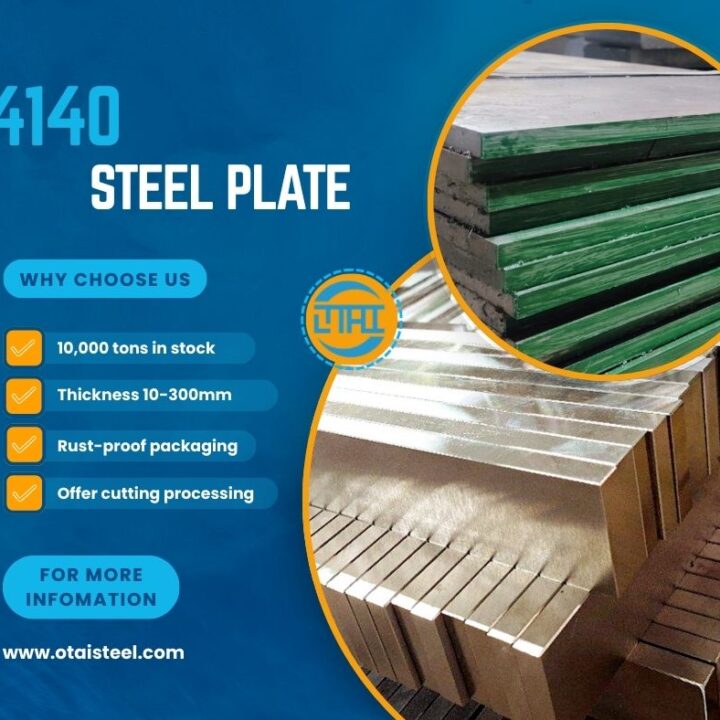
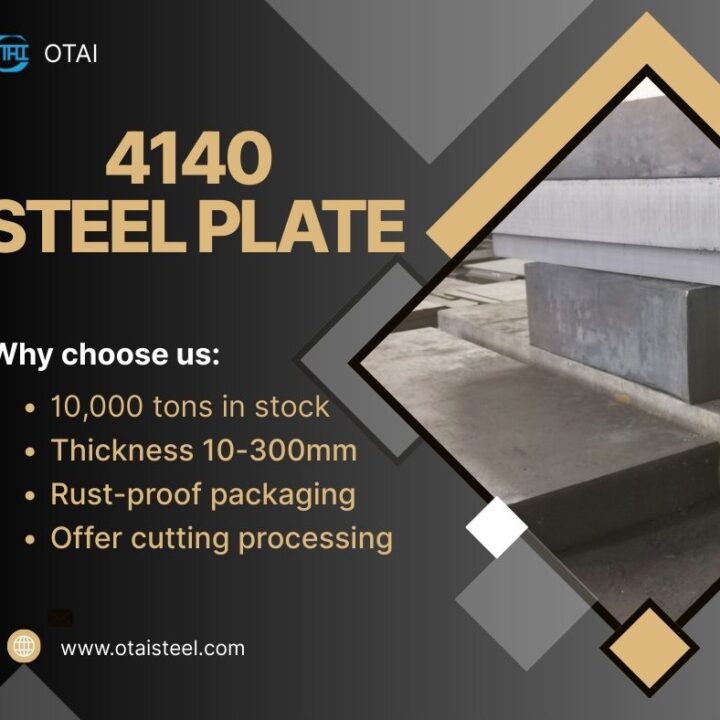
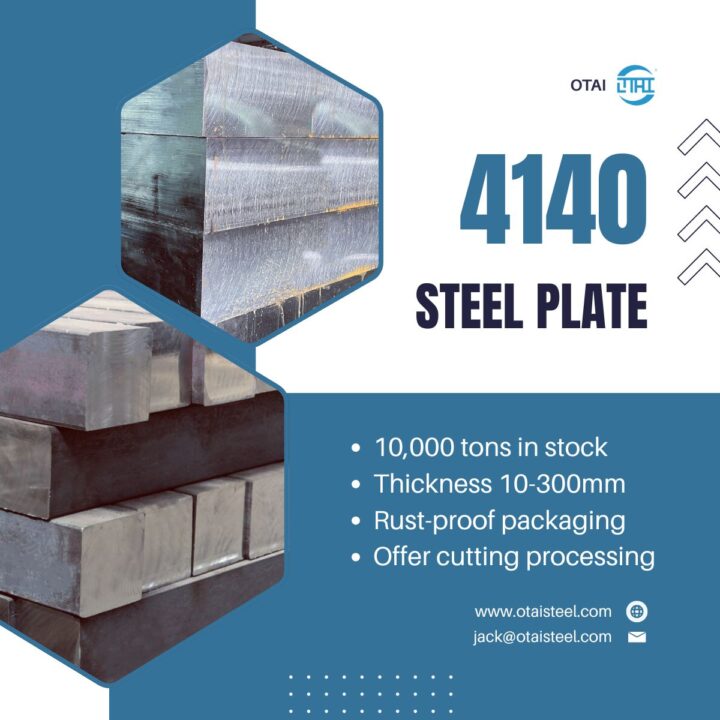
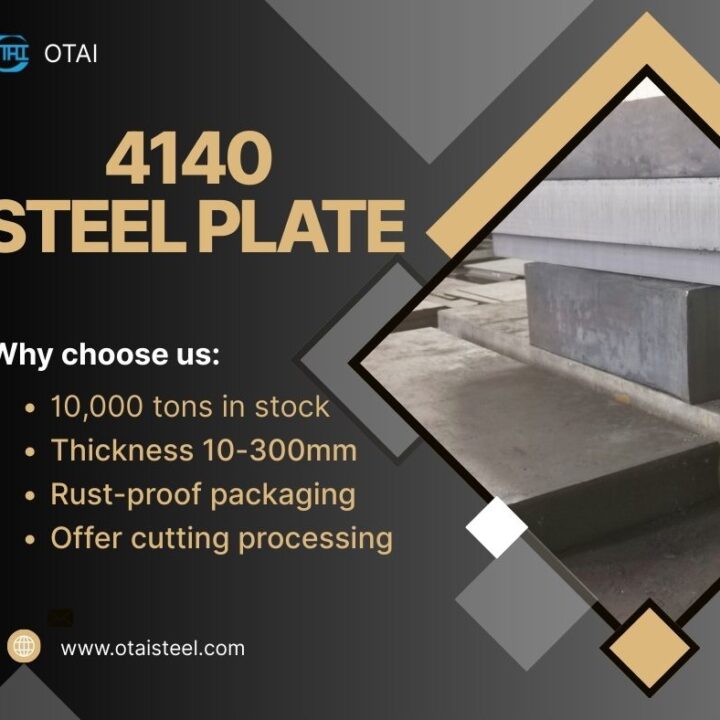
For current SCM440 product information, buyers can review the SCM440 steel product page. For the closely related 42CrMo4/4140 range, the 4140 / 42CrMo4 product page provides additional product information.
📋 8. MTC and Inspection Requirements for Equivalent Materials
When a buyer considers 42CrMo4 as an alternative to SCM440, the material certificate becomes especially important. A grade designation alone cannot demonstrate that the supplied material satisfies the original specification.
The MTC should identify the supplied heat and provide the actual chemical analysis required by the applicable standard. Depending on the product and purchase specification, mechanical properties, hardness and other test results may also need to appear on the certificate.
| Inspection Item | Purpose in an SCM440 / 42CrMo4 Comparison |
|---|---|
| Heat number | Links the certificate to the supplied material |
| Chemical analysis | Confirms actual heat chemistry |
| Tensile test | Confirms strength according to the applicable specification |
| Hardness | Confirms the specified material condition where required |
| Ultrasonic testing | Evaluates internal quality when specified |
| Third-party inspection | Provides independent verification for projects requiring it |
Buyers should also distinguish between a steel mill’s typical analysis and the actual MTC chemistry. A typical analysis can help explain the grade, but the certificate for the supplied heat provides the relevant purchasing evidence.
If your customer requires SCM440 specifically, ask whether they permit 42CrMo4 before changing the purchase specification. If they approve the substitution, retain that approval with the purchasing documentation.
This procedure protects both the buyer and supplier. It prevents a technically similar grade from entering production without authorization and gives the end customer a clear record of the material actually supplied.
💰 9. How Grade Selection Affects Your Purchasing Decision
For procurement teams, the question is rarely just “Which steel is better?” A more useful question is “Which grade can satisfy the technical requirement with the lowest overall purchasing and project risk?”
If your drawing requires SCM440, buying SCM440 directly can simplify technical approval. You avoid a substitution review and can match the MTC directly to the named material standard.
If SCM440 is difficult to source in the required size, however, 42CrMo4 may offer a practical alternative when the engineering specification permits it. In that situation, availability can become more important than the small differences between the chemistry windows.
| Purchasing Situation | Preferred Approach |
|---|---|
| Drawing specifically requires SCM440 | Source SCM440 unless the customer approves another grade |
| Customer allows equivalent grades | Compare SCM440 and 42CrMo4 against the stated requirements |
| SCM440 size unavailable | Evaluate 42CrMo4 as an approved alternative |
| Urgent delivery required | Prioritize a grade and size that the supplier can physically ship on schedule |
| Safety-critical component | Follow the exact specified standard and formal substitution approval |
Price should also be compared on the same basis. Request the same product form, dimensions, condition, quantity, tolerance, inspection level, processing scope and delivery terms from each supplier.
For example, a supplier with SCM440 plate already in stock may provide a faster and more economical solution than a supplier offering a lower nominal price but requiring new production. Likewise, an approved 42CrMo4 alternative may reduce lead time when the required SCM440 dimension is unavailable.
Therefore, the best purchasing decision combines technical compliance, current stock, processing capability, inspection documentation, delivery schedule and total cost.
🏢 Otai SCM440 and 42CrMo4 Supply Support
Otai Special Steel supplies SCM440 and closely related Cr-Mo alloy steels for international industrial customers. For buyers comparing SCM440 and 42CrMo4, the company can support both the material-sourcing and processing sides of the purchasing decision.
- SCM440 steel plate current stock: 4–380 mm thickness.
- SCM440 quenched-and-tempered plate current stock: 13–200 mm thickness.
- SCM440 round bar current stock: Ø14–500 mm.
- 10,000+ tons of steel stock: Supports regular industrial and project purchasing.
- 20 saw cutting machines: Support cut-to-size material preparation.
- CNC machining and grinding: Available for projects requiring additional processing.
- Custom size and tolerance: Can be discussed according to the drawing and application.
- Inspection support: Material testing, MTC, ultrasonic testing and third-party inspection can be arranged according to project requirements.
- Export packaging: Strapping, wooden cases and anti-rust protection can be arranged according to shipment requirements.
- International supply experience: Otai has exported steel to 54+ countries since 1999.
- One-stop service: Material supply, cutting, machining, heat treatment, inspection and export preparation can be coordinated for suitable projects.
For buyers who already have an SCM440 specification but are considering 42CrMo4, the most useful approach is to send the original material requirement, dimensions, quantity, delivery condition and inspection requirements. The supplier can then evaluate the proposed grade against the actual purchasing specification.
This is more reliable than selecting a substitute solely from an online equivalent-grade table. It also allows the buyer to compare current stock and processing options before deciding whether changing the grade will improve cost or delivery.
❓ SCM440 vs 42CrMo4 FAQ
1. Are SCM440 and 42CrMo4 equivalent?
SCM440 and 42CrMo4 are closely related chromium-molybdenum alloy structural steels and are commonly treated as corresponding grades for many engineering applications. However, they belong to different standards, so buyers should compare the exact chemical, mechanical, dimensional and testing requirements before approving substitution.
2. Can 42CrMo4 replace SCM440?
42CrMo4 can serve as a practical alternative in many applications when its properties meet the original requirement. However, the buyer should obtain engineering or customer approval when the drawing specifically calls for SCM440, particularly for safety-critical or controlled applications.
3. Which has better properties, SCM440 or 42CrMo4?
Neither grade is universally better. Their alloy systems and typical performance are very similar. Actual strength, hardness, toughness and other properties depend on the applicable standard, product size, delivery condition and heat-treatment process.
4. What is the main chemical difference between SCM440 and 42CrMo4?
The principal alloying elements are very similar. Commonly referenced SCM440 chemistry specifies carbon at about 0.38–0.43%, while 42CrMo4 commonly specifies 0.38–0.45%. Both commonly specify chromium at 0.90–1.20% and molybdenum at 0.15–0.30%. The actual MTC should determine the chemistry of the supplied heat.
5. What should I check when buying SCM440 or 42CrMo4?
Confirm the exact standard, product form, dimensions, quantity, delivery condition, hardness or mechanical requirements, tolerance, MTC, inspection requirements and delivery schedule. If you plan to substitute 42CrMo4 for SCM440, obtain approval and compare the actual material certificate against the original specification before production.