5140 Supplier: AISI 5140 Steel Properties, Hardness, Heat Treatment & Purchasing Information
📑 Table of Contents
- 🔍 1. What Is 5140 Steel?
- ⚙️ 2. AISI 5140 Chemical Composition and Steel Classification
- 📊 3. 5140 Steel Mechanical Properties and Datasheet Information
- 🔥 4. 5140 Steel Heat Treatment Process and Temperature
- 📏 5. 5140 Steel Hardness in Different Conditions
- 🔄 6. 5140 Equivalent Grades: 41Cr4, SCr440 and 40Cr
- ⚖️ 7. 5140 vs 4140 Steel: Key Differences for Selection
- 🏭 8. 5140 Steel Applications in Engineering Industries
- 🚢 9. How to Choose a Reliable 5140 Supplier?
- 🏢 10. Otai Special Steel 5140 Supply Capability
- ❓ FAQ About 5140 Steel
🔍 1. What Is 5140 Steel?
5140 steel is a medium carbon chromium alloy steel. Manufacturers widely use 5140 steel for mechanical components that require a combination of strength, toughness, wear resistance, and reliable heat treatment performance. International steel markets commonly identify this grade as AISI 5140, SAE 5140, or UNS G51400.
For buyers searching for a reliable 5140 supplier, this grade is usually selected when ordinary carbon steel cannot provide enough strength after manufacturing. The chromium addition improves hardenability, allowing 5140 alloy steel to achieve better mechanical properties after quenching and tempering.
In practice, AISI 5140 is frequently used for shafts, gears, axles, transmission components, and other engineering parts exposed to repeated loads. Its balanced alloy design makes it a practical choice between plain carbon steels and higher alloy grades with increased material costs.
What is 5140 steel used for?
Engineers mainly select 5140 alloy steel for heat-treated mechanical parts requiring moderate-to-high strength, good fatigue resistance, and improved wear performance. The final application suitability depends on component size, heat treatment condition, and required mechanical properties.
| Item | Description |
|---|---|
| Steel Grade | AISI 5140 / SAE 5140 |
| Steel Type | Chromium alloy engineering steel |
| Carbon Level | Medium carbon alloy steel |
| Main Alloy Element | Chromium (Cr) |
| Common Delivery Condition | Hot rolled, annealed, normalized, quenched and tempered |
| Main Industry | Automotive, machinery, and industrial manufacturing |
When purchasing from a 5140 steel manufacturer or exporter, customers should confirm the exact standard, dimensions, tolerance, delivery condition, and inspection requirements instead of relying only on the grade designation.
⚙️ 2. AISI 5140 Chemical Composition and Steel Classification
The chemical composition of AISI 5140 steel determines its hardenability, strength potential, and processing characteristics. However, buyers should understand the difference between a standard specification range, a steel mill’s typical analysis, and the actual chemistry shown on the Material Test Certificate (MTC).
The following values represent the general specification range for 5140 alloy steel. The actual chemical composition of supplied material should always be confirmed through the MTC provided for each production heat.
| Element | Standard Composition Range (wt.%) | Main Function |
|---|---|---|
| Carbon (C) | 0.38–0.43% | Provides strength and hardness after heat treatment |
| Silicon (Si) | 0.15–0.35% | Improves deoxidation and strength |
| Manganese (Mn) | 0.70–0.90% | Improves strength and hardenability |
| Chromium (Cr) | 0.70–0.90% | Improves hardenability and wear resistance |
| Phosphorus (P) | ≤0.035% | Controlled impurity element |
| Sulfur (S) | ≤0.040% | Controlled according to specification |
Chromium is the key alloying element that separates 5140 from standard carbon steels. It allows deeper hardening during heat treatment and improves performance in components with larger cross sections.
Some suppliers publish a Typical Analysis from a specific steel production heat. Although this information helps customers understand the material trend, it should not be considered a universal composition for every 5140 steel product. The actual MTC chemistry remains the final reference for each shipment.
For international purchasing, buyers commonly request a 5140 steel datasheet together with chemical composition, mechanical properties, dimensions, and tolerance information before placing an order.
📊 3. 5140 Steel Mechanical Properties and Datasheet Information
The mechanical properties of 5140 steel depend on delivery condition, product size, and heat treatment process. Therefore, suppliers usually provide mechanical data together with the delivery condition stated in the material certificate.
What are the mechanical properties of 5140 steel?
The typical mechanical properties include tensile strength, yield strength, elongation, and hardness. The exact values vary according to heat treatment and section thickness.
| Property | Typical Reference Value |
|---|---|
| Tensile Strength | Approximately 800–1100 MPa after suitable heat treatment |
| Yield Strength | Approximately 600–900 MPa depending on condition |
| Elongation | Approximately 10–15% |
| Impact Performance | Depends on heat treatment and testing requirements |
| Hardness | Depends on delivery condition |
For engineering applications, the same 5140 steel grade can provide different performance levels. For example, annealed material offers better machinability, while quenched and tempered material provides higher strength and hardness.
A professional 5140 steel supplier should be able to provide:
- Material Test Certificate (MTC)
- Chemical composition report
- Mechanical properties
- Dimensions and tolerance information
- Inspection documents if required
This documentation helps procurement teams confirm that the purchased material matches the requirements of their manufacturing process.
🔥 4. 5140 Steel Heat Treatment Process and Temperature
Heat treatment plays an important role in developing the final properties of 5140 alloy steel. Through controlled heating, quenching, and tempering, manufacturers can adjust the balance between hardness, strength, and toughness.
What temperature is used for 5140 steel heat treatment?
5140 steel is commonly austenitized at approximately 830–860°C before quenching. The final treatment parameters depend on material thickness, furnace conditions, and required mechanical properties.
| Heat Treatment Step | Typical Temperature | Cooling / Purpose |
|---|---|---|
| Austenitizing | 830–860°C | Heat to form suitable austenite structure before quenching |
| Quenching | After austenitizing | Oil quenching is commonly used; cooling method depends on size and requirement |
| Tempering | 500–650°C | Improve toughness and reduce brittleness |
Holding time depends on section thickness, furnace loading, and required transformation. Therefore, suppliers normally adjust the heat treatment cycle according to the actual product dimensions rather than applying one fixed time for every order.
For critical engineering applications, buyers should confirm whether the supplier can provide heat treatment records and inspection support.
📏 5. 5140 Steel Hardness in Different Conditions
Hardness is one of the most important parameters when selecting 5140 steel for engineering applications. However, the hardness value does not depend only on the steel grade. Delivery condition, heat treatment process, cooling method, and material size all influence the final result.
What is the hardness of 5140 steel?
The typical hardness of 5140 steel varies according to its processing condition. Annealed material usually provides better machinability, while quenched and tempered material achieves higher hardness and strength.
| Delivery Condition | Typical Hardness Reference | Application Consideration |
|---|---|---|
| Annealed | Approximately 200–230 HB | Suitable for machining before final heat treatment |
| Normalized | Approximately 220–260 HB | Improved strength and structure uniformity |
| Quenched and Tempered | Approximately 28–45 HRC | Used for higher strength mechanical components |
| Surface Hardened | Depends on hardening process | Used when higher surface wear resistance is required |
In practice, manufacturers may use induction hardening or other surface treatment methods when components require a hard wear-resistant surface while maintaining a tougher core structure.
When purchasing from a 5140 steel stockist, buyers should specify the required hardness range, testing method, and delivery condition. This information allows the supplier to recommend the correct production route.
🔄 6. 5140 Equivalent Grades: 41Cr4, SCr440 and 40Cr
Because alloy steel standards vary between countries, buyers often compare 5140 steel with similar grades from Europe, Japan, and China. These grades may have similar applications, but they should not be treated as completely identical without checking the applicable specification.
What is the equivalent grade of 5140 steel?
The commonly compared grades include EN 41Cr4, JIS SCr440, and GB 40Cr. The actual substitution should be confirmed according to chemical composition, mechanical requirements, and customer standards.
| Standard System | Equivalent / Comparable Grade | Region |
|---|---|---|
| AISI / SAE | 5140 | USA |
| EN | 41Cr4 / 1.7035 | Europe |
| JIS | SCr440 | Japan |
| GB | 40Cr | China |
For example, 5140 and 41Cr4 are frequently compared because both are chromium alloy steels with similar engineering applications. However, differences may exist in chemical limits, manufacturing standards, and certification requirements.
Therefore, professional buyers should confirm:
- Applicable steel standard
- Chemical composition requirements
- Mechanical properties
- Delivery condition
- Material certificate requirements
⚖️ 7. 5140 vs 4140 Steel: Key Differences for Selection
5140 and 4140 steel are often compared because both belong to chromium alloy steel families and are used in heat-treated engineering applications. However, the addition of molybdenum in 4140 gives it different performance characteristics.
| Comparison Item | 5140 Steel | 4140 Steel |
|---|---|---|
| Main Alloy Elements | Carbon + Chromium | Carbon + Chromium + Molybdenum |
| Hardenability | Good | Higher due to molybdenum addition |
| Strength Performance | Suitable for general heavy-duty components | Suitable for higher stress applications |
| Typical Applications | Shafts, gears, axles, machine parts | High-strength shafts, pressure components, heavy machinery |
| Material Cost | Generally more economical | Usually higher due to alloy content |
Should you choose 5140 or 4140 steel?
The answer depends on application requirements. For many mechanical parts requiring reliable strength and cost control, 5140 provides a practical solution. However, when higher hardenability and strength are required for larger or more highly stressed components, 4140 may be considered.
For this reason, buyers should discuss operating conditions with their 5140 steel manufacturer instead of selecting material only by price.
🏭 8. 5140 Steel Applications in Engineering Industries
Manufacturers widely use 5140 alloy steel in mechanical manufacturing because it provides a balanced combination of strength, toughness, and wear resistance after suitable heat treatment.
Where is 5140 steel used?
Typical applications include automotive components, industrial machinery parts, transmission systems, and load-bearing mechanical components.
| Industry | Typical Parts | Material Advantages |
|---|---|---|
| Automotive | Axles, shafts, gears, transmission parts | Good fatigue resistance and strength |
| Machinery Manufacturing | Drive shafts, pins, connecting parts | Reliable mechanical performance |
| Agricultural Equipment | Rotating components and heavy-duty parts | Good toughness and wear resistance |
| Industrial Equipment | Fasteners and structural mechanical parts | Suitable for heat-treated applications |
In practical manufacturing, engineers consider not only steel grade but also machining requirements, component size, operating environment, and final surface treatment.
For large-scale production, a supplier that can provide cutting, machining, inspection, and documentation support can help reduce purchasing complexity.
🚢 9. How to Choose a Reliable 5140 Supplier?
Selecting a reliable 5140 supplier requires more than comparing steel prices. International buyers should evaluate inventory capability, technical support, processing services, and export experience.
What should buyers check before purchasing 5140 steel?
- Stock availability: Confirm whether the supplier keeps regular inventory and can provide stable delivery.
- Material documentation: Request MTC, chemical composition, mechanical properties, and inspection records.
- Dimensions and tolerance: Confirm thickness range, cutting tolerance, and final size requirements.
- Processing capability: Cutting, machining, grinding, and other services can reduce additional production steps.
- Quality inspection: For critical projects, ultrasonic testing and third-party inspection may be required.
- Export capability: Experienced exporters can provide suitable packaging, documents, and international logistics support.
A professional 5140 steel distributor or exporter should provide a complete purchasing solution, from material selection to shipment preparation.
🏢 10. Otai Special Steel 5140 Supply Capability
Otai Special Steel is a China-based special steel supplier providing alloy steel and tool steel solutions for international industrial customers. With experience in global steel supply since 1999, Otai supports manufacturers, distributors, and engineering companies that require stable quality, flexible processing, and reliable delivery.
For customers looking for a professional 5140 supplier, Otai provides not only steel materials but also customized services that help simplify the purchasing process. From stock availability and cutting service to inspection support and export packaging, customers can receive a complete supply solution.
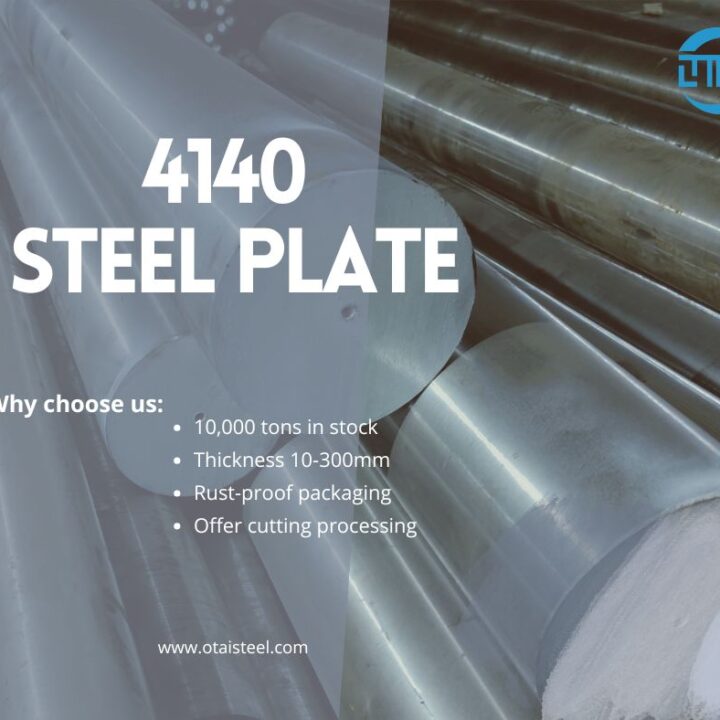
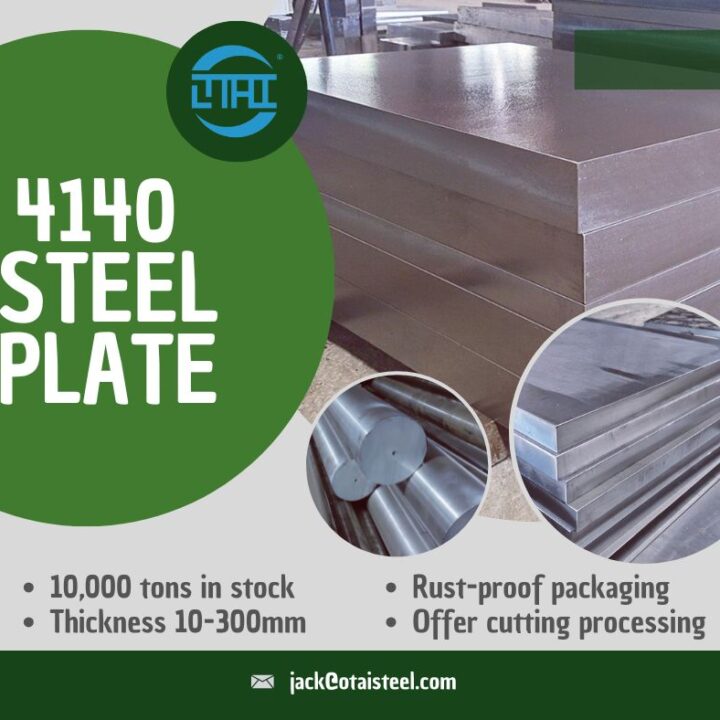
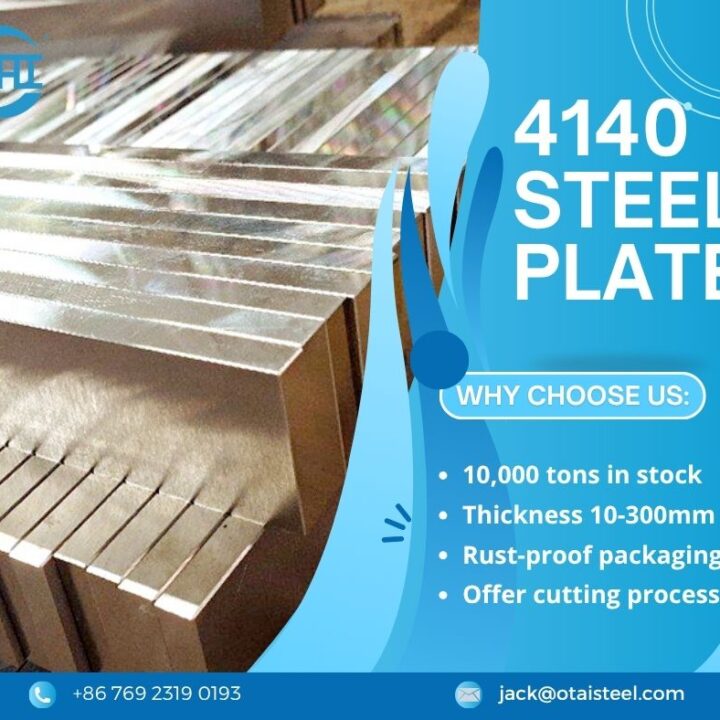
- Large inventory: More than 10,000 tons of steel stock available to support different project requirements.
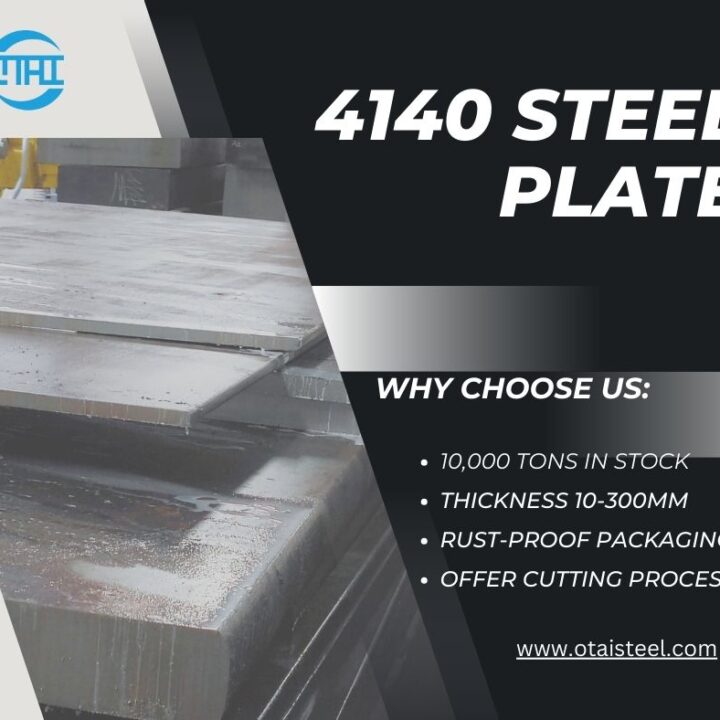
- 5140 / 41Cr4 stock availability: 5140 alloy steel plate thickness range from 4–300mm in stock.
- Professional processing capability: Equipped with 20 saw cutting machines, CNC machining, and grinding equipment.
- Customized dimensions: Support custom sizes, tolerances, and project-based requirements according to customer drawings and specifications.
- Complete service: Provide one-stop service including cutting, machining support, inspection coordination, and export preparation.
- Global export experience: Supplying customers in 54+ countries since 1999 with international B2B steel supply experience.
- Quality support: Provide MTC documents, quality testing, ultrasonic testing options, third-party inspection support, and export standard anti-rust packaging.
When purchasing 5140 steel internationally, stable supply and technical communication are important factors beyond the material price. A supplier with inventory, processing capability, and export experience can help customers reduce purchasing risks and improve production efficiency.
Otai works with customers to provide suitable 5140 steel solutions according to grade requirements, dimensions, tolerance, delivery condition, and application needs.
❓ FAQ About 5140 Steel
1. What is 5140 steel?
5140 steel is a medium carbon chromium alloy steel under the AISI/SAE standard system. It is mainly used for mechanical components requiring good strength, toughness, wear resistance, and heat treatment performance.
The chromium content improves hardenability, while the carbon content allows the material to achieve higher strength after quenching and tempering.
2. What is the equivalent grade of 5140 steel?
Common comparable grades of 5140 steel include EN 41Cr4, JIS SCr440, and China 40Cr. However, you should not consider these grades completely identical because chemical composition limits and technical standards may differ.
Before substitution, buyers should confirm the required specification, mechanical properties, and Material Test Certificate requirements.
3. What hardness can 5140 steel reach?
The hardness of 5140 steel depends on the delivery condition and heat treatment process. Typical values are approximately 200–230 HB in annealed condition and around 28–45 HRC after quenching and tempering.
You should confirm the final hardness according to the actual product size, heat treatment parameters, and inspection requirements.
4. What temperature is used for 5140 steel heat treatment?
Manufacturers commonly austenitize 5140 steel at approximately 830–860°C before quenching. They generally perform tempering at approximately 500–650°C to improve toughness and reduce brittleness.
The exact process depends on section thickness, furnace conditions, cooling method, and required mechanical properties.
5. How can I buy 5140 steel from a supplier?
To request a quotation from a 5140 steel supplier, buyers should provide the steel grade, dimensions, quantity, delivery condition, tolerance requirements, inspection requirements, and destination information.
A professional supplier can then confirm material availability, processing options, documentation requirements, and delivery arrangements.