4130 Steel Bar: Properties, Chemical Composition, Hardness and Applications
📑 Table of Contents
🧪 2. 4130 Steel Chemical Composition
⚙️ 3. 4130 Steel Bar Properties and Mechanical Performance
🔥 4. 4130 Steel Heat Treatment
🔧 6. Machining, Welding and Fabrication
🏭 7. 4130 Steel Bar Applications
🔄 8. 4130 Steel Equivalent Grades and Comparisons
🛒 9. How to Buy 4130 Steel for Industrial Use
🔍 1. What Is 4130 Steel Bar?
4130 steel bar refers to AISI 4130 chromium-molybdenum alloy steel used for components that require a useful combination of strength, toughness, ductility and hardenability. The grade belongs to the low-alloy Cr-Mo steel family and carries the UNS designation G41300.
Its relatively moderate carbon content makes 4130 different from higher-carbon tool steels. Instead of relying on extreme hardness alone, engineers often select this grade when the finished component needs strength together with good impact resistance and machinability.
Several specifications and designation systems associate 4130 with standards or grades used for alloy steel products, including ASTM A322, ASTM A331, ASTM A519, AMS specifications, SAE designations and DIN 1.7218. However, an equivalent designation does not automatically mean that every specification has identical chemistry, dimensions or mechanical requirements.
One important advantage comes from its heat-treatment flexibility. Depending on the initial condition and final treatment, 4130 can provide relatively moderate strength in normalized condition or substantially higher strength after quenching and tempering.
| Item | 4130 Reference | Why It Matters |
|---|---|---|
| Steel family | Low-alloy Cr-Mo steel | Combines strength and toughness |
| UNS | G41300 | Useful identification for procurement |
| Common European designation | 1.7218 | Commonly associated with 25CrMo4 |
| Main alloying elements | Cr and Mo | Improve hardenability and performance |
🧪 2. 4130 Steel Chemical Composition
The chemical composition of 4130 controls its response to heat treatment and contributes to its balance of strength and toughness. Carbon provides the basis for hardness, while chromium and molybdenum increase hardenability.
For procurement, however, buyers should avoid treating one exact chemistry as universal. The applicable standard defines permitted ranges or maximum limits, while the actual heat analysis appears on the material test certificate. Therefore, the table below should be read as a commonly referenced composition range rather than the exact chemistry of every 4130 heat.
| Element | Commonly Referenced Range / Limit | Main Function |
|---|---|---|
| Carbon (C) | 0.28–0.33% | Hardness and strength |
| Chromium (Cr) | 0.80–1.10% | Hardenability and strength |
| Manganese (Mn) | 0.40–0.60% | Hardenability and strength |
| Molybdenum (Mo) | 0.15–0.25% | Hardenability and tempering response |
| Silicon (Si) | 0.15–0.35% | Deoxidation and strength |
| Phosphorus (P) | ≤0.035% | Controlled impurity |
| Sulfur (S) | ≤0.040% | Controlled impurity and machinability factor |
The actual composition can vary within the limits of the applicable specification. For this reason, the MTC should confirm the chemistry of the actual heat supplied when a project requires traceability or strict chemical limits.
Chromium and molybdenum are particularly important when engineers select 4130 for heat-treated components. These alloying elements help the material develop useful hardness deeper into a section than a plain carbon steel with similar carbon content.
⚙️ 3. 4130 Steel Bar Properties and Mechanical Performance
The properties of 4130 depend strongly on its metallurgical condition. A normalized product will not show the same strength as a quenched-and-tempered product. Section size also influences the final mechanical results because cooling rates change across thicker sections.
For example, an ASM/MATWEB reference for normalized AISI 4130 heated to 870°C and air cooled reports approximately 197 HB hardness, 670 MPa tensile strength and 435 MPa yield strength. The same source reports 25.5% elongation and about 60% reduction of area for its specific specimen.
| Condition / Reference | Hardness | Tensile Strength | Yield Strength | Elongation |
|---|---|---|---|---|
| Normalized, 870°C, air cooled | 197 HB | 670 MPa | 435 MPa | 25.5% |
| Annealed reference | 156 HB | 560 MPa | 360 MPa | 28.2% |
| Water quenched + 540°C temper, 100 mm reference | 235 HB / 21 HRC | 800 MPa | 635 MPa | 21.5% |
These figures represent specific test conditions and specimen sizes. They should not serve as universal guaranteed values for every 4130 product. In particular, the 100 mm quenched-and-tempered reference demonstrates how section size and cooling conditions can influence the result.
Other useful physical properties include a density of approximately 7.85 g/cm³ and a typical elastic modulus near 205 GPa. Engineers can therefore use conventional steel density values for preliminary weight calculations, while final design calculations should follow the applicable material specification.
🔥 4. 4130 Steel Heat Treatment
Heat treatment gives 4130 much of its engineering flexibility. Normalizing can refine the structure and provide a useful combination of strength and ductility, while quenching and tempering can raise the strength level for more demanding components.
| Treatment | Reference Temperature | Cooling Method | Purpose |
|---|---|---|---|
| Annealing | Around 865°C | Controlled furnace cooling | Reduce hardness and improve machinability |
| Normalizing | Around 870°C | Air cooling | Refine structure and establish balanced properties |
| Austenitizing for Q&T | Approximately 830–870°C | Followed by rapid quenching | Prepare for hardening |
| Tempering | Commonly around 480–650°C | Controlled cooling | Adjust hardness, strength and toughness |
A reference normalized condition uses 870°C followed by air cooling. For quenched-and-tempered material, another documented test uses 855°C water quenching followed by tempering at 540°C, while another uses 855°C followed by 480°C tempering.
Holding time requires separate consideration. There is no single time that applies to every 4130 section. Furnace loading, section thickness, starting temperature, equipment and the required metallurgical condition all influence the actual cycle.
Therefore, production heat treatment should follow a qualified procedure rather than copying the cycle from a small laboratory specimen. A thick section may develop a different cooling rate between its surface and center, which directly affects hardness and mechanical properties.
📏 5. 4130 Steel Bar Hardness
The hardness of 4130 varies substantially with heat treatment. Annealed or normalized material generally remains in the Brinell range, while quenching can produce much higher Rockwell C hardness before tempering reduces it to the target level.
For example, a normalized 4130 reference shows approximately 197 HB. An annealed 25 mm reference reports 156 HB, while a different annealed condition can reach approximately 217 HB depending on processing history.
After quenching, the hardness can rise significantly. A 100 mm water-quenched reference reports an as-quenched hardness of about 45.5 HRC at the surface, while the center reached only about 24.5 HRC. This difference illustrates why section size matters when a buyer specifies a hardness requirement.
| Condition | Reference Hardness | Important Note |
|---|---|---|
| Annealed | 156 HB in one 25 mm reference | Actual value depends on processing condition |
| Normalized | 197 HB in a 25 mm reference | 870°C, air cooled |
| Water quenched | 45.5 HRC surface in a 100 mm reference | Center hardness was much lower |
| Q&T, 540°C temper | 235 HB / 21 HRC | Specific 100 mm specimen |
Consequently, buyers should specify whether they need a hardness range for the supplied condition or a final hardness after their own heat treatment. Those are two different purchasing requirements.
🔧 6. Machining, Welding and Fabrication
4130 offers useful machinability when supplied in an appropriate annealed or normalized condition. Softer material generally allows easier cutting and machining than quenched-and-tempered material with substantially higher hardness.
For machining-intensive components, engineers often leave suitable finishing allowance before heat treatment. The final operation can then remove distortion or dimensional changes produced during quenching and tempering.
Welding requires more process control than ordinary mild steel because the alloy responds to thermal cycles and can develop a harder heat-affected zone. Preheating, controlled interpass temperature and suitable post-weld treatment may become necessary depending on section thickness and welding procedure.
For critical fabricated components, the welding procedure should follow the applicable engineering specification rather than a generic temperature recommendation. Hydrogen control also matters because high-strength alloy steel can become more sensitive to cracking when moisture or contamination enters the welding process.
After welding or machining, dimensional inspection can confirm whether the component remains within tolerance. For precision projects, suppliers may also provide cutting or machining services before shipment so the customer receives material closer to the required dimensions.
🏭 7. 4130 Steel Bar Applications
Engineers use 4130 where a medium-carbon Cr-Mo alloy needs a practical combination of strength, toughness and heat-treatment response. The grade can support both general mechanical applications and components requiring higher strength after quenching and tempering.
- Aircraft and aerospace structural components.
- Motorsport and high-performance mechanical structures.
- Automotive components.
- Pressure-containing and mechanical components where the applicable specification permits its use.
- Machine parts subjected to cyclic loading.
- High-strength shafts, pins and similar components.
- Welded structures requiring a stronger low-alloy steel than plain carbon steel.
- Oil and gas equipment components under appropriate specifications.
- Industrial machinery components.
- Components requiring a controlled combination of strength and toughness.
Application selection should always start with the service conditions. Load type, operating temperature, fatigue exposure, required hardness, corrosion environment and fabrication method can all influence material selection.
For example, a normalized condition may suit a component that prioritizes ductility and machinability, while a quenched-and-tempered condition can provide higher strength. The correct condition therefore depends on the engineering requirement rather than the steel grade name alone.
🔄 8. 4130 Steel Equivalent Grades and Comparisons
4130 appears under several international designations. Buyers often search for an equivalent grade when purchasing across different markets, but a designation match should always receive technical verification before substitution.
| Designation | System / Region | Relationship to 4130 |
|---|---|---|
| AISI 4130 | SAE / AISI | Primary designation |
| UNS G41300 | UNS | Identification system |
| 25CrMo4 / 1.7218 | European | Commonly referenced comparable grade |
| SCM2 | JIS | Commonly associated designation |
| 25CD4 | French designation | Commonly listed related grade |
Although 25CrMo4 and 4130 are frequently compared, the purchaser should still check the chemical limits, mechanical requirements, product standard and delivery condition. An “equivalent” designation does not automatically guarantee identical certification requirements.
For international purchasing, the safest approach is to specify the required standard together with the chemical and mechanical requirements. The supplier can then confirm whether the offered material satisfies the contractual specification.
🛒 9. How to Buy 4130 Steel for Industrial Use
When purchasing 4130 for an industrial project, the steel grade represents only the starting point. A complete inquiry should define the specification, dimensions, delivery condition, tolerances, inspection requirements and documentation.
| Purchase Requirement | What to Confirm |
|---|---|
| Grade | AISI 4130 / UNS G41300 and applicable standard |
| Dimensions | Thickness, width, length and dimensional tolerances |
| Delivery condition | Annealed, normalized or other specified condition |
| Chemical analysis | Actual heat analysis on the MTC |
| Mechanical properties | Hardness, tensile strength, yield strength and elongation where required |
| Inspection | MTC, third-party inspection or ultrasonic testing when specified |
| Processing | Cutting, CNC machining, grinding and customized tolerances |
Buyers should also distinguish between a material specification and a supplier’s stock description. A supplier may hold one condition or dimension while the project requires another. Confirming the actual available specification before placing the purchase order can prevent unnecessary reprocessing.
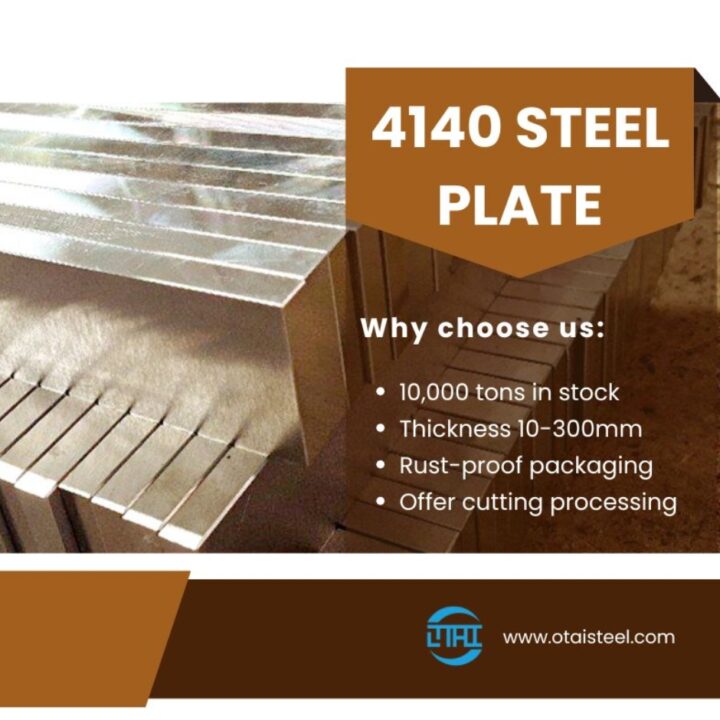
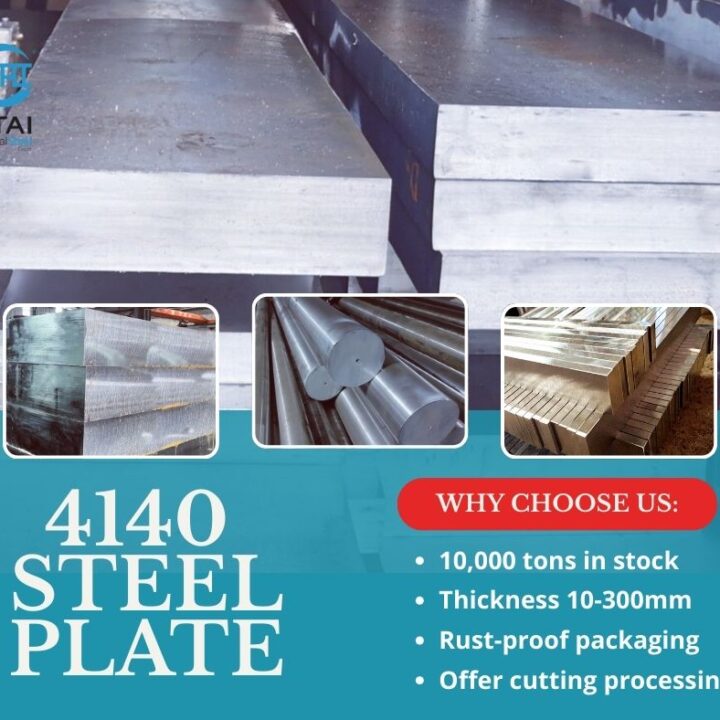
For Otai, the currently available 4130 product inventory is steel plate in 10–70 mm thickness. If your project starts from 4130 plate and requires customized dimensions, the required thickness, width, length and tolerance should be stated in the inquiry so the processing route can be confirmed accurately.
Because heat treatment can change dimensions, customers should also state whether they require raw material for later processing or a specific finished condition. This distinction helps the supplier prepare the material correctly from the beginning.
🏢 10. Why Choose Otai for 4130 Steel?
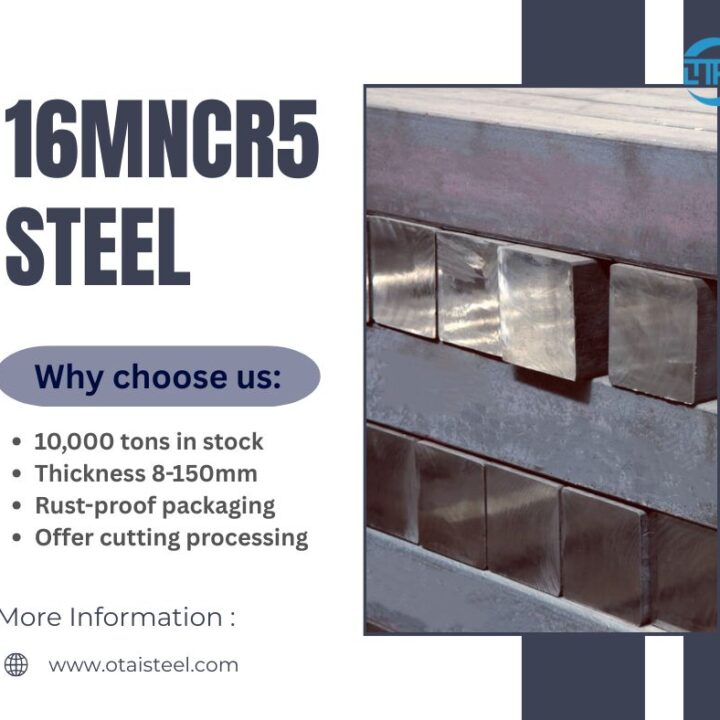
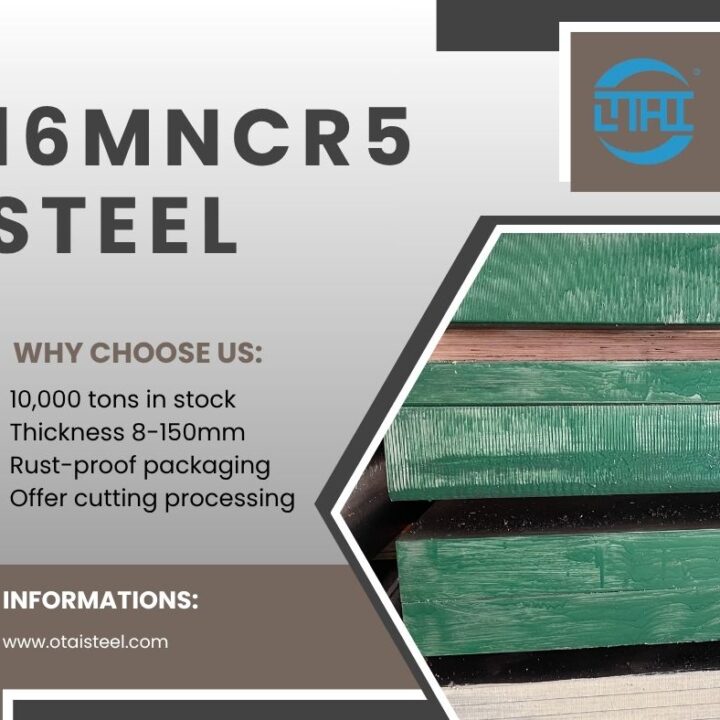
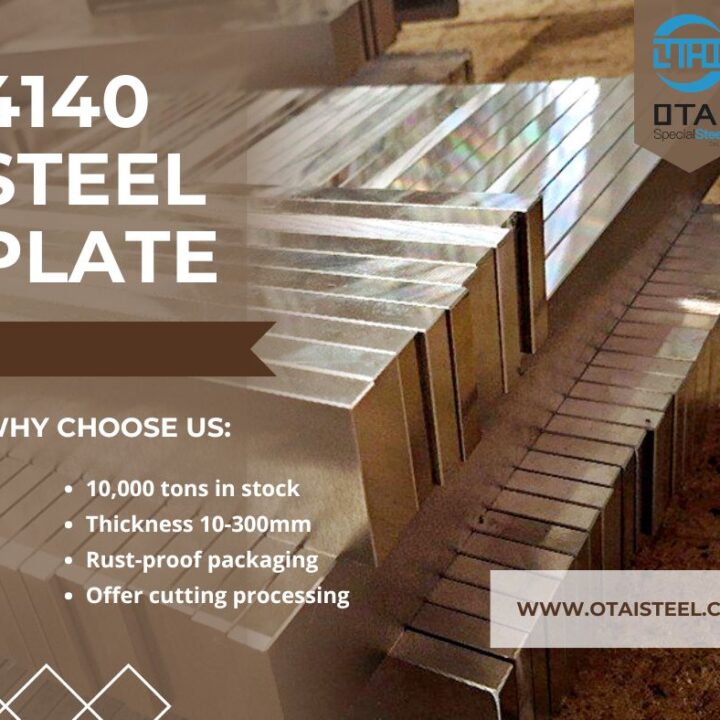
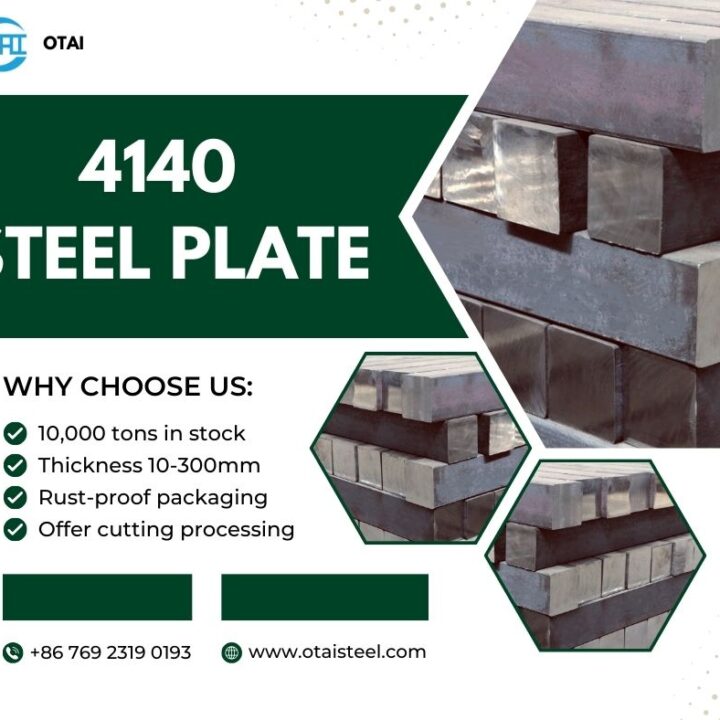
- 4130 steel plate in stock: current stock thickness range is 10–70 mm.
- 10,000+ tons of steel stock: supports regular industrial and export orders.
- 20 saw cutting machines: suitable for customized cutting requirements.
- CNC and grinding services: available for projects requiring additional processing.
- Customized size and tolerance: dimensions can be prepared according to the project requirements.
- One-stop service: cutting, machining, heat-treatment support, inspection and export packaging can be coordinated according to the order.
- International export experience: Otai has exported steel to more than 54 countries since 1999.
- Quality documentation: MTC and third-party inspection support can be arranged when required.
- Ultrasonic testing support: available for projects with specific internal-quality requirements.
- Export packaging: anti-rust protection, strapping and wooden-box packaging can be arranged according to customer requirements.
For international buyers, the practical goal is not simply to find a 4130 supplier. The supplier should also understand dimensions, tolerances, inspection documentation, processing requirements and the final application. A clear technical inquiry allows both sides to confirm the material before production and shipment.
❓ FAQ
1. What is 4130 steel used for?
4130 is used for components that require a combination of strength, toughness, ductility and hardenability. Common applications include aerospace and motorsport structures, automotive components, machinery parts, high-strength mechanical components and applications that require controlled heat treatment.
2. What is the hardness of 4130 steel?
The hardness depends on the delivery and heat-treatment condition. A normalized 4130 reference shows approximately 197 HB, while an annealed reference shows 156 HB. After quenching, a 100 mm test specimen reached approximately 45.5 HRC at the surface before tempering.
3. What temperature is used for 4130 heat treatment?
A normalized reference uses approximately 870°C followed by air cooling. For quenching and tempering, documented test conditions use approximately 855°C for austenitizing, followed by rapid cooling and tempering at temperatures such as 480°C or 540°C. Production cycles should match the applicable specification and section size.
4. Is 4130 the same as 25CrMo4?
4130 and 25CrMo4 are commonly treated as comparable Cr-Mo grades, and 1.7218 is frequently associated with 25CrMo4. However, buyers should verify the exact chemical limits, mechanical requirements and product specification before treating one grade as a direct contractual substitute.
5. What 4130 steel thickness does Otai have in stock?
Otai currently lists 4130 steel plate in 10–70 mm thickness. For a specific project, buyers should confirm the required thickness, width, length, tolerance, delivery condition and processing requirements before ordering.