 4140 Steel Equivalent EN Series – Full Cross-Reference and EN Grade Mapping
The topic 4140 steel equivalent EN series is highly important in global material selection, especially for engineers, buyers, and manufacturers working across ASTM, AISI, and EN standard systems.
4140 steel is a widely used chromium-molybdenum alloy steel. However, in Europe and international supply chains, users often search for 4140 alloy equivalent EN series to find comparable EN grades for procurement, substitution, and engineering design validation.
This article provides a complete engineering breakdown of equivalent EN grades, chemical similarity, mechanical performance comparison, heat treatment response, and practical selection guidance for industrial use.
🔍 1. What is 4140 Steel in EN Standard Context?
To understand 4140 steel equivalent EN series, we must first define what 4140 steel represents.
4140 is an AISI/SAE medium-carbon alloy steel containing chromium and molybdenum. It is designed for quenched and tempered applications requiring high strength, toughness, and fatigue resistance.
- AISI/SAE Grade: 4140
- Type: Cr-Mo alloy steel
- Main treatment: quenching & tempering
In EN standards, there is no single exact 1:1 match. Instead, several EN steels fall into the 4140 alloy equivalent EN series depending on application and heat treatment condition.
⚙️ 2. Main 4140 Steel Equivalent EN Series Grades
The most commonly accepted 4140 steel equivalent EN series grades include the following EN materials.
| ASTM / AISI | EN Equivalent | Material Type | Similarity Level |
|---|---|---|---|
| 4140 | 42CrMo4 (1.7225) | Cr-Mo quenched & tempered steel | Very High |
| 4140 | 42CrMoS4 | Free-machining version | High (machinability optimized) |
| 4140 | 34CrMo4 | Lower carbon Cr-Mo steel | Medium |
Among these, 42CrMo4 (1.7225) is the closest and most widely accepted match in the 4140 material equivalent EN series.
🔥 3. Chemical Composition Comparison
One of the key ways to evaluate 4140 steel equivalent EN series is through chemical composition comparison.
| Element | 4140 (AISI) | 42CrMo4 (EN 1.7225) | Function |
|---|---|---|---|
| Carbon (C) | 0.38–0.43% | 0.38–0.45% | Strength and hardness |
| Chromium (Cr) | 0.80–1.10% | 0.90–1.20% | Wear resistance and hardenability |
| Molybdenum (Mo) | 0.15–0.25% | 0.15–0.30% | Toughness and anti-temper brittleness |
| Manganese (Mn) | 0.75–1.00% | 0.60–0.90% | Hardness and strength balance |
The similarity in Cr and Mo content explains why 42CrMo4 dominates the 4140 steel equivalent EN series classification.
🧪 4. Mechanical Properties Comparison After Heat Treatment
After quenching and tempering, both steels show very similar performance. This is a critical reason why 4140 steel equivalent EN series mapping is widely accepted in engineering substitution.
| Property | 4140 Steel | 42CrMo4 Steel |
|---|---|---|
| Tensile Strength | 850–1100 MPa | 900–1100 MPa |
| Yield Strength | 650–950 MPa | 700–900 MPa |
| Hardness | 28–32 HRC | 28–34 HRC |
| Impact Toughness | High | High |
These similarities confirm that 42CrMo4 is the closest match in the 4140 steel equivalent EN series.
⚙️ 5. Heat Treatment Behavior and Performance Response
Both steels are designed for quenching and tempering. In engineering practice, 4140 steel equivalent EN series materials behave almost identically under heat treatment.
- Quenching temperature: 840–880°C
- Cooling medium: oil or polymer
- Tempering range: 450–650°C
The chromium and molybdenum content improves hardenability and reduces brittleness during tempering, making both steels suitable for high-stress components.
🚗 6. Industrial Applications of 4140 EN Equivalent Steels
The 4140 steel equivalent EN series materials are widely used in global industries requiring high strength and fatigue resistance.
- Automotive crankshafts and axle shafts
- Oil & gas drilling equipment
- Hydraulic machinery components
- High-strength bolts and fasteners
- Industrial gear systems
These applications rely on a balance of strength and toughness rather than extreme hardness.
🛠 7. Machinability and Manufacturing Considerations
Before heat treatment, both materials in the 4140 steel equivalent EN series offer moderate machinability.
- Good machinability in annealed condition
- Requires carbide tooling for high precision parts
- Finish machining usually after heat treatment
42CrMo4 may show slightly better machining stability in European supply chains due to tighter EN processing standards.
🏭 8. Selection Logic for Engineers and Buyers
Choosing between ASTM 4140 and EN equivalents is not only a chemical decision. It depends on standards, availability, and certification requirements.
| Application Requirement | Recommended Grade | Reason |
|---|---|---|
| US standard design | 4140 | AISI/SAE compliance |
| EU standard projects | 42CrMo4 | EN 10083 compliance |
| Machining-intensive parts | 42CrMoS4 | Improved machinability |
🏢 9. Supplier Capability – Otai Special Steel
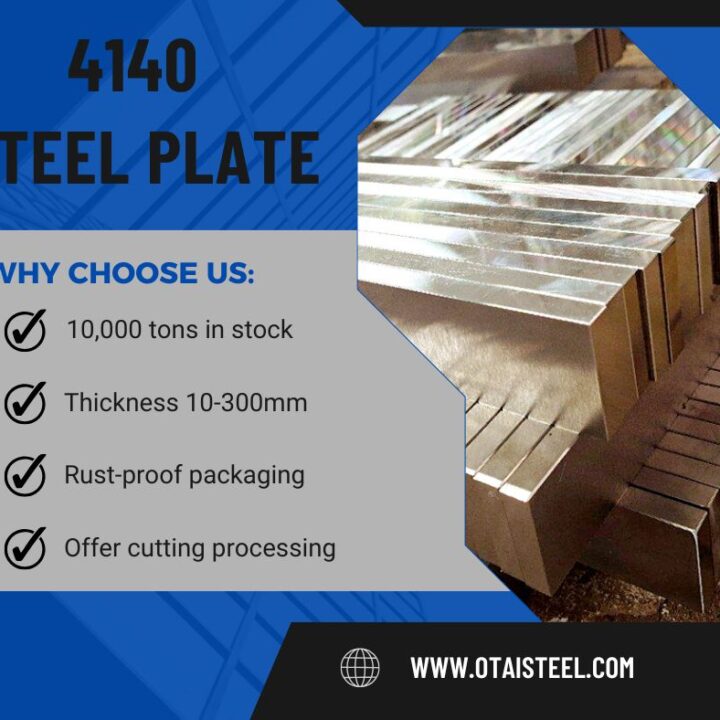
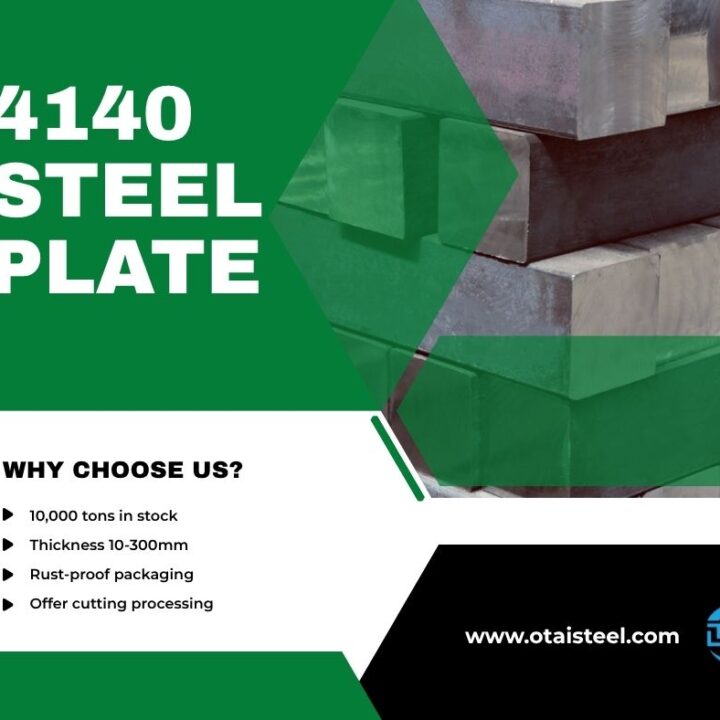
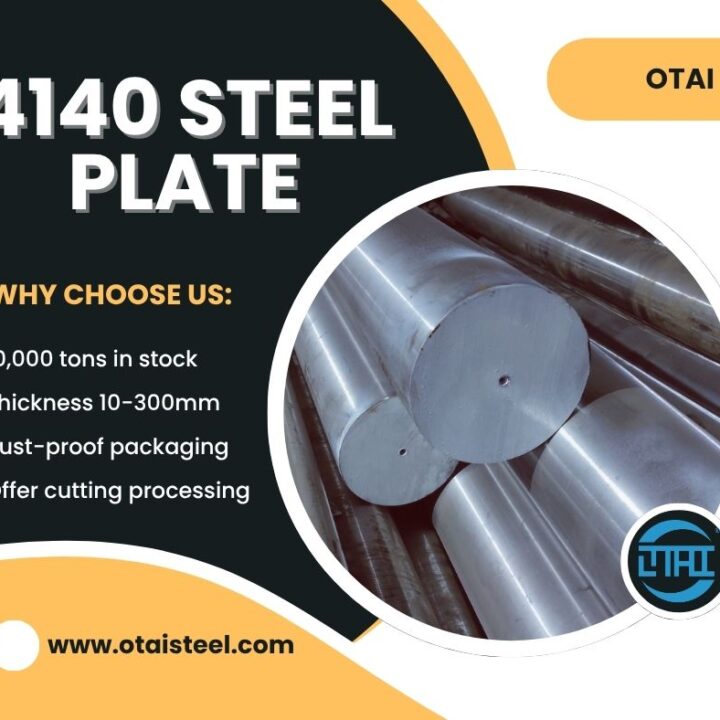
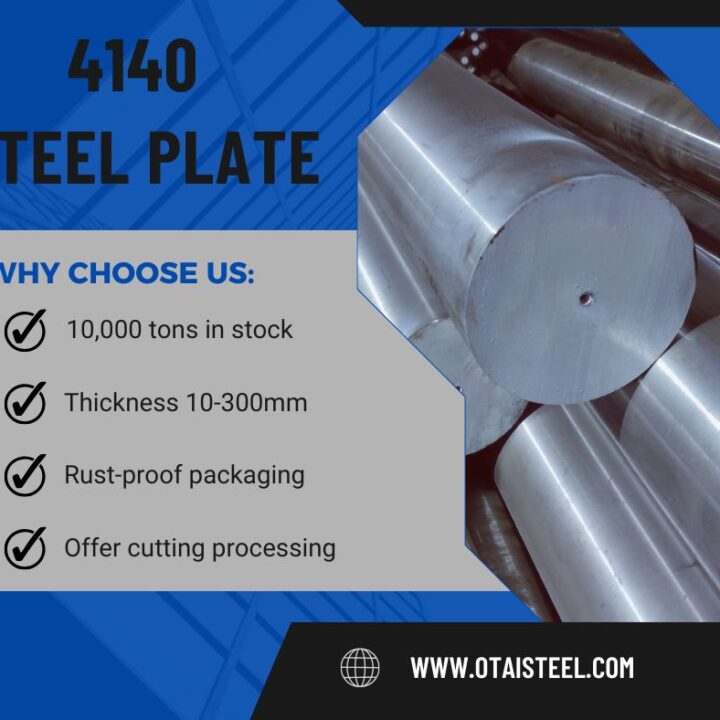
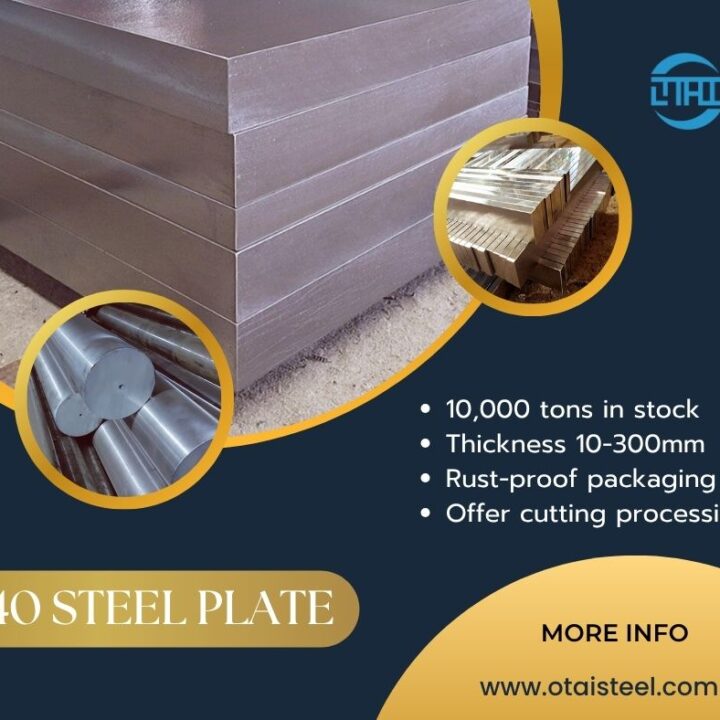
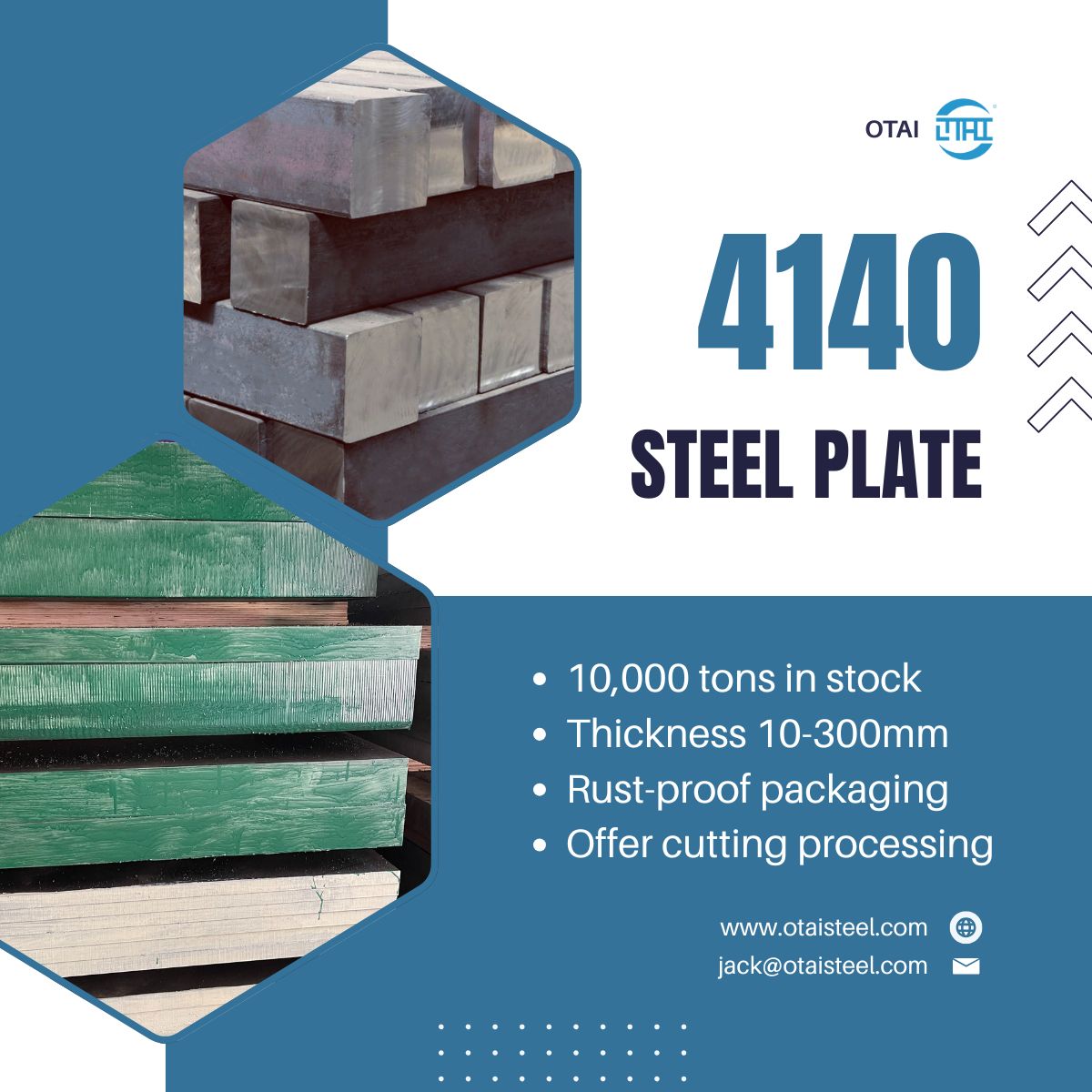
- 📦 More than 10,000 tons of alloy steel inventory available in various plate sizes and thicknesses.
- 📏 4140 PHT plates stocked in multiple dimensions for fast delivery.
- ✂️ Precision cutting, milling, machining, drilling, and customized processing services.
- 🔥 Heat treatment support and technical assistance for special applications.
- 🔬 Ultrasonic testing (UT) and third-party inspection available upon request.
- 📦 Export-standard anti-rust packaging, steel strapping, and wooden case packaging.
- 🌍 Proven experience supplying Fortune Global 500 companies and customers in more than 80 countries.
❓ FAQ
Q1: What is the EN equivalent of 4140 steel?
The closest EN equivalent is 42CrMo4 (1.7225).
Q2: Is 4140 exactly the same as 42CrMo4?
Not exactly, but they are very close in composition and performance.
Q3: Can 42CrMo4 replace 4140 steel?
Yes, in most engineering applications after validation.
Q4: What is the main difference?
Small variations in composition and standard requirements.
Q5: Where is 4140 used most?
In shafts, gears, bolts, and high-stress mechanical parts.