 16MnCr5 AISI Equivalent Guide – Composition, Heat Treatment & Engineering Applications
🔍 1. Engineering Meaning of 16MnCr5 AISI Equivalent
The concept of 16MnCr5 AISI equivalent is not a simple one-to-one mapping. Instead, it represents a range of carburizing steels that share similar surface hardening behavior and core toughness characteristics.
In engineering practice, the 16MnCr5 AISI equivalent must be evaluated based on heat treatment response rather than only chemical composition. Therefore, material selection becomes a performance-driven decision.
Meanwhile, this steel is widely used in gears, shafts, and transmission systems because it can achieve a hard wear-resistant surface while maintaining a ductile core structure capable of absorbing impact loads.
In short, the 16MnCr5 AISI equivalent refers to steels that replicate this surface-core performance balance under carburizing conditions.
🧪 2. Common AISI Grades Compared with 16MnCr5
There is no single exact replacement, however several AISI grades are commonly considered as equivalents depending on application requirements.
- AISI 5115: Light-duty carburized parts with low stress
- AISI 5120: Closest general equivalent in most applications
- AISI 8620: Higher toughness due to nickel addition
Among them, AISI 5120 is often selected as the closest match. However, AISI 8620 performs better when impact resistance is critical.
Therefore, selecting the correct 16MnCr5 AISI equivalent depends on load conditions, case depth requirements, and fatigue expectations.
⚙️ 3. Chemical Composition and Functional Role
| Element | 16MnCr5 | AISI 5120 | AISI 8620 |
|---|---|---|---|
| C | 0.14–0.19% | 0.18–0.23% | 0.18–0.23% |
| Cr | 0.80–1.10% | 0.70–0.90% | 0.40–0.70% |
| Mn | 1.00–1.30% | 0.70–0.90% | 0.70–0.90% |
| Ni | — | — | 0.40–0.70% |
These differences explain why the 16MnCr5 AISI equivalent cannot be defined as a single fixed grade. Instead, engineers focus on how alloying elements affect carburizing response.
In addition, low carbon content allows controlled diffusion, while chromium and manganese improve hardenability and case stability.
🔥 4. Heat Treatment Behavior and Carburizing Process
A key factor in understanding the 16MnCr5 AISI equivalent is its carburizing response. This process introduces carbon into the surface layer at high temperature to form a hardness gradient.
The process includes several stages. First, carbon diffusion occurs at 880–950°C. Then, controlled holding time determines case depth. After that, oil quenching forms martensite on the surface, followed by tempering to reduce stress.
As a result, a hard outer shell and tough core structure are created. This balance is essential for fatigue resistance in mechanical systems.
However, improper carburizing control may lead to cracks or uneven hardness distribution, which significantly reduces service life.
🧬 5. Microstructure and Fatigue Performance
Before heat treatment, 16MnCr5 consists mainly of ferrite and pearlite. After carburizing and quenching, the surface transforms into high-carbon martensite while the core remains low-carbon bainite or ferrite-pearlite.
This gradient structure defines the real engineering meaning behind the 16MnCr5 AISI equivalent.
Fatigue failure typically follows a predictable sequence:
- Crack initiation at surface stress concentration
- Micro-crack propagation in hardened layer
- Transition zone crack growth
- Final fracture in core region
Meanwhile, surface treatments such as shot peening can significantly delay crack initiation and improve fatigue life.
🏭 6. Mechanical Properties After Heat Treatment
| Property | Typical Range |
|---|---|
| Tensile Strength | 650–900 MPa |
| Yield Strength | 400–650 MPa |
| Surface Hardness | 58–62 HRC |
| Core Hardness | 25–45 HRC |
| Fatigue Resistance | High (process dependent) |
These results clearly show that the 16MnCr5 AISI equivalent cannot be evaluated in raw material form alone. Instead, heat treatment determines final performance.
🚗 7. Industrial Applications and Load Conditions
The practical value of the 16MnCr5 AISI equivalent becomes most obvious in rotating and cyclic-loaded components.
- Automotive gearbox gears under torsional stress
- Drive shafts under bending cycles
- Pinions with high surface contact pressure
- Industrial reducers under continuous operation
- Agricultural machinery under impact loading
These applications require both wear resistance and core toughness. Therefore, 16MnCr5 is widely adopted in mechanical transmission systems.
🛠 8. Machining Process and Manufacturing Strategy
In annealed condition, 16MnCr5 has good machinability, which allows rough machining before heat treatment.
The standard manufacturing route is as follows:
- Rough machining in soft state
- Carburizing and quenching process
- Final grinding for dimensional accuracy
This process ensures both precision and surface performance. In addition, it reflects the true industrial meaning of the 16MnCr5 AISI equivalent: a process-controlled engineering material rather than a fixed property steel.
🔄 9. Material Selection Comparison
| Steel Grade | Type | Application |
|---|---|---|
| 16MnCr5 | Case hardening | Standard gears |
| 20MnCr5 | Higher hardenability | Heavy-duty gears |
| 8620 | Ni-alloy carburizing steel | Automotive parts |
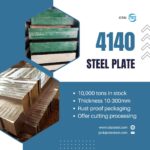
| 4140 | Through-hardening steel | Shafts and structural parts |
This comparison shows that 16MnCr5 is not selected for maximum strength, but for balanced surface and core performance.
🏢 10. Company Advantages – Otai Special Steel
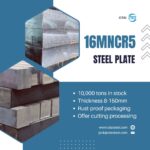
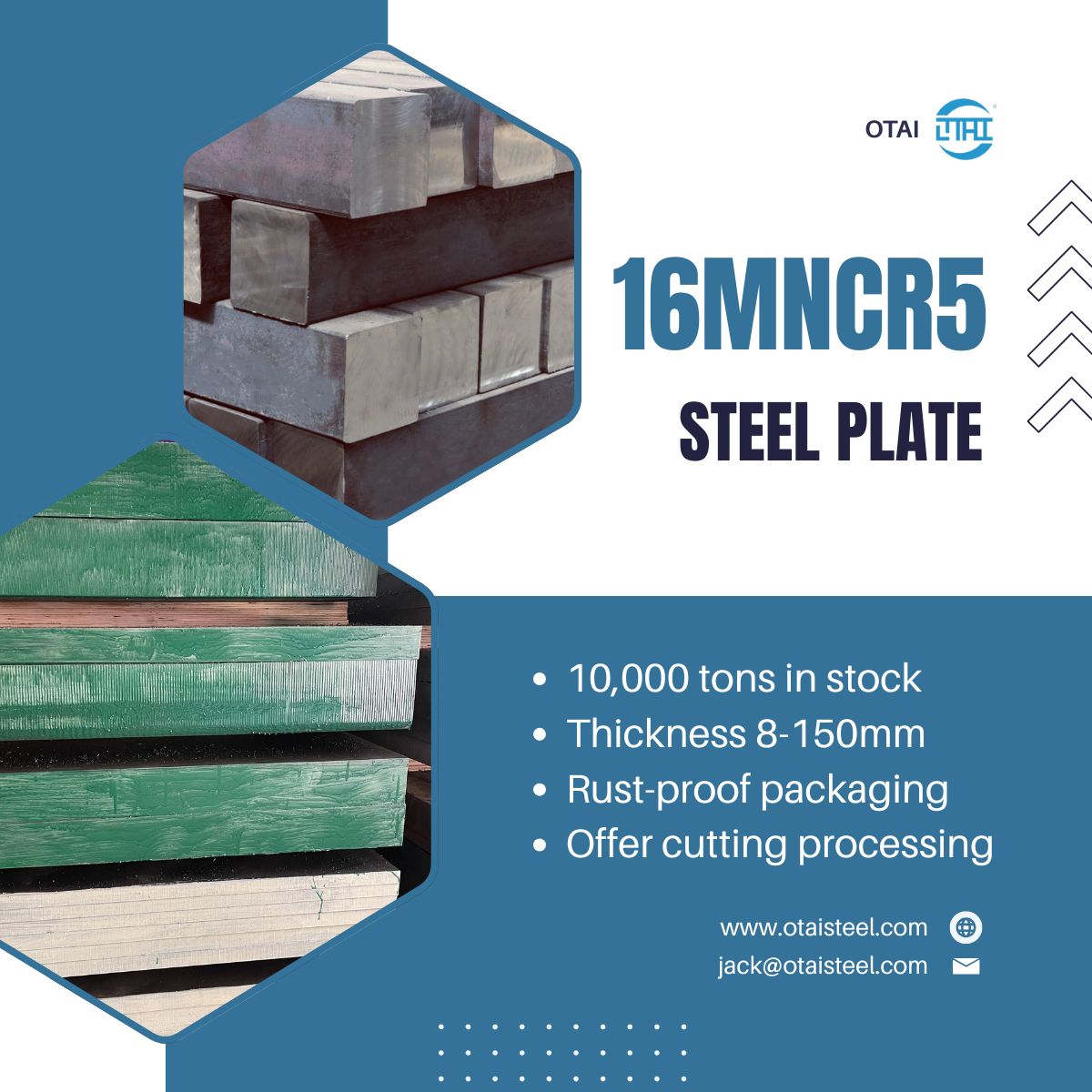
As a professional steel supplier, Otai Special Steel provides stable supply and technical support for 16MnCr5 and related carburizing steels. Meanwhile, we support global customers with flexible processing solutions.
- Large Stock Availability: 10,000 tons inventory with 8–150mm 16MnCr5 plates ready for fast delivery
- Processing Services: Cutting, machining, heat treatment, and customized sizing available
- Quality Control: Ultrasonic testing and third-party inspection supported
- Export Experience: Long-term supply to Europe, USA, and Asia industrial markets
- Stable Supply Chain: Consistent quality for batch production requirements
Therefore, customers can reduce sourcing risk and improve production efficiency when purchasing from a stable supplier.
❓ 11. FAQ – 16MnCr5 AISI Equivalent
Q1: What is the closest AISI equivalent of 16MnCr5?
AISI 5120 is generally considered the closest match in most engineering applications.
Q2: Can AISI 8620 replace 16MnCr5?
Yes, but it provides higher toughness due to nickel content, so heat treatment behavior will differ slightly.
Q3: Why is 16MnCr5 widely used in gears?
Because it provides a strong combination of surface hardness and core toughness after carburizing.
Q4: Is 16MnCr5 suitable for heavy load applications?
It is suitable for medium to heavy load systems, but correct heat treatment is required for optimal performance.
Q5: What affects the performance most?
Heat treatment process and carburizing depth are the most critical factors affecting final performance.
🏭 12. Conclusion and Industrial Understanding
In conclusion, the 16MnCr5 AISI equivalent represents a group of carburizing steels with similar performance behavior rather than a fixed substitution grade.
Therefore, correct selection must consider heat treatment response, load conditions, and fatigue requirements. Otherwise, performance failure may occur in real applications.