 Welding 16MnCr5: Practical Techniques to Avoid Cracking and Ensure Strength
🔍 Introduction
Welding 16MnCr5 presents unique challenges due to its low carbon content combined with alloying elements designed for carburizing. While this steel offers excellent surface hardness and core toughness after heat treatment, improper welding can lead to cracking, distortion, or reduced mechanical performance.
In this article, we provide a detailed guide on welding 16mncr5 steel procedure, including preheating, filler selection, heat-affected zone control, and post-weld heat treatment to ensure reliable results.
⚙️ Is 16MnCr5 Weldable or Not?
A common question is is 16mncr5 weldable or not. The answer is:
👉 Yes, but with precautions.
16MnCr5 has moderate weldability due to:
- Alloying elements like chromium
- Sensitivity to hardening in the heat-affected zone (HAZ)
- Risk of cracking if cooling is too fast
Without proper control, welding defects are likely to occur.
🧪 Welding Challenges of 16MnCr5 Material
Understanding welding 16mncr5 material challenges is essential before starting.
Key Issues:
- Formation of brittle martensite in HAZ
- Risk of hydrogen-induced cracking
- Distortion due to uneven heating
- Reduced toughness after welding
These challenges require strict process control.
🔥 Preheating Temperature for Welding 16MnCr5
Proper preheating temperature for welding 16mncr5 is critical.
Recommended Preheating Range
| Material Thickness | Preheat Temperature |
|---|---|
| < 20 mm | 150–200°C |
| 20–50 mm | 180–250°C |
| > 50 mm | 220–300°C |
Benefits:
- Reduces cooling rate
- Minimizes cracking risk
- Improves weld quality
Preheating is one of the most effective ways to ensure successful welding.
🛠️ Best Welding Method for 16MnCr5 Steel
Choosing the best welding method for 16mncr5 steel depends on application and thickness.
Common Methods:
- TIG welding (GTAW) → High precision, clean welds
- MIG welding (GMAW) → Suitable for production efficiency
- Shielded Metal Arc Welding (SMAW) → Flexible and widely used
Recommendation:
TIG welding is preferred for critical components due to better control.
🧵 16MnCr5 Welding Filler Material Selection
Correct 16mncr5 welding filler material selection ensures compatibility and strength.
Common Filler Options:
| Filler Type | Characteristics |
|---|---|
| Low-alloy filler (e.g., ER80S-D2) | Good strength and toughness |
| Austenitic stainless filler | Reduces cracking risk |
| Matching alloy filler | Similar mechanical properties |
Practical tip:
Use low-hydrogen consumables to reduce cracking.
🌡️ Heat Affected Zone in 16MnCr5 Welding
The heat affected zone in 16mncr5 welding is the most critical area.
Characteristics:
- Increased hardness
- Reduced ductility
- High crack sensitivity
Control Measures:
- Preheating
- Controlled heat input
- Slow cooling
Proper HAZ management ensures long-term performance.
🔄 Post Weld Heat Treatment for 16MnCr5 Steel
Applying post weld heat treatment for 16mncr5 steel improves weld quality.
Typical PWHT Process:
| Process | Temperature |
|---|---|
| Stress relieving | 550–650°C |
| Tempering | 150–200°C |
Benefits:
- Reduces residual stress
- Improves toughness
- Prevents cracking
PWHT is strongly recommended for critical applications.
🧭 Welding Procedure Summary
A reliable welding 16mncr5 steel procedure includes:
- Clean the material surface
- Apply proper preheating
- Use suitable filler material
- Control heat input during welding
- Perform post-weld heat treatment
- Allow slow cooling
Following these steps ensures consistent weld quality.
🏭 Practical Tips for Welding 16MnCr5 Case Hardening Steel
To master tips for welding 16mncr5 case hardening steel, consider:
- Avoid welding after carburizing (if possible)
- Machine off hardened layer before welding
- Use multi-pass welding for thick sections
- Maintain low hydrogen environment
These practices significantly reduce failure risks.
⚠️ Common Mistakes When Welding 16MnCr5
- Skipping preheating
- Using incorrect filler material
- Cooling too quickly
- Ignoring HAZ hardness
- Welding carburized surfaces directly
Avoiding these mistakes ensures better weld performance.
🏆 Company Advantages
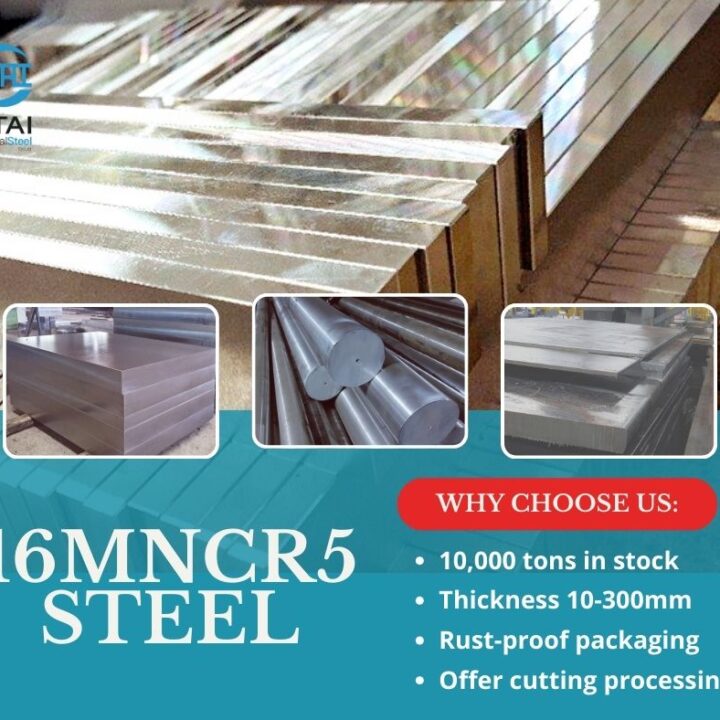
At Otai Special Steel, we provide high-quality 16MnCr5 steel suitable for welding and machining:
- Over 10,000 tons of inventory available year-round
- Full size range from 6mm to 300mm
- Precision cutting and customized heat treatment services
- Strict quality control including ultrasonic testing (UT) and chemical analysis
- Support for third-party inspections such as SGS
- Extensive experience supplying global industrial clients
We help customers solve material challenges and improve production efficiency.
❓ FAQ
1. Can 16MnCr5 be welded easily?
It can be welded, but requires preheating and controlled procedures to avoid cracking.
2. What is the best preheating temperature?
Typically between 150°C and 300°C depending on thickness.
3. Is post weld heat treatment necessary?
Yes, especially for critical components to reduce stress and improve toughness.
4. What filler material should be used?
Low-alloy or austenitic fillers are commonly used depending on requirements.
5. Can carburized 16MnCr5 be welded?
It is not recommended unless the hardened layer is removed first.