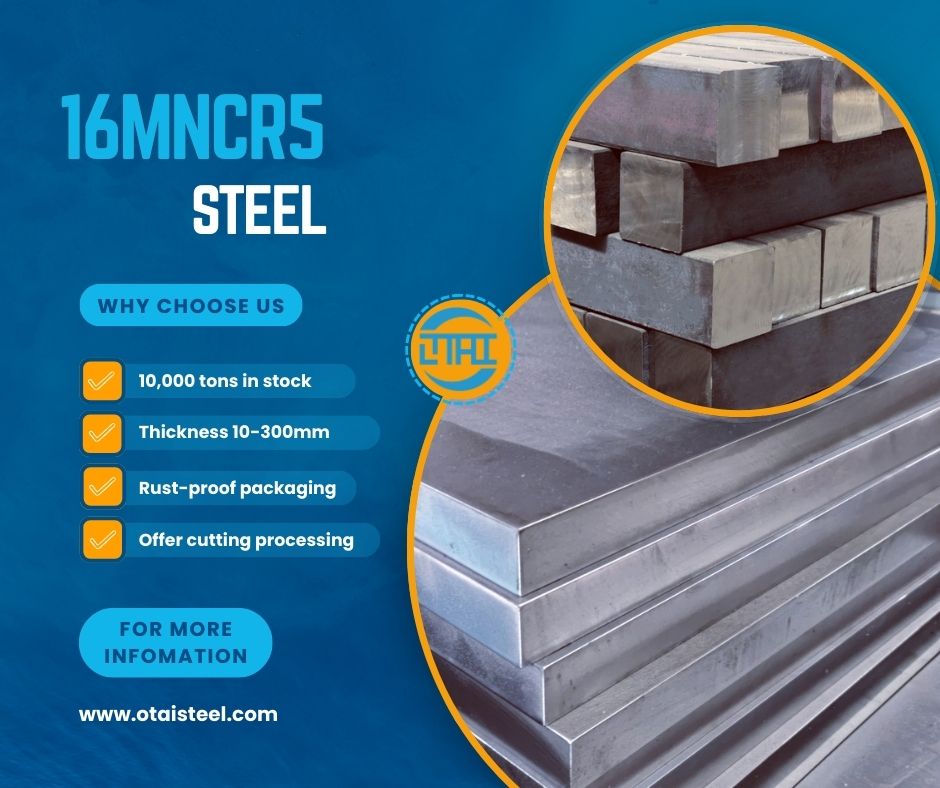
 16MnCr5 Material Chemical Composition: Standards and Performance Insights
In alloy steel selection, chemical composition is the foundation that determines mechanical properties, heat treatment response, and overall performance. Many engineers and buyers search for 16mncr5 material chemical composition to ensure the steel meets application requirements.
16MnCr5 is a low-carbon chromium alloy steel widely used for carburizing applications. Its carefully balanced composition allows it to develop a hard, wear-resistant surface while maintaining a tough and ductile core after heat treatment.
Understanding the chemical composition of 16MnCr5 steel EN standard is essential for achieving consistent quality in industrial production.
🔍 Overview of 16MnCr5 Steel Composition
16MnCr5 is defined under the European standard EN 10084, which specifies case-hardening steels. The composition is designed to support carburizing processes and improve wear resistance.
The 16MnCr5 material composition specification EN 10084 ensures that the steel meets strict limits for each alloying element, guaranteeing stable performance in demanding applications.
The 16MnCr5 carbon chromium composition details make it particularly suitable for high-load components such as gears and shafts.
⚙️ 16MnCr5 Material Chemical Composition Table
The 16MnCr5 material chemical composition table below shows the standard range of elements:
| Element | Content (%) |
|---|---|
| Carbon (C) | 0.14 – 0.19 |
| Manganese (Mn) | 1.00 – 1.30 |
| Chromium (Cr) | 0.80 – 1.10 |
| Silicon (Si) | ≤0.40 |
| Phosphorus (P) | ≤0.025 |
| Sulfur (S) | ≤0.035 |
This 16MnCr5 steel composition percentage is optimized to provide a balance between hardness, strength, and toughness.
🧪 Role of Alloying Elements
The 16MnCr5 alloy composition and elements each play a specific role in determining the material’s performance.
Carbon (C)
Carbon is essential for carburizing. It allows the surface to absorb additional carbon during heat treatment, resulting in high surface hardness.
The relatively low base carbon content helps maintain core toughness.
Manganese (Mn)
Manganese increases hardenability and tensile strength. It also improves the steel’s response to heat treatment processes.
It is a key element in the elements in 16MnCr5 case hardening steel.
Chromium (Cr)
Chromium enhances wear resistance, fatigue strength, and hardenability. It also supports the formation of a hard surface layer during carburizing.
The chromium content defines the strength characteristics in the 16MnCr5 carbon chromium composition details.
Silicon (Si)
Silicon acts as a deoxidizer during steel production and improves strength and elasticity.
Although present in smaller amounts, it contributes to overall material stability.
Phosphorus (P) and Sulfur (S)
These elements are controlled at very low levels in the chemical composition of 16MnCr5 steel EN standard.
Low phosphorus and sulfur improve toughness and reduce the risk of brittleness.
📊 Mechanical Properties Related to Composition
The chemical composition directly influences mechanical properties after heat treatment.
| Property | Typical Value |
|---|---|
| Tensile Strength | 800 – 1000 MPa |
| Yield Strength | 500 – 700 MPa |
| Elongation | 10 – 15 % |
| Core Hardness | 200 – 300 HB |
| Surface Hardness (carburized) | 58 – 62 HRC |
These properties highlight how the 16mncr5 material chemical composition enables both wear resistance and structural strength.
🔥 Heat Treatment and Composition Interaction
The composition of 16MnCr5 is specifically designed to perform well during carburizing heat treatment.
Typical process parameters include:
| Process | Temperature Range |
|---|---|
| Carburizing | 880 – 940 °C |
| Quenching | 780 – 850 °C |
| Tempering | 150 – 200 °C |
The 16MnCr5 alloy composition and elements allow the surface to harden while maintaining a tough core structure.
🔁 Equivalent Materials Based on Composition
Engineers often compare materials across international standards based on composition.
| Standard | Equivalent Grade |
|---|---|
| EN | 16MnCr5 |
| DIN | 1.7131 |
| AISI / SAE | 5120 |
| JIS | SCM420 |
| GB | 20CrMnTi |
These materials have similar 16MnCr5 steel composition percentage, making them suitable substitutes in many applications.
🏭 Industrial Applications
Because of its optimized composition, 16MnCr5 is widely used in industries requiring high wear resistance and fatigue strength.
Typical applications include:
- Automotive gears
- Transmission shafts
- Camshafts
- Worm gears
- Industrial gearbox components
- Heavy machinery parts
These applications rely heavily on the 16MnCr5 material composition specification EN 10084 to ensure performance and durability.
🌟 Company Advantages
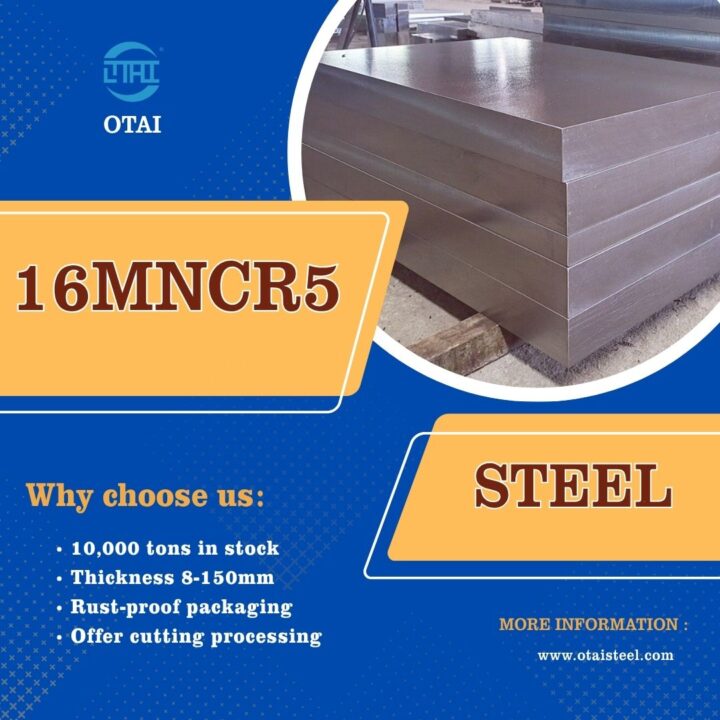
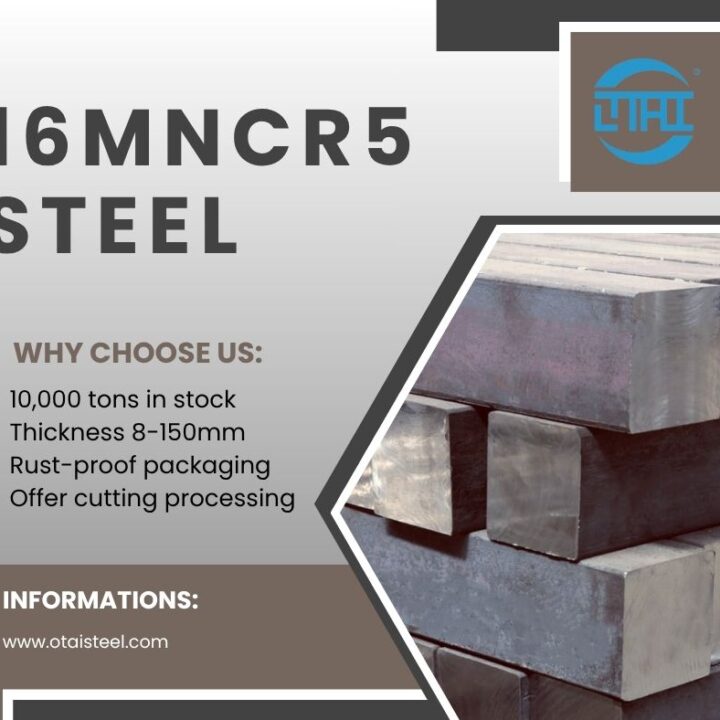
At Otai Special Steel, we provide high-quality 16MnCr5 alloy steel with strict control of chemical composition.
Our advantages include:
- Over 10,000 tons of steel inventory available year-round
- Plate thickness range from 6 mm to 300 mm
- Professional custom cutting and processing services
- Strict ultrasonic testing (UT) quality control
- Complete chemical composition inspection
- Long-term cooperation with international companies such as Thyssenkrupp, Borealis, and Schlumberger
We ensure stable composition and reliable performance for global customers.
❓ FAQ
1. What is the chemical composition of 16MnCr5 material?
It includes approximately 0.14–0.19% carbon, 1.00–1.30% manganese, and 0.80–1.10% chromium, along with small amounts of silicon, phosphorus, and sulfur.
2. Why is chromium important in 16MnCr5 steel?
Chromium improves wear resistance, hardenability, and fatigue strength, especially after carburizing.
3. Is 16MnCr5 a low-carbon steel?
Yes, it is a low-carbon alloy steel designed for case-hardening applications.
4. How does composition affect heat treatment?
The balanced composition allows the surface to harden during carburizing while maintaining a tough core.