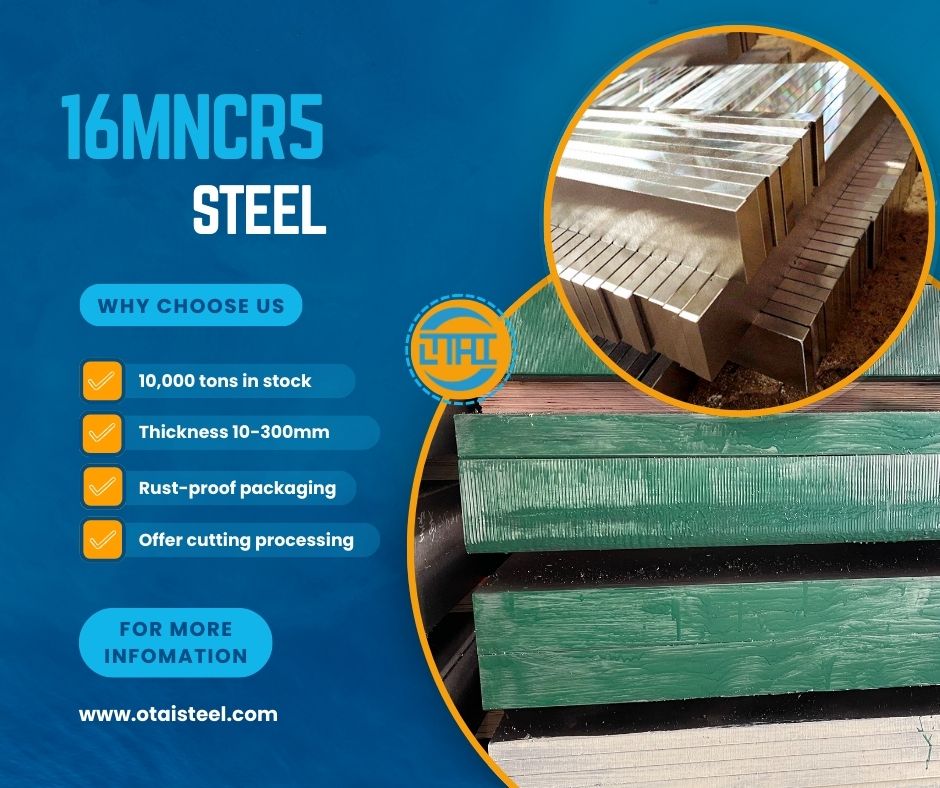
 16MnCr5 vs 100Cr6: Comparing Carburizing Steel and Bearing Steel
In mechanical engineering and industrial manufacturing, selecting the right steel grade is essential for performance, durability, and reliability. Two commonly used alloy steels are 16MnCr5 and 100Cr6. Engineers often evaluate 16mncr5 vs 100cr6 when choosing materials for gears, bearings, and high-wear components.
Although both steels provide excellent hardness and wear resistance, they serve different engineering purposes. 16MnCr5 is primarily a carburizing steel designed for case hardening applications, while 100Cr6 is a high-carbon chromium bearing steel widely used in rolling bearings and precision mechanical parts.
Understanding the difference between 16MnCr5 and 100Cr6 steel helps engineers select the appropriate material for demanding industrial environments.
🔍 Overview of 16MnCr5 and 100Cr6 Steel
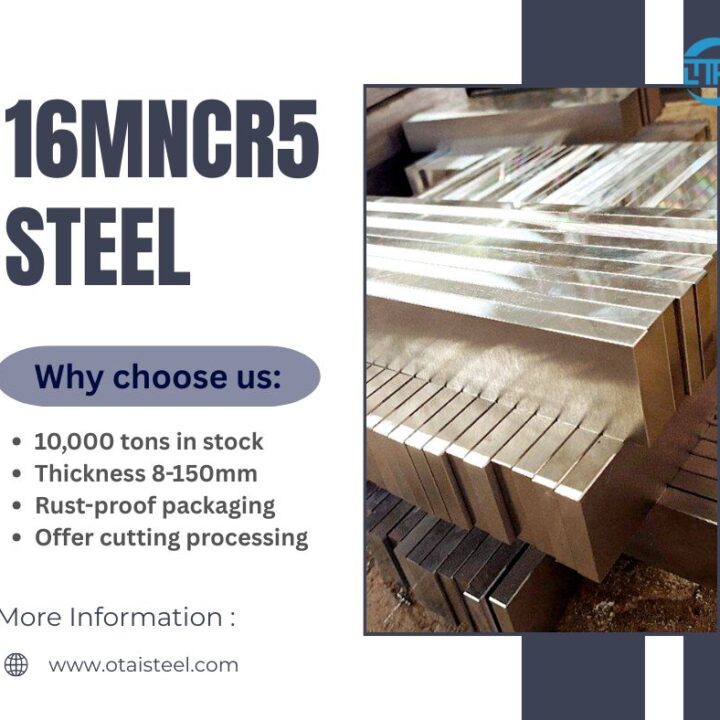
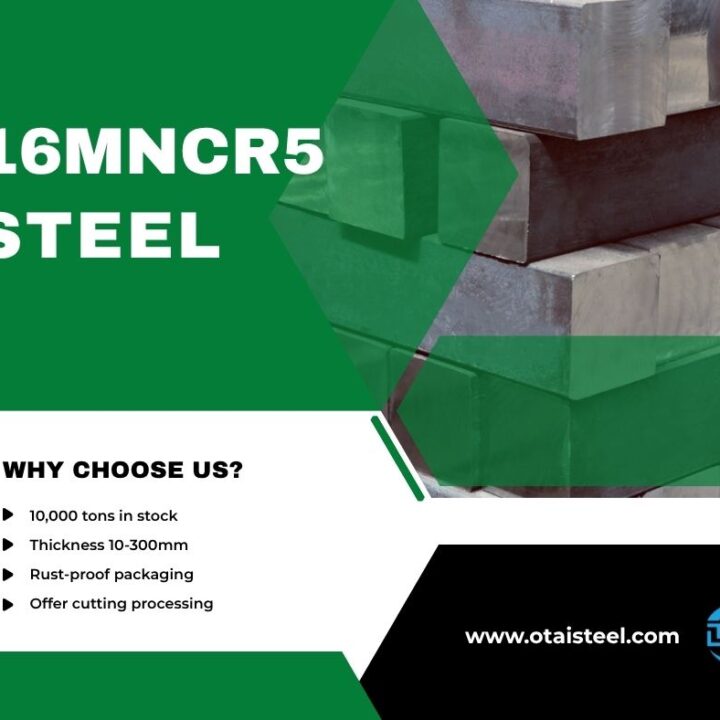
16MnCr5 is a low-carbon alloy steel defined in the European EN 10084 standard. It is widely used as a carburizing steel because it can develop a hard surface while maintaining a tough core after heat treatment.
100Cr6, also known as bearing steel, is a high-carbon chromium alloy steel defined in the EN ISO 683 standard. It offers extremely high hardness, wear resistance, and fatigue strength, making it ideal for rolling bearings and precision components.
Because these steels belong to different categories, engineers often analyze the carburizing steel vs bearing steel comparison when determining which material suits their design requirements.
⚙️ Chemical Composition Comparison
The 16MnCr5 vs 100Cr6 chemical composition comparison shows major differences in carbon content and alloying elements.
| Element | 16MnCr5 (%) | 100Cr6 (%) |
|---|---|---|
| Carbon (C) | 0.14 – 0.19 | 0.95 – 1.05 |
| Chromium (Cr) | 0.80 – 1.10 | 1.35 – 1.65 |
| Manganese (Mn) | 1.00 – 1.30 | 0.25 – 0.45 |
| Silicon (Si) | ≤0.40 | 0.15 – 0.35 |
| Phosphorus (P) | ≤0.025 | ≤0.025 |
| Sulfur (S) | ≤0.035 | ≤0.025 |
The most significant difference lies in carbon content. 100Cr6 contains nearly 1% carbon, which enables extremely high hardness after heat treatment. In contrast, 16MnCr5 has lower carbon content, allowing it to maintain a tough core after carburizing.
These differences define the difference between 16MnCr5 and 100Cr6 steel in terms of mechanical behavior and application suitability.
📊 Mechanical Properties Comparison
Engineers frequently analyze the 16MnCr5 vs 100Cr6 mechanical properties to determine which steel better fits a specific application.
| Property | 16MnCr5 | 100Cr6 |
|---|---|---|
| Tensile Strength | 800 – 1000 MPa | 1000 – 1200 MPa |
| Yield Strength | 500 – 700 MPa | 600 – 750 MPa |
| Elongation | 10 – 15% | 5 – 10% |
| Hardness (after heat treatment) | 58 – 62 HRC (case) | 60 – 66 HRC |
This comparison shows that 100Cr6 offers higher hardness and strength, while 16MnCr5 provides better toughness due to its carburized core.
🔧 Hardness and Wear Resistance
The 16MnCr5 vs 100Cr6 hardness comparison highlights how each material behaves under wear conditions.
16MnCr5 develops a hardened surface layer during carburizing, while the inner core remains relatively soft and tough. This structure provides excellent fatigue resistance and impact strength.
100Cr6, on the other hand, hardens throughout the entire cross-section after quenching and tempering. This full hardness results in outstanding wear resistance and contact fatigue performance.
Typical hardness values include:
| Heat Treatment Condition | 16MnCr5 | 100Cr6 |
|---|---|---|
| Annealed | ~200 HB | ~220 HB |
| Carburized surface | 58 – 62 HRC | — |
| Quenched and tempered | — | 60 – 66 HRC |
Because of this structure, 100Cr6 is widely used for rolling contact applications such as bearings.
🔥 Heat Treatment Differences
Heat treatment methods differ significantly between the two steels.
| Heat Treatment Process | 16MnCr5 | 100Cr6 |
|---|---|---|
| Carburizing | 880 – 940°C | Not required |
| Quenching | 780 – 850°C | 830 – 860°C |
| Tempering | 150 – 200°C | 150 – 200°C |
In carburizing processes, 16MnCr5 absorbs carbon at high temperatures to form a hardened case. This process provides excellent wear resistance without sacrificing toughness.
100Cr6 does not require carburizing because its high carbon content allows direct hardening during quenching.
These distinctions are essential when comparing carburizing steel vs bearing steel comparison in industrial applications.
🏭 Industrial Applications
Both steels serve different roles in industrial systems.
Typical 16MnCr5 vs 100Cr6 applications include:
16MnCr5 Applications
- Automotive transmission gears
- Camshafts
- Gear shafts
- Worm gears
- Industrial gearboxes
100Cr6 Applications
- Ball bearings
- Roller bearings
- Precision bearing rings
- Machine tool spindles
- High-precision mechanical components
Engineers typically choose 16MnCr5 for gear systems requiring surface hardness and core toughness, while 100Cr6 is selected for high-precision rolling contact components.
⚖️ Selection Guidelines
When choosing between these steels, engineers consider the operational requirements.
| Requirement | Recommended Steel |
|---|---|
| High surface hardness with tough core | 16MnCr5 |
| Maximum wear resistance | 100Cr6 |
| Bearing applications | 100Cr6 |
| Gear systems | 16MnCr5 |
Evaluating which is better 16MnCr5 or 100Cr6 steel depends on whether the application requires carburized toughness or full hardness throughout the component.
🌟 Company Advantages
At Otai Special Steel, we specialize in supplying high-quality alloy steels including 16MnCr5 and 100Cr6 for global industrial customers.
Our advantages include:
- Over 10,000 tons of alloy steel inventory available year-round
- Plate thickness range from 6 mm to 300 mm
- Professional custom cutting services
- Strict ultrasonic testing (UT) quality inspection
- Full chemical composition testing
- Long-term cooperation with international companies such as Thyssenkrupp, Borealis, and Schlumberger
Our experience and inventory allow us to deliver reliable steel solutions for demanding engineering applications.
❓ FAQ
1. What is the main difference between 16MnCr5 and 100Cr6 steel?
The main difference is carbon content and application. 16MnCr5 is a carburizing steel, while 100Cr6 is a high-carbon bearing steel.
2. Which steel is harder, 16MnCr5 or 100Cr6?
100Cr6 generally achieves higher hardness after heat treatment, typically reaching 60–66 HRC.
3. Why is 100Cr6 widely used for bearings?
100Cr6 provides excellent wear resistance, high hardness, and strong rolling contact fatigue resistance, making it ideal for bearing applications.
4. When should engineers choose 16MnCr5 instead of 100Cr6?
Engineers choose 16MnCr5 when applications require a hardened surface combined with a tough core, such as gears and transmission components.