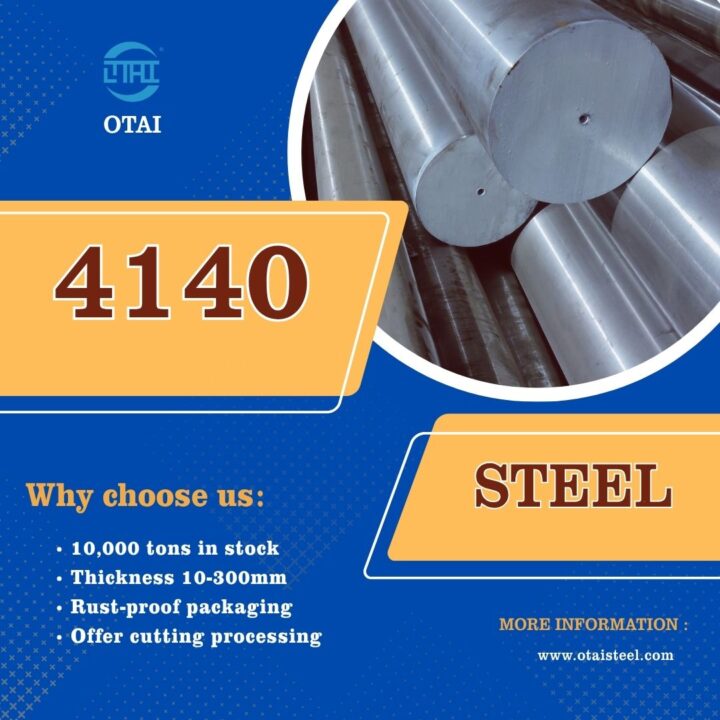
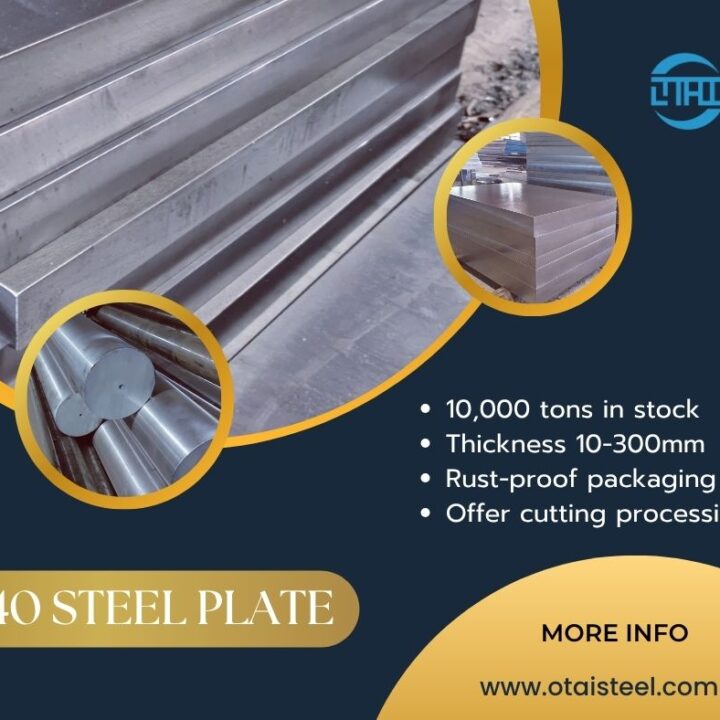
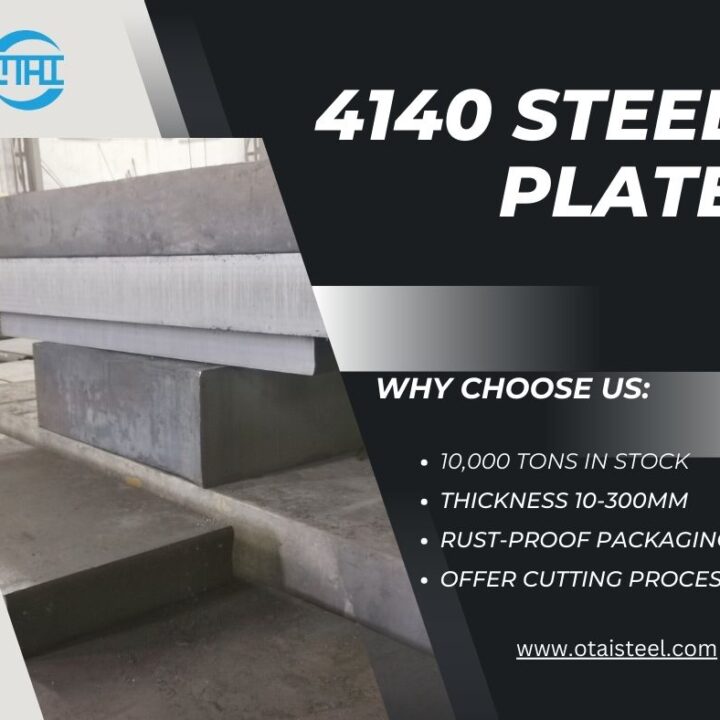
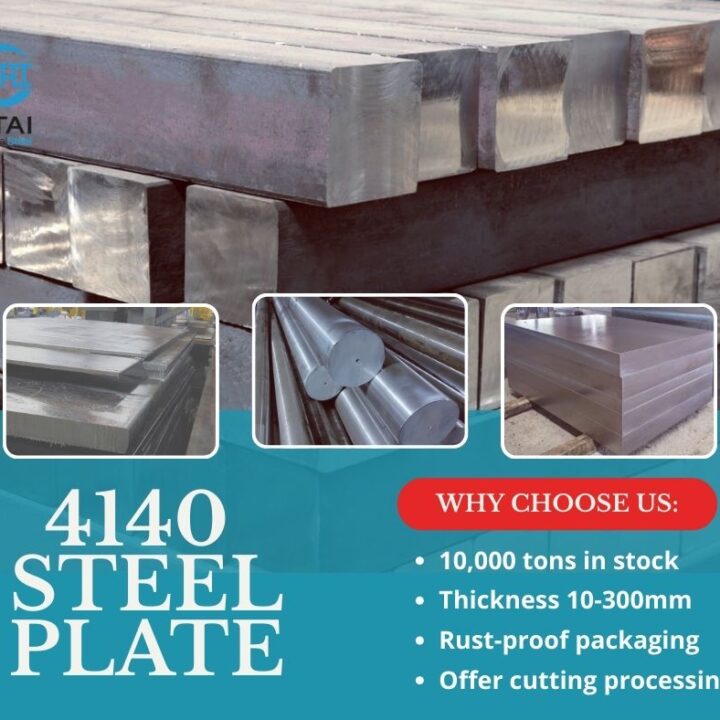
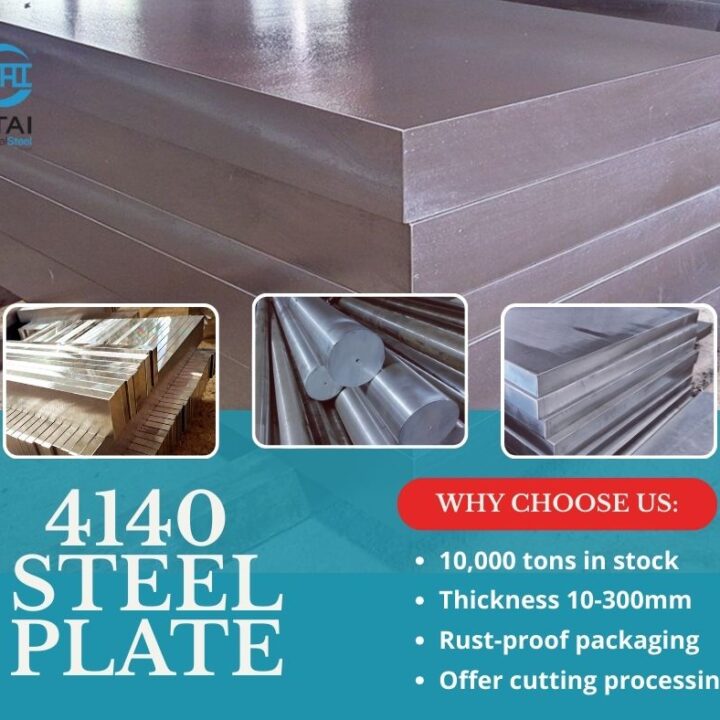
 AISI 4140 Steel Material Properties: Strength and Industrial Performance
AISI 4140 is one of the most widely used chromium-molybdenum alloy steels in modern manufacturing. Engineers choose this material because it offers excellent strength, toughness, fatigue resistance, and heat treatment versatility. Understanding aisi 4140 steel material properties helps manufacturers determine whether this alloy steel fits their mechanical and structural requirements.
This steel grade performs well in demanding environments where components must withstand heavy loads, repeated stress, and wear. Industries such as automotive manufacturing, oil and gas drilling, heavy machinery, and aerospace rely on the material properties of AISI 4140 steel to produce durable and reliable components.
This article examines the AISI 4140 steel mechanical and physical properties, chemical composition, heat treatment behavior, and practical industrial applications.
🔍 Overview of AISI 4140 Alloy Steel
AISI 4140 belongs to the chromium-molybdenum alloy steel family. The addition of chromium improves hardenability and corrosion resistance, while molybdenum enhances strength at high temperatures and increases toughness.
Because of this balanced composition, the AISI 4140 alloy steel characteristics make it suitable for parts that must resist fatigue and maintain structural integrity under extreme operating conditions.
Manufacturers commonly supply 4140 in several conditions, including:
- Annealed
- Normalized
- Quenched and tempered
- Pre-hardened
These different conditions allow engineers to optimize the heat treated AISI 4140 steel properties for specific applications.
⚙️ Chemical Composition of AISI 4140 Steel
The AISI 4140 steel chemical composition and properties originate from its carefully balanced alloying elements.
| Element | Content (%) |
|---|---|
| Carbon (C) | 0.38 – 0.43 |
| Chromium (Cr) | 0.80 – 1.10 |
| Molybdenum (Mo) | 0.15 – 0.25 |
| Manganese (Mn) | 0.75 – 1.00 |
| Silicon (Si) | 0.15 – 0.35 |
| Phosphorus (P) | ≤0.035 |
| Sulfur (S) | ≤0.040 |
Each element contributes to the overall performance of the steel. Carbon provides hardness and strength, chromium increases wear resistance, and molybdenum improves toughness and high-temperature performance.
These alloying elements explain why material properties of AISI 4140 steel make it suitable for highly stressed mechanical components.
📊 Mechanical Properties
Engineers evaluate the AISI 4140 steel hardness and tensile strength to determine whether the material can handle heavy loads and repeated mechanical stress.
Typical mechanical properties in the quenched and tempered condition include:
| Property | Typical Value |
|---|---|
| Ultimate Tensile Strength | 850 – 1000 MPa |
| Yield Strength | 655 – 850 MPa |
| Elongation | 12 – 25% |
| Reduction of Area | 45 – 60% |
| Hardness | 28 – 32 HRC |
These values demonstrate the excellent balance between strength and toughness found in the typical properties of AISI 4140 steel.
Because of its strong fatigue resistance, this alloy performs exceptionally well in rotating or dynamically loaded components.
🔩 Physical Properties
In addition to mechanical strength, engineers also consider the AISI 4140 steel mechanical and physical properties when designing components.
| Property | Value |
|---|---|
| Density | 7.85 g/cm³ |
| Elastic Modulus | 205 GPa |
| Thermal Conductivity | 42.6 W/m·K |
| Specific Heat Capacity | 0.475 J/g·°C |
| Melting Range | 1416 – 1460°C |
These physical properties allow the steel to perform well in environments where temperature fluctuations and mechanical stress occur simultaneously.
🔥 Heat Treatment Characteristics
Heat treatment significantly influences heat treated AISI 4140 steel properties. Manufacturers commonly apply quenching and tempering to achieve optimal hardness and toughness.
| Heat Treatment Process | Temperature Range |
|---|---|
| Annealing | 840 – 870°C |
| Normalizing | 870 – 900°C |
| Quenching | 820 – 870°C |
| Tempering | 400 – 650°C |
Quenching increases hardness by forming martensite, while tempering reduces brittleness and improves toughness.
By adjusting the tempering temperature, engineers can tailor the AISI 4140 steel hardness and tensile strength for different industrial requirements.
🏭 Industrial Applications
Thanks to its balanced performance, manufacturers widely use this steel in industries requiring high reliability.
Common applications include:
- Automotive crankshafts and axles
- Heavy-duty shafts and gears
- Hydraulic machinery components
- Oil and gas drilling tools
- Structural components in construction equipment
The durability and fatigue resistance of the AISI 4140 alloy steel characteristics make it particularly valuable for components subjected to cyclic loading.
🔧 Machining and Weldability
AISI 4140 offers good machinability in the annealed condition. However, machining becomes more challenging after heat treatment due to increased hardness.
For welding, preheating is usually required to prevent cracking.
Typical welding recommendations include:
| Welding Parameter | Recommendation |
|---|---|
| Preheat Temperature | 200 – 300°C |
| Post-Weld Heat Treatment | Stress relieving recommended |
| Filler Material | Compatible alloy filler |
Following proper welding procedures helps maintain the material properties of AISI 4140 steel without compromising structural integrity.
🌟 Company Advantages
At Otai Special Steel, we specialize in supplying high-quality alloy steels including AISI 4140 for global industrial customers.
Our advantages include:
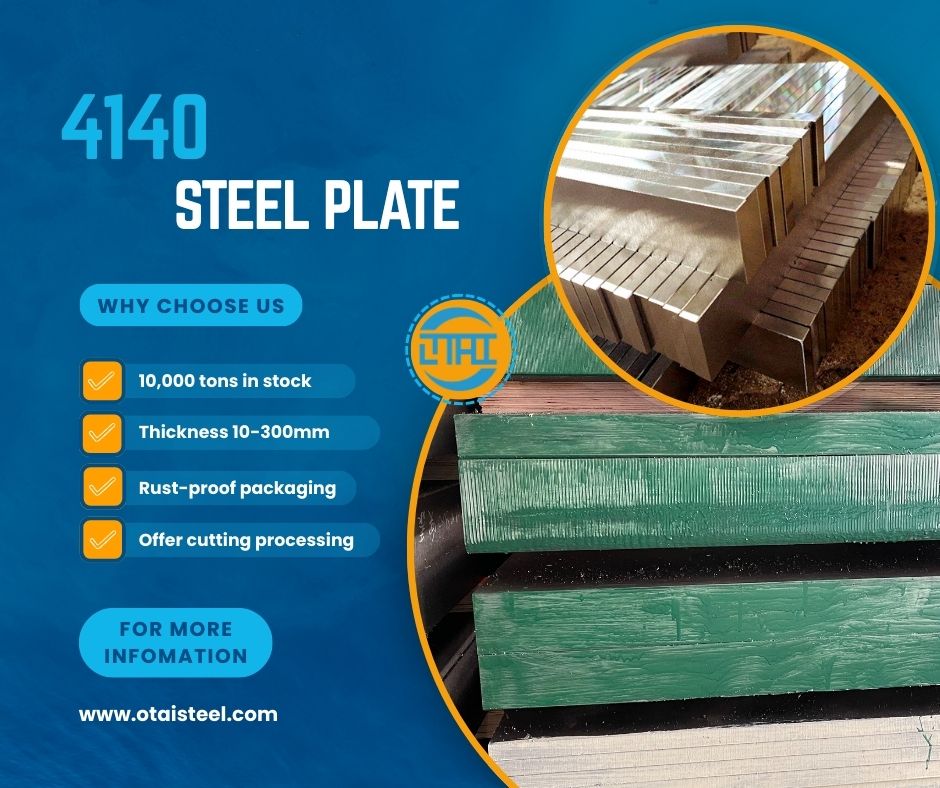
- Over 10,000 tons of alloy steel inventory available year-round
- Plate thickness range from 6 mm to 300 mm
- Professional custom cutting and processing services
- Strict ultrasonic testing (UT) and quality inspection
- Complete chemical composition verification
- Long-term partnerships with international companies such as Thyssenkrupp, Borealis, and Schlumberger
These strengths allow us to provide stable supply and reliable material quality for demanding engineering projects.
❓ FAQ
1. What are the main material properties of AISI 4140 steel?
The key aisi 4140 steel material properties include high tensile strength, good toughness, excellent fatigue resistance, and strong hardenability after heat treatment.
2. What is the typical hardness of AISI 4140 steel?
In the quenched and tempered condition, the AISI 4140 steel hardness and tensile strength typically reach 28–32 HRC.
3. Can AISI 4140 steel be heat treated?
Yes. Heat treatment such as quenching and tempering significantly improves the heat treated AISI 4140 steel properties, allowing engineers to achieve higher strength and hardness.
4. Why is AISI 4140 widely used in engineering?
The balanced AISI 4140 steel mechanical and physical properties provide an excellent combination of strength, toughness, and fatigue resistance, making it ideal for heavy-duty mechanical components.