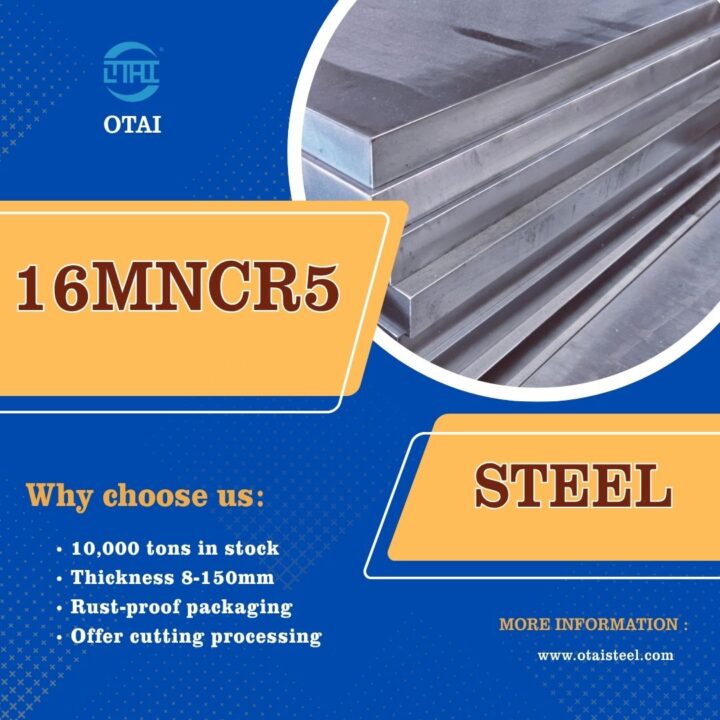
 How Hardness Affects the Properties of 16MnCr5 Steel
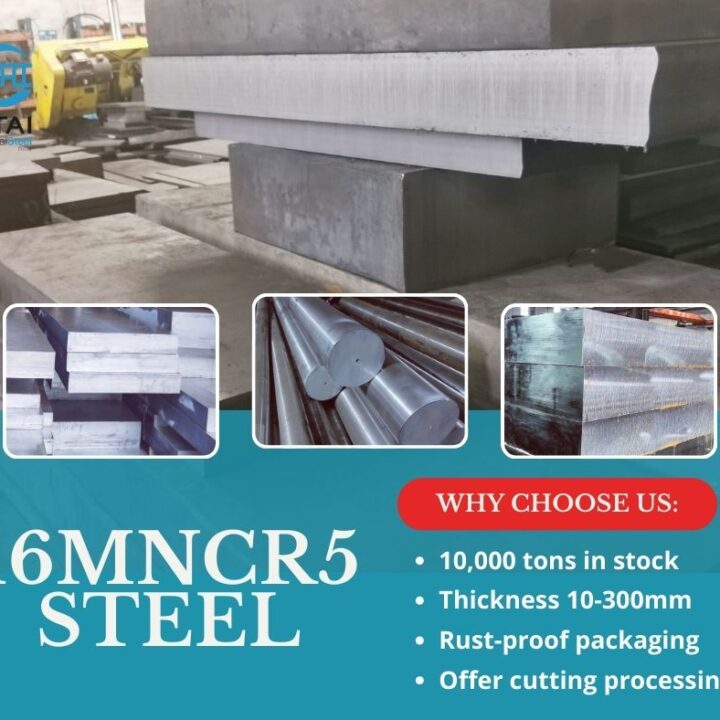
The 16MnCr5 steel is widely used in the automotive and manufacturing industries for components that require both strength and toughness. One of its standout features is its hardness, which makes it highly durable in demanding applications. Understanding the hardness of 16MnCr5 steel is crucial for selecting the right material for specific projects, ensuring optimal performance in parts like gears, shafts, and other mechanical components.
In this article, we’ll dive into the hardness of 16MnCr5 steel, how it’s measured, and the factors that influence its hardness.
🧪 What is 16MnCr5 Steel?
16MnCr5 is a low-alloy, medium-carbon steel. It contains manganese and chromium, which enhance its hardness, wear resistance, and strength, making it suitable for carburizing (a heat treatment process). This process increases the surface hardness of the material, allowing it to withstand greater stress while maintaining toughness in the core.
Here’s a breakdown of its composition:
| Element | Composition (%) |
|---|---|
| Carbon (C) | 0.14 – 0.19% |
| Manganese (Mn) | 0.60 – 0.90% |
| Chromium (Cr) | 0.80 – 1.10% |
| Silicon (Si) | 0.20 – 0.35% |
| Molybdenum (Mo) | 0.15 – 0.25% |
The inclusion of manganese and chromium is what makes 16MnCr5 steel particularly hard and suitable for high-stress applications. These elements increase the resistance to wear and fatigue, which is essential in many engineering applications.
🔍 How is the Hardness of 16MnCr5 Steel Measured?
Hardness is a measure of a material’s resistance to deformation, particularly indentation. The hardness of 16MnCr5 steel is typically measured using different scales, such as the Brinell, Rockwell, or Vickers hardness tests.
Here’s a comparison of the typical hardness values for 16MnCr5 steel under different testing methods:
| Hardness Test | Hardness Value (approx.) |
|---|---|
| Brinell (HB) | 180 – 220 HB |
| Rockwell C (HRC) | 28 – 35 HRC |
| Vickers (HV) | 250 – 350 HV |
These values vary depending on factors such as the heat treatment process and the final application of the steel. For example, carburized 16MnCr5 steel can have a surface hardness of up to 58-62 HRC, making it ideal for gears, shafts, and bearings.
🏗️ How Hardness Affects the Properties of 16MnCr5 Steel
Hardness is a key factor that impacts the performance and durability of materials in real-world applications. Here’s how the hardness of 16MnCr5 steel plays a role in its effectiveness:
✔️ Improved Wear Resistance
The higher the hardness, the better the steel resists abrasion and wear, making it a great choice for parts that experience friction or sliding contact. 16MnCr5 steel’s hard surface makes it ideal for gears, valves, and bearings, where wear resistance is crucial.
✔️ Enhanced Strength
A harder material can withstand higher stress and forces without failing. The high hardness of 16MnCr5 steel improves the fatigue strength, allowing components to perform well under fluctuating loads, such as in automotive axles or crankshafts.
✔️ Increased Durability
Hardness contributes to a material’s longevity and resistance to deformation. In parts like sprockets or piston rods, where high impact and abrasive conditions are common, the hardness of 16MnCr5 ensures longer service life.
However, there’s a balance to strike. If steel becomes too hard, it may become brittle and prone to cracking under shock or impact. This is why heat treatment and carburizing play such an important role in optimizing 16MnCr5 steel’s hardness for different applications.
🛠️ Applications of 16MnCr5 Steel Based on Hardness
Given its impressive hardness, 16MnCr5 is used in various industries for components that must endure high mechanical stress, fatigue, and wear. Here are some of the most common uses:
| Application | Hardness Requirement |
|---|---|
| Gears and Pinions | High surface hardness (55 – 60 HRC) for wear resistance |
| Shafts and Crankshafts | Moderate hardness for strength and fatigue resistance |
| Bearings | High hardness for reduced wear and long-lasting operation |
| Automotive Components | Toughness with wear resistance for parts like axles and valves |
| Heavy Machinery Parts | Excellent resistance to fatigue and wear for high-stress components |
The carburizing process, often applied to 16MnCr5 steel, increases surface hardness while maintaining toughness in the core, making it ideal for components that are subjected to high loads and abrasive environments.
📊 Hardness Comparison with Other Steels
Let’s compare the hardness of 16MnCr5 with other similar steels to understand its position in terms of wear resistance and strength:
| Steel Grade | Carbon Content | Hardness (HRC) | Application |
|---|---|---|---|
| 16MnCr5 | 0.14 – 0.19% | 28 – 35 HRC | Automotive gears, shafts, bearings |
| AISI 8620 | 0.18% | 25 – 30 HRC | Automotive components, shafts, gears |
| AISI 5140 | 0.40% | 35 – 45 HRC | Crankshafts, axles, high-strength components |
| AISI 4340 | 0.38% | 35 – 50 HRC | Aerospace, heavy-duty components |
| AISI 4130 | 0.28% | 25 – 35 HRC | Aircraft components, structural parts |
As shown, 16MnCr5 provides a balanced level of hardness suitable for high-performance applications without becoming excessively brittle, unlike some higher-carbon steels.
🏅 Why Choose Otai Special Steel for 16MnCr5 Steel?
When you need 16MnCr5 steel with the right hardness for your application, Otai Special Steel is here to meet your needs. Here’s why you should trust us:
| Feature | Details |
|---|---|
| Premium Quality | We offer high-quality 16MnCr5 steel that meets global standards. |
| Custom Services | We provide cutting, heat treatment, and machining services. |
| Reliable Delivery | We ensure timely delivery worldwide to support your projects. |
| Competitive Pricing | Get cost-effective solutions without compromising on quality. |
With Otai Special Steel, you can be confident that your 16MnCr5 steel will have the optimal hardness for its intended use, ensuring reliability and durability in demanding conditions.
❓ FAQ: Frequently Asked Questions
Q1: What hardness should I aim for when selecting 16MnCr5 steel?
A1: The desired hardness depends on the specific application. For gears and bearings, 58-62 HRC (after carburizing) is recommended, while for shafts and crankshafts, a hardness around 28-35 HRC is typical.
Q2: Can I improve the hardness of 16MnCr5 steel?
A2: Yes, carburizing is a common method to increase the surface hardness of 16MnCr5 steel, making it suitable for wear-resistant applications.
Q3: What makes 16MnCr5 steel a good choice for high-stress components?
A3: Its combination of medium carbon content, chromium, and manganese provides excellent wear resistance, toughness, and fatigue strength, making it ideal for components subjected to dynamic loads.