42CrMo4 Normalizing: Can It Improve Microstructure and Machinability?
📑 Table of Contents
- 🔍 What Is Normalizing of 42CrMo4 Steel?
- 🔬 How Does Normalizing Change the Microstructure of 42CrMo4?
- 🌡️ 42CrMo4 Normalizing Temperature: What Factors Matter?
- ❄️ Why Is Air Cooling Important During Normalizing?
- ⚙️ Can Normalizing Improve 42CrMo4 Machinability?
- 💪 How Does Normalizing Affect Hardness and Mechanical Properties?
- 🔄 42CrMo4 Normalizing vs. Annealing: Which Is Better for Machining?
- 🏭 When Should Manufacturers Choose Normalized 42CrMo4?
- 📋 What Should Buyers Check When Ordering Normalized 42CrMo4?
- 🏢 Company Advantages
- ❓ Frequently Asked Questions
42CrMo4 is a chromium-molybdenum alloy steel widely used for shafts, gears, machine components and other parts that require good strength and toughness. However, the steel’s performance depends not only on its chemical composition but also on its microstructure and delivery condition. For manufacturers preparing material for machining or further heat treatment, normalizing can be an important processing step.
Normalizing heats 42CrMo4 to a suitable temperature above its critical transformation range, holds it long enough for the required transformation, and then allows it to cool in still air. This process can refine the grain structure and improve microstructural uniformity. It may also produce a more consistent starting condition for subsequent machining or heat treatment.
However, normalizing does not automatically make every 42CrMo4 product easier to machine. The result depends on the original material condition, section size, heating cycle and cooling rate. Buyers should also distinguish normalized 42CrMo4 from annealed and quenched-and-tempered material because each condition serves different manufacturing requirements.
🔍 What Is Normalizing of 42CrMo4 Steel?
Understanding the normalizing process
Normalizing is a heat treatment process that changes the steel’s microstructure through controlled heating and air cooling. For 42CrMo4, manufacturers heat the material into the austenitizing range, hold it at temperature, and then remove it from the furnace for cooling in still air.
During heating, the existing microstructure transforms into austenite when the steel reaches the appropriate temperature. The holding stage allows the material to reach a sufficiently uniform temperature and supports the required transformation. During subsequent air cooling, the austenite transforms into a new microstructure, commonly consisting mainly of ferrite and pearlite or related transformation products depending on the section size and cooling conditions.
Because 42CrMo4 contains chromium and molybdenum, its transformation and cooling behavior differ from those of plain carbon steel. These alloying elements increase hardenability, so manufacturers must consider section dimensions and cooling conditions when developing a normalizing procedure.
Why manufacturers normalize 42CrMo4
Manufacturers may use normalizing to refine the grain structure, reduce microstructural variations from previous processing and establish a more consistent condition for later operations. The process can be particularly useful when the original hot-working history has produced an uneven structure.
For example, a steel bar may undergo forging or hot rolling before machining. Depending on the temperature history and cooling conditions, different areas may develop different grain sizes or microstructural features. A properly controlled normalizing treatment can help improve structural uniformity.
Nevertheless, normalizing is not a substitute for every other heat treatment. It does not provide the same strength and hardness profile as a properly designed quenching-and-tempering process. Manufacturers should select the treatment according to the component’s final performance requirements.
Normalizing compared with other delivery conditions
| Condition | Main process | Typical purpose |
|---|---|---|
| Hot rolled | Hot deformation followed by controlled or uncontrolled cooling | General structural steel supply and further processing |
| Normalized | Austenitizing followed by air cooling | Microstructure refinement and a more uniform starting condition |
| Annealed | Heating followed by controlled, usually slower cooling | Softening and improving processing conditions |
| Quenched and tempered | Hardening by quenching followed by tempering | Developing higher strength and a balanced combination of strength and toughness |
For buyers, the most important point is to specify the required delivery condition clearly. A quotation for normalized 42CrMo4 should not be treated as equivalent to a quotation for annealed or quenched-and-tempered material.
🔬 How Does Normalizing Change the Microstructure of 42CrMo4?
Grain refinement through austenitizing
One important purpose of normalizing is to refine the steel’s grain structure. During heating, the original ferrite and pearlite structure transforms into austenite after the material reaches the appropriate temperature. The resulting austenite grain structure depends on the heating temperature, holding time, previous microstructure and steel composition.
If manufacturers control the heating cycle correctly, the subsequent air-cooling stage can produce a finer and more uniform structure than certain previous processing conditions. This can improve consistency across the material and provide a more predictable starting point for further manufacturing.
However, higher heating temperatures do not necessarily produce better results. Excessive temperatures or unnecessarily long holding times can cause austenite grain growth. Therefore, the goal is not simply to heat the steel as much as possible. The process must achieve the required transformation while controlling grain size.
Transformation during air cooling
After the steel leaves the furnace, its temperature decreases and the austenite gradually transforms. Depending on the cooling rate and section dimensions, the resulting microstructure may contain ferrite and pearlite, together with other transformation products.
Because 42CrMo4 has higher hardenability than many plain carbon steels, its transformation behavior requires careful attention. A relatively large section cools more slowly at its center than at its surface. Consequently, the core and surface may develop different microstructures and hardness levels.
Manufacturers should therefore evaluate the actual product dimensions rather than applying one cooling assumption to every plate or bar. This becomes especially important when supplying thick sections or large-diameter products.
Why microstructural uniformity matters
Microstructural variations can influence hardness, machining behavior and the response to subsequent heat treatment. If different areas of a workpiece behave differently during cutting, manufacturers may experience inconsistent tool wear, dimensional variation or changes in surface finish.
A properly normalized condition can help reduce some of these variations. It gives the next manufacturing stage a more controlled starting point, although it cannot eliminate every difference caused by segregation, inclusions, forging history or other material characteristics.
For procurement teams, microstructural quality is particularly relevant when purchasing large sections for precision machining. If the finished component has strict performance requirements, buyers should discuss the required delivery condition and inspection scope with the steel supplier before ordering.
🌡️ 42CrMo4 Normalizing Temperature: What Factors Matter?
Typical normalizing temperature range
For 42CrMo4, a commonly referenced normalizing temperature range is approximately 850–900°C. The actual temperature should follow the applicable material specification, the steel producer’s recommendations and the requirements of the heat treatment procedure.
This range is a practical reference, not a universal instruction for every product size or production route. Different standards, steelmaking practices and section dimensions may require adjustments. Buyers should avoid specifying a single temperature without considering the material condition and intended result.
The selected temperature must be high enough to achieve the required austenitizing transformation. At the same time, it should avoid unnecessary grain growth, excessive oxidation and other problems associated with overheating.
Holding time and section dimensions
After the furnace reaches the target temperature, the steel needs sufficient time for the section to heat through. A thin plate and a thick round bar will not reach a uniform temperature at the same rate. Therefore, the holding period should account for the product’s thickness or diameter, furnace loading and heating method.
Insufficient holding time may leave temperature differences between the surface and core. On the other hand, excessive holding can waste energy and increase the risk of grain growth or surface deterioration.
For large sections, heat treatment operators should use a validated procedure based on the actual dimensions and furnace conditions. A generic time recommendation may not provide reliable results for every production batch.
Factors affecting temperature selection
| Factor | Possible effect | What manufacturers should consider |
|---|---|---|
| Section thickness or diameter | Changes the time needed for the core to reach temperature | Use a procedure suitable for the actual product dimensions |
| Initial material condition | Influences the starting microstructure and transformation behavior | Review hot-working and previous heat treatment history |
| Heating temperature | Affects austenitizing and grain growth | Avoid insufficient heating and overheating |
| Holding time | Affects temperature uniformity and transformation | Consider the largest section and furnace loading |
| Cooling conditions | Influence transformation products and hardness | Control spacing, airflow and cooling environment |
Why temperature control matters to buyers
Buyers do not always need to prescribe every furnace parameter. However, they should state the required normalized condition and final property requirements. If a project has strict microstructure, hardness or machining requirements, the purchaser may also request the heat treatment procedure or supporting inspection records.
This approach helps avoid a situation in which the supplier and buyer use the same term, “normalized,” but expect different results from the delivered steel.
❄️ Why Is Air Cooling Important During Normalizing?
Air cooling distinguishes normalizing from annealing
Cooling is a defining part of normalizing. After austenitizing, manufacturers remove the steel from the furnace and allow it to cool in still air under controlled conditions. This generally produces a faster cooling rate than conventional full annealing, where the material cools slowly in the furnace.
The difference in cooling rate affects the transformation of austenite and the resulting microstructure. Normalized 42CrMo4 may therefore have a different hardness and strength profile from annealed 42CrMo4, even when both materials start with similar chemical compositions.
However, air cooling does not mean that every piece cools at exactly the same rate. Ambient temperature, airflow, product spacing and section dimensions all influence the cooling process.
Why large sections need extra attention
The surface of a large steel bar or plate loses heat more quickly than its center. As a result, the surface and core may follow different cooling paths. This difference can affect the final microstructure and hardness distribution.
For 42CrMo4, alloying elements increase hardenability and influence transformation during cooling. Therefore, manufacturers should not assume that a thick section will produce the same normalized structure as a small test sample.
When heat treating large products, operators should consider how pieces are arranged after furnace removal. Closely stacked materials may restrict airflow and create uneven cooling. Excessively rapid or uncontrolled cooling can also produce results that differ from the intended normalizing condition.
What happens if cooling is poorly controlled?
Inconsistent cooling can create variations in hardness and microstructure. These variations may affect subsequent machining or heat treatment. For example, a manufacturer may notice that different sections of a large workpiece respond differently to cutting operations.
In more demanding applications, an unsuitable cooling process may also contribute to unwanted residual stresses or distortion. The actual risk depends on product geometry, temperature history and cooling conditions.
To reduce these problems, manufacturers should use a defined cooling procedure and avoid unnecessary changes in the way they handle hot material. They should also consider the maximum section size when validating the process.
⚙️ Can Normalizing Improve 42CrMo4 Machinability?
How microstructure affects machining
Machinability depends on several material characteristics, including hardness, microstructure, strength, inclusions and delivery condition. A uniform structure can help manufacturers achieve more predictable cutting behavior. This is one reason why some producers normalize 42CrMo4 before machining or subsequent processing.
When normalizing refines an uneven structure, it may reduce local variations that affect cutting forces and tool wear. A more consistent starting condition can also help manufacturers maintain dimensional accuracy across multiple workpieces.
However, improved microstructural uniformity does not automatically mean lower cutting forces or longer tool life. The hardness of normalized 42CrMo4 may be higher than that of an annealed product. If the machining operation requires very low cutting resistance, a softer delivery condition may be more suitable.
Normalizing versus annealing for machining preparation
Annealing generally aims to soften steel and improve its workability. For some machining operations, this can make material removal easier and reduce tool loading. Normalizing, by comparison, aims more directly at refining the microstructure and establishing a more uniform condition.
Consequently, the best condition depends on the manufacturing sequence. If the workshop needs a softer material for extensive rough machining, annealed 42CrMo4 may be a better choice. If the main concern is structural uniformity or preparing the material for a later process, normalizing may be appropriate.
Machining factors beyond heat treatment
Even when two batches have the same delivery condition, their machining performance may differ. Tool geometry, cutting speed, feed rate, coolant, machine rigidity and workpiece dimensions all influence the result.
For production planning, manufacturers should consider the following points:
- Material hardness: Confirm the actual hardness range rather than assuming every normalized batch has the same value.
- Cutting operation: Turning, milling, drilling and boring may respond differently to the same material condition.
- Tool selection: Select tool material and geometry according to the supplied steel condition.
- Machining allowance: Consider dimensional changes and material removal during rough and finish machining.
- Final heat treatment: Allow for possible distortion or dimensional changes if the component will undergo further hardening.
For buyers, the practical approach is to tell the supplier how the material will be processed. This helps the supplier recommend a suitable delivery condition instead of simply quoting the lowest-priced option.
💪 How Does Normalizing Affect Hardness and Mechanical Properties?
Normalized hardness is not a fixed value
42CrMo4 does not have one universal hardness value after normalizing. The result depends on chemical composition, product dimensions, heating temperature, holding time and cooling conditions. Large sections may also show differences between surface and core properties.
Therefore, buyers should be cautious when comparing a supplier’s hardness figure with a general online reference. Unless the reference identifies the same material standard, product size, heat treatment condition and test method, the figures may not be directly comparable.
Strength and toughness after normalizing
Normalizing can establish a useful balance of strength and ductility for certain manufacturing applications. It may also improve structural consistency when the previous condition contains an uneven grain structure. Nevertheless, normalized 42CrMo4 should not automatically be expected to meet the mechanical requirements of quenched-and-tempered 42CrMo4.
Quenching and tempering create a different microstructure and are commonly used when the component needs higher strength with controlled toughness. Normalizing usually serves as a preparation or intermediate treatment rather than the final high-strength condition for demanding components.
How buyers should interpret test results
When comparing normalized products, buyers should check whether the test results refer to the delivered material or a separate heat-treated sample. They should also confirm the test location and specimen orientation where these details matter under the applicable specification.
| Property | What it indicates | Buyer consideration |
|---|---|---|
| Hardness | Resistance to localized indentation | Confirm the required range and test method |
| Tensile strength | Maximum tensile stress before fracture | Check the applicable product condition and specimen requirements |
| Yield strength | Stress at which permanent deformation begins | Compare with the component’s design requirements |
| Elongation | Ductility during tensile testing | Confirm the specified test standard and specimen dimensions |
| Impact toughness | Energy absorbed under impact testing | Specify test temperature and acceptance criteria when required |
For components that will later undergo quenching and tempering, the normalized condition is only one stage of the manufacturing route. Buyers should evaluate the final properties after the complete treatment rather than using normalized test results as proof of finished-part performance.
🔄 42CrMo4 Normalizing vs. Annealing: Which Is Better for Machining?
Different objectives lead to different results
Normalizing and annealing both involve heating steel, but they use different cooling approaches and serve different purposes. Normalizing generally uses air cooling to refine the microstructure and improve uniformity. Annealing typically uses slower controlled cooling to soften the steel and improve workability.
For machining, annealing may be more suitable when the workshop needs a softer material for extensive cutting operations. Normalizing may be preferable when the manufacturer wants a more uniform structure or needs a particular starting condition before further processing.
Compare the two processes
| Comparison point | 42CrMo4 Normalizing | 42CrMo4 Annealing |
|---|---|---|
| Cooling method | Air cooling | Controlled slow cooling, commonly furnace cooling |
| Main objective | Microstructure refinement and improved uniformity | Softening and improved workability |
| Typical hardness response | May be higher than a fully annealed condition | Generally lower when the annealing cycle is designed for softening |
| Machining preparation | Useful when uniformity is a priority | Often suitable when easier cutting is the priority |
| Process considerations | Airflow and section size affect cooling | Cooling rate and furnace control affect softening |
Which condition should manufacturers choose?
There is no single best condition for every machining project. Manufacturers should start with the required machining operation and final component properties. If the priority is to reduce hardness and cutting resistance, annealing may be more suitable. If the material needs a refined and more uniform structure, normalizing may provide a better starting point.
For components that require high final strength, the production route may include machining in a suitable intermediate condition followed by quenching and tempering. In that case, the supplier and manufacturer should agree on the complete processing sequence rather than selecting a delivery condition in isolation.
Buyers can also request a hardness range in the purchase specification. This makes the expected machining condition clearer and reduces the risk of receiving material that does not suit the workshop’s production plan.
🏭 When Should Manufacturers Choose Normalized 42CrMo4?
When microstructure consistency is important
Manufacturers may choose normalized 42CrMo4 when the material’s previous hot-working history has produced a structure that needs refinement or improved uniformity. This can be relevant for forged or hot-rolled products that will undergo additional machining or heat treatment.
A more consistent starting structure can help manufacturers manage later operations. It may also reduce variations between workpieces when the heat treatment procedure and material dimensions remain consistent.
When preparing material for further heat treatment
Some components require machining before final quenching and tempering. In these cases, normalizing may serve as an intermediate treatment to establish a suitable microstructure before the next production stage.
However, the manufacturer must consider dimensional changes during subsequent heat treatment. Machining allowances, component geometry and the final tolerance requirements should account for possible distortion during hardening and tempering.
Applications that may use normalized 42CrMo4
Normalized 42CrMo4 may be considered for intermediate manufacturing stages involving shafts, gears, machine parts, forged components and other products that will receive additional machining or heat treatment. The final selection depends on the design requirements and the full production route.
For example, a manufacturer producing a transmission shaft may use an intermediate material condition for rough machining before final heat treatment. Another manufacturer may require normalized material because the component design calls for a particular combination of workability and mechanical properties.
These examples do not mean that normalized 42CrMo4 is automatically suitable for every shaft or gear. Buyers must check the final service requirements, specified material condition and applicable standard.
When another condition may be more appropriate
If a component requires high strength and toughness in service, quenched-and-tempered 42CrMo4 may be the more appropriate final condition. If the workshop needs a softer material for extensive machining, annealed 42CrMo4 may be worth considering.
Before placing an order, communicate the intended use and processing route to the supplier. This allows the supplier to recommend the correct product condition and avoid unnecessary heat treatment or machining costs.
📋 What Should Buyers Check When Ordering Normalized 42CrMo4?
Confirm the grade and applicable standard
42CrMo4 is commonly associated with EN 10083-3 for alloy steels for quenching and tempering. However, buyers should identify the exact standard edition and product requirements in the purchase order. A grade designation alone does not define every delivery, testing or inspection requirement.
Where a project uses an equivalent grade designation from another standard, the purchasing team should verify the chemical composition and mechanical requirements instead of assuming that the grades are fully interchangeable.
Specify the delivery condition and dimensions
Make sure the order clearly states that normalized material is required. Include the product form, thickness or diameter, width, length, quantity and dimensional tolerances. If the material will undergo extensive machining, provide the expected finished dimensions or machining allowance where relevant.
For large sections, ask whether the supplier can provide the required condition across the specified dimensions. The section size can influence the cooling response and final property distribution, so it should not be treated as a minor purchasing detail.
Review the MTC and inspection scope
The material test certificate should identify the steel grade, standard, heat number, chemical analysis and relevant test results. Buyers should confirm that the reported delivery condition matches the order and that the test results meet the agreed requirements.
Depending on the application, additional requirements may include hardness testing, ultrasonic testing, dimensional inspection or third-party inspection. These requirements should be agreed before production and shipment rather than added after the material has been prepared.
Purchasing checklist for normalized 42CrMo4
| Item | What buyers should confirm |
|---|---|
| Grade and standard | 42CrMo4 and the specified standard edition |
| Delivery condition | Normalized, with any additional condition requirements stated clearly |
| Product dimensions | Thickness, width, length or diameter and tolerances |
| Hardness | Required range, test method and test location where applicable |
| Mechanical properties | Required tensile, yield, elongation and impact values |
| Chemical composition | Compliance with the specified grade and standard |
| Inspection | MTC, hardness, ultrasonic and third-party inspection requirements |
| Processing requirements | Cutting, machining allowance and subsequent heat treatment plans |
| Packaging and delivery | Rust protection, bundling, wooden cases and export documentation |
For international procurement, clear specifications reduce misunderstandings between the steel supplier, heat treatment provider and final manufacturer. Buyers should also keep the MTC and inspection records linked to the heat number so that material traceability remains available throughout production.
To review the available grade and product information, buyers can visit Otai’s 42CrMo4 steel product page. Confirm the required dimensions, delivery condition and inspection details with the supplier before placing an order.
🏢 Company Advantages
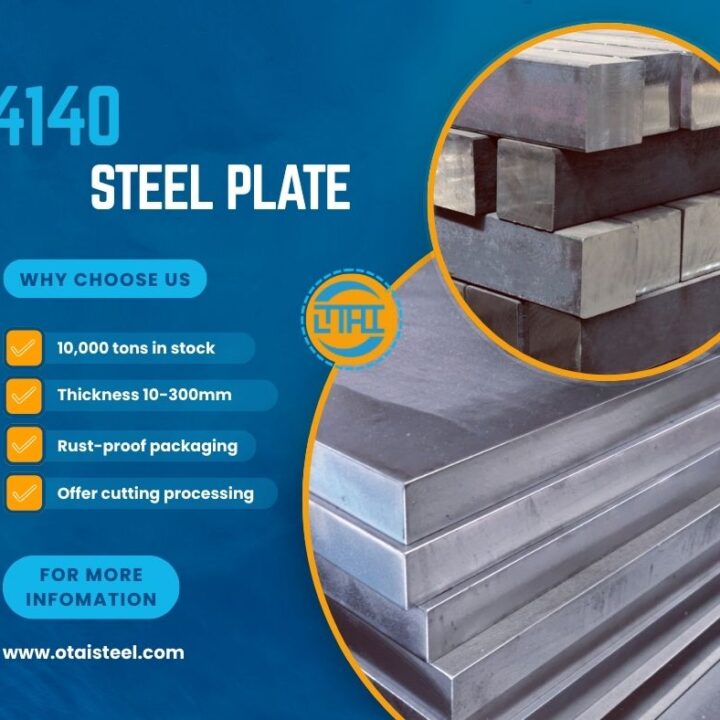
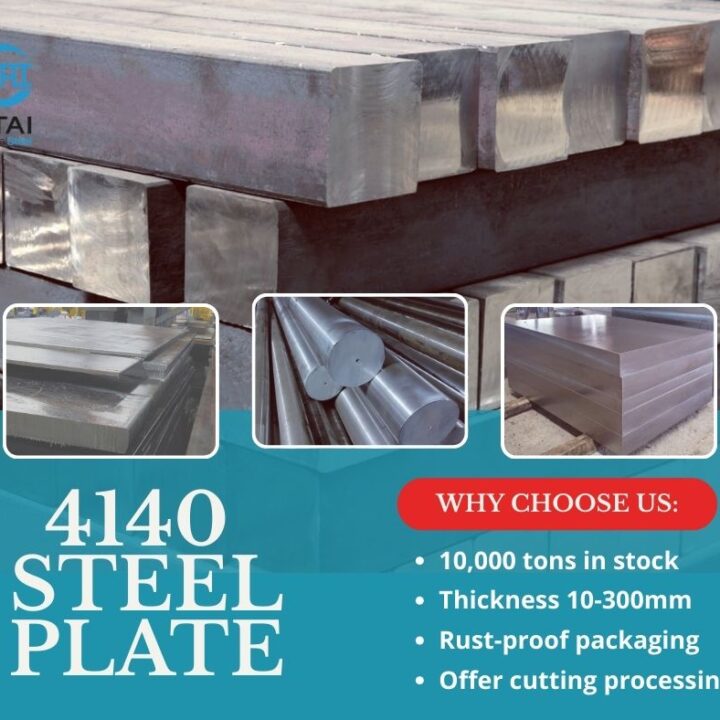
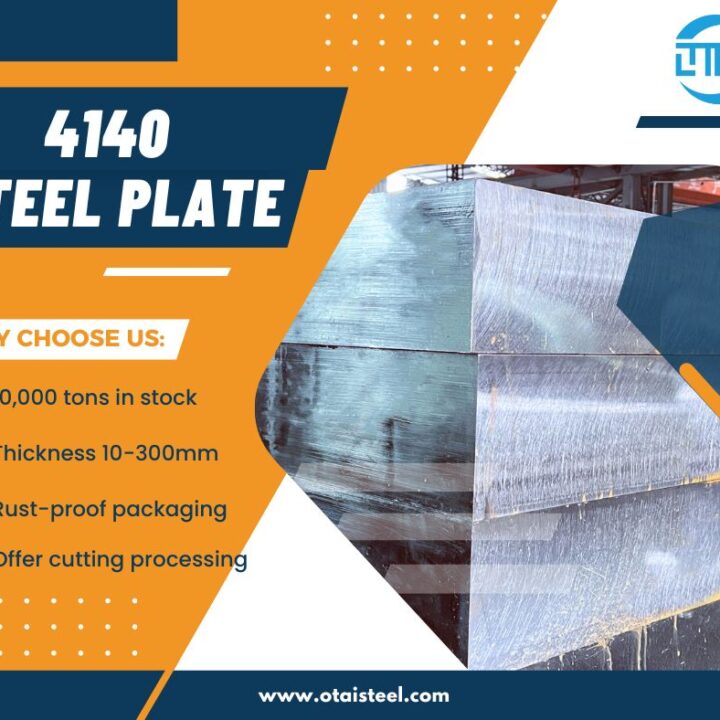
- 42CrMo4 steel plate stock: Plate thickness from 4–380 mm, supporting different industrial machining and manufacturing requirements. Actual stock sizes and quantities should be confirmed before ordering.
- 10,000+ tons of total steel inventory: Broad inventory supports regular supply and project-based purchasing across the company’s steel product range.
- 20 saw cutting machines: Cutting capacity supports customized dimensions and different order quantities.
- CNC machining and grinding: Additional processing helps customers obtain material closer to their required dimensions and tolerances.
- Customized cutting: The company can arrange cutting and machining according to agreed drawings and technical specifications.
- One-stop service: Material supply, cutting, machining, heat treatment coordination, inspection and packaging can be arranged through one supplier.
- Quality inspection support: Material testing, ultrasonic testing and third-party inspection can be coordinated according to project requirements.
- Export experience since 1999: Otai has supplied customers in more than 54 countries and understands international steel purchasing requirements.
- Protective export packaging: Anti-rust protection, strapping, bundling and wooden cases can be arranged to support overseas transportation.
- Technical communication: Buyers can discuss steel grade, standard, delivery condition, dimensions and inspection requirements before confirming an order.
❓ Frequently Asked Questions
1. What is the normalizing temperature for 42CrMo4?
A commonly referenced normalizing temperature range for 42CrMo4 is approximately 850–900°C. However, the exact temperature depends on the material specification, section dimensions and heat treatment procedure. Buyers should confirm the applicable requirements rather than treating this range as a universal instruction.
2. Does normalizing make 42CrMo4 easier to machine?
Normalizing can improve microstructural uniformity and provide a more consistent starting condition for machining. However, it does not always reduce hardness. If easier cutting is the main priority, annealed 42CrMo4 may be more suitable because it is generally softer than normalized material.
3. Is normalized 42CrMo4 stronger than annealed 42CrMo4?
Normalized 42CrMo4 may have higher strength and hardness than fully annealed material because air cooling generally produces a different microstructure. Actual properties depend on the heat treatment cycle, composition and section size. Buyers should compare test results from the same product condition.
4. What is the difference between normalizing and quenching and tempering 42CrMo4?
Normalizing uses austenitizing followed by air cooling to refine the microstructure and establish a suitable starting condition. Quenching and tempering use rapid cooling followed by tempering to develop higher strength and a balanced combination of strength and toughness. The two processes serve different manufacturing requirements.
5. Should buyers order normalized or annealed 42CrMo4 for machining?
The choice depends on the machining process and final component requirements. Annealed 42CrMo4 may be preferable when the workshop needs lower hardness and easier material removal. Normalized 42CrMo4 may suit applications where microstructural uniformity is more important. Buyers should confirm the required hardness, dimensions and subsequent heat treatment plan before ordering.