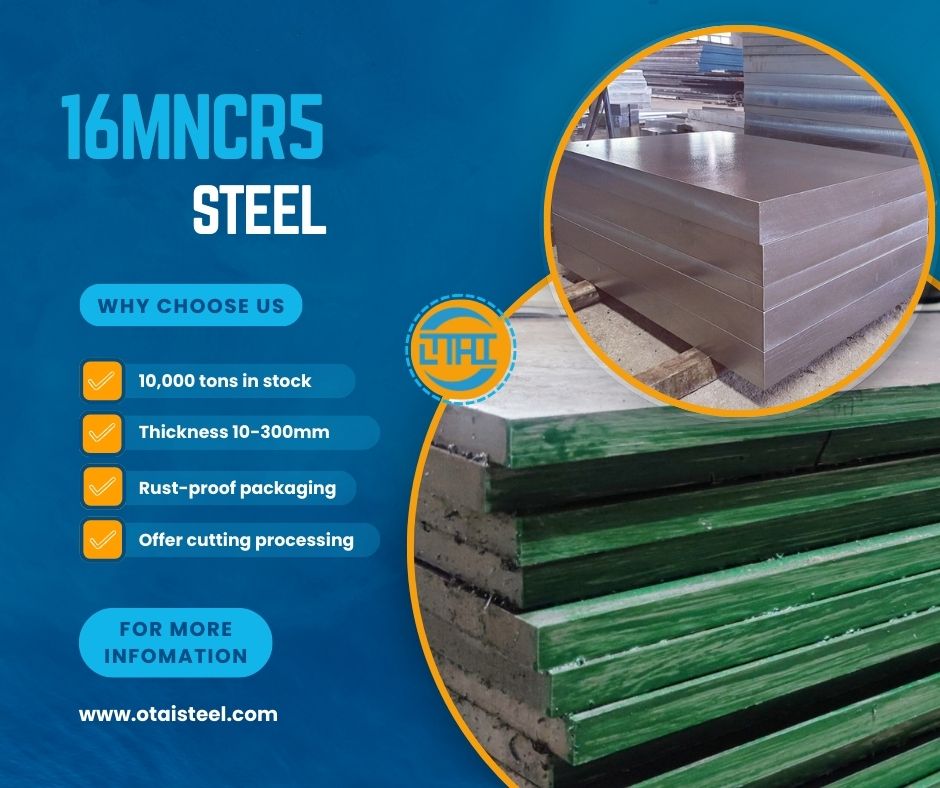
 16MnCr5 Standard: Specifications, Properties, and International Equivalents
In modern mechanical engineering, selecting the correct material standard is essential for ensuring component reliability and performance. One commonly used carburizing steel in Europe and many global industries is 16MnCr5. Engineers and procurement specialists often search for the 16mncr5 standard to understand its specifications, chemical composition, and mechanical requirements.
16MnCr5 is a low-carbon chromium alloy steel widely used for case-hardening applications. The material provides an excellent combination of a hard wear-resistant surface and a tough core after carburizing and heat treatment. These characteristics make it ideal for gears, shafts, and other high-load mechanical components.
Understanding the 16MnCr5 steel standard specification helps manufacturers maintain consistent material quality and meet international engineering requirements.
🔍 Overview of the 16MnCr5 Steel Standard
The EN standard for 16MnCr5 steel is defined primarily in the European standard EN 10084, which covers case-hardening steels used in mechanical engineering.
Under this system, 16MnCr5 is identified as a carburizing alloy steel designed for surface hardening through heat treatment processes such as carburizing, quenching, and tempering.
The 16MnCr5 material standard EN 10084 specifies requirements including:
- Chemical composition limits
- Mechanical properties
- Heat treatment recommendations
- Inspection and testing requirements
Following these standards ensures consistent performance in demanding industrial applications.
⚙️ Chemical Composition According to Standard
The 16MnCr5 chemical composition standard defines the allowable range of alloying elements to achieve the required mechanical performance.
| Element | Standard Content (%) |
|---|---|
| Carbon (C) | 0.14 – 0.19 |
| Manganese (Mn) | 1.00 – 1.30 |
| Chromium (Cr) | 0.80 – 1.10 |
| Silicon (Si) | ≤0.40 |
| Phosphorus (P) | ≤0.025 |
| Sulfur (S) | ≤0.035 |
Carbon enables effective carburizing and surface hardening, while chromium improves wear resistance and fatigue strength. Manganese enhances hardenability and mechanical strength.
These elements together define the essential characteristics of the 16MnCr5 case hardening steel standard.
📊 Mechanical Properties According to Standard
The 16MnCr5 mechanical properties standard depends on the heat treatment condition, particularly after carburizing.
Typical mechanical properties include:
| Property | Typical Value |
|---|---|
| Tensile Strength | 800 – 1000 MPa |
| Yield Strength | 500 – 700 MPa |
| Elongation | 10 – 15 % |
| Core Hardness | 200 – 300 HB |
| Surface Hardness (carburized) | 58 – 62 HRC |
These properties provide excellent wear resistance on the surface while maintaining toughness in the core.
Because of this balance, 16MnCr5 is widely used in heavily loaded mechanical systems.
🔥 Heat Treatment Requirements
The performance of 16MnCr5 strongly depends on its heat treatment process. The 16MnCr5 case hardening steel standard includes recommended temperature ranges for carburizing and quenching.
| Heat Treatment Process | Temperature Range |
|---|---|
| Carburizing | 880 – 940 °C |
| Quenching | 780 – 850 °C |
| Tempering | 150 – 200 °C |
Carburizing increases the carbon content on the surface, forming a hardened outer layer after quenching. Tempering then stabilizes the microstructure and improves toughness.
This process allows components to achieve both wear resistance and fatigue strength.
🔁 International Equivalent Materials
Engineers working across different countries often need to identify the international equivalents of 16MnCr5 steel.
| Standard | Equivalent Grade |
|---|---|
| EN | 16MnCr5 |
| DIN | 1.7131 |
| AISI / SAE | 5120 |
| JIS | SCM420 |
| GB (China) | 20CrMnTi |
These materials share similar chemical compositions and mechanical behavior, allowing them to substitute for 16MnCr5 in many engineering applications.
🏭 Typical Industrial Applications
Because of its high surface hardness and strong core toughness, 16MnCr5 steel is widely used in the manufacturing industry.
Common applications include:
- Automotive transmission gears
- Gear shafts
- Camshafts
- Worm gears
- Industrial gearbox components
- Heavy machinery transmission parts
These components operate under high contact stress and repeated loading, which requires materials with excellent fatigue resistance.
🌟 Company Advantages
At Otai Special Steel, we specialize in supplying high-quality carburizing alloy steels including 16MnCr5 for global manufacturing industries.
Our advantages include:
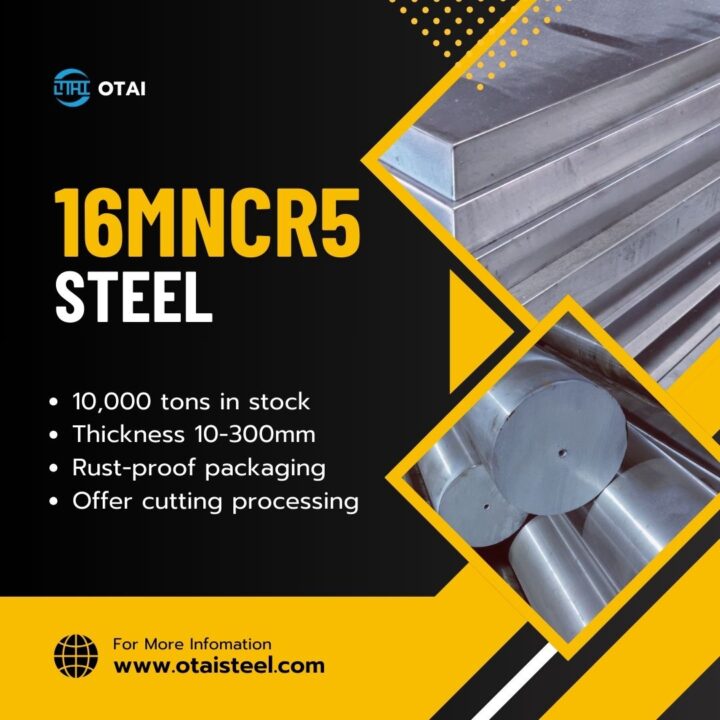
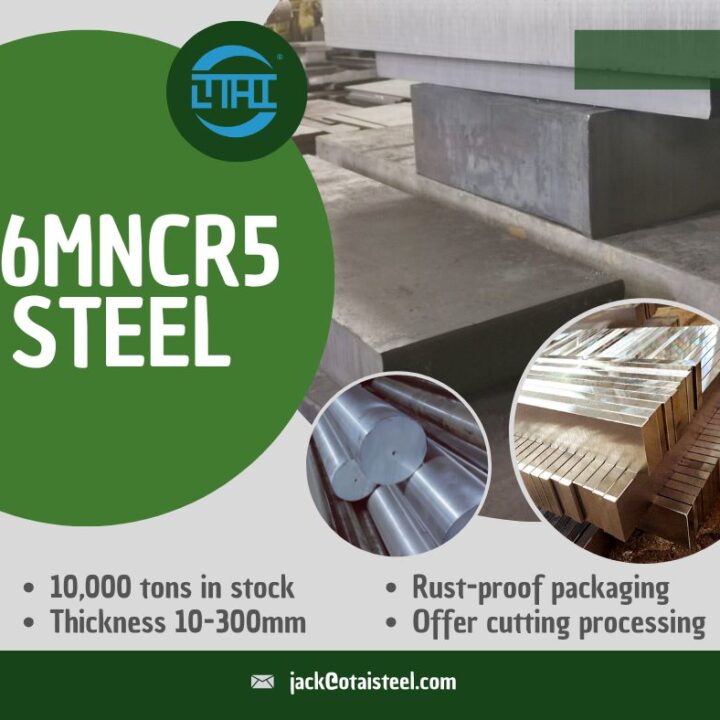
- More than 10,000 tons of alloy steel inventory available year-round
- Plate thickness range from 6 mm to 300 mm
- Professional custom cutting and processing services
- Strict ultrasonic testing (UT) quality control
- Complete chemical composition inspection
- Long-term cooperation with international companies such as Thyssenkrupp, Borealis, and Schlumberger
Our stable supply and strict quality control help customers meet demanding industrial standards.
❓ FAQ
1. What standard defines 16MnCr5 steel?
The primary specification is EN 10084, which defines case-hardening steels used in mechanical engineering.
2. Is 16MnCr5 a carburizing steel?
Yes, 16MnCr5 is specifically designed as a case-hardening steel that achieves high surface hardness through carburizing.
3. What hardness can 16MnCr5 reach after carburizing?
After carburizing and quenching, the surface hardness typically reaches 58–62 HRC.
4. What is the equivalent material of 16MnCr5?
Common equivalents include DIN 1.7131, AISI 5120, and JIS SCM420, which have similar compositions and properties.