 The 16MnCr5 normalizing temperature plays a critical role in refining grain structure, improving machinability, and preparing the material for subsequent heat treatment. Engineers often apply normalizing before carburizing or machining to ensure consistent mechanical properties and dimensional stability.
Understanding the correct 16MnCr5 normalizing temperature helps you achieve better performance and avoid defects in production.
🛠️ What is Normalizing in 16MnCr5 Steel?
Normalizing is a heat treatment process that involves heating 16MnCr5 steel above its critical temperature and then cooling it in air. This process refines the grain structure and produces a uniform microstructure.
Compared with annealing, normalizing creates a slightly harder and stronger structure while maintaining good toughness.
⚙️ Recommended 16MnCr5 Normalizing Temperature
You should carefully control the 16MnCr5 normalizing temperature to achieve optimal results.
| Parameter | Recommended Range |
|---|---|
| Normalizing Temperature | 850 – 880°C |
| Holding Time | 1 hour per 25 mm thickness |
| Cooling Method | Air cooling |
Heating within this 16MnCr5 normalizing temperature range ensures complete austenitization and uniform grain refinement.
🔬 Microstructure After Normalizing
The correct 16MnCr5 normalizing temperature produces a refined microstructure that improves performance.
| Condition | Microstructure | Effect |
|---|---|---|
| Before Normalizing | Coarse grains | Lower strength and uneven structure |
| After Normalizing | Fine pearlite + ferrite | Improved strength and uniformity |
A finer grain structure enhances mechanical properties and prepares the steel for carburizing.
🔧 Mechanical Properties After Normalizing
Applying the correct 16MnCr5 normalizing temperature improves the balance between strength and machinability.
| Property | Typical Value |
|---|---|
| Tensile Strength | 600 – 800 MPa |
| Hardness | 170 – 230 HB |
| Toughness | Good |
| Machinability | Improved |
Normalized 16MnCr5 steel becomes easier to machine while maintaining adequate strength.
🧰 Why Normalizing is Important for 16MnCr5
The 16MnCr5 normalizing temperature ensures consistent quality before further processing.
- Grain Refinement: Produces a uniform and fine microstructure
- Stress Relief: Reduces internal stresses from forging or rolling
- Improved Machinability: Makes cutting operations more stable
- Better Heat Treatment Response: Prepares material for carburizing
- Dimensional Stability: Reduces distortion in later processes
You should apply normalizing when working with forged or hot-rolled 16MnCr5 steel.
💡 Common Mistakes and How to Avoid Them
Incorrect control of the 16MnCr5 normalizing temperature can lead to defects:
| Issue | Cause | Solution |
|---|---|---|
| Grain Coarsening | Excessive temperature | Reduce heating temperature |
| Incomplete Normalizing | Low temperature | Increase temperature within range |
| Distortion | Uneven cooling | Ensure uniform air cooling |
| Low Strength | Improper holding time | Maintain adequate soaking time |
Precise temperature control ensures consistent results.
🌍 Applications After Normalizing
After applying the correct 16MnCr5 normalizing temperature, the steel is ready for:
- Gear manufacturing
- Shaft production
- Carburized components
- Automotive transmission parts
These applications benefit from improved uniformity and machinability.
🏆 Company Advantages
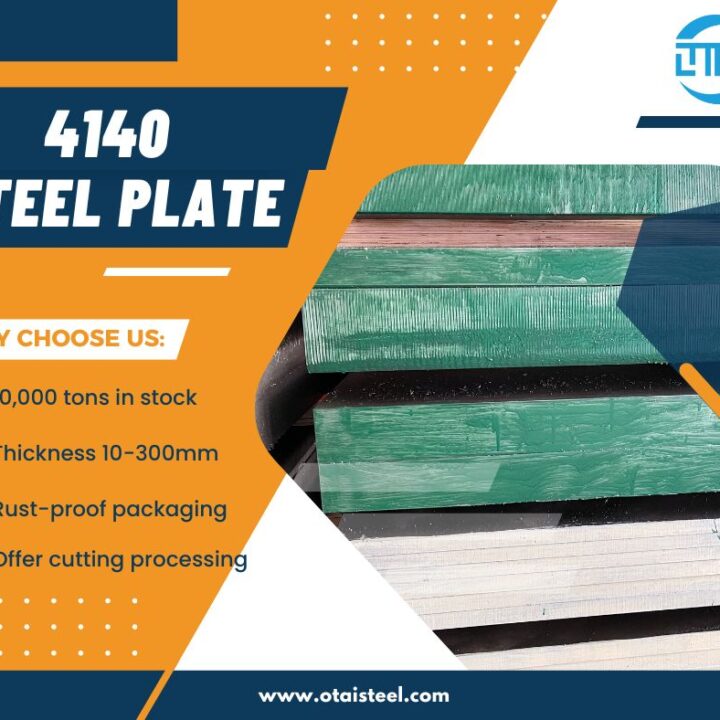
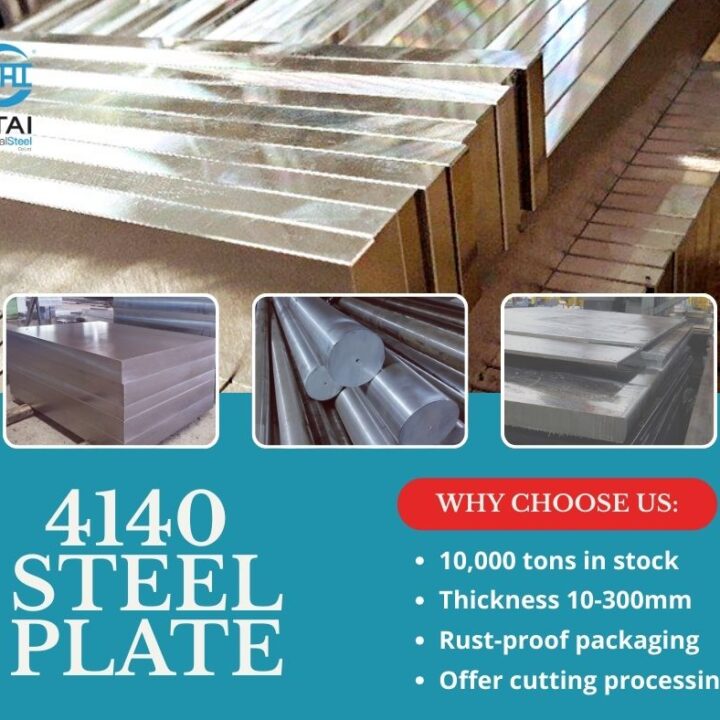
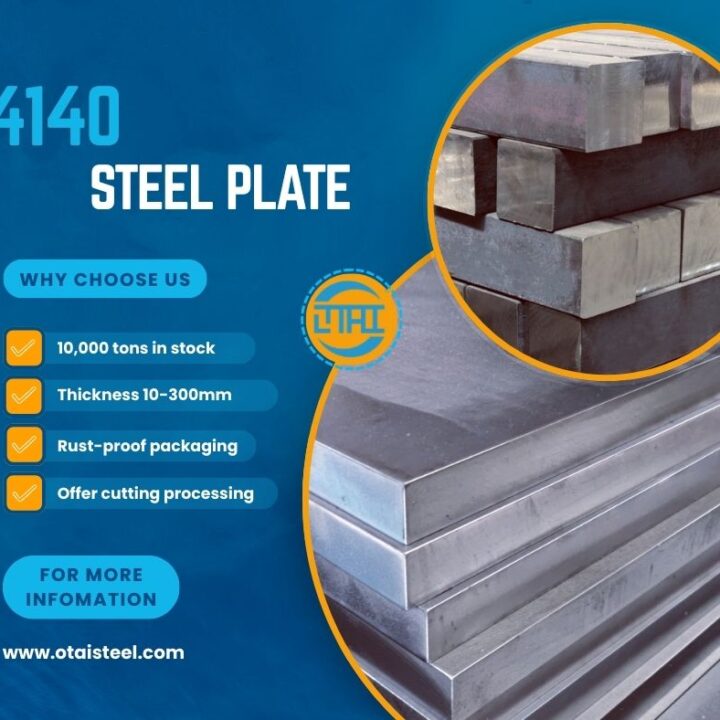
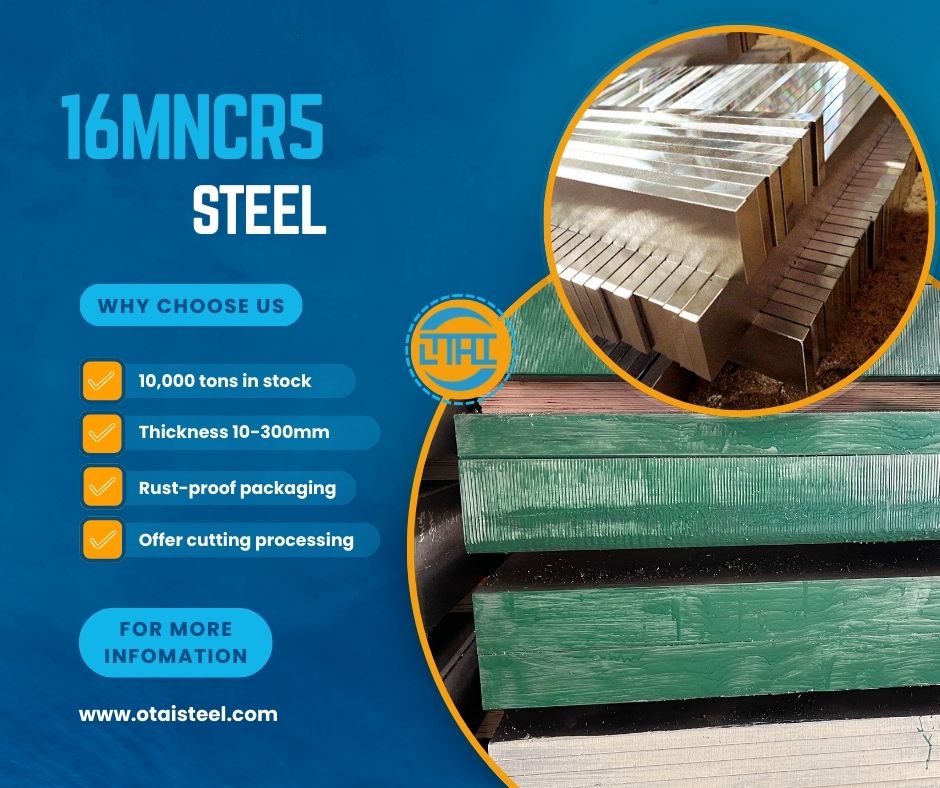
At Otai Special Steel, we supply high-quality 16MnCr5 steel with precise heat treatment control, including normalizing processes. Our advantages include:
- Large Inventory: Over 10,000 tons of alloy steel ready for fast delivery.
- Custom Heat Treatment Services: Normalizing, carburizing, and quenching tailored to your needs.
- Strict Quality Control: UT testing and chemical analysis for every batch.
- Global Export Experience: Reliable supply to international markets.
- Competitive Pricing: Cost-effective solutions with stable performance.
🤔 FAQ
Q1: What is the normalizing temperature for 16MnCr5 steel?
A1: The recommended 16MnCr5 normalizing temperature is 850–880°C.
Q2: Why is normalizing important before carburizing?
A2: It refines grain structure and ensures uniform response during carburizing.
Q3: Can normalizing improve machinability?
A3: Yes, normalized 16MnCr5 steel offers better machinability and more stable cutting performance.