16MnCr5 Material Equivalent: Global Grades and Practical Selection Insights
🔍 Introduction
When sourcing case-hardening steel for gears, shafts, or automotive components, understanding 16MnCr5 material equivalent becomes essential. Buyers often face challenges when switching between European, American, or Asian standards, especially when material availability, certification, or pricing varies across regions.
This article breaks down the international equivalents of 16MnCr5 steel, compares chemical compositions and properties, and provides practical guidance to help engineers, purchasers, and trading companies confidently select substitute materials without compromising performance.
⚙️ What Is 16MnCr5 Steel?
16MnCr5 is a low-carbon alloy steel widely used for carburizing applications. It belongs to the EN 10084 standard and offers excellent wear resistance after case hardening while maintaining a tough core.
Typical applications include:
- Automotive gears
- Transmission shafts
- Camshafts
- Heavy-duty mechanical components
It is especially valued when surface hardness and core toughness must be balanced.
🌍 16MnCr5 Material Equivalent Grades Across Standards
Understanding the 16mncr5 material equivalent grade across global standards helps ensure compatibility in procurement and design.
Equivalent Grades Table
| Standard | Grade | Country/Region |
|---|---|---|
| EN (DIN) | 16MnCr5 (1.7131) | Europe |
| ASTM/AISI | 5115 | USA |
| SAE | 5115 | USA |
| JIS | SCM415 | Japan |
| GB | 16CrMnH | China |
| ISO | 16MnCr5 | International |
These grades are widely recognized as 16mncr5 equivalent in ASTM standard and other systems, although slight differences in composition may exist.
🧪 Chemical Composition Comparison
To better understand 16mncr5 equivalent chemical composition comparison, let’s examine the key elements:
| Grade | C (%) | Mn (%) | Cr (%) | Notes |
|---|---|---|---|---|
| 16MnCr5 | 0.14–0.19 | 1.0–1.3 | 0.8–1.1 | Standard EN grade |
| AISI 5115 | 0.13–0.18 | 0.7–0.9 | 0.7–0.9 | Slightly lower Mn |
| SCM415 | 0.13–0.18 | 0.6–0.85 | 0.9–1.2 | Higher Cr range |
| 16CrMnH | 0.13–0.19 | 1.0–1.3 | 0.8–1.1 | Very close match |
From this table, you can see that 16mncr5 equivalent steel properties remain consistent across most alternatives, especially after carburizing treatment.
📊 Mechanical Properties and Performance
After carburizing and quenching, 16MnCr5 exhibits:
- Surface hardness: 58–62 HRC
- Core tensile strength: 800–1100 MPa
- Excellent fatigue resistance
- High wear resistance
These properties make it interchangeable with many 16mncr5 steel equivalent in USA grades in gear manufacturing and automotive systems.
⚖️ 16MnCr5 vs 20MnCr5: Key Differences
Many buyers compare 16mncr5 vs 20mncr5 difference when selecting materials.
| Property | 16MnCr5 | 20MnCr5 |
|---|---|---|
| Carbon Content | Lower | Higher |
| Core Strength | Moderate | Higher |
| Toughness | Better | Slightly lower |
| Application | Medium load parts | Heavy-duty gears |
Practical insight:
Choose 16MnCr5 when toughness and machinability matter. Opt for 20MnCr5 when higher strength is required.
🧭 How to Choose the Right Equivalent Material
Selecting the correct what is the equivalent of 16mncr5 steel depends on several factors:
1. Application Requirements
- For gears → AISI 5115 or SCM415
- For automotive shafts → 16CrMnH
2. Heat Treatment Compatibility
Ensure the substitute supports:
- Carburizing depth requirements
- Similar hardenability
3. Supply Availability
In some regions, 16mncr5 equivalent material in DIN standard may be harder to source, making ASTM or GB grades more practical.
4. Certification Requirements
Always verify:
- Mill test certificates (MTC)
- Chemical composition reports
- Third-party inspection
🏭 Practical Applications and Industry Use Cases
Automotive Industry
Used for:
- Transmission gears
- Differential components
Equivalent grades like AISI 5115 are widely adopted globally.
Heavy Machinery
- Gearboxes
- Industrial drive systems
Oil & Gas Equipment
- Wear-resistant precision components
Using a 16mncr5 cross reference material chart ensures smooth substitution during global sourcing.
⚠️ Common Mistakes When Using Equivalent Materials
- Ignoring composition differences
Small variations in Mn or Cr can affect hardenability. - Skipping heat treatment verification
Even equivalent grades require process validation. - Assuming full interchangeability
Not all equivalents perform identically under extreme loads. - Overlooking supplier quality control
Material reliability depends heavily on testing and processing.
🏆 Company Advantages
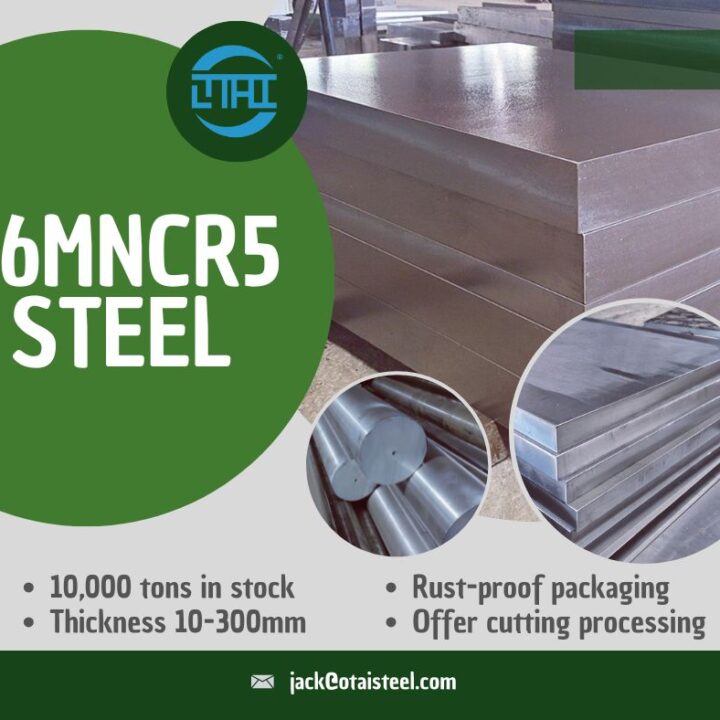
At Otai Special Steel, we provide reliable solutions for global buyers looking for 16MnCr5 and its equivalents:
- Large inventory of over 10,000 tons available year-round
- Full size range from 6mm to 300mm thickness
- Precision cutting and customized heat treatment services
- Strict quality control including ultrasonic testing (UT) and chemical analysis
- Support for third-party inspections such as SGS
- Extensive export experience serving leading international companies
We help customers quickly match the correct equivalent material while ensuring stable quality and cost efficiency.
❓ FAQ
1. What is the closest equivalent to 16MnCr5 in the USA?
AISI 5115 is the most commonly used equivalent and offers similar carburizing performance.
2. Can 16MnCr5 be directly replaced by SCM415?
Yes, in most applications, SCM415 is a suitable substitute, but heat treatment parameters should be verified.
3. Is 16MnCr5 suitable for high-load gears?
It works well for medium-load gears. For higher loads, consider 20MnCr5.
4. Does equivalent material always guarantee the same performance?
No. Performance depends on heat treatment, processing, and quality control, not just composition.
5. How do I ensure the quality of equivalent steel?
Always request MTC reports, perform chemical testing, and consider third-party inspection for critical applications.