When selecting materials for mechanical components, understanding the 16MnCr5 density is crucial for ensuring optimal performance. The density of a material affects its strength, weight, and how it responds to mechanical forces during use. This article will explore the density of 16MnCr5 steel, its significance, and how it impacts the material’s overall performance in various applications.
16MnCr5 is a low-carbon chromium-molybdenum alloy steel that is commonly used for case-hardening processes. It is favored for its excellent combination of surface hardness and toughness after heat treatment, making it suitable for high-load mechanical components such as gears and shafts.
🔍 What Is the Density of 16MnCr5 Steel?
The density of 16MnCr5 alloy steel is approximately 7.85 g/cm³ (7850 kg/m³). This value is similar to most other alloy steels and indicates the material’s mass per unit volume. The relatively high density of 16MnCr5 is due to the presence of alloying elements such as chromium, manganese, and carbon, which contribute to its mechanical strength.
The 16MnCr5 steel density in g/cm³ plays a vital role in determining the material’s behavior in applications where weight is a consideration. Its density ensures that it has the required strength-to-weight ratio for heavy-duty industrial components.
⚙️ Importance of Density in Steel
Density is a fundamental property that affects several mechanical characteristics of steel. Here’s how it influences performance:
- Strength-to-Weight Ratio: The higher the density, the more material mass there is to withstand stress. A higher density like that of 16MnCr5 helps increase its strength.
- Durability and Wear Resistance: Steel with higher density often exhibits better wear resistance, which is important for components exposed to high friction.
- Machinability: A material’s density also affects its machinability. Higher density steels tend to be tougher and require more effort to machine.
For 16MnCr5 case hardening steel, its density is essential when determining its suitability for high-load bearing components like gears or shafts, where the balance of weight and durability is critical.
📊 Density and Mechanical Properties of 16MnCr5
The 16MnCr5 density and mechanical properties are interlinked. The density contributes to the material’s ability to withstand external loads and stresses. Typical mechanical properties of 16MnCr5 steel after carburizing and heat treatment include:
| Property | Value |
|---|---|
| Density | 7.85 g/cm³ |
| Tensile Strength | 800 – 1000 MPa |
| Yield Strength | 500 – 700 MPa |
| Hardness (after carburizing) | 58 – 62 HRC |
| Elongation | 10 – 15 % |
These mechanical properties reflect the material’s ability to handle stress while maintaining toughness. The density of 16MnCr5 is a key factor in determining the balance of strength and weight.
🔥 Density and Heat Treatment
Heat treatment processes such as carburizing and tempering can alter the properties of 16MnCr5. However, the density of 16MnCr5 steel remains relatively unchanged after heat treatment because it is primarily a function of the material’s chemical composition.
- Carburizing increases the surface hardness of 16MnCr5 while maintaining a tough core, benefiting from the inherent density for strength.
- Tempering further refines the material, enhancing its toughness without altering its density significantly.
This makes 16MnCr5 ideal for high-wear applications where high strength and toughness are needed without significantly increasing weight.
🏭 Applications of 16MnCr5 Steel
The density of 16MnCr5 plays a role in determining its suitability for various industrial applications:
Common Applications:
- Automotive gears
- Transmission shafts
- Heavy machinery parts
- Worm gears and camshafts
- Industrial gearbox components
The combination of high density and the ability to undergo carburizing makes 16MnCr5 ideal for components that require both strength and toughness in high-stress environments.
🌟 Company Advantages
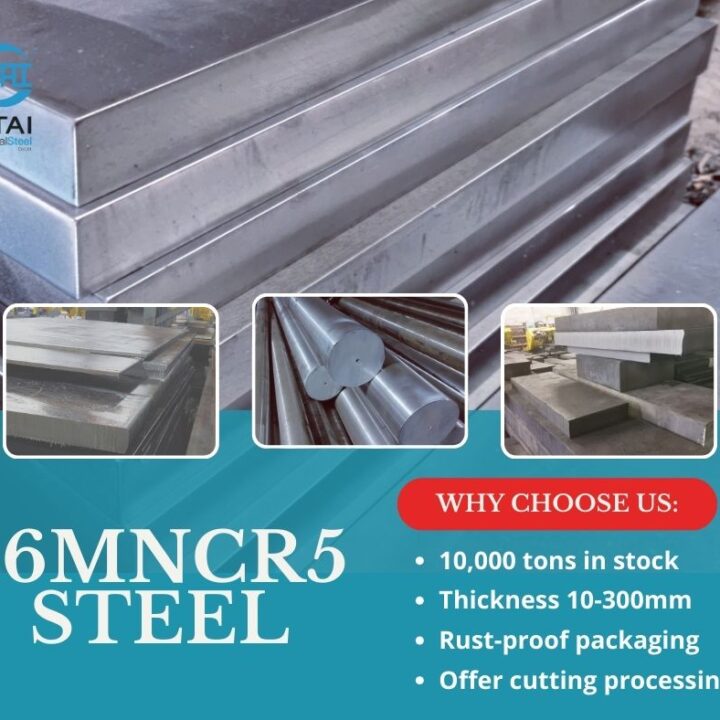
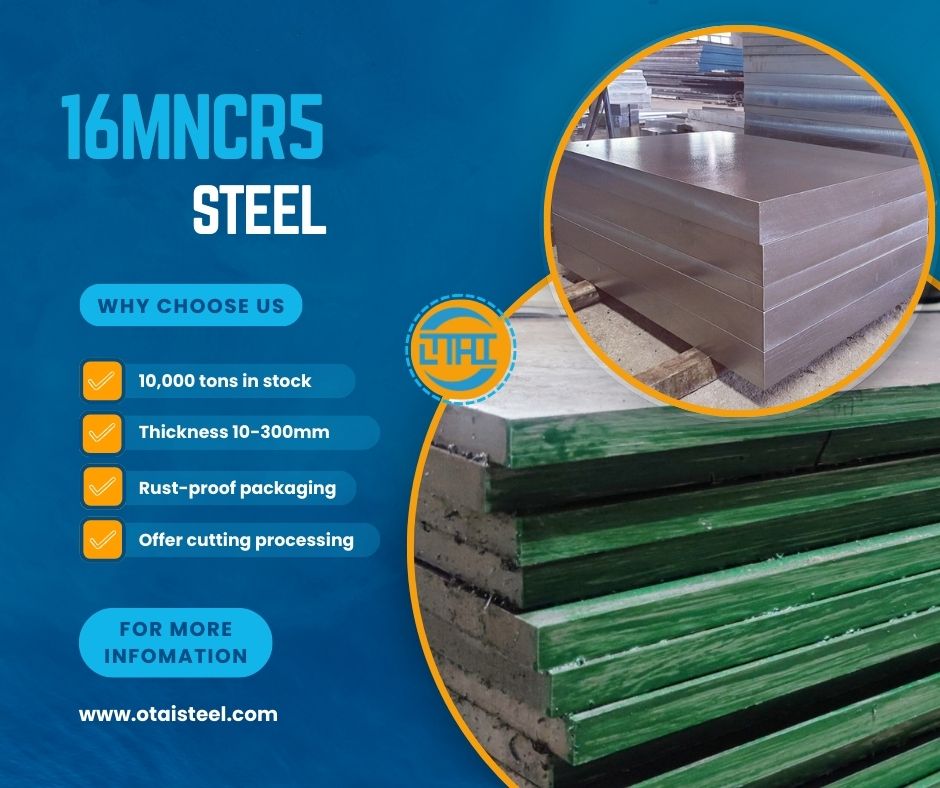
At Otai Special Steel, we supply high-quality 16MnCr5 alloy steel that meets stringent industry specifications.
Our advantages include:
- Over 10,000 tons of steel inventory available year-round
- Plate thickness range from 6 mm to 300 mm
- Professional heat treatment and processing services
- Strict ultrasonic testing (UT) quality control
- Complete chemical composition verification
- Long-term cooperation with international companies like Thyssenkrupp, Borealis, and Schlumberger
We ensure stable supply and reliable performance for customers requiring precise material properties.
❓ FAQ
1. What is the density of 16MnCr5 steel?
Approximately 7.85 g/cm³.
2. How does the density of 16MnCr5 affect its performance?
Higher density contributes to increased strength, durability, and wear resistance, making it ideal for high-load mechanical components.
3. Does the density of 16MnCr5 change after heat treatment?
No, the density of 16MnCr5 remains relatively constant after heat treatment, as it is primarily determined by the chemical composition of the steel.
4. In what applications is the density of 16MnCr5 critical?
The density of 16MnCr5 is important in applications requiring a high strength-to-weight ratio, such as automotive gears, transmission shafts, and industrial machinery components.