Understanding the 16MnCr5 composition is essential for engineers and buyers working with carburizing steels. The chemical balance of this alloy determines its hardenability, surface hardness after carburizing, and core toughness.
🛠️ What is 16MnCr5 Steel?
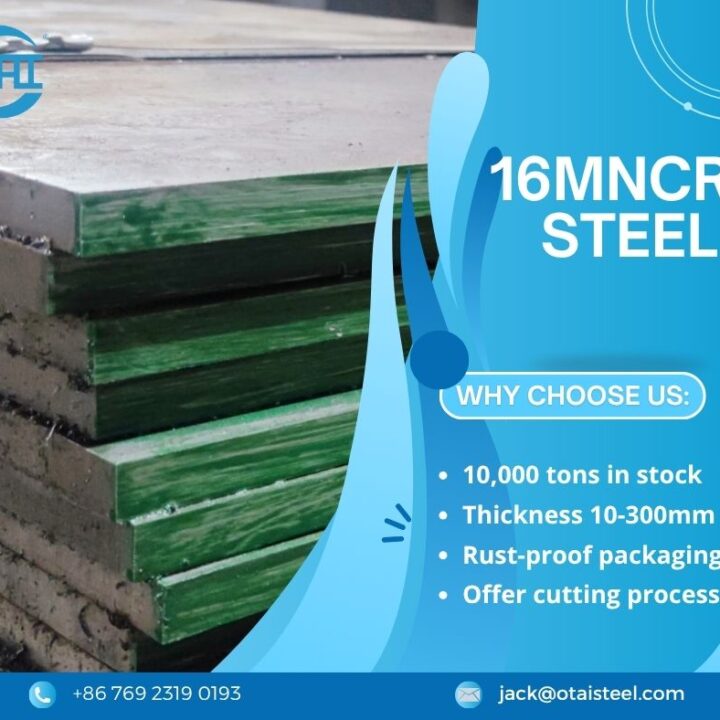
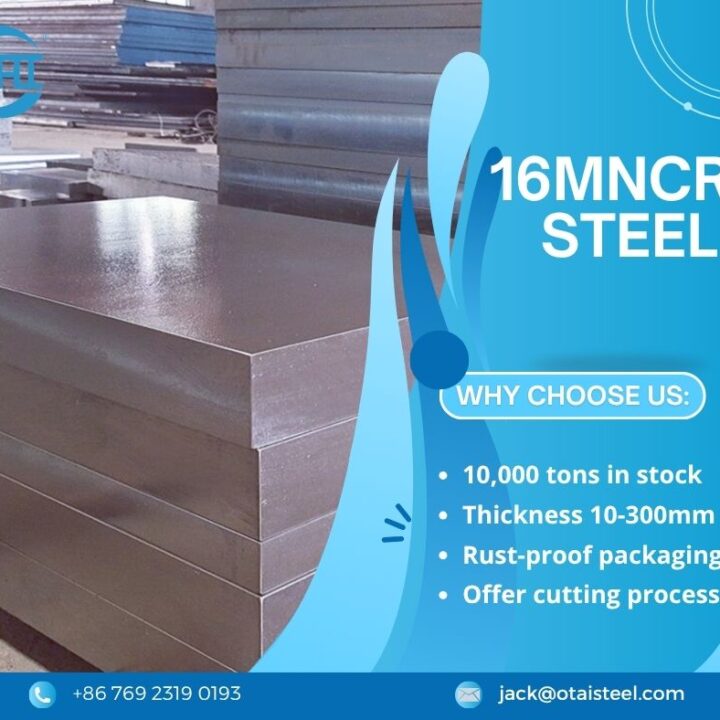
16MnCr5 steel (EN 1.7131) is a low-carbon alloy steel designed for case hardening. It develops a hard, wear-resistant surface after carburizing while maintaining a tough and ductile core.
Manufacturers widely use 16MnCr5 steel in gears, shafts, and automotive transmission components.
⚙️ 16MnCr5 Composition (Chemical Composition Table)
The 16MnCr5 composition follows the EN 10084 standard. The typical chemical ranges are shown below:
| Element | Content (%) |
|---|---|
| Carbon (C) | 0.14 – 0.19 |
| Silicon (Si) | 0.15 – 0.40 |
| Manganese (Mn) | 1.00 – 1.30 |
| Chromium (Cr) | 0.80 – 1.10 |
| Phosphorus (P) | ≤ 0.025 |
| Sulfur (S) | ≤ 0.035 |
This balanced 16MnCr5 composition ensures excellent carburizing performance and stable mechanical properties.
🔬 Role of Each Element in 16MnCr5 Composition
Each element in the 16MnCr5 composition contributes to specific material characteristics:
- Carbon (C): Provides hardness after carburizing while maintaining a tough core due to its low content.
- Manganese (Mn): Improves hardenability and increases tensile strength.
- Chromium (Cr): Enhances wear resistance and supports deeper case hardening.
- Silicon (Si): Strengthens the steel and improves structural stability.
- Phosphorus (P): Controlled at low levels to avoid brittleness.
- Sulfur (S): Improves machinability but must remain limited to maintain toughness.
This optimized 16MnCr5 composition makes the steel ideal for high-performance components.
🔧 Mechanical Properties Influenced by Composition
The 16MnCr5 composition directly affects mechanical properties after heat treatment:
| Property | Typical Value |
|---|---|
| Surface Hardness | 58 – 62 HRC (carburized) |
| Core Hardness | 30 – 45 HRC |
| Tensile Strength | 800 – 1100 MPa |
| Toughness | High |
| Fatigue Strength | Excellent |
These properties make 16MnCr5 steel suitable for dynamic and high-load applications.
🧰 Heat Treatment and Composition Interaction
The effectiveness of the 16MnCr5 composition becomes clear during heat treatment:
| Process | Temperature Range | Effect |
|---|---|---|
| Carburizing | 880 – 930°C | Adds carbon to surface layer |
| Quenching | Oil cooling | Hardens surface |
| Tempering | 150 – 200°C | Reduces brittleness |
The alloying elements in the 16MnCr5 composition ensure uniform hardening and improved fatigue resistance.
🔩 Applications Based on Composition
The 16MnCr5 composition supports a wide range of industrial applications:
- Automotive gears and transmission parts
- Shafts and pinions
- Bearings and bushings
- Heavy machinery components
These applications require a combination of surface hardness and core toughness.
💡 Advantages of 16MnCr5 Composition
Using the optimized 16MnCr5 composition offers several benefits:
- Excellent carburizing capability
- High wear resistance
- Strong fatigue performance
- Good machinability before heat treatment
- Reliable performance in dynamic loads
This makes 16MnCr5 steel one of the most widely used case-hardening steels.
🏆 Company Advantages
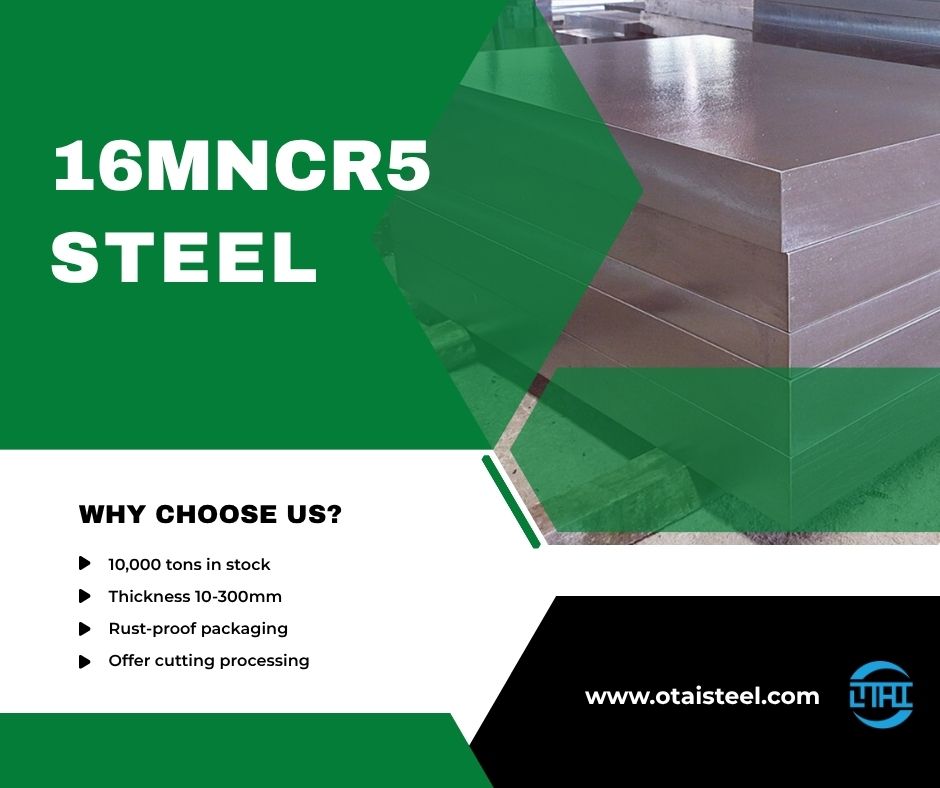
At Otai Special Steel, we supply high-quality 16MnCr5 steel with strictly controlled composition and consistent performance. Our advantages include:
- Large Inventory: Over 10,000 tons available for fast delivery.
- Custom Processing Services: Cutting, carburizing, and heat treatment support.
- Strict Quality Control: UT testing and chemical composition verification.
- Global Export Experience: Reliable supply to international customers.
- Competitive Pricing: Cost-effective solutions with stable quality.
🤔 FAQ
Q1: What is the carbon content in 16MnCr5 steel?
A1: The 16MnCr5 composition includes 0.14% to 0.19% carbon, which supports carburizing performance.
Q2: Why is chromium added to 16MnCr5?
A2: Chromium improves wear resistance and enhances hardenability during heat treatment.
Q3: Is 16MnCr5 suitable for carburizing?
A3: Yes, the 16MnCr5 composition is specifically designed for carburizing applications, providing a hard surface and tough core.