 16MnCr5 Chemical & Mechanical Properties: What Really Matters in Case-Hardening Applications
When engineers choose 16MnCr5 steel, they usually focus on one thing: reliable case hardening with predictable mechanical performance. However, many buyers only see basic data sheets and miss how the chemical and mechanical properties actually work together in real components.
This article explains the chemical & mechanical properties of 16MnCr5 steel in a practical way, helping you understand why this grade performs so well in gears, shafts, and wear-critical parts.
🔍 What Is 16MnCr5 Steel Used For?
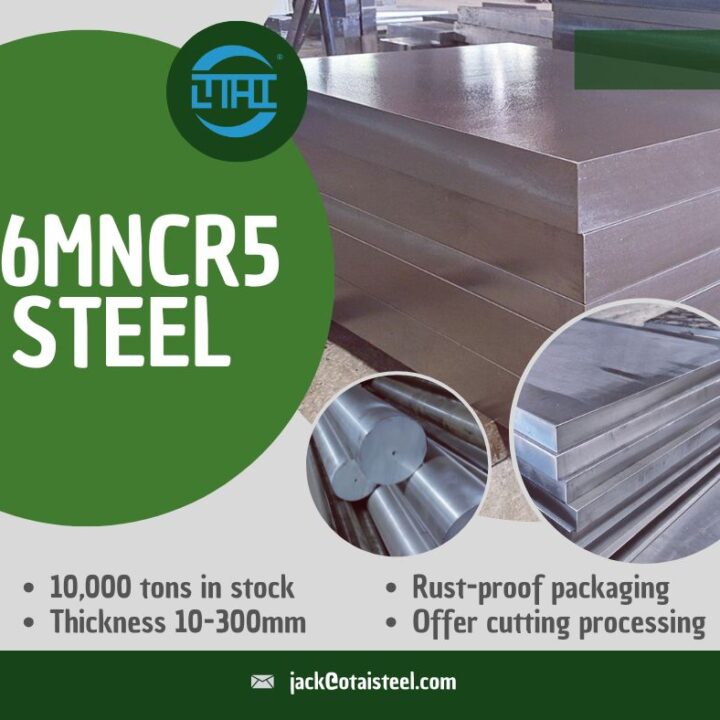
16MnCr5 is a low-carbon alloy steel defined under EN 10084. Manufacturers primarily use it for case-hardened components, where the surface must resist wear while the core absorbs shock.
Typical applications include:
-
Automotive gears and pinions
-
Transmission and drive shafts
-
Bushings and sleeves
-
Industrial gearbox components
-
Agricultural machinery parts
Its popularity comes from a balanced alloy design, not from extreme hardness or strength alone.
🧪 Chemical Properties of 16MnCr5 Steel
The chemical composition of 16MnCr5 directly controls carburizing depth, surface hardness, and core toughness. Each element plays a clear role in final performance.
📊 Typical Chemical Composition (%)
| Element | Content Range | Practical Effect |
|---|---|---|
| Carbon (C) | 0.14 – 0.19 | Enables deep carburizing without brittle core |
| Manganese (Mn) | 1.00 – 1.30 | Improves hardenability and strength |
| Chromium (Cr) | 0.80 – 1.10 | Increases wear resistance and case stability |
| Silicon (Si) | ≤ 0.40 | Supports strength without reducing toughness |
| Phosphorus (P) | ≤ 0.025 | Controls brittleness |
| Sulfur (S) | ≤ 0.035 | Improves machinability |
This chemistry allows strong surface hardening while maintaining a ductile core, which explains why engineers trust this grade for rotating and impact-loaded parts.
⚙️ Why the Chemical Balance Matters
Unlike medium-carbon steels, 16MnCr5 keeps carbon low in the base material. During carburizing, carbon enriches only the surface layer. As a result:
-
The surface reaches very high hardness
-
The core stays tough and crack-resistant
-
Components handle fatigue and shock loads better
This balance makes 16MnCr5 far more forgiving in real-world service.
🔩 Mechanical Properties of 16MnCr5 Steel
The mechanical properties of 16MnCr5 steel depend strongly on heat treatment. Designers can tailor performance through carburizing, quenching, and tempering.
📊 Typical Mechanical Properties (Core)
| Condition | Tensile Strength | Yield Strength | Elongation |
|---|---|---|---|
| Annealed | 600 – 750 MPa | ~350 MPa | ≥ 14% |
| Normalized | 800 – 950 MPa | ~500 MPa | ≥ 12% |
| Case Hardened (Core) | 850 – 1000 MPa | ~550 MPa | ≥ 10% |
These values give the core enough strength while keeping excellent toughness.
🔥 Surface Hardness After Case Hardening
After proper carburizing and quenching:
-
Surface hardness: 58 – 62 HRC
-
Effective case depth: 0.6 – 1.2 mm (typical)
-
Core hardness: 28 – 35 HRC
This hardness profile allows gears and shafts to resist wear, pitting, and fatigue cracking over long service cycles.
🏗️ How These Properties Benefit Real Applications
The combination of chemical & mechanical properties gives 16MnCr5 several practical advantages:
-
⚙️ Gears maintain accurate tooth profiles under load
-
🔩 Shafts resist torsional fatigue
-
🛠️ Bushings show long wear life
-
🚜 Machinery parts tolerate shock and vibration
🔧 Machinability and Processing
In the annealed condition, 16MnCr5 machines smoothly with standard tooling. Manufacturers often complete rough machining before carburizing, which helps control cost and accuracy.
Key processing advantages:
-
Stable dimensions during heat treatment
-
Predictable distortion behavior
-
Good compatibility with mass production
These traits explain its popularity in automotive and gearbox manufacturing.
🏅 Company Advantages – Why Otai Special Steel?
At Otai Special Steel, we don’t just supply material — we help customers use it correctly.
-
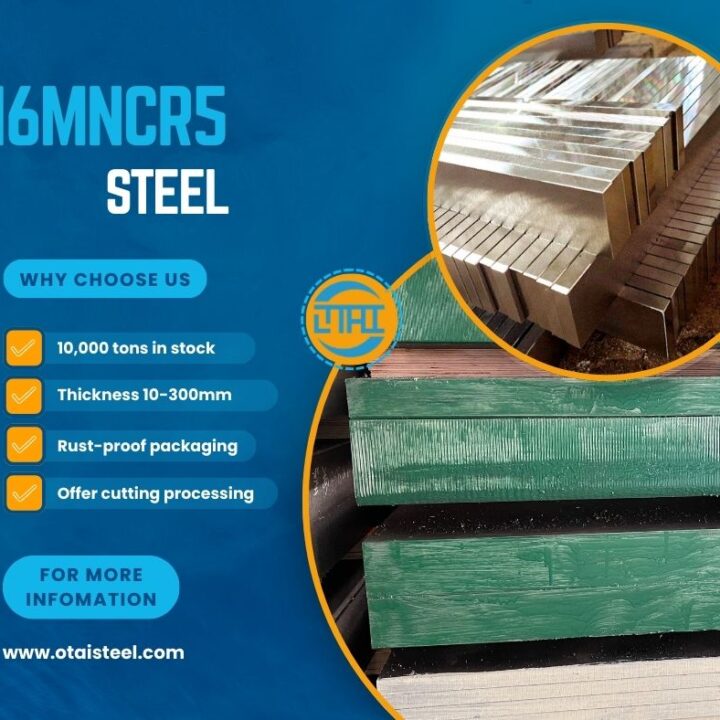
🔹 Large stock of 16MnCr5 steel
-
🔹 Chemical analysis and UT inspection
-
🔹 Heat-treatment coordination for case hardening
-
🔹 Custom cutting and machining support
-
🔹 Experience supplying global OEMs and tier-one suppliers
We focus on performance consistency, not just specification compliance.
❓ FAQ – 16MnCr5 Chemical & Mechanical Properties
Q1: Why does 16MnCr5 use low carbon content?
Low carbon allows deep carburizing while keeping the core tough and crack-resistant.
Q2: Can 16MnCr5 replace medium-carbon steels?
In case-hardening applications, yes. It often performs better in fatigue and wear.
Q3: What controls surface hardness most?
Carburizing time, carbon potential, and quenching control surface hardness.
Q4: Is 16MnCr5 suitable for heavy shock loads?
Yes. Its tough core absorbs impact far better than fully hardened steels.
Q5: Does Otai provide heat-treatment guidance?
Yes. We support customers from material selection to final performance.