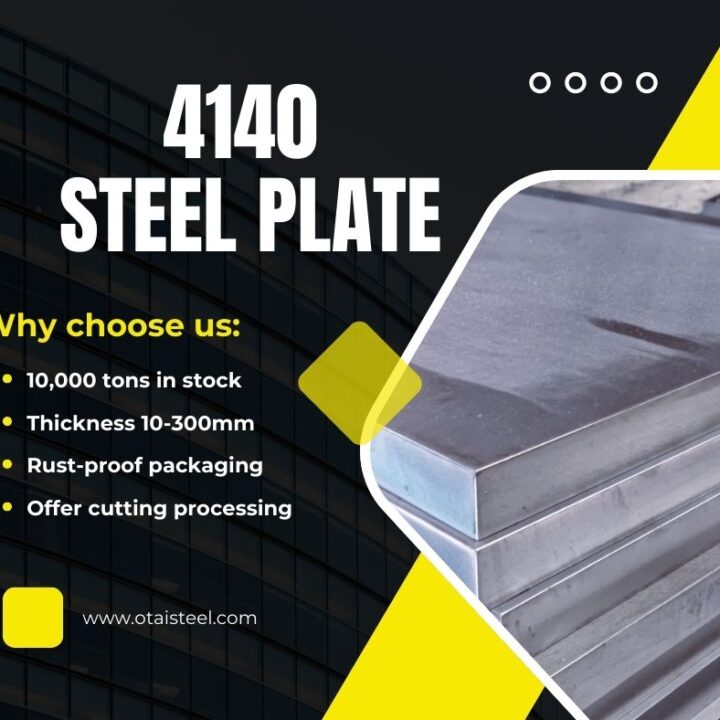
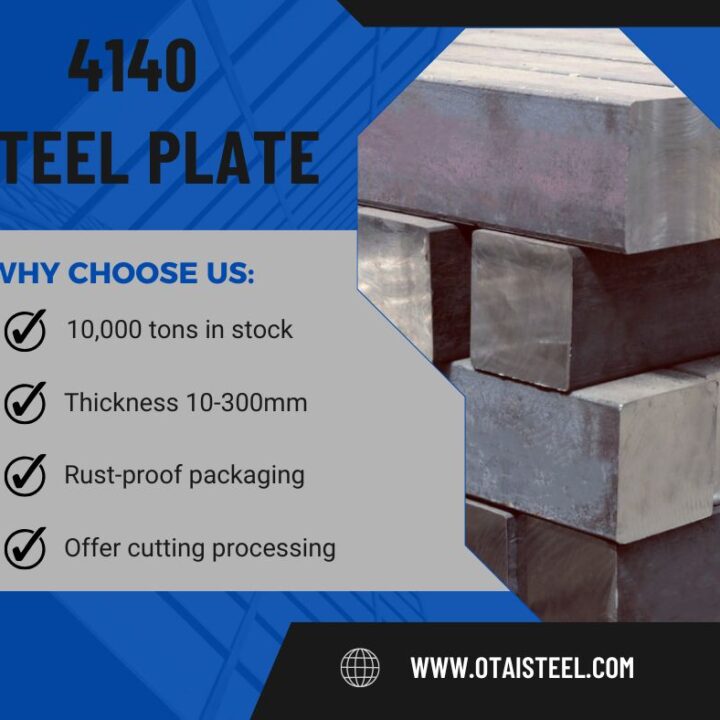
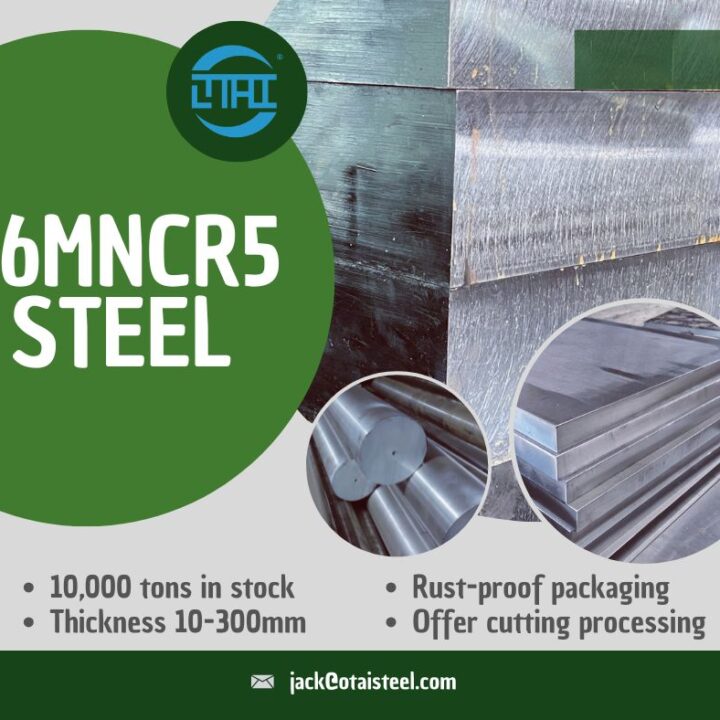
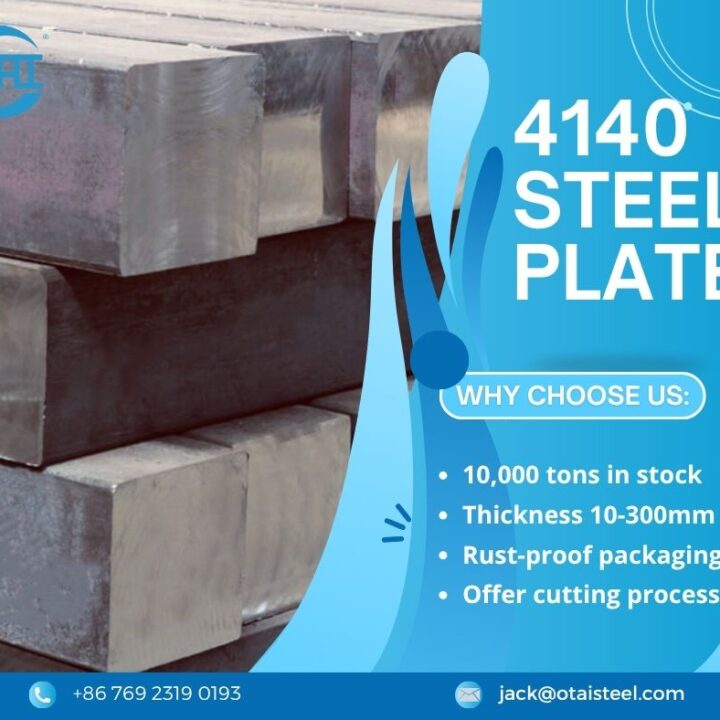
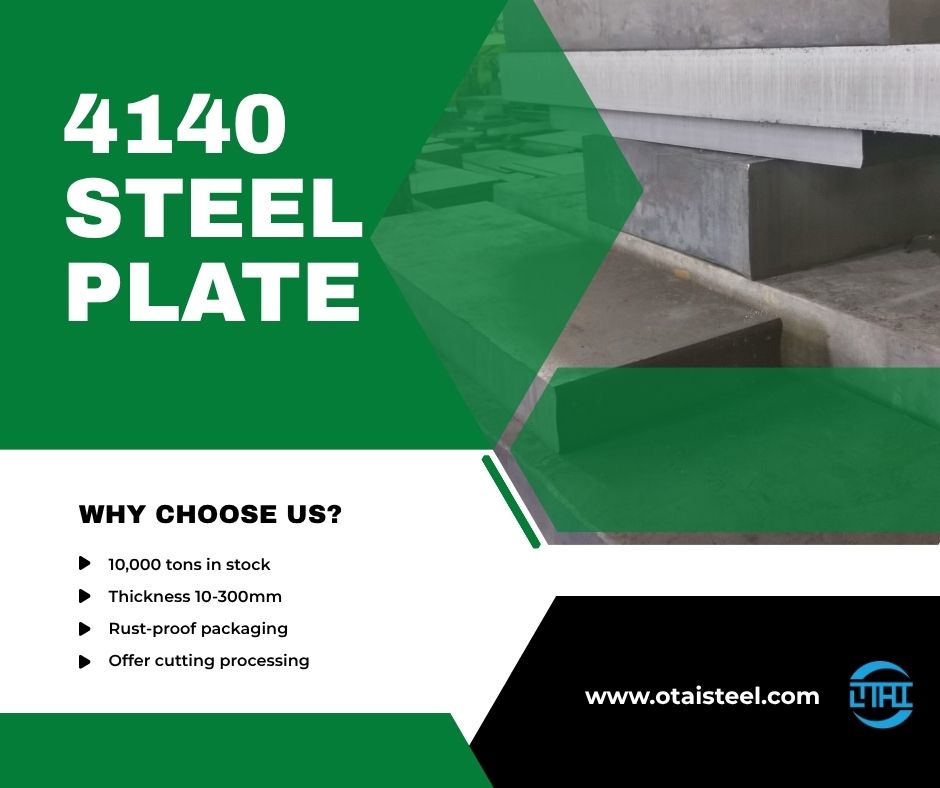
 When sourcing materials internationally, identifying the correct UK equivalent of 4140 steel is essential for ensuring compatibility in performance and standards. Since 4140 steel belongs to the ASTM/SAE system, engineers often look for its closest British Standard (BS) or EN equivalent.
🛠️ What Is 4140 Steel?
4140 steel is a chromium-molybdenum alloy steel known for its high strength, toughness, and fatigue resistance. It performs exceptionally well after quenching and tempering.
Industries widely use 4140 steel in shafts, gears, bolts, and heavy-duty mechanical components.
⚙️ UK Equivalent of 4140 Steel
The most recognized UK equivalent of 4140 steel is:
| Standard | Equivalent Grade |
|---|---|
| EN (Europe/UK) | 42CrMo4 (1.7225) |
| BS (Older Standard) | EN19 |
🔬 Chemical Composition Comparison
To verify the UK equivalent of 4140 steel, comparing chemical composition is essential:
| Element | 4140 Steel (%) | 42CrMo4 (%) |
|---|---|---|
| Carbon (C) | 0.38 – 0.43 | 0.38 – 0.45 |
| Manganese (Mn) | 0.75 – 1.00 | 0.60 – 0.90 |
| Chromium (Cr) | 0.80 – 1.10 | 0.90 – 1.20 |
| Molybdenum (Mo) | 0.15 – 0.25 | 0.15 – 0.30 |
| Silicon (Si) | 0.15 – 0.35 | 0.15 – 0.40 |
🔧 Mechanical Properties Comparison
The performance of the UK equivalent of 4140 steel closely matches the original grade:
| Property | 4140 Steel | 42CrMo4 |
|---|---|---|
| Tensile Strength | 850 – 1000 MPa | 850 – 1100 MPa |
| Yield Strength | 650 – 850 MPa | 650 – 900 MPa |
| Hardness (HRC) | 28 – 32 (Q&T) | 28 – 34 (Q&T) |
| Toughness | Excellent | Excellent |
| Fatigue Strength | High | High |
These similarities allow engineers to confidently use the UK equivalent of 4140 steel in most applications.
🧰 Heat Treatment Compatibility
4140 steel supports similar heat treatment processes:
| Process | 4140 Steel | 42CrMo4 |
|---|---|---|
| Austenitizing | 850 – 880°C | 840 – 880°C |
| Quenching | Oil | Oil or polymer |
| Tempering | 200 – 600°C | 200 – 650°C |
Both materials respond well to quenching and tempering, offering flexibility in property control.
🔩 Applications of 4140 Steel
4140 steel is widely used in:
- Automotive components (shafts, crankshafts)
- Oil and gas equipment
- Heavy machinery parts
- Construction and mining equipment
These applications require high strength and durability.
💡 Key Differences to Consider
Although the UK equivalent of 4140 steel is highly similar, some differences remain:
- Slight variations in chemical composition ranges
- Different certification standards (ASTM vs EN/BS)
- Regional availability and supply chain differences
- Minor differences in heat treatment practices
Engineers should always verify specifications before substitution.
🌍 Advantages of Using UK Equivalent Grades
Using the UK equivalent of 4140 steel offers several benefits:
- Easier sourcing in European and UK markets
- Reduced lead times for international projects
- Comparable mechanical performance
- Compatibility with global engineering standards
- Cost optimization through flexible procurement
These benefits support efficient global manufacturing.
🏆 Company Advantages
At Otai Special Steel, we supply both 4140 steel and its UK equivalent with strict quality control and reliable performance:
- Large Inventory: Over 10,000 tons ready for fast delivery
- Custom Processing Services: Cutting, heat treatment, and machining
- Strict Quality Control: UT testing and full chemical verification
- Global Export Experience: Trusted supplier worldwide
- Competitive Pricing: Cost-effective solutions with consistent quality
🤔 FAQ
Q1: What is the UK equivalent of 4140 steel?
A1: The most common steel is 42CrMo4 (EN 1.7225), also known as EN19 in older British standards.
Q2: Can 42CrMo4 fully replace 4140 steel?
A2: Yes, in most cases, 42CrMo4 can replace 4140 steel due to similar properties.
Q3: Are there differences between UK and ASTM standards?
A3: Yes, there are minor differences in composition ranges and certification requirements, but performance remains very similar.