Skip to Content

Blog Archives

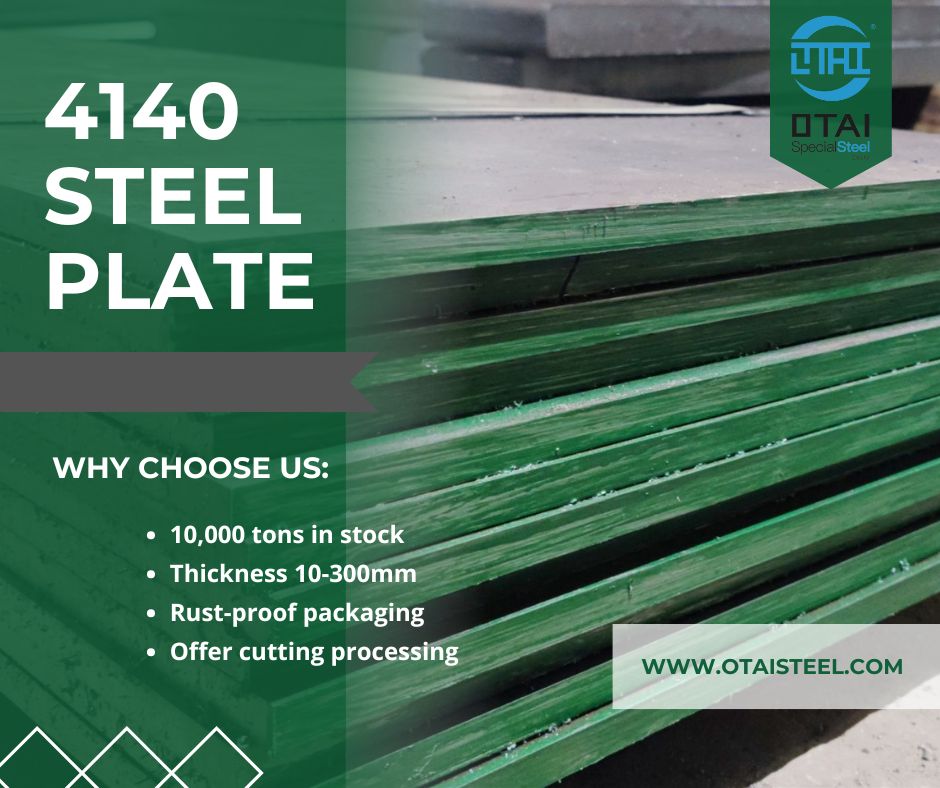
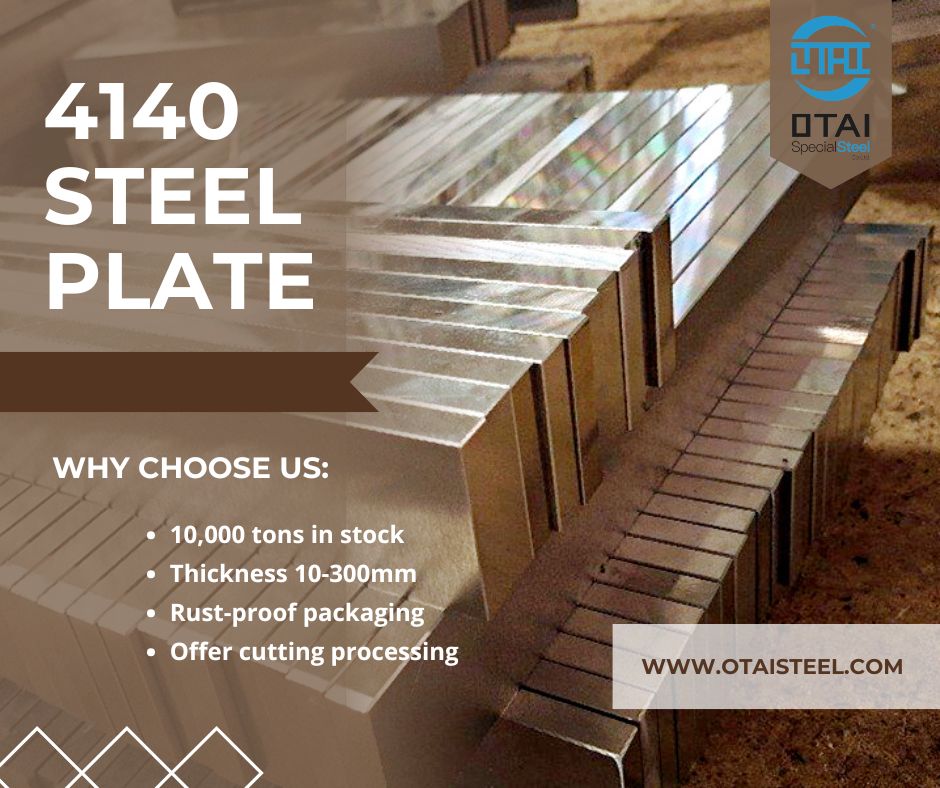
AISI 4140 Steel Plate: Properties, Benefits, and Applications

AISI 4140 Steel Plate: Properties, Benefits, and ApplicationsAISI 4140 Steel Plate: Properties, Benefits, and Applications

AISI 4140 steel plate is a versatile and high-performance alloy steel known for its excellent mechanical properties, making it ideal for demanding applications. Widely used in industries ranging from automotive to aerospace, 4140 steel plate offers an exceptional combination of strength, toughness, and wear resistance. In this article, we’ll explore the properties of AISI 4140 steel plate, its benefits, and its common applications to help you understand why this material is a go-to choice for many industries.


🌟 What is AISI 4140 Steel Plate?

AISI 4140 steel plate is a chromium-molybdenum alloy steel that combines carbon, chromium, molybdenum, and manganese to provide a well-balanced material with excellent hardenability, toughness, and wear resistance. The steel’s composition makes it suitable for high-stress and high-wear applications.

  • Carbon (C): 0.38–0.43%

  • Chromium (Cr): 0.80–1.10%

  • Molybdenum (Mo): 0.15–0.25%

  • Manganese (Mn): 0.60–0.90%

  • Silicon (Si): 0.20–0.35%

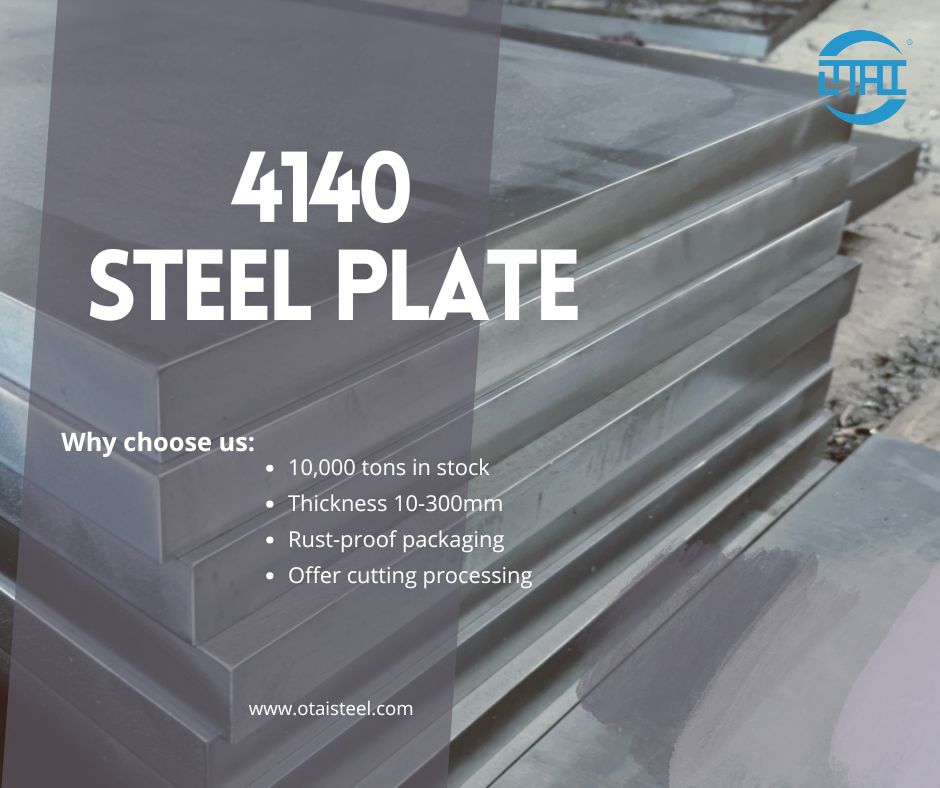
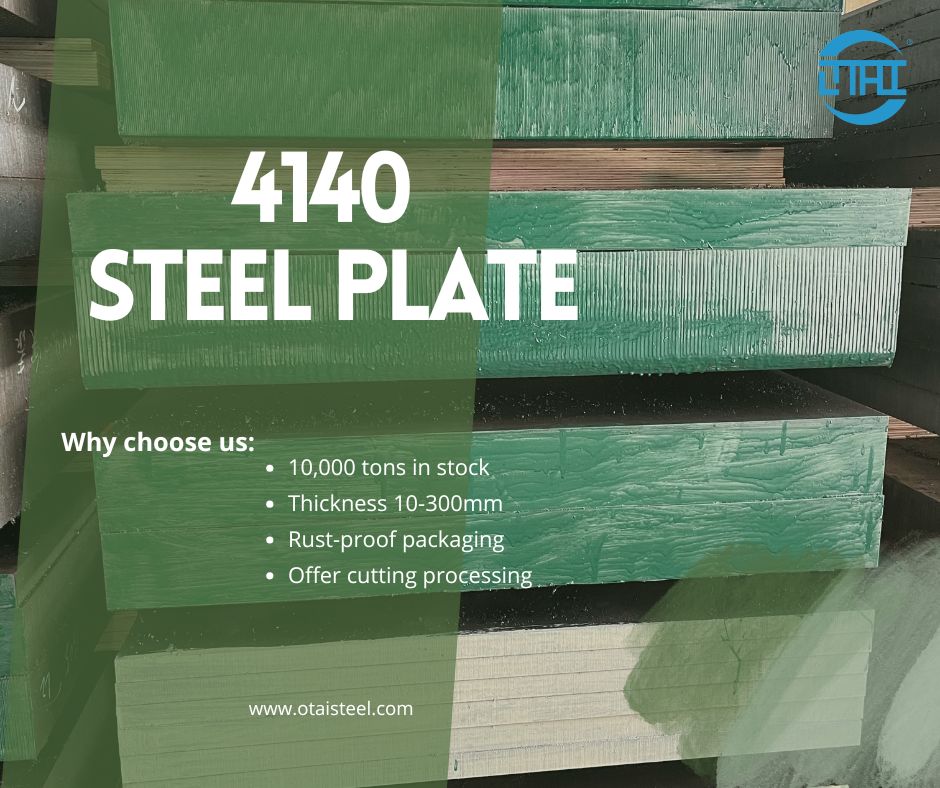
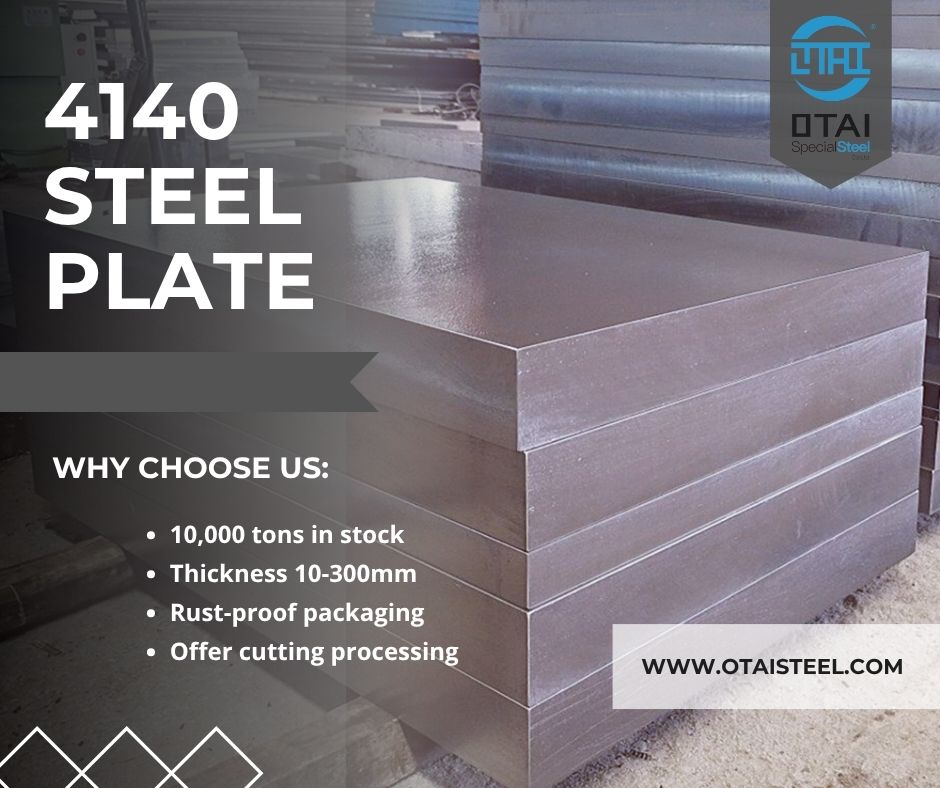
The 4140 steel plate comes in thicknesses ranging from 6mm to 300mm, and you can receive it in various forms, including normalized, quenched, or tempered to meet specific performance requirements.


🔧 Mechanical Properties of AISI 4140 Steel Plate

AISI 4140 steel plate is prized for its exceptional mechanical properties, which make it a popular choice in applications where strength, toughness, and durability are critical. Here are some of its key properties:

Property Value
Tensile Strength 850–1000 MPa
Yield Strength 600–900 MPa
Elongation 20%–30% (depending on heat treatment)
Hardness 28–35 HRC
Impact Toughness High resistance to impact and fatigue
Fatigue Strength Excellent fatigue resistance

1. Tensile Strength

AISI 4140 steel plate offers a tensile strength ranging from 850 MPa to 1000 MPa, making it ideal for applications that require resistance to stretching and breaking.

2. Yield Strength

The yield strength of 4140 steel plate ranges from 600 MPa to 900 MPa, allowing it to resist permanent deformation under heavy loads. This feature is particularly important for components that experience significant stress.

3. Elongation

4140 steel plate shows an elongation of 20% to 30%, which means it can stretch under tension before breaking. This ability helps prevent cracking and adds ductility to high-strength applications.

4. Hardness

The hardness of 4140 steel plate ranges from 28 to 35 HRC, offering a good balance of wear resistance and toughness while maintaining strength.

5. Toughness and Fatigue Resistance

The toughness of 4140 steel plate is one of its key features. It resists impact and fatigue, making it ideal for applications where parts experience cyclic loading or repetitive stress.


🌍 Heat Treatment and Its Effect on 4140 Steel Plate

AISI 4140 steel plate responds exceptionally well to heat treatment. Depending on the specific application, you can use different heat treatment methods to enhance its mechanical properties such as strength, hardness, and toughness.

  • Quenching and Tempering: Quenching involves heating the steel and rapidly cooling it. This increases both tensile strength and hardness. Tempering softens the steel to improve its toughness and make it less brittle.

  • Annealing: Annealing involves heating the steel to a high temperature and then slowly cooling it. This treatment relieves internal stresses and enhances machinability, making it easier to process.

  • Normalizing: Normalizing refines the steel’s grain structure, improving its consistency and enhancing its toughness. This treatment is ideal for components requiring improved mechanical properties.

Each heat treatment method allows 4140 steel plate to be customized to meet the specific performance needs of a given application.


🏗️ Applications of AISI 4140 Steel Plate

Due to its outstanding mechanical properties, AISI 4140 steel plate is widely used in various industries. Here are some of the most common applications of 4140 steel plate:

Industry Applications Why Choose AISI 4140 Steel Plate?
Automotive Crankshafts, Axles, Suspension Components High strength and impact resistance for heavy-duty parts.
Aerospace Landing Gear, Structural Components High toughness and fatigue resistance for critical parts.
Manufacturing Gears, Spindles, Shafts Wear resistance and ability to withstand high-pressure conditions.
Oil & Gas Drill Bits, Downhole Tools, Valves Excellent resistance to harsh environments and cyclic loads.

1. Automotive Industry

In the automotive industry, AISI 4140 steel plate is used to manufacture crankshafts, axles, and suspension components. The material’s high strength and impact resistance make it perfect for these heavy-duty applications.

2. Aerospace Industry

In aerospace, 4140 steel plate is used for landing gear and structural components. The steel’s fatigue resistance makes it ideal for parts that must endure extreme loads and stresses during flight.

3. Manufacturing Industry

AISI 4140 steel plate is commonly used for producing gears, spindles, and shafts in manufacturing. Its excellent wear resistance and strength make it a reliable choice for parts exposed to high pressures and demanding conditions.

4. Oil & Gas Industry

The oil and gas industry uses 4140 steel plate for components such as drill bits, downhole tools, and valves. The material’s resistance to high-pressure and abrasive conditions makes it ideal for equipment used in harsh environments.


🏆 Why Choose Otai Special Steel for AISI 4140 Steel Plate?

At Otai Special Steel, we provide high-quality AISI 4140 steel plates with the following advantages:

  • Large Inventory: We maintain an extensive stock of 4140 steel plates in various thicknesses and grades, ensuring quick delivery.

  • Customization: We offer cutting, heat treatment, and surface finishing services tailored to your specific needs.

  • Quality Assurance: We rigorously test every batch of 4140 steel plate, including chemical composition analysis and mechanical testing, ensuring top-notch quality.

  • Global Reach: With years of experience, we supply 4140 steel to industries worldwide, providing reliable materials for your toughest applications.


FAQ

Q1: How does AISI 4140 steel plate compare to other alloy steels?
A1: AISI 4140 steel plate stands out due to its high strength, toughness, and excellent wear resistance. It balances these mechanical properties well, making it perfect for demanding applications in automotive, aerospace, and manufacturing.

Q2: Can AISI 4140 steel plate be welded?
A2: Yes, AISI 4140 steel plate can be welded using appropriate techniques. Preheating and post-weld heat treatment may be necessary to prevent cracking, especially in its hardened state.

Q3: What is the best heat treatment for AISI 4140 steel plate?
A3: The best heat treatment depends on the intended application. Quenching and tempering are common methods to enhance strength and hardness, while normalizing improves toughness and consistency for specific components.
0 0 Continue Reading →

Steel 4140 Properties: An In-Depth Guide to Its Strength and Versatility

Steel 4140 Properties: An In-Depth Guide to Its Strength and VersatilitySteel 4140 Properties: An In-Depth Guide to Its Strength and Versatility

4140 steel is a widely used alloy steel known for its excellent mechanical properties, making it perfect for high-stress applications. This material is highly regarded across industries for its strength, toughness, and wear resistance. Whether you’re working in the automotive, aerospace, or manufacturing sector, understanding 4140 steel properties helps you choose the right material for your project. In this article, we’ll dive into 4140 steel’s properties, including its chemical composition, mechanical features, heat treatment methods, and common uses.


🌟 What is 4140 Steel?

4140 steel is a chromium-molybdenum alloy steel with the following key components:

  • Carbon (C): 0.38–0.43%

  • Chromium (Cr): 0.80–1.10%

  • Molybdenum (Mo): 0.15–0.25%

  • Manganese (Mn): 0.60–0.90%

  • Silicon (Si): 0.20–0.35%

These alloying elements provide 4140 steel with remarkable strength, toughness, and wear resistance. The material also responds well to heat treatment, which further enhances its performance in demanding applications.


🔧 Mechanical Properties of 4140 Steel

The mechanical properties of 4140 steel are key to its versatility and strength. Let’s break down these important characteristics:

Property Value
Tensile Strength 850–1000 MPa
Yield Strength 600–900 MPa
Elongation 20%–30% (depends on heat treatment)
Hardness 28–35 HRC
Impact Toughness High resistance to impact and fatigue
Fatigue Strength Excellent fatigue resistance

1. Tensile Strength

4140 steel generally has a tensile strength ranging from 850 MPa to 1000 MPa, which allows it to resist high tensile loads without breaking. This feature makes it ideal for parts that need to withstand significant stress.

2. Yield Strength

The yield strength of 4140 steel is between 600 MPa and 900 MPa, ensuring it won’t deform permanently under heavy loads. This is particularly important for components that need to maintain their shape and integrity in high-stress environments.

3. Elongation

With an elongation of 20% to 30%, 4140 steel can stretch before breaking, which helps to prevent cracking under pressure and adds flexibility to high-strength applications.

4. Hardness

The hardness of 4140 steel is typically between 28 and 35 HRC, which provides a good balance of wear resistance while maintaining the material’s toughness.

5. Toughness and Fatigue Resistance

4140 steel has high toughness and fatigue resistance, making it an excellent choice for parts that face repeated stress, impacts, and wear.


🌍 Heat Treatment and Its Effect on 4140 Steel

One of 4140 steel’s key advantages is its ability to undergo heat treatment, which allows it to be customized for specific applications. Different heat treatments enhance the steel’s mechanical properties to meet the specific requirements of the job:

  • Quenching and Tempering: Quenching involves heating the steel and rapidly cooling it, which increases its tensile strength and hardness. Tempering softens the steel to improve its toughness, ensuring that the material doesn’t become too brittle.

  • Annealing: This process softens the steel by heating it and then cooling it slowly. Annealing improves the machinability of 4140 steel and relieves internal stresses.

  • Normalizing: Normalizing involves heating 4140 steel to a specific temperature and cooling it in air. This treatment refines the grain structure, resulting in better consistency and improved toughness.

Each treatment method allows 4140 steel to meet different mechanical performance requirements, depending on the application.


🏗️ Applications of 4140 Steel

Below are a few of its common applications:

Industry Applications Why Choose 4140 Steel?
Automotive Crankshafts, Axles, Suspension Components Strength and impact resistance make it ideal for high-stress parts.
Aerospace Landing Gear, Structural Components Fatigue resistance and toughness for critical parts.
Manufacturing Gears, Spindles, Shafts Wear resistance and ability to withstand high-pressure conditions.
Oil & Gas Drill Bits, Downhole Tools, Valves Resists harsh conditions and cyclic loads.

1. Automotive Industry

In the automotive industry, 4140 steel is widely used for making crankshafts, axles, and suspension components. The material’s combination of high strength and impact resistance makes it an excellent choice for these demanding applications.

2. Manufacturing Industry

4140 steel is ideal for making gears, spindles, and shafts in manufacturing. Its wear resistance and strength allow it to perform well in high-pressure environments.

3. Oil & Gas Industry

The oil and gas industry uses 4140 steel for drill bits, downhole tools, and valves. The steel’s ability to resist pressure and wear makes it an excellent choice for critical equipment in harsh environments.


🏆 Why Choose Otai Special Steel for 4140 Steel?

At Otai Special Steel, we offer premium-quality 4140 steel with the following advantages:

  • Large Inventory: We maintain a stock of over 10,000 tons of 4140 steel, ensuring timely delivery.

  • Customization: We offer cutting, heat treatment, and surface finishing services to meet your exact specifications.

  • Quality Assurance: Every batch of 4140 steel undergoes strict quality control, including chemical analysis and mechanical testing.

  • Global Reach: With years of experience, we supply top-quality steel to industries worldwide, ensuring reliable and durable materials for your projects.


FAQ: Common Questions About 4140 Steel

Q1: What makes 4140 steel a preferred choice in demanding applications?
A1: 4140 steel combines high strength, toughness, and wear resistance, making it suitable for applications where reliability and durability are critical.

Q2: Can 4140 steel be welded?
A2: Yes, 4140 steel can be welded, but proper techniques and preheating may be necessary to prevent cracking, especially in hardened states.

Q3: What is the best heat treatment for 4140 steel?
A3: The optimal heat treatment for 4140 steel depends on the intended use. For strength and hardness, quenching and tempering are ideal, while normalizing may be used to improve toughness.

0 0 Continue Reading →

What Kind of alloy Steel is 4140?

What Kind of alloy Steel is 4140?4140 steel is one of the most commonly used alloy steels, renowned for its strength, toughness, and versatility. Often found in critical applications across various industries, this steel stands out for its ability to withstand high stresses, wear, and fatigue. But what exactly makes 4140 alloy a preferred choice for engineers and manufacturers? Let’s take a closer look at what kind of steel 4140 is, its properties, and its most common uses.


🌟 What is 4140 Steel?

4140 steel is an alloy steel composed primarily of carbon (0.38-0.43%), chromium (0.80-1.10%), and molybdenum (0.15-0.25%). It is part of the chromium-molybdenum steel family, often referred to as chromoly steel. This steel’s blend of elements gives it outstanding characteristics that make it ideal for high-stress and high-wear applications.

It is commonly found in annealed, quenched and tempered, or pre-hardened conditions, and it is versatile enough to be used in a variety of shapes, including bars, plates, tubes, and rods.


🔑 What Makes 4140 Steel Unique?

💪 High Strength and Toughness

One of the primary reasons engineers prefer 4140 steel is its high tensile strength (ranging from 95,000 to 120,000 psi) and its toughness. These properties make it suitable for applications that require both strength and resistance to impact or fatigue. Whether you’re designing parts for machinery or automotive components, it can handle demanding conditions.

🔧 Good Wear Resistance

4140 steel offers excellent wear resistance, which makes it ideal for parts that undergo high levels of friction and abrasion. It can withstand the harshest conditions without quickly degrading, ensuring the longevity of the components it forms. This property is especially beneficial in industries like mining, oil & gas, and heavy machinery.

🔥 Heat Treatability

Another significant feature of 4140 steel is its heat treatability. When heat-treated, it can achieve different hardness levels, making it suitable for applications where materials need to be tough but not brittle. After processes like quenching and tempering, the steel can reach hardness levels up to 45 HRC.


🛠️ Common Applications of 4140 Steel

🚗 Automotive Industry

The automotive industry relies heavily on 4140 steel due to its combination of strength, toughness, and machinability. Common uses include:

  • Axles

  • Crankshafts

  • Transmission gears

  • Chassis components

These parts need to withstand constant motion, pressure, and heat, and 4140 steel provides the necessary durability.

⛽ Oil & Gas Industry

In the oil and gas industry, 4140 steel finds its place in equipment that must endure high pressures and corrosive environments. Examples of applications include:

  • Drill collars

  • Tool joints

  • Pressure vessels

  • Wellhead components

The ability of 4140 steel to resist fatigue and wear makes it perfect for use in drilling operations and other oilfield applications.

⚙️ Toolmaking and Heavy Machinery

4140 alloy is often used in the toolmaking industry for producing molds, dies, and other high-performance tools. Its strength and resistance to wear make it ideal for high-precision tools that are exposed to high stresses. It is used in:

  • Cutting tools

  • Press dies

  • Molds

  • Heavy-duty machinery components

⚙️ Aerospace and Military Applications

4140 steel also finds use in aerospace and military applications. Aircraft landing gear, high-strength bolts, and other critical components benefit from the material’s superior strength-to-weight ratio and resilience.


🌍 Why Choose 4140 Steel for Your Applications?

  1. Versatility
    4140 steel is incredibly versatile. Whether you need a material that resists fatigue, wear, or high stresses, 4140 steel can meet those needs. It is used in everything from automotive parts to industrial machinery and military-grade components.

  2. Toughness and Durability
    The steel’s ability to maintain its toughness, even at elevated temperatures, makes it perfect for critical, high-performance parts that require durability.

  3. Cost-Effectiveness
    Compared to other high-alloy steels, 4140 steel provides excellent performance at a reasonable cost, making it an ideal choice for manufacturers who need high strength without the high price tag.

  4. Customizable Hardness
    You can easily adjust the hardness of 4140 material through heat treatment to match the requirements of different applications. Whether you need a softer steel for forming or a harder one for wear resistance, 4140 steel can be tailored to your needs.


💡 Company Advantages – Why Choose Otai Special Steel?

At Otai Special Steel, we provide top-quality 4140 steel for a variety of industries. Our expertise and commitment to quality ensure you get the best products and services, including:

  • 🏭 Large Inventory – Over 10,000 tons of 4140 material in stock, available in a variety of forms and sizes.

  • 📐 Customization Services – We offer cutting, heat treatment, and other customizations to meet your precise requirements.

  • 🔍 Quality Assurance – Our steel passes rigorous quality control checks, including ultrasonic testing (UT), chemical composition testing, and hardness verification.

  • 🌍 Global Reach – We deliver to over 50 countries, ensuring fast and reliable service worldwide.

  • 💰 Competitive Pricing – We offer high-quality 4140 steel at affordable prices without compromising on quality.


❓ FAQ

Q1: What is 4140 steel used for?
A: 4140 steel is used in a variety of applications including automotive parts, toolmaking, oil and gas equipment, and military-grade components. It is ideal for parts requiring high strength, wear resistance, and toughness.

Q2: Can I weld 4140 steel?
A: Yes, 4140 steel can be welded, but it requires preheating and post-weld heat treatment to prevent cracking and distortion.

Q3: How do I heat treat 4140 alloy?
A: 4140 steel is commonly heat-treated through quenching and tempering, which increases its hardness and improves its mechanical properties.

Q4: What is the hardness of 4140 steel?
A: The hardness of 4140 steel can reach up to 45 HRC after heat treatment, depending on the cooling and tempering process.

Q5: What makes 4140 steel different from other alloy steels?
A: 4140 offers a unique combination of strength, toughness, and wear resistance, making it an excellent choice for heavy-duty applications. It is also more cost-effective than many other high-alloy steels.

0 0 Continue Reading →

4140 alloy Steel Information –Why choose 4140 Alloy Steel?

4140 alloy Steel Information –Why choose 4140 Alloy Steel?4140 alloy Steel Information –Why choose 4140 Alloy Steel?

When it comes to high-performance alloy steels, 4140 steel is one of the most widely used and recognized materials in the world. Its unique balance of toughness, strength, and wear resistance makes it an essential choice across industries ranging from automotive to oil & gas, heavy machinery, and tool manufacturing. In this article, we’ll provide all the essential 4140 steel information you need—covering its composition, mechanical properties, heat treatment behavior, and practical applications.


🌟 What is 4140 Steel?

4140 steel is a chromium-molybdenum low-alloy steel that belongs to the AISI-SAE family of alloy steels. It is classified as a versatile material because it offers an excellent combination of mechanical strength, fatigue resistance, and toughness—qualities that make it suitable for demanding engineering components.

  • Category: Low-alloy steel

  • Common Forms: Plate, bar, tube, and forgings

  • Standards: AISI 4140, ASTM A29, DIN 1.7225, JIS SCM440

This steel is especially known for its ability to be heat treated to various hardness levels, depending on the final application.


🔬 4140 Steel Chemical Composition

The properties of 4140 steel stem from its carefully balanced chemical composition.

Element Typical Content (%)
Carbon (C) 0.38 – 0.43
Chromium (Cr) 0.80 – 1.10
Molybdenum (Mo) 0.15 – 0.25
Manganese (Mn) 0.75 – 1.00
Silicon (Si) 0.15 – 0.35
Phosphorus (P) ≤ 0.035
Sulfur (S) ≤ 0.040

This balanced mix gives 4140 steel its well-known strength, toughness, and wear resistance.


⚙️ Mechanical Properties of 4140 Steel

4140 steel is valued because it delivers high strength without sacrificing ductility.

Property Condition Typical Value
Tensile Strength Annealed 655 MPa (95 ksi)
Yield Strength Annealed 415 MPa (60 ksi)
Tensile Strength Quenched & Tempered 850 – 1000 MPa (123 – 145 ksi)
Yield Strength Quenched & Tempered 655 – 862 MPa (95 – 125 ksi)
Hardness (HB) Annealed 197 HB max
Hardness (HRC) Heat Treated 28 – 32 HRC (typical), up to 50 HRC

This flexibility allows engineers to adjust the material performance through quenching and tempering, making it suitable for parts under heavy loads.


🔥 Heat Treatment Behavior

One of the most critical aspects of 4140 steel information is how it responds to heat treatment:

  • Annealing: Refines grain structure and reduces hardness to improve machinability.

  • Quenching: Achieves higher hardness and wear resistance.

  • Tempering: Adjusts strength and toughness after quenching.

  • Normalizing: Improves toughness and mechanical uniformity.


🏭 Applications of 4140 Steel

Because of its versatility, 4140 steel is found in countless applications, including:

  • Gears and shafts

  • Bolts and fasteners

  • Crankshafts and connecting rods

  • Drill collars and oilfield equipment

  • Tool bodies and dies

  • Hydraulic machinery parts

For applications that require high fatigue resistance, dimensional stability, and strength under stress, 4140 steel is a leading choice.


🛠 Machinability and Weldability

  • Machinability: 4140 steel offers moderate machinability in its annealed state, but it becomes more difficult to machine after hardening. Proper cutting fluids and rigid setups are essential.

  • Weldability: 4140 steel can be welded, but preheating and post-weld heat treatment are often necessary to avoid cracking due to its higher carbon content.


📦 Forms Available on the Market

When sourcing 4140 steel, buyers can find it in multiple shapes and sizes:

  • Plates (6mm – 300mm thick)

  • Round bars and square bars

  • Hollow bars and tubes

  • Forged blocks

This flexibility allows suppliers and buyers to choose the right form for machining or direct use.


💡 Why Choose 4140 Steel?

The unique benefits of 4140 steel include:

  • Balanced strength and toughness

  • Wide availability in global markets

  • Excellent fatigue resistance

  • Customizable hardness through heat treatment

  • Strong track record in heavy-duty engineering applications


🌍 Company Advantages – Otai Special Steel

At Otai Special Steel, we are experts in supplying 4140 steel and other alloy steels. With over 10,000 tons of inventory available, we provide plates, bars, and tubes in various sizes with value-added services such as cutting, heat treatment, and ultrasonic testing.

Our company has supplied major international corporations, offering:

  • Stable and consistent quality

  • Global export experience

  • SGS/UT inspection services

  • Competitive prices with fast delivery


❓ FAQ About 4140 alloy Steel Information

Q1: What makes 4140 steel better than plain carbon steel?
4140 has chromium and molybdenum, giving it better strength, toughness, and wear resistance.

Q2: Can 4140 steel be surface hardened?
Yes, it can undergo induction hardening or carburizing for improved surface wear resistance.

Q3: Is 4140 steel corrosion-resistant?
It has some corrosion resistance due to chromium, but it’s not stainless. Protective coatings are recommended.

Q4: Which industries use 4140 steel the most?
Automotive, oil & gas, aerospace, tool manufacturing, and heavy machinery.

Q5: Does heat treatment affect machinability?
Yes. 4140 steel is easiest to machine in the annealed state; after hardening, it requires more advanced machining setups.

0 0 Continue Reading →

What are ASTM 4140 Steel’s Properties?

What are ASTM 4140 Steel's Properties?What are ASTM 4140 Steel’s Properties?

ASTM 4140 steel is a low-alloy steel that offers a versatile balance of strength, toughness, and wear resistance, making it one of the most popular materials in industries such as automotive, aerospace, oil and gas, and heavy machinery. Understanding the ASTM 4140 Steel’s Properties is crucial for selecting the right material for your projects. In this article, we will delve into the key properties of ASTM 4140 steel, how its mechanical characteristics benefit various applications, and why it remains a top choice for demanding industries.


🌟 What is ASTM 4140 Steel?

ASTM 4140 steel is part of the AISI 4140 series, which is a low-alloy steel containing chromium, molybdenum, and carbon as its main alloying elements. This composition provides the steel with excellent toughness, strength, and resistance to wear. ASTM 4140 is often heat-treated to improve its mechanical properties, making it suitable for a wide range of industrial applications.

The ASTM standard refers to the specification for 4140 steel that defines its chemical composition, mechanical properties, and heat treatment processes. ASTM 4140 steel is commonly used in applications that require a combination of strength, toughness, and fatigue resistance.


🔧 Key Properties of ASTM 4140 Steel

Here are the key mechanical properties of ASTM 4140 steel, which make it an ideal material for heavy-duty applications:

1. Tensile Strength

Tensile strength is the maximum stress a material can withstand before breaking. ASTM 4140 steel has a high tensile strength range of 850 MPa to 1000 MPa when heat-treated. This makes it ideal for components that need to resist stretching or breaking under load.

  • Normalized Condition: ASTM 4140 offers tensile strength in the range of 620 MPa to 850 MPa.

  • Quenched and Tempered Condition: In this heat-treated condition, tensile strength can reach up to 1000 MPa, providing superior strength for demanding applications.

2. Yield Strength

The yield strength of ASTM 4140 steel is the stress level at which the material starts to deform plastically. It typically ranges from 600 MPa to 900 MPa, depending on the heat treatment process.

  • Normalized 4140: Yield strength ranges from 450 MPa to 600 MPa.

  • Quenched and Tempered 4140: Yield strength increases to 670 MPa to 900 MPa, offering better performance under high-stress conditions.

3. Hardness

Hardness measures a material’s resistance to indentation and scratching. ASTM 4140 steel has high hardness values, which can be enhanced through heat treatment:

  • Normalized Condition: Hardness typically falls between 22 to 30 HRC (Rockwell C scale).

  • Quenched and Tempered Condition: Hardness can increase to 28 to 35 HRC, providing enhanced wear resistance for parts exposed to friction and abrasion.

4. Impact Toughness

Impact toughness measures a material’s ability to absorb energy before fracturing. ASTM 4140 steel has good impact toughness, which allows it to withstand sudden loads or shocks without failing. This is especially important for parts that experience dynamic stresses, such as gears or shafts.

  • Normalized 4140: It has good impact toughness, typically ranging from 40 to 60 J at room temperature.

  • Quenched and Tempered 4140: The impact toughness can be excellent, offering superior resistance to shocks.

5. Ductility

Ductility refers to a material’s ability to deform before fracture, which is crucial for components subjected to tensile or bending stresses. ASTM 4140 steel has good ductility, which means it can stretch or bend to some extent without breaking.

  • Normalized 4140: Exhibits higher ductility, which makes it easier to machine and form.

  • Quenched and Tempered 4140: Though it becomes harder and stronger, ductility is somewhat reduced compared to the normalized version.


🏗️ Applications of ASTM 4140 Steel

Due to its high strength, toughness, and wear resistance, ASTM 4140 steel is widely used in several demanding industries. Below are some common applications where 4140 steel is essential:

Industry Applications Reason for Use
Automotive Gears, Shafts, Crankshafts, Suspension Components High strength, wear resistance, and fatigue resistance
Aerospace Aircraft Structural Parts, Landing Gear Durability under high stress, impact toughness
Oil and Gas Drill Pipes, Downhole Tools Wear resistance, high strength, resistance to fatigue
Heavy Machinery Gearboxes, Machine Frames, Crankshafts Durability under heavy loads and high mechanical stresses

1. Automotive Industry

In the automotive industry, ASTM 4140 steel is commonly used for components that require high strength and resistance to wear, such as gears, crankshafts, and suspension parts. The material’s excellent fatigue resistance and ability to withstand high impact make it a perfect choice for high-performance vehicles.

2. Aerospace Industry

In aerospace, ASTM 4140 steel is used for critical structural components, including landing gear and other high-stress parts. Its ability to absorb shock and maintain strength under extreme conditions is vital for maintaining the integrity of aircraft during takeoff, landing, and in-flight operations.

3. Oil and Gas Industry

The oil and gas industry relies on ASTM 4140 steel for applications such as drill pipes and downhole tools, where materials are subjected to extreme pressure and wear. 4140 steel’s toughness, resistance to fatigue, and wear resistance make it ideal for these harsh environments.

4. Heavy Machinery

In heavy machinery, parts such as gears, crankshafts, and machine frames benefit from the exceptional strength and durability of ASTM 4140 steel. Its ability to endure heavy mechanical stresses makes it ideal for machinery used in construction, mining, and other heavy-duty industries.


🏆 Why Choose Otai Special Steel for ASTM 4140 Steel?

Otai Special Steel is a leading supplier of ASTM 4140 steel with the following advantages:

  • Extensive Inventory: We maintain a large inventory of over 10,000 tons of steel available year-round, ensuring that we can fulfill orders quickly and reliably.

  • Customization: We offer tailored services including cutting, heat treatment, and packaging, so you get exactly what you need for your specific applications.

  • Quality Assurance: Every batch of ASTM 4140 steel undergoes stringent quality control processes, including chemical composition testing and ultrasonic inspection, ensuring that it meets international standards.

  • Global Supply: With years of experience serving top international clients, we have the capacity to deliver high-quality ASTM 4140 steel to companies around the world.


FAQ: Common Questions About ASTM 4140 Steel

Q1: What is the difference between ASTM 4140 steel and other alloy steels?
A1: ASTM 4140 steel contains chromium and molybdenum, which provide it with excellent wear resistance, hardness, and toughness. Compared to other alloy steels, 4140 steel offers a better combination of these properties, making it suitable for high-stress applications.

Q2: Can ASTM 4140 steel be welded?
A2: Yes, ASTM 4140 steel can be welded, but it is important to preheat the material before welding and to perform post-weld heat treatment to avoid cracking and distortion, especially when using the quenched and tempered version.

Q3: How does heat treatment affect the mechanical properties of ASTM 4140 steel?
A3: Heat treatment significantly improves the strength, hardness, and fatigue resistance of ASTM 4140 steel. In the quenched and tempered condition, it has higher tensile strength, yield strength, and hardness compared to the normalized or annealed versions.

0 0 Continue Reading →

Cast 4140 Steel Properties: A Comprehensive Overview

Cast 4140 Steel Properties: A Comprehensive OverviewCast 4140 Steel Properties: A Comprehensive Overview

Cast 4140 steel is a variant of 4140 alloy steel, created using casting methods instead of traditional forging. This steel combines the excellent mechanical properties of 4140 steel, like strength, toughness, and wear resistance, with the flexibility of casting, allowing manufacturers to produce complex and large components. In this article, we’ll explore the properties of cast 4140 steel, including its mechanical characteristics, benefits, and common applications.


🌟 What Is Cast 4140 Steel?

Cast 4140 steel is an alloy containing carbon (C), chromium (Cr), molybdenum (Mo), and manganese (Mn). These alloying elements give it exceptional strength, toughness, and wear resistance. In the casting process, manufacturers pour molten metal into molds, allowing it to cool and solidify into specific shapes. This process makes it possible to produce complex, large, or irregularly shaped parts efficiently.

While the mechanical properties of cast 4140 steel are similar to those of forged 4140 steel, the casting process may slightly affect the internal structure and overall mechanical properties of the material.


🔧 Chemical Composition of Cast 4140 Steel

The chemical composition of cast 4140 steel plays a vital role in determining its mechanical properties. Here is the typical chemical composition:

Element Min % Max %
Carbon (C) 0.38 0.43
Chromium (Cr) 0.80 1.10
Molybdenum (Mo) 0.15 0.25
Manganese (Mn) 0.60 0.90
Silicon (Si) 0.20 0.35
Sulfur (S) 0.04 0.05
Phosphorus (P) 0.04 0.05

These elements provide cast 4140 steel with the strength, wear resistance, and toughness needed for high-performance applications.


🏗️ Mechanical Properties of Cast 4140 Steel

Cast 4140 steel offers impressive mechanical properties, even though the casting process can influence its internal structure. Below are the typical mechanical properties:

Property Value
Tensile Strength 850–1000 MPa
Yield Strength 600–900 MPa
Elongation 20%–30% (depends on heat treatment)
Hardness 28–35 HRC
Impact Toughness High resistance to impact and fatigue
Fatigue Strength Excellent fatigue resistance

1. Tensile Strength

Cast 4140 steel typically has a tensile strength between 850 MPa and 1000 MPa. This allows the steel to withstand significant tensile loads without breaking, making it suitable for heavy-duty applications.

2. Yield Strength

With a yield strength ranging from 600 MPa to 900 MPa, cast 4140 steel resists permanent deformation, maintaining its shape under heavy loads.

3. Elongation

The elongation of cast 4140 steel ranges from 20% to 30%, providing the material with flexibility before it fractures, which helps it resist cracking under stress.

4. Hardness

The hardness of cast 4140 steel falls between 28 and 35 HRC, offering wear resistance while maintaining toughness.

5. Toughness and Fatigue Resistance

One of the standout features of cast 4140 steel is its toughness and fatigue resistance, making it ideal for high-stress environments where cyclic loads are common.


🌍 Advantages of Cast 4140 Steel

The casting process offers distinct advantages, particularly when producing large or complex components. These include:

Advantage Description
Complex Shapes Casting allows for the production of intricate, large parts that would be difficult or expensive to forge.
Cost-Effective For large parts, casting is often more economical than forging or machining, particularly in mass production.
Consistency Casting ensures consistent material properties, especially with controlled cooling rates.
Design Flexibility Casting offers more flexibility for creating custom parts with unique shapes.

🏗️ Applications of Cast 4140 Steel

Due to its excellent mechanical properties, cast 4140 steel finds application in a variety of industries, including:

Industry Applications Why Cast 4140 Steel?
Automotive Engine blocks, crankshafts, gears The casting process is ideal for large, complex components that require strength.
Aerospace Structural components, landing gear parts High toughness and wear resistance for critical aerospace components.
Heavy Machinery Hydraulic components, machine frames Strength and fatigue resistance under heavy loads.
Oil and Gas Drill rods, downhole tools, valves Ability to withstand high pressures and abrasive conditions.

1. Automotive Industry

In the automotive industry, cast 4140 steel is used for engine blocks and crankshafts. The ability to cast large, complex shapes makes it ideal for producing these high-strength components, which are essential in engine performance.

2. Aerospace Industry

Cast 4140 steel is used in aerospace for landing gear parts and structural components. These parts require high strength and toughness to withstand the extreme conditions during flight and landing.

3. Heavy Machinery

For heavy machinery, cast 4140 steel is ideal for hydraulic components and machine frames. Its high fatigue resistance and strength make it suitable for use in demanding environments where durability is key.

4. Oil and Gas

In the oil and gas industry, cast 4140 steel is used for drill rods, downhole tools, and valves. The material’s ability to resist high pressure and wear makes it perfect for equipment that operates in harsh, high-pressure environments.


🏆 Why Choose Otai Special Steel for Cast 4140 Steel?

Otai Special Steel offers cast 4140 steel with several key benefits:

  • Large Inventory: We maintain over 10,000 tons of steel in stock, ensuring prompt delivery to meet your needs.

  • Customization: We offer cutting, heat treatment, and surface finishing services to tailor the material to your specifications.

  • Quality Assurance: Each batch of cast 4140 steel undergoes rigorous quality control to ensure that it meets your exact standards.

  • Global Expertise: With years of experience in supplying high-performance steel, we provide reliable materials to clients worldwide.


FAQ: Common Questions About Cast 4140 Steel

Q1: How does cast 4140 steel compare to forged 4140 steel?
A1: Both cast 4140 steel and forged 4140 steel offer similar mechanical properties. However, cast 4140 steel is ideal for producing large and complex parts at a lower cost, whereas forged 4140 steel provides higher toughness for parts requiring maximum strength.

Q2: Can cast 4140 steel be heat-treated?
A2: Yes, cast 4140 steel can undergo heat treatment processes like tempering and quenching to improve its hardness and wear resistance. Heat treatment enhances its performance in high-stress and high-wear applications.

Q3: Is cast 4140 steel suitable for high-temperature applications?
A3: Yes, cast 4140 steel can handle high temperatures, but it’s essential to consider heat treatment and proper design to maintain its strength and durability in extreme conditions.

0 0 Continue Reading →

4140 Steel Coefficient of Friction: What It Means for Wear Resistance

4140 Steel Coefficient of Friction: What It Means for Wear Resistance4140 Steel Coefficient of Friction: What It Means for Wear Resistance

The coefficient of friction is a critical factor to consider when evaluating the performance of materials in applications involving sliding contact or movement. For 4140 steel, a widely used alloy steel, understanding its coefficient of friction is essential in assessing its wear resistance, efficiency, and longevity in various industrial applications. In this article, we’ll explore the coefficient of friction of 4140 steel, how it impacts performance, and why it is crucial for industries that rely on high-stress, high-wear conditions.


🌟 What Is the Coefficient of Friction?

The coefficient of friction (COF) is a measure of how much force is required to move one surface over another relative to the normal force pressing the two surfaces together. The COF helps determine how much wear, heat, and energy is generated during the interaction between two surfaces in motion.

The coefficient of friction is typically represented by two types:

  • Static Coefficient of Friction (μs): The force needed to start moving an object at rest.

  • Kinetic Coefficient of Friction (μk): The force required to keep an object in motion once it has already started moving.

Both types of friction are important in industrial applications where sliding, rotation, and impact occur, such as in gears, bearings, and shafts.


🔧 The Coefficient of Friction for 4140 Steel

For 4140 steel, the coefficient of friction typically ranges from 0.3 to 0.5 under dry conditions. However, this can vary depending on several factors:

  • Surface finish: A rougher surface increases friction, while a polished surface can reduce it.

  • Lubrication: The presence of lubrication (oil, grease, etc.) can significantly reduce friction, making 4140 steel more efficient in applications like gears and shafts.

  • Contact pressure: Higher pressure can lead to higher friction, which can increase wear on the steel.

  • Temperature: High temperatures may alter the surface properties of the steel, affecting the coefficient of friction.

1. Static vs. Kinetic Friction

The static coefficient of friction for 4140 steel is typically higher than the kinetic coefficient. This is because it takes more force to initiate motion between two stationary surfaces than to keep them moving once they have started. As 4140 steel is used in applications involving both static and dynamic conditions, understanding these two types of friction is crucial to designing systems that minimize energy loss and wear.


🌍 Factors Influencing the Coefficient of Friction for 4140 Steel

While the standard coefficient of friction for 4140 steel provides a baseline, several external factors can influence its performance in real-world applications:

Factor Effect on Coefficient of Friction
Surface Finish A smoother surface finish reduces friction and wear.
Lubrication Oil, grease, or other lubricants reduce friction and heat.
Temperature Higher temperatures can lower the COF but may cause thermal expansion.
Contact Pressure Higher pressure can increase friction and wear on the material.
Speed of Movement High-speed motion typically reduces friction due to less time for surface interaction.

For instance, when 4140 steel is used in gears or shafts that operate under high pressure and low speed, lubrication becomes essential to reduce friction and heat buildup. Conversely, in high-speed applications, such as automotive components or bearings, a smoother surface finish and the proper lubricant selection are key to maintaining efficiency.


🏗️ Applications of 4140 Steel and the Importance of Friction

The coefficient of friction plays a significant role in determining the wear and performance of 4140 steel in various industrial applications. Here are a few examples:

Industry Applications Role of Friction
Automotive Axles, gears, brake components Lower friction reduces wear and improves efficiency in moving parts.
Aerospace Landing gear, actuators, high-stress components Minimizing friction enhances the longevity and safety of aerospace parts.
Heavy Machinery Hydraulic cylinders, gears, machine tools Proper friction management reduces wear and improves machine life.
Oil and Gas Drill rods, downhole tools Reducing friction in harsh environments prolongs tool life and performance.

1. Automotive Industry

In the automotive industry, 4140 steel is used in gears, axles, and brake components. The coefficient of friction directly impacts the wear and longevity of these components. Lubrication and surface treatment (such as coating or polishing) are used to reduce friction and improve fuel efficiency by minimizing energy loss.

2. Aerospace Industry

In the aerospace industry, where components like landing gear and actuators are subjected to extreme forces, controlling the coefficient of friction is essential. Lower friction in these components enhances performance, reduces heat buildup, and extends the life of critical aerospace parts.

3. Heavy Machinery

For heavy machinery used in gears, hydraulic systems, and machine tools, friction management ensures smoother operation, reduces heat generation, and prevents premature wear. Choosing the right surface finish, coating, and lubrication reduces friction, making these machines more durable and energy-efficient.

4. Oil and Gas Industry

In the oil and gas industry, drill rods and downhole tools encounter high pressures and abrasive conditions. The coefficient of friction plays a major role in minimizing wear and ensuring that these tools operate efficiently for extended periods, even in challenging environments.


🏆 Why Choose Otai Special Steel for Your 4140 Steel Needs?

Otai Special Steel offers high-quality 4140 steel with several key advantages:

  • Large Inventory: With over 10,000 tons of steel in stock, we ensure timely delivery and availability for your specific requirements.

  • Customization: We provide cutting, heat treatment, and surface finish services to meet your specific needs, optimizing friction and wear resistance.

  • Quality Assurance: Each batch of 4140 steel undergoes rigorous quality control, ensuring it meets your performance standards for friction and wear resistance.

  • Global Expertise: With years of experience in providing high-performance steel, we offer expert advice and support for your industrial applications.


FAQ: Common Questions About 4140 Steel and Coefficient of Friction

Q1: How does the coefficient of friction affect the wear of 4140 steel?
A1: The coefficient of friction directly impacts the rate of wear on 4140 steel. High friction leads to increased wear and heat generation, which can shorten the life of components like gears, shafts, and bearings. Reducing friction with lubrication or surface treatments helps minimize wear and improve the efficiency of moving parts.

Q2: Can the coefficient of friction of 4140 steel be adjusted?
A2: Yes, the coefficient of friction of 4140 steel can be adjusted through surface treatments, coatings, or by applying lubrication. For example, applying a smooth coating or using oil/grease can significantly reduce friction in moving components.

Q3: Is 4140 steel suitable for high-friction applications?
A3: Yes, 4140 steel is suitable for high-friction applications, but managing friction is essential. In high-friction environments, 4140 steel should be paired with appropriate lubrication and surface treatments to minimize wear and prevent damage.

0 0 Continue Reading →

ASTM Standard for 4140 Steel: Understanding Quality and Specifications

ASTM Standard for 4140 Steel: Understanding Quality and SpecificationsASTM Standard for 4140 Steel: Understanding Quality and Specifications

4140 steel is one of the most commonly used alloy steels in the industrial sector, known for its excellent strength, toughness, and wear resistance. However, to ensure that 4140 steel meets the required performance standards for various applications, it must adhere to specific guidelines and specifications. One of the most widely recognized standards for 4140 steel is set by ASTM (American Society for Testing and Materials). In this article, we will explore the ASTM standard for 4140 steel, its key specifications, and why it’s essential for manufacturers and engineers.


🌟 What is ASTM?

ASTM (formerly known as the American Society for Testing and Materials) is an international standards organization that develops and publishes voluntary consensus technical standards for a wide range of materials, products, systems, and services. ASTM standards are critical for ensuring the quality, safety, and reliability of products across various industries, including manufacturing, construction, and transportation.

For 4140 steel, ASTM sets specific standards that govern its composition, mechanical properties, heat treatment, and testing to ensure that the material meets the needs of its intended applications.


🔧 ASTM Standard for 4140 Steel: Key Specifications

The ASTM standard for 4140 steel is ASTM A829 (Standard Specification for Alloy Steel Plate, Carbon Steel Plate, and Alloy Steel Bar for Structural Use). This standard outlines the chemical composition, mechanical properties, and heat treatment guidelines for 4140 steel to ensure its suitability for various demanding applications.

1. Chemical Composition (ASTM A829 for 4140 Steel)

The chemical composition of 4140 steel plays a significant role in its mechanical properties and overall performance. The key elements in 4140 steel are carbon (C), chromium (Cr), molybdenum (Mo), and manganese (Mn), which contribute to its strength, hardness, and resistance to wear.

Element Min % Max %
Carbon (C) 0.38 0.43
Chromium (Cr) 0.80 1.10
Molybdenum (Mo) 0.15 0.25
Manganese (Mn) 0.60 0.90
Silicon (Si) 0.20 0.35

These alloying elements give 4140 steel its excellent strength, toughness, and wear resistance. The precise control of these elements ensures that 4140 steel meets performance requirements across a variety of industries.


🌍 Mechanical Properties of 4140 Steel According to ASTM

The ASTM standard for 4140 steel also outlines its mechanical properties, which include tensile strength, yield strength, elongation, and hardness. These properties determine how well 4140 steel can withstand stress, wear, and impact in different applications.

Property Value
Tensile Strength 850–1000 MPa
Yield Strength 600–900 MPa
Elongation 20–30% (depending on heat treatment)
Hardness (HRC) 28–35 HRC
Impact Toughness High resistance to impact and fatigue

These properties ensure that 4140 steel is a versatile material suitable for high-stress environments where strength, toughness, and wear resistance are crucial.


🌡️ Heat Treatment Requirements for 4140 Steel

The ASTM A829 standard also specifies heat treatment guidelines for 4140 steel to achieve the desired mechanical properties. Heat treatment processes such as quenching and tempering are critical to improving the steel’s strength, hardness, and wear resistance.

  • Quenching: This process involves heating the steel to a high temperature (typically around 850°C to 900°C) and then cooling it rapidly in water or oil. Quenching hardens the steel, making it stronger but less ductile.

  • Tempering: After quenching, 4140 steel is typically tempered at a lower temperature (around 400°C to 650°C) to reduce brittleness and improve toughness while maintaining a balance between strength and ductility.

By following the correct heat treatment processes, 4140 steel can achieve its full mechanical potential, making it suitable for demanding applications such as machinery parts, gears, and automotive components.


🏗️ Applications of ASTM A829 4140 Steel

The properties of 4140 steel that are specified in the ASTM standard make it suitable for a wide range of applications in various industries. Here are some common uses:

Industry Applications Reason for Use
Automotive Axles, gears, crankshafts, suspension parts Strength and durability under high stress and impact
Aerospace Landing gear, aircraft components Toughness and wear resistance in critical flight components
Heavy Machinery Machine parts, industrial components Wear resistance and ability to withstand high loads
Oil and Gas Drill rods, downhole tools, valves Resistance to fatigue and corrosion in high-pressure environments

🏆 Why Choose Otai Special Steel for ASTM A829 4140 Steel?

Otai Special Steel offers ASTM A829 4140 steel with several advantages:

  • Large Inventory: We maintain over 10,000 tons of steel in stock, ensuring fast delivery for your specific requirements.

  • Customization: We provide cutting, heat treatment, and packaging services to meet your specific needs.

  • Quality Assurance: All of our 4140 steel products meet ASTM A829 standards, with strict quality control including chemical composition analysis, hardness testing, and ultrasonic testing.

  • Global Expertise: With years of experience in the steel industry, we provide reliable, durable materials to clients worldwide.


FAQ: Common Questions About ASTM A829 4140 Steel

Q1: What is the significance of the ASTM A829 standard for 4140 steel?
A1: The ASTM A829 standard ensures that 4140 steel meets specific chemical, mechanical, and heat treatment requirements. This guarantees consistent performance in high-stress applications, ensuring the material’s strength, toughness, and wear resistance.

Q2: How does the ASTM standard affect the quality of 4140 steel?
A2: By adhering to the ASTM A829 standard, manufacturers ensure that 4140 steel has the correct chemical composition and mechanical properties for demanding applications. This improves the material’s overall reliability, making it suitable for critical industrial uses.

Q3: Can 4140 steel be used in corrosion-resistant applications?
A3: While 4140 steel has good wear resistance, it does not have the corrosion resistance of stainless steel. For corrosion-resistant applications, additional coatings or heat treatments (like galvanizing) may be necessary to protect 4140 steel from environmental factors.

0 0 Continue Reading →

4140 Steel Elongation: What You Need to Know

4140 Steel Elongation: What You Need to Know4140 Steel Elongation: What You Need to Know About Ductility and Performance

When it comes to materials like 4140 steel, one of the critical properties that engineers and manufacturers consider is elongation. Elongation refers to the ability of a material to stretch or elongate before it breaks. For 4140 steel, this property plays a significant role in determining its performance in various applications. In this article, we will explore what 4140 steel elongation is, how it affects the material’s overall properties, and why it is important in industrial applications.


🌟 What is Elongation in Steel?

Elongation is a measure of a material’s ability to undergo plastic deformation (stretching) before failure under tensile stress. It is expressed as a percentage and calculated based on the increase in length divided by the original length of the material before it breaks. The higher the elongation, the more ductile (stretchable) the material is, meaning it can absorb more strain before fracturing.

For steel like 4140 steel, elongation is an essential indicator of how the material behaves under stress and how well it can resist cracking or breaking during use.


🔧 Mechanical Properties of 4140 Steel and How Elongation Fits In

4140 steel is an alloy steel that contains chromium, molybdenum, and carbon, making it strong, tough, and highly resistant to wear. While the material is known for its toughness, elongation is another important factor that affects its performance.

Key mechanical properties of 4140 steel include:

Property Value
Yield Strength 600–900 MPa
Tensile Strength 850–1000 MPa
Elongation 20%–30% (depending on heat treatment)
Hardness (HRC) 28–35 HRC
Impact Toughness High resistance to impact and fatigue
Fatigue Strength Excellent fatigue resistance

1. Yield Strength and Elongation

Yield strength is the point at which 4140 steel begins to deform permanently under stress. Elongation comes into play because it helps 4140 steel absorb stress and undergo plastic deformation before it fractures. This means that, while 4140 steel is strong, it can also tolerate a degree of stretching without breaking, offering more flexibility in high-stress applications.

2. Tensile Strength and Elongation

The tensile strength of 4140 steel refers to the maximum stress the material can endure without breaking. As the material is stretched during testing, it elongates before reaching this point. The higher the elongation, the more the material can stretch under load, making it useful for applications that experience fluctuating forces or impacts.

3. Toughness and Elongation

Elongation also impacts the toughness of 4140 steel. Toughness refers to the ability of a material to absorb energy before fracturing. The higher the elongation, the more energy the material can absorb before it fails, making 4140 steel suitable for high-impact and high-stress environments.


🏗️ Applications of 4140 Steel and the Role of Elongation

The elongation of 4140 steel plays a crucial role in how it performs in different applications, especially where flexibility and impact resistance are required. Here are some key applications where 4140 steel‘s elongation contributes to its effectiveness:

Industry Applications Role of Elongation
Automotive Axles, gears, suspension components Elongation helps absorb shock and stress in moving parts.
Aerospace Landing gear, structural components Elongation enhances resistance to fatigue and impact during flight.
Oil and Gas Drill rods, downhole tools Elongation ensures tools can handle high-pressure environments.
Heavy Machinery Machine parts, industrial components Elongation contributes to toughness in heavy-load operations.

1. Automotive Industry

In the automotive industry, 4140 steel is often used in axles, gears, and suspension components. These parts experience continuous loading and unloading. The elongation of 4140 steel allows these components to absorb shocks and stresses without cracking, ensuring they last longer and perform better under pressure.

2. Aerospace Industry

For the aerospace industry, 4140 steel is commonly used in landing gear and structural components. These parts must withstand the rigors of flight, including extreme forces and impacts. The elongation of 4140 steel ensures that it can absorb the stresses encountered during takeoff, landing, and flight without failing.

3. Oil and Gas Industry

In the oil and gas industry, 4140 steel is used for drill rods and downhole tools that face extreme pressure and abrasive conditions. Elongation helps these tools maintain their integrity under fluctuating pressures and forces, reducing the risk of failure in high-stress environments.

4. Heavy Machinery

For heavy machinery, 4140 steel is used in machine parts and industrial components that are subject to heavy loads. The elongation of 4140 steel ensures that these components can handle constant, fluctuating forces without cracking or breaking, improving their durability in demanding applications.


🏆 Why Choose Otai Special Steel for 4140 Steel?

Otai Special Steel offers high-quality 4140 steel with several advantages:

  • Large Inventory: With over 10,000 tons of steel in stock, we ensure fast delivery for your specific needs.

  • Customization: We provide cutting, heat treatment, and packaging services to meet your exact requirements.

  • Quality Assurance: Each batch of 4140 steel undergoes stringent quality control, including chemical composition analysis, hardness testing, and ultrasonic testing to ensure top performance.

  • Global Expertise: With years of experience in the steel industry, we provide reliable and durable materials to clients worldwide.


FAQ: Common Questions About 4140 Steel Elongation

Q1: How does the elongation of 4140 steel compare to other steels?
A1: 4140 steel has a relatively moderate elongation of 20% to 30%, depending on the heat treatment. This allows it to absorb considerable stress and strain before breaking, which is crucial for high-load applications. In comparison, steels with higher carbon content may have lower elongation, making them more brittle.

Q2: How does heat treatment affect the elongation of 4140 steel?
A2: Heat treatment, such as quenching and tempering, can impact the elongation of 4140 steel. Typically, heat-treated 4140 steel will have a slightly reduced elongation due to increased hardness, but it will also experience improved strength and wear resistance. The balance between hardness and elongation is crucial for different applications.

Q3: Is 4140 steel suitable for applications requiring high elongation?
A3: Yes, 4140 steel is suitable for applications that require moderate to high elongation, such as automotive parts, aerospace components, and machinery parts. It strikes a good balance between strength, elongation, and toughness, making it versatile for many demanding environments.

0 0 Continue Reading →

4140 Steel vs Stainless Steel: Which One Is Better for Your Application?

4140 Steel vs Stainless Steel: Which One Is Better for Your Application?4140 Steel vs Stainless Steel: Which One Is Better for Your Application?

When selecting materials for demanding applications, one of the most common questions is: Should I choose 4140 steel or stainless steel? Both materials are widely used in industries requiring strength, durability, and performance, but they have distinct properties that make them suitable for different applications. In this article, we will compare 4140 steel with stainless steel, analyzing their key differences, advantages, and suitable applications.


🌟 What Is 4140 Steel?

4140 steel is a versatile alloy steel known for its high strength, toughness, and wear resistance. It contains chromium, molybdenum, and carbon, which give it the ability to perform in high-stress, high-fatigue environments. The 4140 steel is commonly used in applications such as gears, shafts, axles, and machinery parts, where its ability to resist deformation and withstand wear is crucial.

The alloying elements in 4140 steel improve its hardenability and strength, making it ideal for applications that require high mechanical properties.


🌟 What Is Stainless Steel?

Stainless steel, on the other hand, is a steel alloy known for its corrosion resistance and excellent durability. It contains at least 10.5% chromium, which forms a passive oxide layer on the surface, protecting the steel from rust and corrosion. Stainless steel comes in various grades, with 304 and 316 being the most common, and it is used extensively in industries such as food processing, pharmaceuticals, medical equipment, and construction.

Unlike 4140 steel, which is primarily used for strength and toughness, stainless steel is highly valued for its resistance to corrosion and its ability to maintain its appearance and integrity in harsh environments.


🔧 Key Differences Between 4140 Steel and Stainless Steel

Property 4140 Steel Stainless Steel
Composition Carbon, Chromium, Molybdenum Chromium, Nickel, Iron
Corrosion Resistance Moderate (Requires coating or treatment) High (Naturally corrosion-resistant)
Strength High (Good tensile and yield strength) Moderate to High (Varies by grade)
Hardness High (Through heat treatment) Moderate (Higher grades are harder)
Toughness High (Good resistance to impact) Moderate (Toughness varies by grade)
Applications Gears, shafts, automotive, machinery Food processing, medical, construction
Cost More affordable Generally more expensive

1. Composition and Alloying Elements

  • 4140 steel contains chromium and molybdenum, which increase its hardenability and wear resistance, making it ideal for high-stress mechanical applications.

  • Stainless steel, with a higher content of chromium (usually over 10%), provides superior corrosion resistance, but this may come at the expense of some strength, depending on the specific grade used.

2. Corrosion Resistance

  • Stainless steel is known for its excellent corrosion resistance, making it suitable for use in environments exposed to moisture, chemicals, or extreme temperatures.

  • 4140 steel, while durable, requires additional protective coatings (such as plating, galvanizing, or painting) to resist corrosion in environments where moisture or chemicals are present.

3. Strength and Hardness

  • 4140 steel offers superior strength and hardness, particularly after heat treatment. It excels in high-stress applications like gears and axles, where resistance to deformation is required.

  • Stainless steel provides moderate to high strength, but its hardness varies depending on the grade. It is often chosen for corrosion-resistant components where strength is less critical than the need for protection against rust.

4. Toughness and Impact Resistance

  • 4140 steel is known for its toughness, meaning it can absorb high impact and resist cracking. This makes it an excellent choice for parts that undergo frequent stress or mechanical shocks.

  • Stainless steel, while still tough, tends to have less impact resistance than 4140 steel, making it less suitable for applications requiring extreme toughness.


🏗️ Applications of 4140 Steel vs Stainless Steel

4140 Steel Applications:

  • Automotive Components: Axles, gears, crankshafts, and other high-strength components.

  • Aerospace: Landing gear and structural components exposed to mechanical stress.

  • Heavy Machinery: Machine parts, tooling, and industrial machinery where wear resistance and toughness are crucial.

  • Oil and Gas: Drill rods, downhole tools, and valves in high-pressure, high-stress environments.

Stainless Steel Applications:

  • Food Processing: Food-grade equipment, storage tanks, and processing machinery where corrosion resistance is essential.

  • Medical: Surgical instruments, implants, and medical devices that require both durability and resistance to infection.

  • Construction: Structural components, fasteners, and architectural elements that need to maintain their appearance and integrity in exposed environments.

  • Marine: Boat fittings, marine hardware, and pipes exposed to seawater conditions.


🏆 Why Choose Otai Special Steel for 4140 Steel?

Otai Special Steel provides top-quality 4140 steel, with several advantages:

  • Large Inventory: With over 10,000 tons of steel in stock, we ensure fast delivery and availability for your needs.

  • Customization: We offer services like cutting, heat treatment, and packaging to meet your specific requirements for 4140 steel.

  • Quality Assurance: Every batch of 4140 steel undergoes stringent quality control, including chemical composition analysis, hardness testing, and ultrasonic testing to ensure top performance.

  • Global Expertise: With years of experience in the steel industry, we provide reliable, durable steel products to clients worldwide.


FAQ: Common Questions About 4140 Steel vs Stainless Steel

Q1: Which is stronger, 4140 steel or stainless steel?
A1: 4140 steel generally offers higher tensile strength, making it ideal for high-load applications like gears, shafts, and machinery parts. Stainless steel offers moderate strength and is primarily chosen for its corrosion resistance rather than its strength.

Q2: Can 4140 steel be used in a corrosive environment?
A2: While 4140 steel has good strength and wear resistance, it requires additional coatings (such as galvanizing or plating) to protect it from corrosion. Stainless steel, with its naturally high corrosion resistance, is a better choice for environments exposed to moisture or chemicals.

Q3: When should I choose 4140 steel over stainless steel?
A3: Choose 4140 steel when you need a material that offers high strength, wear resistance, and toughness, especially in automotive, aerospace, and heavy machinery applications. If corrosion resistance is a top priority, such as in food processing, medical, or marine applications, stainless steel is the better choice.

0 0 Continue Reading →