Skip to Content

Blog Archives

Laser Cutting 4140 Steel: What You Need to Know for Best Results

Laser Cutting 4140 Steel: What You Need to Know for Best ResultsLaser cutting has become a go-to method for shaping metals with precision, speed, and clean edges. But when it comes to 4140 steel, a tough chromium-molybdenum alloy, there are some important factors to consider before firing up the laser.

In this article, we’ll break down the key points about laser cutting 4140 steel thickness, the best settings, advantages, challenges, and tips to get the most out of your cutting process. Let’s dive in!


⚙️ What Is Laser Cutting and Why Choose It for 4140 Steel?

Laser cutting uses a focused beam of light to melt, burn, or vaporize material in a precise, controlled way. For tough steels like 4140, laser cutting offers:

  • Extremely high precision, ideal for complex parts

  • Minimal heat-affected zones, reducing distortion

  • Clean, burr-free edges that reduce secondary finishing

  • Fast cutting speeds compared to traditional methods

However, since 4140 steel is a hardened alloy with good strength and wear resistance, cutting it with lasers needs proper control to avoid cracking or warping.


🔥 Optimal Laser Cutting Settings for 4140 Steel

Getting the right parameters is critical for success. Key factors include:

Parameter Recommended Range Notes
Laser Power 2000 – 4000 watts Higher power needed for thicker material
Cutting Speed 200 – 600 mm/min Depends on material thickness and machine
Assist Gas Oxygen or Nitrogen Oxygen speeds cutting, nitrogen improves edge quality
Focus Position Slightly below surface For cleanest cuts
Material Thickness Best for 1mm to 20mm Beyond this, process can become slower or less precise

🔍 When laser cutting 4140 steel thickness above 10mm, expect slower speeds and increased heat input, which can affect metallurgical properties.


⚠️ Challenges of Laser Cutting 4140 Steel

Due to 4140 steel’s hardness and chemical makeup, several issues can arise:

  • Heat-Affected Zone (HAZ): Excessive heat can cause microstructural changes weakening the cut edges.

  • Cracking Risks: Rapid heating and cooling cycles can lead to thermal stresses and surface cracks.

  • Edge Quality Variance: Without proper gas selection and cutting speed, edges might be rough or dross-covered.

  • Reflectivity: 4140 steel’s surface may reflect laser energy, reducing cutting efficiency.

💡 To combat these, many shops use best laser cutting settings for 4140 alloy—balancing power, speed, and gas type. For example, oxygen gas can speed cutting but may cause oxidation, while nitrogen provides cleaner edges at the expense of speed.


🚀 Advantages of Laser Cutting 4140 Steel

Despite challenges, laser cutting remains a preferred technique because:

  • It allows complex and precise shapes that are difficult to machine.

  • Reduces material waste with narrow kerf width.

  • Produces less mechanical stress compared to plasma or waterjet cutting.

  • Integrates easily with automated CNC systems for high repeatability.


🔧 Practical Tips for Laser Cutting 4140 alloy

  • Preheat thicker parts if possible to reduce thermal shock.

  • Use shielding gases appropriately—nitrogen for quality, oxygen for speed.

  • Regularly maintain optics and focus to ensure energy efficiency.

  • Consider post-cut heat treatment if critical mechanical properties must be preserved.


    🌍 Applications Where 4140 Steel Excels

  • Automotive parts requiring complex profiles

  • Aerospace components needing tight tolerances

  • Custom tooling and dies

  • Heavy machinery structural parts with precision cutouts


🏭 Why Choose Otai Steel for Your 4140 Steel Needs?

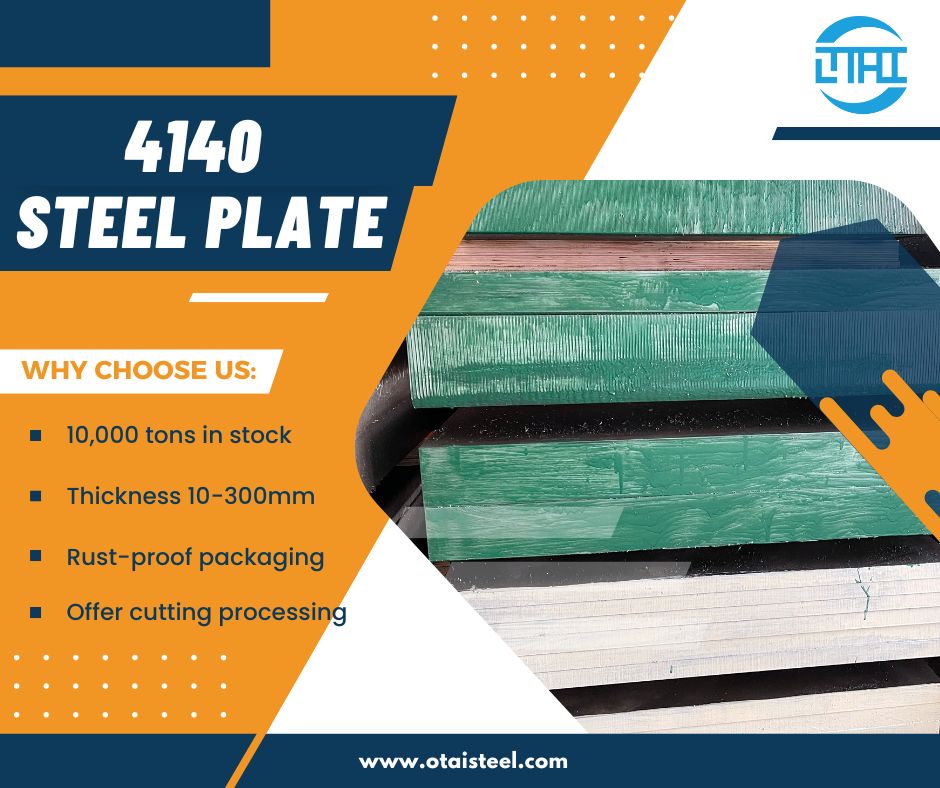
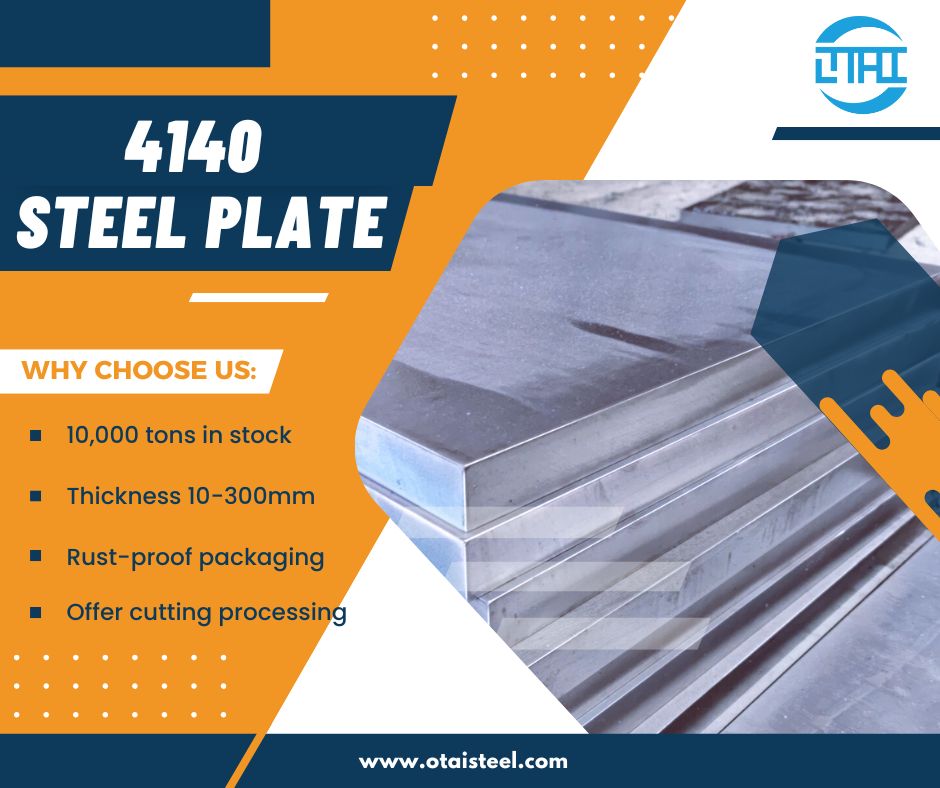
At Otai Special Steel, we offer high-quality 4140 steel optimized for laser cutting and other advanced fabrication methods. Our advantages:

  • Large inventory — over 10,000 tons, from 6mm to 300mm thickness
  • Precision cutting and custom sizes available
  • Support with technical consultation on laser cutting parameters
  • Quality assurance with chemical and mechanical testing
  • Fast global shipping and trusted by Thyssenkrupp, Borealis, Schlumberger, and more

📧 Contact us: jack@otaisteel.com
📱 WhatsApp: +8676923190193


FAQs

Q1: Can 4140 steel be laser cut at any thickness?
Generally, laser cutting is best for 4140 steel thickness up to 20mm. Thicker plates require slower speeds or alternative cutting methods.

Q2: Which assist gas is better for cutting 4140 steel?
Oxygen is faster but may oxidize edges. Nitrogen provides cleaner, oxidation-free edges at slower speeds.

Q3: Does laser cutting affect the mechanical properties of 4140 steel?
If not properly controlled, the heat-affected zone can alter hardness or induce stresses. Post-cut heat treatment can restore properties.

Q4: How do I prevent cracking when laser cutting 4140 steel?
Use appropriate power and speed settings, preheat thick parts, and consider post-cut stress relief.

Q5: Can Otai Steel supply laser-cut 4140 steel parts?
Yes! We offer precision cutting and heat treatment services to meet your exact needs.
0 0 Continue Reading →

How strong is 4140 steel?

How strong is 4140 steelHow strong is 4140 steel: Real Strength & Why It Matters

If you’ve ever wondered, “Is 4140 steel really that strong?” — you’re not alone! Tons of engineers, machinists, and buyers ask this all the time. So let’s break it down in a clear, friendly way and get to the heart of what makes 4140 steel such a favorite in tough jobs.


⚙️ What’s Special About 4140 Steel?

First off, 4140 is a chromium-molybdenum alloy steel, which basically means it has some extra elements mixed in to give it better strength, toughness, and wear resistance than your average carbon steel.

Think of it like this — 4140 steel is the “athlete” of steels. It can take a beating, bounce back, and keep on working hard. It’s used everywhere from automotive shafts to heavy machinery parts, because it handles stress and shock like a champ.


🔥 How Strong Is 4140 Steel, Really?

Alright, let’s talk numbers — but no boring textbook style, promise!

  • Tensile Strength: This tells us how much pulling force 4140 steel can take before snapping. Heat treated 4140 usually ranges from 90,000 to 115,000 psi (or about 620 to 790 MPa if you’re into metric). That’s some serious muscle.

  • Yield Strength: The point where the steel starts to permanently deform (bend or stretch). For 4140, that’s around 60,000 to 95,000 psi (about 415 to 655 MPa). This means it can take a lot of force before it stops acting like a spring and starts to bend.


🛠️ What Makes 4140 Steel This Strong?

The magic happens in two places:

  1. Chemistry: With 0.38-0.43% carbon and alloying elements like chromium and molybdenum, 4140 steel can be heat treated to get a perfect combo of hardness and toughness.

  2. Heat Treatment: Quenching and tempering (Q&T) is where the real power shows up. This process rapidly cools the steel and then reheats it just enough to reduce brittleness, leaving you with a steel that’s hard and tough.

Without heat treatment? It’s still good, but nowhere near its peak strength.


🌟 Real Talk: Where Does 4140 Shine?

  • Automotive Parts: Think about crankshafts and gears. These parts get spun, twisted, and slammed constantly. 4140 steel’s strength means they won’t snap or wear out quickly.

  • Industrial Machinery: Pins, shafts, couplings — all subjected to heavy loads and cycles. 4140 resists fatigue and keeps machines running longer.

  • Oil & Gas Industry: Drill collars made of 4140 steel handle underground pressures and tough environments without breaking a sweat.


📊 Quick Strength Comparison Chart

Steel Grade Tensile Strength (MPa) Yield Strength (MPa) Hardness (HRC)
4140 Steel (Q&T) 620 – 790 415 – 655 28 – 32
1045 Carbon Steel 570 – 700 310 – 460 20 – 25
A36 Structural Steel 400 – 550 250 – 350 10 – 20
4340 Alloy Steel 745 – 930 570 – 720 32 – 38

You can see 4140 stands out over regular carbon steel — making it a great “go-to” alloy when strength matters.


⚠️ Important: Strength Isn’t Everything

Here’s a tip — while 4140 steel is strong, it also balances toughness and fatigue resistance. This means it’s less likely to crack or fail suddenly under repeated stress. That’s why it’s popular for parts that experience constant bending or impact.

Plus, it’s still machinable and weldable (with proper pre- and post-heat treatments), which makes it flexible for manufacturing.


🧩 So, Should You Pick 4140 Steel?

If your project calls for a steel that’s tough, strong, and reliable under stress, 4140 is a fantastic choice.

Just remember:

  • If you want max strength, get it quenched and tempered.

  • For easier machining or forming, consider annealed or normalized conditions.

  • It’s great for shafts, gears, automotive parts, heavy equipment, and more.


🌟 Why Otai Steel Is Your Best Partner for 4140 Steel

At Otai, we get it — your parts need to perform flawlessly every time. That’s why we offer:

  • A huge stock of 4140 steel in sizes from 6mm to 300mm thick
  • Customized cutting and heat treatments like annealing and Q&T
  • Full testing with chemical analysis and ultrasonic inspection
  • Expert advice for choosing the right steel condition
  • Reliable shipments worldwide to clients like Thyssenkrupp and Schlumberger

❓ FAQs on 4140 Steel Strength

Q: What is the tensile strength of 4140 steel?
A: Between 90,000 and 115,000 psi after heat treatment.

Q: Can 4140 steel be heat treated for better strength?
A: Yes! Quenching and tempering is the key.

Q: Is 4140 steel good for high-stress parts?
A: Definitely. It’s used in automotive, aerospace, and oil & gas sectors.

Q: How does 4140 compare to 1045 steel?
A: 4140 is stronger, tougher, and more wear-resistant.

Q: Is 4140 steel weldable?
A: Yes, with proper preheat and post-weld heat treatment.


If you want to chat more about 4140 steel or get a quote, reach out anytime!

📧 jack@otaisteel.com
📱 WhatsApp: +8676923190193

0 0 Continue Reading →

Is 4140 Steel Machinable?

Is 4140 Steel Machinable?Is 4140 Steel Machinable? | What You Need to Know Before You Start Cutting

4140 steel is well-known in the metalworking world for its excellent strength, toughness, and fatigue resistance. But one question we often get from engineers and machinists is: “Is 4140 steel machinable?” 🧐

The short answer? Yes, it absolutely is — but only if you understand the material’s behavior and apply the right strategies. Let’s explore how machinable 4140 really is, how it compares to other steels, and what you can do to achieve the best results.


🧪 What Is 4140 Steel Exactly?

4140 steel is a chromium-molybdenum (Cr-Mo) alloy steel, known for its great balance between strength, toughness, and wear resistance. It’s typically classified as a medium carbon alloy steel with the following approximate chemical composition:

  • Carbon: 0.38–0.43%

  • Manganese: 0.75–1.00%

  • Chromium: 0.80–1.10%

  • Molybdenum: 0.15–0.25%

This steel can be used in the annealed, normalized, or pre-hardened condition. It’s used in parts like axles, gears, shafts, and high-stress automotive and aerospace components.


✂️ Is 4140 Steel Machinable?

Yes — 4140 steel is machinable, especially in the annealed or pre-hardened state. However, it’s not as easy to machine as free-machining steels like 12L14 or mild carbon steels. It requires the right setup, proper tooling, and controlled speeds and feeds.

The machinability rating of 4140 steel is approximately 66% compared to AISI 1112 steel (which is rated 100%).


🔍 Machinability by Condition

🔧 4140 Annealed Machinability

In the annealed state (typically around 16-22 HRC), 4140 is much easier to machine. It’s soft enough to cut smoothly while retaining decent mechanical strength. If you’re doing general-purpose machining, this is the most recommended condition.

Common use: Large volume machining where subsequent heat treatment is done later.

⚙️ 4140 Pre-Hardened Machinability

Pre-hardened 4140 (also known as 4140 PH or 4140 QT) is usually hardened to 28–32 HRC. This version is still very machinable with carbide tools, though slower speeds and higher tool pressure are needed.

This condition is ideal when you want to skip heat treatment and go straight to final machining.

Used for: Tooling components, fixtures, high-strength shafts.


🧰 Tooling Tips for Machining 4140

Machining 4140 effectively is all about choosing the right tools. Here’s what works best:

  • Use carbide inserts or coated HSS tools

  • Keep speeds moderate and feeds steady

  • Use high-quality coolant to avoid thermal cracks

  • Ensure rigidity — no chatter allowed!

If you’re dealing with tool wear when cutting 4140, it’s often due to excessive speeds or poor chip evacuation.


📏 Recommended Speeds & Feeds

Condition Tool Type Cutting Speed (SFM) Feed (IPR)
Annealed HSS 70–100 0.003–0.007
Annealed Carbide 150–200 0.005–0.010
Pre-hardened Carbide 90–150 0.004–0.008
Hardened (>32HRC) Carbide 60–100 0.002–0.005

🔍 Tip: Always start conservative and increase feed/speed gradually.


🌀 How Does 4140 Compare to Other Steels?

1️⃣ 4140 vs 1045 Steel Machinability

1045 is easier to machine due to its lower carbon and alloy content. But 4140 offers far better tensile strength and fatigue resistance.

2️⃣ 4140 vs 4340 Machinability

4340 steel contains more nickel and is tougher, but harder to machine. 4140 is more machinable and cheaper, making it a better choice when ultra-high strength is not required.

3️⃣ 4140 vs 8620 Machinability

8620 steel is easier to machine in its normalized state. However, it’s often carburized, which creates a hard case layer that can be difficult to machine afterward. 4140 prehard is more consistent for precision machining.


🏭 Why Choose Otai Special Steel?

At Otai Special Steel, we specialize in supplying high-performance 4140 steel for machining applications:

  • Large Inventory: Over 10,000 tons of 4140 steel plates and round bars in stock, thickness from 6mm to 300mm.
  • Machining-Friendly Supply: We offer pre-hard, annealed, or normalized 4140, ready for machining.
  • Quality Assured: UT-tested, full mill certs, and third-party inspection like SGS supported.
  • Global Supply Experience: We’ve supplied to world-renowned clients such as Thyssenkrupp, Schlumberger, and more.
  • Fast Service: We respond quickly to WhatsApp/email inquiries — no delays, just solutions!

📩 Need a quote for machinable 4140 steel? Contact us now — we ship worldwide!


❓ Frequently Asked Questions (FAQ)

Q1: Can you machine 4140 steel without annealing?

Yes, especially in the prehard condition (28–32 HRC). Just use proper tooling and reduce speeds.

Q2: What are the best cutting tools for 4140 steel?

Carbide inserts are ideal, especially for pre-hardened material. Coated HSS can be used for roughing.

Q3: Does 4140 steel wear out tools quickly?

Tool wear is moderate but manageable with the right feeds, speeds, and coolant setup.

Q4: Should I use coolant when machining 4140?

Absolutely — coolant helps control heat and prolongs tool life, especially during deeper cuts.

Q5: Is 4140 good for CNC machining?

Yes, it performs very well in CNC setups due to its stability, dimensional consistency, and strength.

0 0 Continue Reading →

Is 4140 Steel Good for Axes? The Real Scoop on Strength and Durability

Is 4140 Steel Good for Axes? The Real Scoop on Strength and DurabilityIs 4140 Steel Good for Axes? The Real Scoop on Strength and Durability

If you’re into axe making, outdoor tools, or just curious about steel types, you might wonder: Is 4140 steel good for axes? 🤔 This question pops up a lot among blacksmiths, DIY enthusiasts, and professionals alike.

So, let’s cut right to it! We’ll explore 4140 steel for axe heads, its toughness, heat treatment options, and how it stacks up against other steels for axe durability. Ready? Let’s chop into the details! 🔥


🪓 What Is 4140 Steel and Why Does It Matter for Axes?

4140 steel is a chromium-molybdenum alloy steel prized for its excellent strength, toughness, and wear resistance. This makes it popular in many industries—from automotive shafts to heavy-duty tools.

For axes, these properties mean that a 4140 steel axe head can handle high impact, resist deformation, and hold an edge well. But is it the best choice? Let’s see.


💪 Toughness and Strength: 4140 Steel for Axe Blades

When chopping wood or other materials, your axe blade needs to withstand:

  • Impact shocks (from swinging and hitting hard surfaces)

  • Wear and abrasion (edge getting dull from use)

  • Flexing forces (so it doesn’t snap or crack)

4140 steel toughness is one of its strongest points. Thanks to the chromium and molybdenum content, it offers a nice balance between hardness and ductility. That means the axe head can absorb shocks without cracking, and the edge can stay sharp longer.

Compared to softer steels like 1045 or simple carbon steels, 4140 is definitely tougher and more durable for high-stress applications like axes.


🔥 Heat Treatment: The Secret to Unlocking 4140 Steel’s Axe Potential

4140 steel’s performance really shines after proper heat treatment. The usual process is quench and temper, which hardens the steel while keeping enough toughness to prevent brittleness.

Here’s what happens:

  • Quenching rapidly cools the heated steel to lock in hardness.

  • Tempering reheats the steel at a lower temperature to reduce brittleness but keep strength.

For axe heads, heat treating 4140 to about 28-32 HRC hardness is ideal. This gives the axe a sharp, durable edge without making it too brittle to handle impact.


⚔️ 4140 Steel vs Other Common Axe Steels

Is 4140 better than other steels typically used for axes? Here’s a quick comparison:

Steel Type Hardness (HRC) Toughness Edge Retention Ease of Heat Treatment Cost
4140 28-32 High Good Moderate Moderate
1055 Carbon 50-55 Moderate Good Easy Low
1095 Carbon 55-60 Lower (brittle) Excellent Easy Low
5160 Spring 50-55 Very High Good Moderate Moderate

What does this mean?

  • 4140 is tougher and more impact-resistant than high carbon steels like 1095 but less hard—so it won’t hold an edge quite as long.

  • If you want maximum edge retention, 1095 might be better, but it can chip if misused.

  • For overall durability and toughness (especially for heavy chopping), 4140 and 5160 are solid choices.


🌳 Real-World Uses: Where 4140 Axes Shine

4140 steel axes are favored for:

  • Heavy-duty chopping tools where toughness matters more than razor-sharp edges

  • Utility axes that must resist cracks and bends in rough outdoor conditions

  • Custom or forged axe heads where machinability and heat treatment flexibility come in handy

One of our clients in the forestry industry switched from standard carbon steel axes to 4140 steel and reported a significant drop in edge chipping and longer tool life.


🛠️ Tips for Working With 4140 Steel When Making Axes

If you’re making or buying a 4140 steel axe head, keep these in mind:

  • Always heat treat properly: Quenching and tempering are musts. Avoid untreated 4140 for axe blades.

  • Respect minimum bend radius if shaping—4140 is tougher but can crack if bent cold incorrectly.

  • Consider nitriding or black oxide finishes for better corrosion resistance and surface hardness.

  • Sharpen at recommended angles (around 25-30°) to balance durability and cutting performance.


🏭 Why Otai Steel Is Your Go-To Source for 4140 Steel Axes and Components

  • Stock of 4140 alloy steel from 6mm to 300mm thickness, cut-to-size to fit your axe design
  • Custom heat treatment options including quench & temper and nitriding
  • Precision cutting and machining support for axe head fabrication
  • Full chemical and mechanical testing to ensure quality and consistency
  • Trusted by global leaders like Thyssenkrupp, Borealis, and Schlumberger
  • Fast worldwide shipping and reliable customer service

Ready to source top-quality 4140 steel for axe making? Contact us!

📧 jack@otaisteel.com
📱 WhatsApp: +8676923190193


❓ FAQs – Is 4140 Steel Good for Axes?

Q1: Can 4140 steel hold a sharp edge for an axe?
A: Yes, when properly heat treated to 28-32 HRC, it balances edge retention and toughness.

Q2: Is 4140 steel better than 1045 or 1055 for axes?
A: It’s tougher and more impact resistant than 1045/1055, but those may hold sharper edges longer.

Q3: Can I use 4140 steel without heat treatment?
A: Not recommended. Untreated 4140 is too soft for axes.

Q4: Does 4140 steel resist cracking under heavy use?
A: Yes, it has excellent toughness and fatigue resistance.

Q5: Can Otai supply 4140 steel cut to custom axe shapes?
A: Absolutely! We offer precision cutting, heat treatment, and machining services.


If you want a tough, reliable axe that can take the beating of serious chopping, 4140 steel is a smart choice. Just make sure it’s heat treated right, and it’ll be your trusted companion for years.

0 0 Continue Reading →

4140 Steel Hardness HRC: How Hard Can It Really Get?

4140 Steel Hardness HRC: How Hard Can It Really Get?4140 Steel Hardness HRC: How Hard Can It Really Get?

When you hear 4140 steel hardness HRC, you might wonder, just how hard is 4140 steel? Whether you’re an engineer, machinist, or buyer, knowing the hardness range and what affects it is crucial for making the right material choice. So, let’s unpack the truth about 4140 steel hardness levels, heat treatment effects, and why this alloy is so widely trusted.


🔍 What Does HRC Mean for 4140 Steel?

HRC (Rockwell Hardness C scale) measures how resistant steel is to indentation. For 4140 steel hardness HRC, this number changes drastically depending on whether the steel is annealed, normalized, or quenched and tempered. The Rockwell scale is particularly useful because it correlates well with real-world toughness and machinability.

Typical 4140 steel hardness values range from:

  • Annealed 4140: 16-22 HRC — softer, easier to machine but less wear-resistant.

  • Normalized 4140: 23-28 HRC — a bit harder, more strength.

  • Quenched and tempered 4140: 28-32 HRC, sometimes up to 35 HRC — optimal balance of hardness and toughness.

  • Nitrided 4140 surface: 50+ HRC on the surface, while core remains tough.


🔥 Why Does Hardness Vary So Much?

The real magic (and complexity) happens in 4140 steel heat treatment. Without it, 4140 is relatively soft. Once quenched and tempered (Q&T), the steel’s microstructure changes—martensite forms and grain boundaries tighten—resulting in a much higher hardness and strength.

  • Quenching rapidly cools the steel, locking in a hard but brittle martensitic phase.

  • Tempering gently reheats it, reducing brittleness but keeping the hardness mostly intact.

This is why the 4140 steel hardness HRC after heat treatment usually lands in that sweet 28-32 range, striking a strong yet resilient balance.


⚙️ How Does Hardness Impact Your Work?

Understanding hardness is key to anticipating how 4140 steel will behave:

  • Machinability: Lower HRC (annealed) = easier cutting and shaping; higher HRC (Q&T) = tougher to machine, requires better tools.

  • Wear resistance: Harder steel withstands abrasion longer—critical for gears, shafts, and heavy-duty parts.

  • Toughness vs brittleness: Higher hardness can mean more brittleness if tempering isn’t done right.

Knowing the 4140 steel hardness chart helps you pick the right condition for your application and tooling.


📊 Comparing 4140 Steel Hardness to Other Steels

For perspective, here’s how 4140 stacks up:

Steel Grade Typical Hardness (HRC) Notes
Mild Steel (annealed) 12-16 Very easy to machine, low strength
1045 Steel (Q&T) 23-28 Medium strength and hardness
4140 Steel (Q&T) 28-32 (can go higher) High strength and toughness
Tool Steel 50+ Extremely hard, often brittle

This shows why 4140 steel hardness hrc in quenched and tempered form is a sweet spot for many demanding industrial uses.


💡 Tips for Achieving Desired Hardness in 4140 Steel

If you want to tweak hardness for specific needs, consider:

  • Adjust tempering temperature: Lower tempering temperature = higher hardness but less toughness; higher tempering temp = softer but tougher.

  • Surface treatments: Nitriding or flame hardening can boost surface hardness to 50+ HRC while keeping the core tough.

  • Controlled cooling rates: Ensuring proper quench media (oil, water, polymer) and cooling rates avoids cracking or uneven hardness.

These techniques give you flexibility beyond the typical 4140 steel hardness range.


🏭 Real-World Uses That Depend on 4140 Hardness

4140’s hardness versatility makes it ideal for:

  • Automotive shafts and gears: Need to be tough and wear-resistant.

  • Hydraulic cylinders and pins: Require hardness to resist wear but also impact toughness.

  • Tooling and dies: Benefit from surface hardening combined with tough core.

  • Heavy machinery components: Must survive fatigue and heavy loads over time.

In all these, controlling 4140 steel hardness HRC through heat treatment and finishing is essential to prevent premature failure and downtime.


🔧 Why Consistent Hardness Matters

Uneven hardness or incorrect heat treatment can cause:

  • Cracking or brittleness: Especially if quenched too fast or tempered insufficiently.

  • Poor wear resistance: If annealed or under-tempered.

  • Machining challenges: Too hard = tool wear and breakage.

That’s why a proper 4140 steel hardness test and quality control are non-negotiable for reliable parts.


🏢 Why Otai Steel Is Your Best Partner for 4140 Steel Hardness Solutions

At Otai Special Steel, we’re proud to be your trusted steel supplier and service partner for 4140 steel hardness HRC needs. Here’s why customers worldwide choose us:

  • ✅ Huge stock: Over 10,000 tons of 4140 steel available from 6mm to 300mm thickness

  • ✅ Variety of conditions: Annealed, normalized, quenched & tempered, nitrided

  • ✅ Precision cutting & custom dimensions for your exact application

  • ✅ Full testing: chemical, mechanical, hardness (HRC) and ultrasonic inspections

  • ✅ Fast global shipping and trusted by top companies like Thyssenkrupp, Borealis, Schlumberger

We help you get the right 4140 steel hardness level for your project, balancing strength, toughness, and machinability.

📧 Reach out at jack@otaisteel.com
📱 Or WhatsApp: +8676923190193


❓ FAQs – 4140 Steel Hardness HRC: Your Questions Answered

Q1: What is the typical hardness range of 4140 steel after heat treatment?
A: Usually between 28-32 HRC after proper quenching and tempering.

Q2: Can 4140 steel be hardened beyond 32 HRC?
A: Surface treatments like nitriding can boost surface hardness to 50+ HRC without sacrificing core toughness.

Q3: How does annealed 4140 hardness compare?
A: Annealed 4140 is much softer, around 16-22 HRC, which is easier to machine but less wear-resistant.

Q4: Does higher hardness mean more brittleness?
A: Not necessarily—tempering balances hardness and toughness. Poor heat treatment can cause brittleness.

Q5: Is hardness testing important for 4140 steel parts?
A: Absolutely, consistent hardness ensures reliability, machinability, and performance.

0 0 Continue Reading →

4140 Steel Grinding: Mastering the Technique Without Burning Out

4140 Steel Grinding: Mastering the Technique Without Burning Out4140 Steel Grinding: Mastering the Technique Without Burning Out

When it comes to machining and finishing 4140 steel, grinding is often the final step to achieve precision, tight tolerances, and a clean surface finish. But 4140 isn’t your average steel—it’s tough, strong, and heat-treatable. That means grinding it the wrong way can lead to burns, cracks, and unnecessary tool wear. 😩

So how do you grind 4140 steel the smart way? Let’s dive into the process, tools, parameters, and tips you need to know to handle this alloy like a pro. 😎


🌟 What Makes 4140 Steel Tricky to Grind?

4140 alloy steel is a chromium-molybdenum (Cr-Mo) low-alloy steel with medium carbon content. It offers a great balance of strength, toughness, and hardenability—but these same traits can make it more difficult to grind compared to softer materials like mild steel.

Things to watch out for:

  • High heat sensitivity (can cause surface burns)

  • Work hardening during dry grinding

  • Risk of microcracking if overheating occurs

That’s why choosing the right technique and tools is critical when you’re grinding 4140.


🧱 Recommended Grinding Methods for 4140 Steel

There are several common grinding techniques used based on the part geometry and finish requirements:

1️⃣ Surface Grinding 4140 Steel

Ideal for flat surfaces. Use coolant generously and go easy on depth per pass. A resin bond aluminum oxide wheel is usually suitable unless the steel has been hardened.

2️⃣ Cylindrical Grinding of 4140

Perfect for round parts like shafts. For hardened shafts, you’ll need to use a CBN wheel to maintain profile accuracy and avoid glazing.

3️⃣ Centerless Grinding

Used when parts don’t have centers. Effective but requires precise setup.


🔍 Choosing the Best Grinding Wheel

Not all wheels are created equal! The best grinding wheel for 4140 steel depends on its heat treatment condition and desired finish.

Condition of 4140 Recommended Wheel Type
Annealed (soft) Aluminum oxide (A46 or A60)
Hardened (28–32 HRC) CBN (Cubic Boron Nitride) or Ceramic
Nitrided Surface CBN with fine grit for surface control

For how to grind hardened 4140 steel, CBN wheels are your best friends—they offer high thermal resistance and low dressing requirements.


⚙️ Grinding Parameters: Speed, Feed & Coolant

Setting the right parameters is key to avoid damaging the steel or your grinding wheel.

✨ Key 4140 Steel Grinding Parameters:

  • Wheel Speed (VS): 30–35 m/s (typical for hardened steel)

  • Work Speed (VW): 10–25 m/min

  • Depth of Cut: 0.01–0.03 mm/pass (light passes recommended)

  • Feed Rate: Slow and steady—don’t rush

Using the proper grinding speed for 4140 alloy steel helps prevent overheating, improves tool life, and ensures a smoother surface.

💦 Pro tip: Use flood coolant generously to dissipate heat. Dry grinding is not recommended unless you have specialized equipment.


🧪 What Happens If You Don’t Do It Right?

Grinding 4140 steel the wrong way can lead to:

  • Burn marks and discoloration

  • Cracking or checking due to thermal shock

  • Hardness variation across the surface

  • Rapid wheel wear

💥 Especially after heat treatment, 4140 becomes even more sensitive. That’s why grinding 4140 steel after heat treatment requires slower passes, more coolant, and precise control of wheel pressure.


🌡️ Heat Generation & Its Effects

One of the biggest concerns during grinding is heat.

Grinding naturally creates friction, but with 4140 steel, this can quickly build up and cause:

  • Surface decarburization

  • Grain boundary oxidation

  • Alteration of mechanical properties

That’s why minimizing the heat generated during grinding 4140 is essential for maintaining part integrity.


💧 Coolant: Don’t Skip It!

Coolant is your best friend when grinding this alloy. Whether it’s oil-based or water-soluble, always:

  • Direct the stream right into the grinding zone

  • Maintain a steady pressure

  • Replace dirty coolant regularly to avoid contamination

Proper coolant use in 4140 steel grinding not only reduces heat but also flushes away swarf, improving surface finish.


🛠️ Pro Tips & Best Practices

  • Dress the Wheel Regularly: Keeps the abrasive surface sharp
  • Use Sharp Tools: Avoid forcing dull wheels into hard material
  • Pre-heat Hardened Parts: Slightly warming the part reduces thermal shock
  • Test Passes: Run test cuts on sample pieces before final grinding

🌍 Real-World Applications That Demand 4140 Grinding

Grinding 4140 steel isn’t just for fun—it’s necessary for components like:

  • Precision shafts and gears

  • Tooling dies and punches

  • Hydraulic cylinder rods

  • Automotive transmission parts

  • Structural parts in aerospace or energy

These parts require tight tolerances and clean surfaces, and proper grinding ensures they meet specs without failures.


🎯 Final Thoughts: Mastering the Grind

Grinding 4140 steel takes a mix of the right setup, sharp tools, and smart technique. Whether you’re working with annealed material or hardened 4140, the key is to manage heat, use proper wheels, and respect the material’s toughness.

👉 Want to ensure flawless machining from start to finish? Trust the process and your tools—and when in doubt, test before committing to full production.


🏭 Why Choose Otai for 4140 Steel?

At Otai Special Steel, we’re more than just a steel supplier—we’re your heat treatment advisor and reliable partner. Here’s why global customers trust us:

  • Over 10,000 tons of 4140 steel in stock
  • Available in annealed, Q&T, or normalized condition
  • Thickness from 6mm to 300mm, cut to exact size
  • Chemical and mechanical testing (with SGS/BV support)
  • Support with flame hardening guidelines and post-processing
  • Supplied to companies like Thyssenkrupp, Borealis, Schlumberger
  • Export-ready: rust-proof packaging, fast global delivery

📧 Email: jack@otaisteel.com
📱 WhatsApp: +8676923190193

0 0 Continue Reading →

Flame Hardening 4140 Steel: How It Works and When to Use It

Flame Hardening 4140 Steel: How It Works and When to Use ItFlame Hardening 4140 Steel: How It Works and When to Use It

If you’re working with parts that need localized hardness without sacrificing core toughness, then flame hardening 4140 steel might be just what you need. It’s one of the most effective ways to improve surface durability—especially for components under wear and abrasion.

But how does it really work? What are the key process parameters? And is it better than other surface hardening options?

Let’s dig into the facts, tech tips, and practical use cases that every engineer, machinist, or buyer should know. ⚙️


🔍 What Is Flame Hardening and Why Use It on 4140?

Flame hardening is a type of surface hardening process that uses high-temperature oxy-fuel flames to rapidly heat the steel surface, followed by immediate quenching. This creates a hard martensitic outer layer, while the core stays tough and ductile.

When applied to 4140 steel—a chromium-molybdenum alloy with good hardenability—the results are excellent. You get:

  • High surface hardness (50–60 HRC)

  • Enhanced wear resistance

  • Minimal distortion if done correctly

  • Cost-effective localized treatment

📌 Can you flame harden 4140 steel?
Absolutely! In fact, 4140 responds very well to flame hardening because of its carbon content (~0.40%) and alloying elements like Cr and Mo, which improve hardenability.


🧪 Chemical & Mechanical Foundation of 4140

Before understanding flame hardening process for 4140 steel, it helps to know the base material:

Element Composition (%)
Carbon (C) 0.38 – 0.43
Chromium (Cr) 0.80 – 1.10
Molybdenum (Mo) 0.15 – 0.25
Manganese (Mn) 0.75 – 1.00
Silicon (Si) 0.15 – 0.35

Its strength, fatigue resistance, and alloy content make it ideal for surface hardening 4140 steel with flame.


🔥 How Flame Hardening Works for 4140 Steel

Here’s a simplified step-by-step:

  1. Preheat not required (if part is not massive or under residual stress)

  2. Apply flame to the surface using oxy-acetylene torch or automated flame head

  3. Heat surface quickly to ~1600–1700°F (870–925°C)
    → This is the critical flame hardening temperature for 4140 steel

  4. Quench with water or polymer spray immediately

  5. Optional stress relieving or tempering to stabilize part

This transforms the surface into hard martensite, while the core remains unaffected.


📏 Typical Flame Hardening Results on 4140

Here are typical outcomes after flame hardening:

Property Value
Surface Hardness (HRC) 50 – 60 HRC
Case Depth 1.0 – 5.0 mm
Core Hardness (Q&T 4140) 28 – 32 HRC
Best Geometry Shafts, gears, rails, tracks
4140 steel hardness after flame hardening High enough for tooling & wear parts

The 4140 steel flame hardening depth depends on flame duration, torch power, and quench timing. Typical case depths range between 1.5–3 mm, which is ideal for wear surfaces.


🆚 Flame Hardening vs Induction Hardening for 4140

If you’re comparing flame hardening vs induction hardening 4140, here’s what to consider:

Feature Flame Hardening Induction Hardening
Equipment Cost Lower Higher
Precision Moderate High (automated control)
Ideal For Small to medium batches High-volume production
Heat Penetration Control Manual Exact control via frequency
Application Flexibility High (any geometry) Limited to compatible shapes

So which one is better?

  • Use flame hardening when you want cost-effective surface hardening for limited or custom parts

  • Choose induction for high-repeatability jobs where precision is critical


🧰 Common Applications of Flame Hardened 4140

4140 is often flame hardened in industries like:

  • 🚛 Automotive: axles, camshafts, steering arms

  • 🏭 Industrial machinery: guide rails, wear strips

  • 🛢️ Oil & gas: downhole tools, pump rods

  • ⚙️ General engineering: gears, bearing races

  • 🔧 Tooling: anvils, punches, shearing blades

In these areas, flame hardened 4140 applications are favored for combining strength with surface wear resistance.


💡 Tips for Successful Flame Hardening of 4140

  • Use controlled flame head movement for even heating

  • Avoid overheating—causes excessive decarburization

  • Always quench immediately after heating

  • For critical parts, perform post-hardening tempering at ~500°F (260°C) to relieve internal stress

  • Avoid flame hardening thin sections—they may warp

Also: never flame harden nitrided or case-hardened parts, as surface cracking may occur.


🧪 Alternate Heat Treatment Options for 4140 Steel

If flame hardening isn’t ideal for your project, consider these heat treatment options for 4140 steel:

  • Quenching and Tempering (Q&T): For full cross-section hardness

  • Nitriding: For very thin, high surface hardness without quenching

  • Carburizing: Adds carbon to low-carbon steels, not common for 4140

  • Induction Hardening: Precision surface treatment like flame hardening, but costlier


🏭 Why Choose Otai for Flame Hardenable 4140 Steel?

At Otai Special Steel, we’re more than just a steel supplier—we’re your heat treatment advisor and reliable partner. Here’s why global customers trust us:

  • Over 10,000 tons of 4140 steel in stock
  • Available in annealed, Q&T, or normalized condition
  • Thickness from 6mm to 300mm, cut to exact size
  • Chemical and mechanical testing (with SGS/BV support)
  • Support with flame hardening guidelines and post-processing
  • Supplied to companies like Thyssenkrupp, Borealis, Schlumberger
  • Export-ready: rust-proof packaging, fast global delivery

📧 Email: jack@otaisteel.com
📱 WhatsApp: +8676923190193


❓FAQs – Flame Hardening 4140 Steel

Q1: Can I flame harden 4140 at home?
Technically yes, but you need controlled flame equipment and quenching setup. DIY may risk warping or cracking.

Q2: What’s the best torch for flame hardening 4140?
Use an oxy-acetylene torch with a neutral or slightly carburizing flame.

Q3: How deep can flame hardening go on 4140 steel?
Typically 1.5–3.0 mm. Deeper cases require longer exposure and multiple passes.

Q4: Should I temper 4140 after flame hardening?
Yes, light tempering helps reduce internal stress and improve toughness.

Q5: Is flame hardening better than induction for 4140?
It depends—flame hardening is cheaper and flexible; induction is more precise and repeatable.

0 0 Continue Reading →

4140 Steel Electrical Conductivity: What You Should Really Know

4140 Steel Electrical Conductivity: What You Should Really Know4140 Steel Electrical Conductivity: What You Should Really Know

If you’ve ever asked yourself, “Is 4140 steel conductive?” or wondered how it compares to other materials in terms of electrical performance—you’re not alone. Engineers, machinists, and product designers working on both mechanical and electromechanical systems often want to know:

💬 “Can 4140 steel be used in circuits?”
💬 “What is the electrical conductivity of 4140 steel?”
💬 “How does it compare with copper or stainless steel?”

Let’s break it all down—clearly, practically, and with some sparks of insight 🔧⚡


📌 What Is 4140 Steel Made Of?

4140 is a low-alloy chromium-molybdenum steel, widely used in gears, shafts, axles, and high-stress components. It’s beloved for its strength, toughness, and wear resistance, but when it comes to conducting electricity, it’s a very different story.

Here’s a look at its basic composition:

Element Typical Content (%)
Carbon (C) 0.38 – 0.43
Chromium (Cr) 0.80 – 1.10
Molybdenum (Mo) 0.15 – 0.25
Manganese (Mn) 0.75 – 1.00
Silicon (Si) 0.15 – 0.30

These alloying elements strengthen the steel—but also lower its electrical conductivity compared to pure metals like copper or aluminum.


⚡ Electrical Conductivity of 4140 Steel: The Numbers

To put it bluntly, 4140 is a poor electrical conductor—and that’s by design.

  • Electrical conductivity of 4140 steel: ~2.7–3.2% IACS

  • Electrical resistivity: ~55–60 µΩ·cm (micro-ohm centimeters)

To put that in perspective:

Material Conductivity (% IACS) Electrical Resistivity (µΩ·cm)
Copper 100 1.72
Aluminum ~61 2.82
Stainless Steel 304 ~2 ~72
4140 Steel ~3 ~58

So while 4140 alloy steel electrical resistivity is lower than that of stainless steel, it is still very high compared to copper or aluminum. That means: don’t use 4140 steel in electrical circuits or as a conductor unless you have no other choice.


🔌 Does 4140 Steel Conduct Electricity?

Technically, yes—all metals conduct electricity to some extent, and 4140 is no exception.

But if you’re wondering “Does 4140 steel conduct electricity efficiently?”, the answer is a firm no. Its high resistance makes it unsuitable for applications where current needs to flow easily or heat needs to be managed via conduction.

💡 Use case tip: If you’re using 4140 steel for structural parts that happen to be near or touching conductive surfaces, make sure to ground properly and avoid assumptions about its conductivity performance.


🔍 4140 Steel vs Copper Conductivity – A Quick Comparison

Let’s be clear: 4140 steel vs copper conductivity is like comparing a truck to a lightning bolt.

Property 4140 Steel Copper
Conductivity (% IACS) ~3 100
Heat Conductivity (W/m·K) ~42 ~385
Machinability Good Fair
Cost Lower Higher

If your application requires current flow, heat transfer, or low resistance, go with copper.
If you need mechanical strength and conductivity is secondary, 4140 might still be acceptable.


🔥 Thermal and Electrical Properties of 4140 Steel

While we’re here, let’s not forget about thermal performance—it often goes hand-in-hand with electrical characteristics.

Property Value
Thermal Conductivity ~42 W/m·K
Specific Heat Capacity ~0.46 J/g·K
Melting Point ~1425–1540°C
Thermal Expansion ~12.2 µm/m·K

So although thermal and electrical properties of 4140 steel are decent for a structural material, they’re nowhere near specialized conductive metals. Still, 4140 handles thermal cycling quite well—making it suitable for tools or parts exposed to heat but not needing to carry current.


🧠 Is 4140 Steel Suitable for Electrical Applications?

If you’re designing a conductor, bus bar, or electrical contact4140 steel is not the right choice. Its high resistivity means poor energy transfer and heat buildup under load.

However, 4140 steel for electrical applications can still make sense in indirect roles:

  • Structural parts that support electrical assemblies

  • Grounded enclosures or support brackets (if conductivity is not essential)

  • Insulated mounts where mechanical strength is more important than conductivity


💡 Real-World Use Case – Custom Brackets in a Power Substation

We once had a client from Malaysia building custom high-strength brackets in a power substation. They initially used aluminum for better conductivity—but found it too soft and prone to fatigue.

We recommended 4140 steel with an insulated coating. It didn’t carry current, but it held the bus bar solidly without deformation for years. Sometimes, it’s about balancing strength + non-conductivity rather than conductivity alone.


🏭 Why Otai Steel Is Your Go-To for 4140 Alloy Steel

At Otai Special Steel, we offer more than just metal. We deliver reliable material solutions tailored to your needs:

  • Over 10,000 tons of 4140 in stock—annealed, normalized, or Q&T
  • Supply in cut-to-size thicknesses from 6mm to 300mm
  • Optional treatments like black oxide, nitriding, and stress relief
  • Full testing (UT, chemical composition, hardness)
  • Fast global shipping and custom packaging
  • Trusted by Thyssenkrupp, Schlumberger, Borealis & more

📧 jack@otaisteel.com
📱 WhatsApp: +8676923190193

Need help selecting the right grade? We’re just a message away.


❓FAQs – 4140 Steel Electrical Conductivity

Q1: Is 4140 steel conductive like copper?
No. It conducts electricity but very poorly—only about 3% as efficiently as copper.

Q2: Can I use 4140 steel for grounding or electrical enclosures?
Yes, but only if conductivity isn’t critical. For high-resistance grounding, it’s acceptable with proper insulation.

Q3: Is 4140 steel better than stainless steel for conductivity?
Slightly better than some stainless steels, but still far worse than aluminum or copper.

Q4: Will heat treatment affect electrical conductivity of 4140?
Not significantly. Its conductivity remains low even after quenching, tempering, or normalizing.

Q5: Do you supply 4140 steel with coatings for electrical isolation?
Yes! We offer black oxide, nitrided, and custom-coated finishes on request.

0 0 Continue Reading →

Can You Weld 4140 Steel? Expert Tips to Get It Right

Can You Weld 4140 Steel? Expert Tips to Get It RightCan You Weld 4140 Steel? Expert Tips to Get It Right

If you’ve ever asked yourself “can you weld 4140 steel?”, you’re not alone. This chromium-molybdenum alloy steel is well-known for its strength and hardenability—but that same toughness also makes welding a bit tricky. 😬

Each week, we get messages from machinists, welders, and mechanical engineers wondering:

  • Will 4140 crack after welding?

  • Do I need to preheat it?

  • What’s the best welding method for 4140 steel?

Let’s break it down with real-world advice, clear guidance, and some welding shop secrets. 🧰💡


🔍 Why Welding 4140 Is Challenging

4140 is a medium carbon low alloy steel (around 0.40% carbon), which gives it excellent strength—but also increased hardenability. That means during welding, the heat-affected zone (HAZ) can form brittle martensite, making it prone to cracking. ❌

This is why weldability of 4140 alloy steel isn’t as simple as with mild steel. Without proper preparation, your part could warp, crack, or lose critical mechanical properties.


📌 Key Factors to Know Before Welding 4140

Before striking that arc, consider:

Factor Recommendation
Carbon content ~0.38–0.43% (requires controlled heat input)
Preheat required? Yes, especially for thick sections
Post-weld heat treatment? Strongly recommended
Best welding process? TIG, MIG, or stick with proper filler metal
Cracking risk? High without precautions

Knowing these basics helps you avoid costly rework or part failure.


🔧 How to Weld 4140 Steel Properly

Let’s walk through the steps for how to weld 4140 steel properly:

🔥 Step 1: Preheat Before Welding

Does 4140 need preheat before welding? Absolutely.

  • Preheat to 300–600°F (150–315°C) depending on part size and thickness.

  • Use temperature crayons or thermocouples to monitor heat.

  • Preheating reduces cooling rate and prevents brittle microstructures.

✍️ Step 2: Choose the Right Welding Process

Can you TIG weld 4140 steel? Yes—and TIG welding 4140 is a great option for precision parts. But MIG and stick are also viable.

Process Notes
TIG (GTAW) Best control, use ER80S-D2 filler
MIG (GMAW) Faster, good for production, use ER80S-D2 or similar
Stick (SMAW) Robust, use E8018-B2 electrode

The best welding method for 4140 steel depends on your project’s precision, material thickness, and equipment.


🧪 What About Filler Material?

Don’t just grab any filler wire. Use low-hydrogen consumables that match the parent material’s strength and chemistry:

  • ER80S-D2 (TIG/MIG): Excellent match for 4140

  • E8018-B2 (Stick): Great for high-strength applications

  • Avoid hard, brittle welds—aim for ductility and strength balance.


♨️ Post-Weld Heat Treatment: Do You Need It?

Yes—heat treatment after welding 4140 is highly recommended. ⚠️

  • Stress relief: ~600°F–800°F (315–425°C) for ~1 hour per inch of thickness

  • Tempering: Optional, but restores ductility after quenching

  • Avoid rapid cooling—let the part cool slowly in air or an oven

This step prevents cracking and helps regain mechanical strength.


🧲 Welding 4140 to Mild Steel – Is It Possible?

Yes, but tricky. Welding 4140 to mild steel involves two different materials with different thermal expansion and hardness. To succeed:

  • Always preheat both materials

  • Use filler metal that bridges strength difference (like ER80S-D2)

  • Expect distortion—plan your fixturing carefully


🧠 Real-World Tip from the Shop Floor

One of our clients in Brazil welded 4140 steel brackets onto mild steel pipe supports. Their first batch cracked during hydro testing. After switching to TIG with preheat and post-weld tempering, their success rate hit 100%. ✅


🛠️ Summary Table – 4140 Steel Welding Best Practices

Step Recommendation
Preheat 300–600°F depending on section
Filler Metal ER80S-D2, E8018-B2
Welding Process TIG, MIG, or Stick
Post-Weld Heat Treat Stress relieve or temper
Cooling Slow, avoid water quenching

📚 FAQs – Can You Weld 4140 Steel?

Q1: Can 4140 be welded successfully?
Yes—but only with the right prep, filler, and heat treatment. Otherwise, it may crack.

Q2: Can you weld 4140 steel with MIG?
Yes, use ER80S-D2 wire and ensure proper preheat.

Q3: Do I always need to post-heat 4140 after welding?
For critical parts—yes. At minimum, stress relief is strongly recommended.

Q4: What happens if I skip preheat?
You risk hard, brittle welds and possible cracking after cooling.

Q5: Is 4140 harder to weld than 1018 or 1045?
Yes, due to its higher carbon content and alloying elements.


🌎 Why Choose Otai Steel for 4140 Welding Projects?

At Otai Special Steel, we know the challenges of working with alloy steels like 4140—and we’re here to help.

  • 10,000+ tons of 4140 steel in stock
  •  Cut-to-size supply: 6mm–300mm thick
  • Delivery in annealed, normalized, or Q&T condition
  • Technical support on welding 4140 steel
  • Optional heat treatment and machining
  • Trusted by top clients: Thyssenkrupp, Borealis, Schlumberger
  • SGS/BV inspection, fast global shipping

📧 jack@otaisteel.com
📱 WhatsApp: +8676923190193


Ready to weld 4140 like a pro? 💪 Contact us today—we’ll help you choose the best steel condition, filler material, and treatment process to match your project needs.

0 0 Continue Reading →

4140 Steel Cutting Speed: How to Maximize Your Machining Efficiency

4140 Steel Cutting Speed: How to Maximize Your Machining Efficiency4140 Steel Cutting Speed: How to Maximize Your Machining Efficiency

If you’re working with 4140 alloy steel, you know it’s a strong, versatile material—but cutting it efficiently requires the right approach. One key factor is the 4140 steel cutting speed. Getting this right can save you time, reduce tool wear, and improve surface finish.

So, what’s the ideal cutting speed for 4140 steel? What tools should you use? And how do cutting parameters affect your machining quality? Let’s dive in! 🚀


⚡ What Is the Recommended Cutting Speed for 4140 Steel?

4140 steel machining speed depends on many factors like material hardness, heat treatment condition, and the machining method (turning, milling, drilling, etc.). But here’s a practical guideline for cutting speeds (in surface feet per minute, SFM):

Machining Method Condition Cutting Speed (SFM) Notes
Turning Annealed 4140 100 – 150 Easier to machine, higher speed
Turning Hardened 4140 (~28 HRC) 40 – 60 Slower to prevent tool wear
Milling Annealed 4140 80 – 120 Use carbide tools recommended
Drilling Annealed 4140 40 – 60 Lower speed, steady feed

Tip: If your 4140 steel is quenched and tempered (Q&T), cut at the lower end of the speed range to extend tool life.


🛠️ Best Cutting Tools for 4140 Steel

Choosing the right tools is just as important as speed. For 4140 steel cutting, here are top recommendations:

  • Carbide tools: Ideal for cutting hardened or heat-treated 4140. They resist heat and maintain sharpness longer.

  • High-speed steel (HSS) tools: Work well with annealed or normalized 4140 but wear faster on harder steel.

  • Coated tools (TiN, TiAlN): Improve wear resistance and reduce friction, boosting cutting efficiency.

  • Coolant use: Always use coolant or cutting fluid to reduce temperature and prolong tool life.


📊 Understanding Cutting Parameters for 4140 Steel

Besides cutting speed, you must optimize feed rate and depth of cut for best results.

Parameter Recommended Range Effect on Machining
Feed Rate 0.002 – 0.008 inches per revolution (IPR) Too low causes rubbing; too high causes tool overload
Depth of Cut 0.05 – 0.25 inches Higher depths reduce pass counts but increase tool wear
Spindle Speed Calculated based on cutting speed and tool diameter Must be adjusted based on material hardness and tool type

Using the correct feed rate for 4140 alloy steel ensures smooth cutting without damaging tools or workpiece surface.


🔍 How to Cut Hardened 4140 Steel?

Cutting hardened 4140 (~28-32 HRC) steel is tougher but doable with the right approach:

  • Use carbide or ceramic tools designed for hardened steel.

  • Lower cutting speed (typically 40-60 SFM) to reduce heat buildup.

  • Apply rigid fixturing to avoid vibrations that cause chipping.

  • Use coolant liberally to cool the tool and workpiece.

  • Consider peck drilling for deep holes to avoid overheating.


⚖️ Comparing 4140 vs 1045 Cutting Performance

If you’re familiar with 1045 steel, you might wonder how 4140 compares:

Feature 4140 Steel 1045 Steel
Hardness (annealed) 20-28 HRC 16-20 HRC
Machinability Moderate, needs sharper tools Easier, faster cutting speeds
Cutting Speed Lower (due to alloying elements) Higher
Tool Wear Higher due to Cr & Mo content Lower

4140 steel cutting speed is generally lower than 1045 because of its alloying elements, which make it tougher and more wear-resistant.


💡 Pro Tips for Efficient 4140 Steel Machining

  • Always start with recommended speeds and adjust based on tool wear and surface finish.

  • Monitor tool wear closely, especially with harder 4140 steel.

  • Use sharp, coated carbide inserts for longer tool life.

  • When machining complex parts, use CNC programming optimized for 4140’s toughness.

  • If possible, request annealed or normalized 4140 from your supplier for easier machining.


📞 Need Help with 4140 Steel Machining?

If you’re unsure about the best 4140 steel CNC turning speed or need custom-cut 4140 stock, feel free to reach out!

We’re here to help you optimize your machining parameters, recommend tooling, and provide high-quality 4140 steel ready to machine.


FAQs — 4140 Steel Cutting Speed

Q1: Can I use the same cutting speed for all 4140 steel?
No, it varies greatly based on heat treatment and machining method.

Q2: What happens if cutting speed is too high on hardened 4140?
Tool wear accelerates, and surface finish deteriorates.

Q3: Can coolant improve cutting speed?
Yes, coolant reduces heat and allows for slightly faster cutting speeds.

Q4: Is carbide always better than HSS for 4140 steel?
For hardened or heavy-duty machining, yes. For softer 4140, HSS can be sufficient.

Q5: How often should I change cutting tools when machining 4140?
Depends on usage and cutting parameters but monitor for wear signs and replace promptly.


🏭 Why Choose Otai Special Steel for 4140 Material Supply?

Here’s why thousands of engineers and manufacturers worldwide trust us:

  • Over 10,000 tons of alloy steel in stock
  • 4140 bars, plates, and cut parts from 6mm to 300mm thick
  • Supply in annealed, normalized, or Q&T conditions
  • Custom cutting, pre-machining, and heat treatment available
  • Third-party inspection (SGS, BV) on request
  • We supply to Thyssenkrupp, Borealis, Schlumberger, and more
  • Fast worldwide delivery with rust-proof packaging

📧 jack@otaisteel.com
📱 +8676923190193 (WhatsApp)

0 0 Continue Reading →