Skip to Content

Blog Archives

4140 Grade Steel Properties: What Makes It a Top Engineering Choice?

4140 Grade Steel Properties: What Makes It a Top Engineering Choice?4140 Grade Steel Properties: What Makes It a Top Engineering Choice?

If you’ve ever worked with high-strength alloys, you’ve likely come across 4140 grade steel. It’s a powerhouse in the world of engineering materials—strong, tough, versatile, and widely used across industries like oil & gas, automotive, tooling, and construction.

But what are the real 4140 grade steel properties that make it stand out? Let’s dive into its chemistry, mechanical behavior, and heat-treated characteristics, so you know exactly what you’re working with and whether it fits your application.


🧪 What Is 4140 Grade Steel Made Of?

4140 steel is a chromium-molybdenum alloy steel, also known as AISI 4140 or ASTM A29 Grade 4140. It contains a moderate amount of carbon and key alloying elements that enhance its hardenability, wear resistance, and strength under heat-treated conditions.

Here’s a breakdown of the typical chemical composition:

Element Content (%)
Carbon (C) 0.38 – 0.43
Chromium (Cr) 0.80 – 1.10
Manganese (Mn) 0.75 – 1.00
Molybdenum (Mo) 0.15 – 0.25
Silicon (Si) 0.15 – 0.30
Phosphorus (P) ≤ 0.035
Sulfur (S) ≤ 0.040

This carefully balanced chemistry enables 4140 alloy steel mechanical properties to be tailored through heat treatment processes like quenching, tempering, and annealing.


🛠️ Key Mechanical Properties of 4140 Grade Steel

The strength of 4140 steel in different conditions makes it highly desirable. Let’s look at some core mechanical values:

Condition Tensile Strength (MPa) Yield Strength (MPa) Hardness (HBW) Elongation (%)
As-rolled 850 – 1000 650 – 700 200 – 250 20 – 25
Quenched & Tempered 1080 – 1250 850 – 1000 285 – 320 12 – 16
Annealed 655 – 885 415 – 585 187 – 229 23 – 30

These values may vary depending on the size and form of the material.

4140 grade steel mechanical strength is exceptional after quenching and tempering, offering both wear resistance and impact toughness. This is why it’s often used in load-bearing parts, shafts, and high-strength gears.


🔥 Heat Treatment Effects on 4140 Grade Steel

Heat treatment unlocks the true performance of 4140 steel. Here’s how the key processes impact its properties:

Heat Treatment Purpose Effect
Annealing Soften material for machining Reduces hardness, improves ductility
Normalizing Refine grain structure Improves uniformity and toughness
Quenching Rapid cooling (usually oil) Increases hardness significantly
Tempering Reheat after quenching Adjusts toughness, reduces brittleness
Stress Relieving Relieve internal stress Stabilizes structure post-machining

A preheat before welding 4140 steel is also recommended to avoid cracking due to its hardenability.


⚙️ Common Forms & Applications

4140 steel is available in many forms, including:

  • 4140 round bar

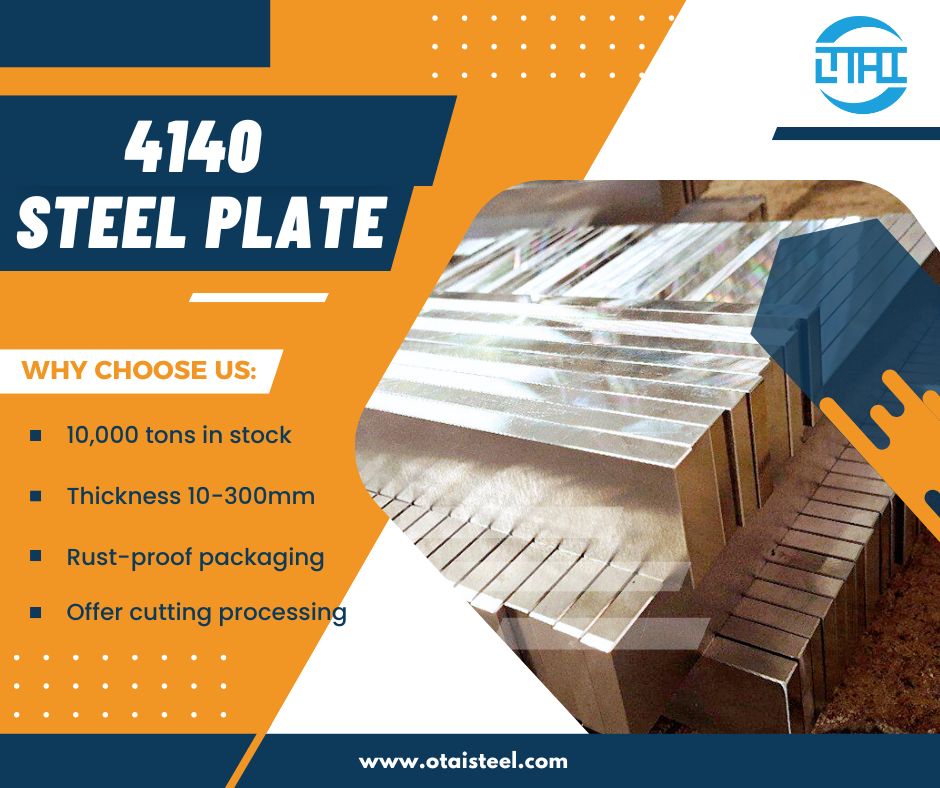
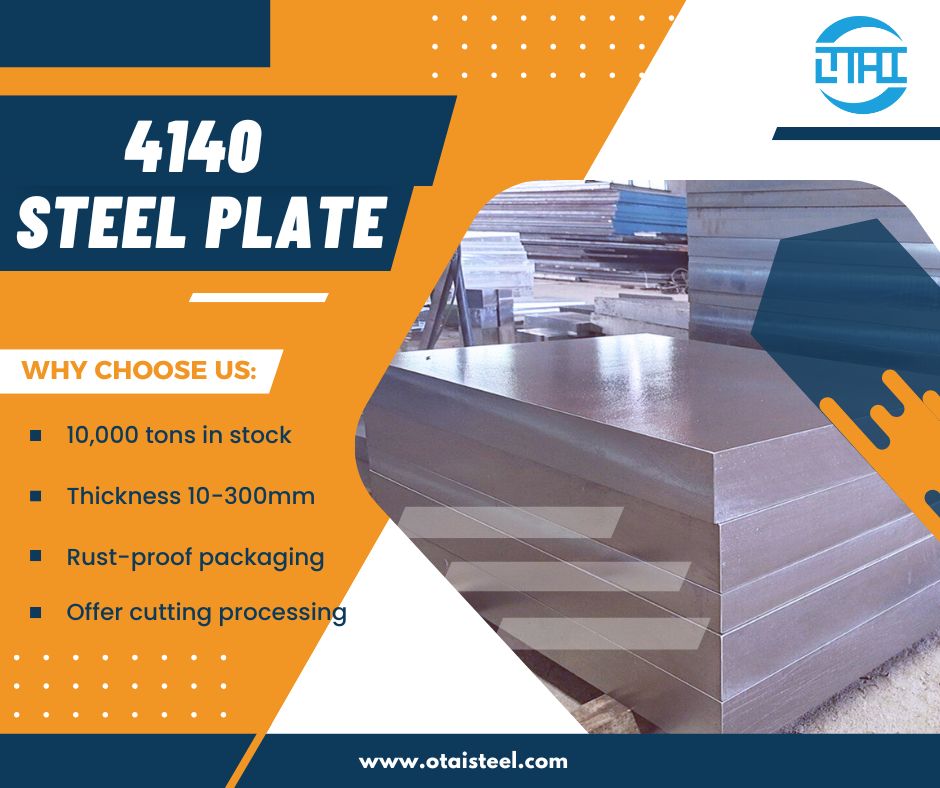
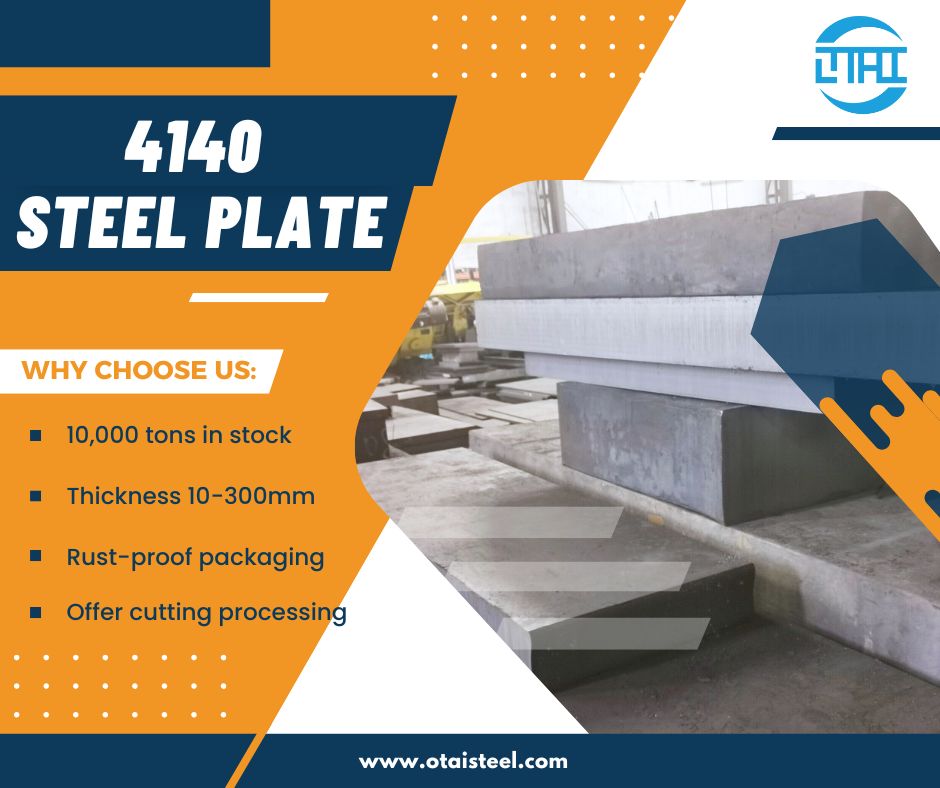
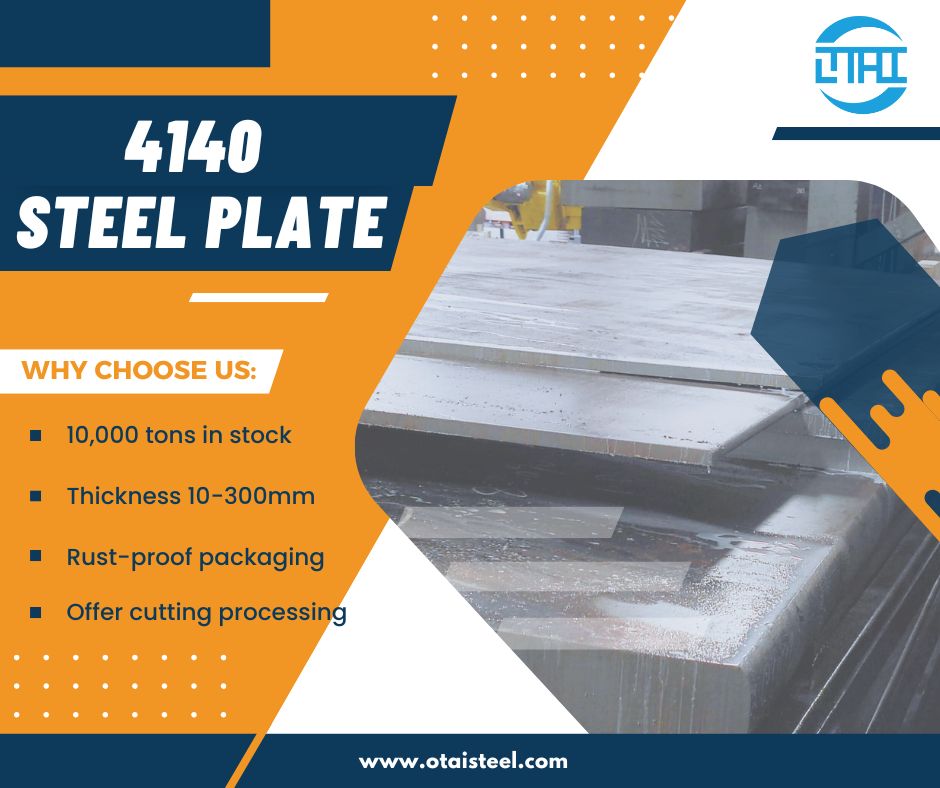
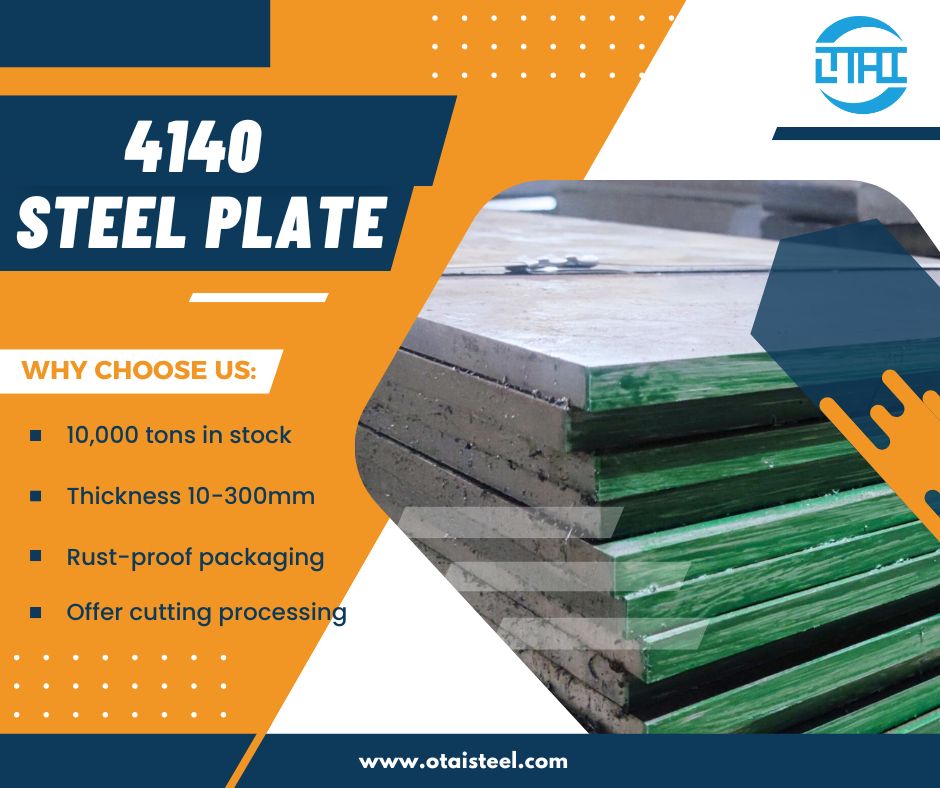
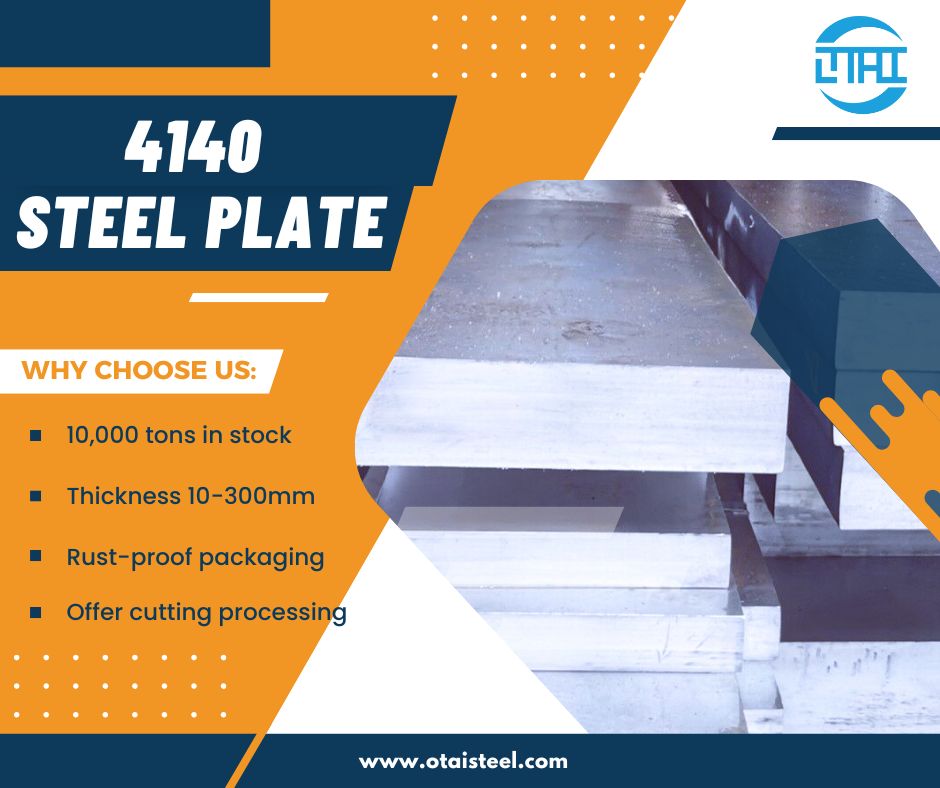
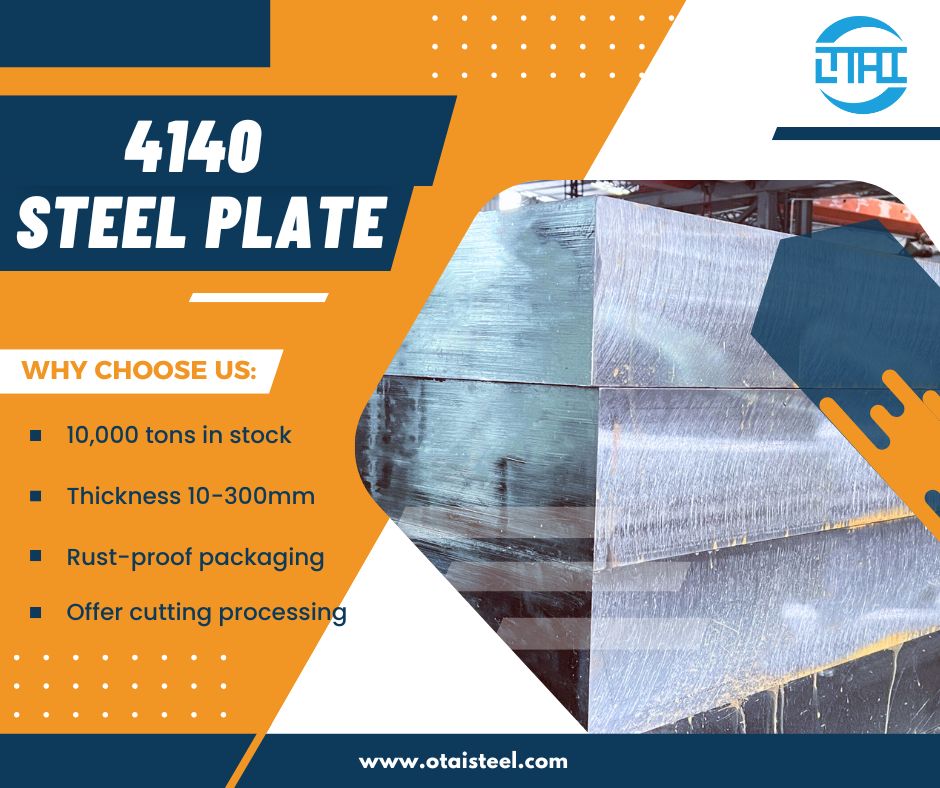
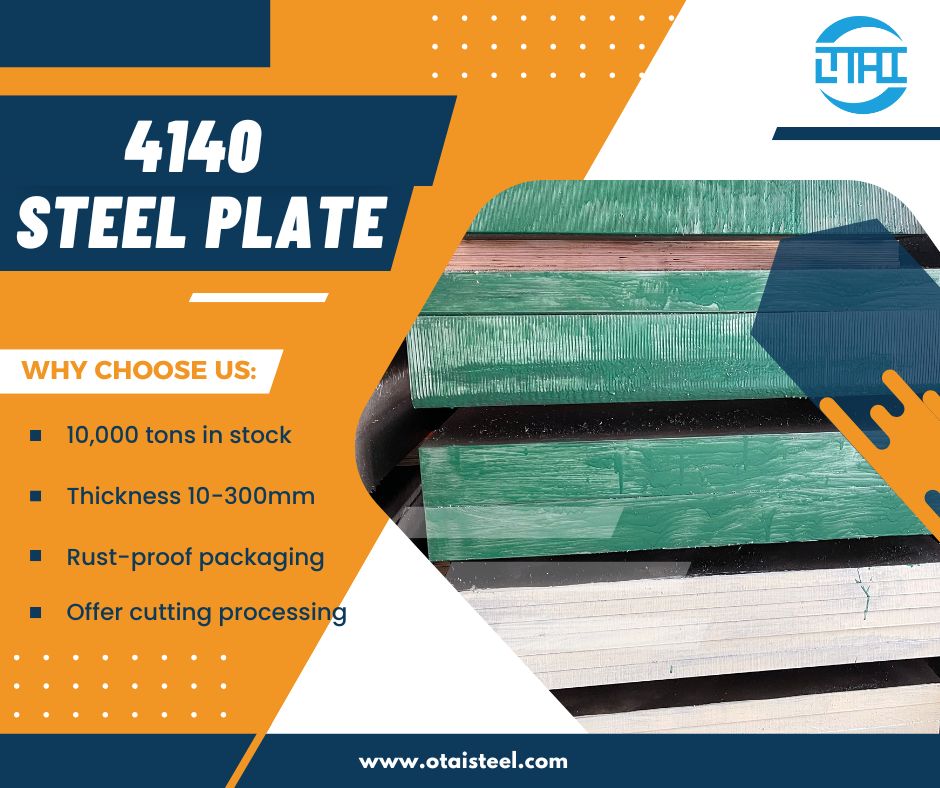
  • 4140 steel plate

  • 4140 forged blocks

  • 4140 alloy steel shafts

Because of its balanced strength-to-toughness ratio, 4140 is used in:

  • Oil tool components

  • Hydraulic cylinder rods

  • Automotive spindles and crankshafts

  • Tool holders and fixtures

  • Heavy-duty bolts and fasteners

Its versatility is what makes it a favorite among material engineers.


🌡️ Thermal and Physical Properties

Property Value
Density 7.85 g/cm³
Modulus of Elasticity 205 GPa
Thermal Conductivity 42.6 W/m·K
Specific Heat 0.475 J/g·K
Thermal Expansion (20–100°C) 12.3 µm/m·K

These properties make 4140 steel stable under temperature changes and suitable for moderate heat service applications.


🧩 How Does It Compare to Other Grades?

Many clients ask how 4140 compares to grades like 4340 or 8620. In short:

  • 4140 vs 4340 steel: 4340 has higher toughness and fatigue strength, but 4140 offers better machinability.

  • 4140 vs 8620 steel: 8620 is lower-carbon and more suitable for carburizing, while 4140 excels in through-hardening applications.

If you’re unsure, always consider the specific application requirements—load, environment, and manufacturing constraints.


🌟 Why 4140 Grade Steel Is So Popular

Let’s summarize why 4140 stands out:

  • ✔ Excellent balance of strength, ductility, and toughness

  • ✔ Readily heat treated to achieve target mechanical values

  • ✔ Easily machinable in annealed condition

  • ✔ Widely available in various forms and sizes

  • ✔ Good resistance to wear and fatigue

These features make it the perfect “all-rounder” steel grade for engineers and manufacturers alike.


🏭 Why Choose Otai Special Steel?

  • 🌍 Global Experience: Exported to 50+ countries, including long-term clients like Thyssenkrupp and Schlumberger.

  • 📦 Massive Inventory: Over 10,000 tons of alloy steel in stock year-round.

  • 🔧 Processing Ready: We offer cutting, heat treatment, and ultrasonic testing (UT) in-house.

  • Strict QC: Guaranteed chemical and mechanical properties with SGS & BV third-party inspections.

  • 🚚 Fast Delivery: Custom cut-to-size and prompt logistics services to reduce your lead time.

📧 Contact us: jack@otaisteel.com
📱 WhatsApp: +8676923190193


❓ FAQ: Frequently Asked Questions

Q1: Is 4140 grade steel weldable?
Yes, but preheating is recommended, especially for thicker sections, to avoid cracking.

Q2: Can 4140 steel be surface hardened?
Yes! Nitriding 4140 steel is a common way to enhance surface hardness while keeping the core tough.

Q3: Is 4140 hot rolled or cold rolled?
Both options exist, but hot rolled 4140 steel is more common for structural use.

Q4: What’s the ultimate tensile strength of 4140 steel?
It ranges from 850 MPa in the annealed state to over 1250 MPa when heat treated.

Q5: How can I identify 4140 steel?
You can confirm it using a spectrometer or check hardness and mechanical performance after machining.
0 0 Continue Reading →

4140 Steel Heat Treated Properties: Why They Matter for High-Performance Applications
Oil Quenching 4140 Steel: Boosting Strength and Hardness the Right Way4140 Steel Heat Treated Properties: Why They Matter for High-Performance Applications
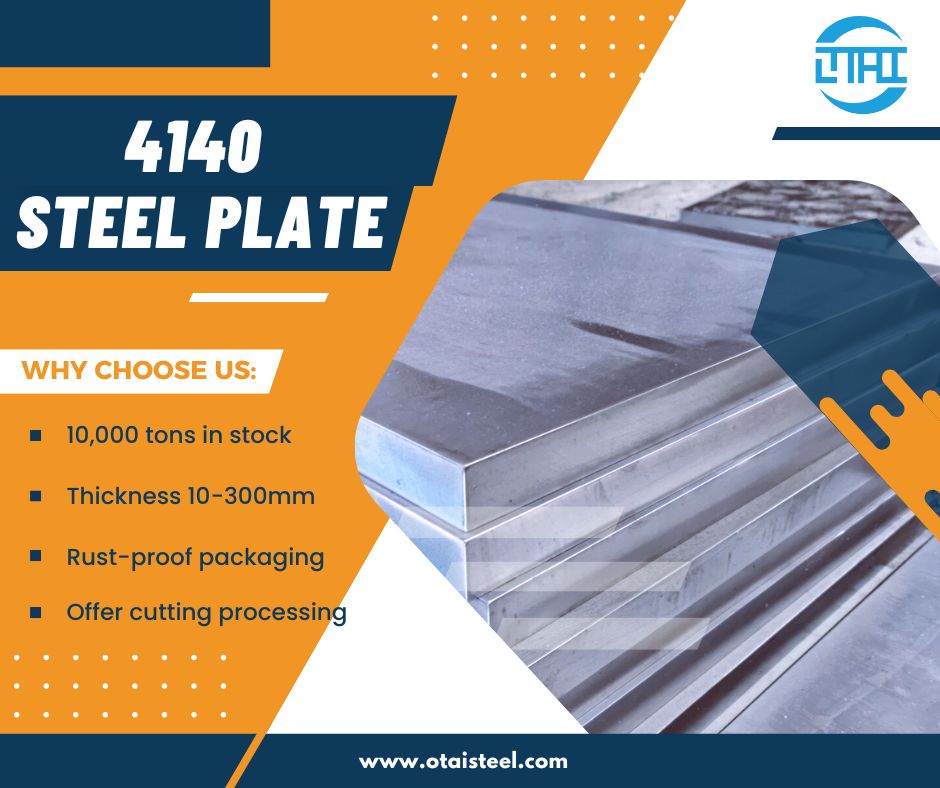
When it comes to high-strength, high-performance steels, few names pop up as frequently as 4140 steel. But not all 4140 steel is created equal—its behavior and strength drastically change based on heat treatment. If you’re dealing with gears, axles, dies, or structural parts, understanding the 4140 steel heat treated properties is a game-changer. 🧠 Let’s dive deep into how heat treatment transforms this steel and what it means for your application.


🔥 What Is 4140 Steel?

4140 is a chromium-molybdenum (Cr-Mo) alloy steel with excellent strength, toughness, and wear resistance. It’s a popular material used in industries like oil & gas, automotive, aerospace, and manufacturing.

The raw, as-rolled 4140 may not meet the mechanical requirements of your parts. But once it goes through proper heat treatment like quenching and tempering, it becomes a different beast—tough, wear-resistant, and ready to take a beating.


🛠️ Common Heat Treatments for 4140 Steel

Before jumping into the data, let’s clarify some typical heat treatment methods for 4140 steel:

  • Annealing: Softens the steel for machining and relieves internal stress.

  • Normalizing: Refines the grain structure and improves toughness.

  • Quenching and Tempering (Q&T): Boosts hardness and tensile strength.

  • Stress Relieving: Removes residual stresses after machining.

  • Nitriding: Increases surface hardness and fatigue life.

Each method yields different results in terms of strength, ductility, and wear resistance. Let’s look at the numbers.


📊 Mechanical Properties of Heat Treated 4140 Steel

Heat Treatment Method Tensile Strength (MPa) Yield Strength (MPa) Hardness (HRC) Elongation (%) Impact Toughness (J)
Annealed 655 – 825 415 – 550 20 – 25 20 – 25 60 – 80
Normalized 850 – 1000 655 – 850 25 – 28 17 – 22 50 – 70
Q&T @ ~315°C (600°F) 1080 – 1250 900 – 1100 38 – 42 12 – 16 35 – 50
Q&T @ ~540°C (1000°F) 930 – 1080 750 – 900 28 – 32 14 – 18 40 – 55
Nitrided (surface only) 60+ (surface)

These numbers may vary slightly depending on the supplier and exact conditions, but they give a reliable range of what you can expect from 4140 steel heat treated properties.


🧱 Why Heat Treatment Makes 4140 Steel So Versatile

Proper heat treatment tailors the steel to the task. Need a high-hardness shaft? Go with oil quenched and tempered 4140 steel. Need fatigue resistance for a piston rod? Nitrided 4140 steel does the job. This versatility is a huge reason why the material is so widely used.

Here are some common applications of heat treated 4140 steel:

  • Q&T 4140: Gears, axles, spindles, crankshafts

  • Normalized 4140: Structural parts, sleeves, connectors

  • Annealed 4140: Machinable blanks, pre-hardening forms

  • Nitrided 4140: Mold cavities, firearm components, powertrain parts


🧰 Technical Considerations for Heat Treating 4140

When planning to heat treat 4140, consider these critical factors:

  1. Preheat Requirements: 4140 is prone to cracking during hardening. Always preheat to 400–600°C before austenitizing.

  2. Austenitizing Temperature: Typically between 830–870°C.

  3. Quenching Medium: Oil quenching is preferred to avoid cracking (water is too aggressive).

  4. Tempering Temperature: Varies depending on final property goals. Higher tempering leads to more toughness; lower tempering retains hardness.

  5. Surface Hardening: For better wear life, surface treatments like nitriding 4140 steel or induction hardening are effective.


🚀 Performance Benefits After Heat Treatment

Let’s take a closer look at the key advantages of heat treated 4140 alloy steel:

  • Higher Tensile and Yield Strength for demanding load-bearing applications.

  • Improved Hardness for superior wear resistance.

  • Enhanced Ductility and Impact Resistance when tempered appropriately.

  • Greater Fatigue Life, especially with surface hardening treatments.

  • Machinability: Annealed or normalized forms are easier to machine, then heat-treated after final shaping.


📦 Company Advantages: Why Choose Otai Special Steel?

At Otai Special Steel, we understand that choosing the right 4140 steel variant isn’t just about grade—it’s about processing, consistency, and technical support. Here’s why clients worldwide trust us:

  • ✅ Over 10,000 tons of stock including 4140 Q&T plates, bars, and pre-machined blanks
  • ✅ Custom cutting, heat treatment, and ultrasonic testing (UT) services
  • ✅ Third-party inspection support from SGS, BV, TUV
  • ✅ Expert support on heat treatment, welding, and machining recommendations
  • ✅ Fast delivery, global logistics experience

Whether you need Q&T 4140 steel round bar or custom heat treated plates, we’ve got you covered.

📧 Contact us: jack@otaisteel.com
📱 WhatsApp: +8676923190193


❓FAQ: 4140 Steel Heat Treated Properties

Q1: What is the hardness range of Q&T 4140 steel?
A: Depending on tempering temperature, it ranges from 28 HRC to 42 HRC.

Q2: Can 4140 steel be surface hardened after Q&T?
A: Yes. Methods like nitriding or induction hardening can be applied after Q&T for better wear resistance.

Q3: Is heat treated 4140 machinable?
A: It is machinable but more difficult than annealed 4140. Use carbide tools and coolant for best results.

Q4: Which heat treatment offers the best balance between strength and ductility?
A: Q&T at around 540°C offers a good mix—around 30 HRC, strong yet not brittle.

Q5: How does heat treatment affect the fatigue life of 4140 steel?
A: Significantly. Nitriding and proper tempering enhance fatigue resistance, especially under cyclic loads.

0 0 Continue Reading →

How to Identify 4140 Steel: Practical Techniques You Can Use

How to Identify 4140 Steel: Practical Techniques You Can UseHow to Identify 4140 Steel: Practical Techniques You Can Use

Wondering how to identify 4140 steel when it’s not labeled or when you’re comparing it with other similar alloys? You’re not alone! In industries like machining, automotive, oil & gas, and tool making, accurate steel identification can save thousands in cost and production time. Let’s explore the most reliable ways to spot 4140 steel—even if it’s just a mystery chunk in your hands.


🔍 Why Is Identifying 4140 Steel So Important?

Whether you’re selecting materials for a new component or troubleshooting an unknown part, identifying 4140 steel material composition ensures the right balance of strength, toughness, and machinability. Choosing the wrong material can lead to poor performance, cracking during heat treatment, or even structural failure.

4140 steel is widely used due to its great mechanical properties after quenching and tempering. But how do you distinguish it from other steels like 1045, 4130, or 8620?


🧪 Common Methods to Identify 4140 Steel

Here’s a rundown of practical techniques to identify 4140 steel from both a technical and fieldwork perspective:

1. Visual Inspection

While not always conclusive, visual inspection is your first step:

Surface Characteristic
As-rolled Dull gray, rougher surface
Cold drawn Smooth and shiny
Heat-treated (Q&T) Blue-gray oxidation or tempered scale

However, surface finish alone won’t give a definitive answer. That’s why we move on to more scientific methods.


2. Spark Test

A spark test for 4140 steel can be surprisingly accurate in skilled hands. Using a bench grinder, hold the sample against the wheel and observe the sparks.

Property Spark Characteristics
Carbon Content Moderate explosion of bright white sparks
Alloy Content Subtle “forking” or feathering effect

4140 produces sparks similar to medium-carbon alloy steels—distinct from low-carbon mild steel or high-carbon tool steel.


3. Hardness Testing

When normalized or annealed, 4140 steel hardness usually falls between 197–235 HB. When quenched and tempered, it can exceed 300 HB.

Condition Hardness (Brinell)
Annealed 197–217 HB
Quenched & Tempered 255–321 HB

A portable Rockwell tester or rebound hardness tester can help differentiate it from other medium carbon steels.


4. Chemical Analysis (OES or XRF)

The most accurate method is chemical composition analysis. Both optical emission spectrometry (OES) and X-ray fluorescence (XRF) can quickly reveal the alloy content:

Element Typical % in 4140
Carbon (C) 0.38–0.43
Manganese (Mn) 0.75–1.00
Chromium (Cr) 0.80–1.10
Molybdenum (Mo) 0.15–0.25

The presence of chromium and molybdenum is what distinguishes 4140 from 1045 and 4140 vs 4130 steel.


5. Magnetic and Density Tests

While not exclusive, magnetic response and density can give clues. 4140 is ferromagnetic and has a density of ~7.85 g/cm³, like most steel grades.


6. Hardness vs Tensile Strength Correlation

If you suspect the material has been quenched and tempered, you can test the hardness and estimate tensile strength using conversion charts.

Hardness (HRC) Approx. UTS (MPa)
22 HRC 800
28 HRC 950
35 HRC 1100
40 HRC 1250

This is useful when comparing with data for 4140 steel yield strength and ultimate tensile strength.


🧰 Field Tips for Steel Buyers and Machinists

  • Bring a magnet and handheld XRF when inspecting unlabeled bars at a scrapyard or supplier’s stockyard.

  • If unsure, ask for 4140 steel certification documents (MTCs) with heat number traceability.

  • When dealing with 4140 steel round bar vs square bar, remember that cold-finished square bars often show higher hardness due to work hardening.


📦 Company Advantages — Why Choose Otai for 4140 Steel?

At Otai Special Steel, we offer a massive inventory of 4140 steel plates, round bars, and square bars with full traceability. Here’s why global buyers trust us:

  • ✅ Over 10,000 tons of inventory in stock

  • ✅ Complete range: 6mm–300mm thickness

  • ✅ Advanced testing: UT, hardness, and chemical analysis

  • ✅ Custom cutting, packaging & heat treatment options

  • ✅ Fast international delivery and responsive service

Whether you need Q&T 4140 bar stock or precision-ground square bars, we’ve got you covered.

Need a quote for your next project? 📩 Contact us now and get expert advice tailored to your application!

📧 Contact us: jack@otaisteel.com
📱 WhatsApp: +8676923190193


❓ FAQ About Identifying 4140 Steel

Q1: Can I use a magnet to identify 4140 steel?
Yes, but 4140 is ferromagnetic like most steels, so it helps but doesn’t confirm the identity.

Q2: Is spark testing accurate enough?
It’s a useful method but best used by experienced operators. For certainty, use OES or XRF testing.

Q3: What’s the quickest lab method to identify 4140 steel?
OES (optical emission spectrometry) gives accurate alloy content in under 30 seconds.

Q4: Can I confuse 4140 with 1045 or 4130?
Yes—especially if only using visual or hardness testing. The key difference is the Cr-Mo alloy content.

Q5: Does 4140 steel always come with certification?
It should! At Otai, every delivery includes full mill certification and testing data.

0 0 Continue Reading →

4140 Steel Investment Castings: Why It’s a Smart Choice for Complex Parts

4140 Steel Investment Castings: Why It's a Smart Choice for Complex Parts4140 Steel Investment Castings: Why It’s a Smart Choice for Complex Parts

When it comes to producing high-strength, high-precision parts, 4140 steel investment castings offer a remarkable combination of performance and cost-efficiency. Whether you’re manufacturing critical components for mining, automotive, or industrial machinery, 4140 investment castings deliver a winning balance of strength, toughness, and dimensional precision.

Let’s explore why this process is becoming increasingly popular—and how it stacks up against other manufacturing methods.


🏭 What Makes 4140 Steel Ideal for Investment Casting?

4140 steel is a chromium-molybdenum alloy steel known for its toughness, fatigue resistance, and excellent response to heat treatment. When investment cast, it provides even more advantages:

  • Excellent surface finish

  • Near-net shape capability

  • High dimensional accuracy

  • Superior mechanical properties

These benefits make precision casting with 4140 alloy a strong candidate for parts requiring both strength and complexity.


📊 Key Properties of 4140 Investment Cast Steel

Property Value (Typical)
Hardness (As-cast) 28–32 HRC
Tensile Strength (heat treated) 850–1000 MPa
Yield Strength 650–750 MPa
Elongation 15–20%
Impact Toughness (Charpy V) >30 J @ room temperature
Density 7.85 g/cm³
Machinability Good (rated ~65%)
Surface Finish (as cast) 3.2–6.3 Ra µm
Dimensional Tolerance ±0.13 mm per 25 mm (typical)

These numbers highlight the high performance of 4140 cast steel mechanical properties, especially after post-casting heat treatment.


🧰 Comparing 4140 Steel Casting vs Forging

Some engineers ask whether casting or forging is better. Here’s a simple comparison:

Feature Investment Casting Forging
Complexity of Design High (ideal for intricate parts) Medium
Dimensional Accuracy Excellent Good
Surface Finish Smooth (little machining) Rough (requires machining)
Material Usage Efficiency High Moderate
Initial Tooling Cost Higher Lower
Production Volume Suitability Medium to high High

If you’re designing parts with internal cavities, complex geometries, or tight tolerances, 4140 steel casting vs forging favors casting for cost and accuracy.


🔥 Heat Treatment of 4140 Castings

One of the best things about 4140 steel is how well it responds to heat treatment. Most investment cast parts undergo normalization or quenching and tempering to achieve desired mechanical properties.

Common Heat Treatment Processes:

Process Purpose Typical Result
Normalizing Refine grain size & improve ductility Balanced strength & toughness
Quenching & Tempering Increase hardness and strength Up to 35–50 HRC
Stress Relieving Reduce residual stresses Stabilizes part dimensionally

The heat treatment of 4140 castings is essential to unlock its full potential for wear and impact resistance.


🔍 Common Applications of 4140 Steel Investment Castings

Thanks to its toughness and formability, 4140 is widely used in sectors that demand precision and strength:

  • Gears and gear housings

  • Hydraulic parts

  • Couplings and drive shafts

  • 4140 steel cast parts for machinery

  • Agricultural wear components

  • Oil & gas tool components

These are examples of common uses of 4140 steel investment castings, especially in industries where both reliability and tight tolerance are essential.


🎯 Why Choose Investment Casting for 4140?

If your part has complex geometry, internal passageways, or strict dimensional tolerances, 4140 steel investment castings are hard to beat. Here’s why:

  • 💡 Dimensional accuracy of 4140 investment castings reduces machining needs

  • 🔧 Excellent machinability after annealing or tempering

  • 🧱 High wear resistance, especially after nitriding or surface treatment

  • Surface finish of 4140 steel castings typically requires no post-processing

  • 📈 Cost savings for medium-to-large volume production

It’s the go-to solution for those looking to optimize performance without sacrificing efficiency.


🏢 Company Advantages

At Otai Special Steel, we specialize in supplying high-quality 4140 steel investment castings tailored to your exact needs. Our advantages include:

  • 📦 Over 10,000 tons of alloy steel in stock year-round

  • 🛠️ Value-added services: precision cutting, heat treatment, and CNC machining

  • 🔍 Strict QC: UT, chemical analysis, mechanical testing, and third-party inspection

  • 🌐 Trusted by global giants: Thyssenkrupp, Schlumberger, Borealis

  • 🚀 Fast delivery and competitive pricing worldwide

Looking for a reliable supplier for 4140 steel investment castings? Let’s talk!


❓ FAQ

Q1: Can investment casting produce parts with tight tolerances using 4140 steel?
Yes. Typical tolerances are ±0.13 mm per 25 mm, and can be improved with secondary machining.

Q2: Are 4140 castings heat treated after casting?
Absolutely. Heat treatment like quenching and tempering is standard to enhance hardness and tensile strength.

Q3: What’s the main difference between forged and cast 4140 parts?
Forged parts may have slightly better internal strength, but investment castings offer superior complexity and precision.

Q4: Is surface finish good enough without post-processing?
Yes. The surface finish of 4140 steel castings is generally good enough to skip machining unless tight tolerances are required.

Q5: Can I order small batches of custom 4140 investment cast parts?
Yes. We support both small prototype runs and full production volumes.

0 0 Continue Reading →

Is 4140 Steel Hard? | Understanding Its Real Toughness

Is 4140 Steel Hard? | Understanding Its Real ToughnessIs 4140 Steel Hard? | Understanding Its Real Toughness and Hardness Limits

When engineers and metalworkers ask, “Is 4140 steel hard?”, they’re not just curious—they’re choosing a material that must perform under pressure, abrasion, and impact. So, let’s take a deep dive into the true hardness of 4140 steel, what affects it, and whether it’s the right fit for your high-performance applications. 🧠💪


🔍 What Is 4140 Steel, Exactly?

4140 is a chromium-molybdenum alloy steel known for its excellent balance of strength, toughness, and wear resistance. It’s part of the AISI 4000-series and is widely used in shafts, gears, bolts, and tool bodies—any application where both strength and surface hardness matter.

Its chemical composition plays a huge role in its mechanical properties:

Element Typical Content (%)
Carbon (C) 0.38 – 0.43
Chromium (Cr) 0.80 – 1.10
Manganese (Mn) 0.75 – 1.00
Molybdenum (Mo) 0.15 – 0.25
Silicon (Si) 0.15 – 0.30
Iron (Fe) Balance

This mix allows it to be heat treated for hardness and strength, making it far more versatile than plain carbon steels.


🧱 So, Is 4140 Steel Hard in the Raw State?

In its annealed (softened) condition, 4140 alloy has a Brinell hardness of around 197 HB, which is relatively soft and suitable for machining. However, this isn’t where 4140 shines.

The magic happens after heat treatment.

Condition Hardness (Brinell) Rockwell C Equivalent
Annealed 197 HB ~10 HRC
Normalized ~229 HB ~20 HRC
Quenched & Tempered (Q&T) 269–302 HB ~28–32 HRC
Fully Hardened Up to 600 HB ~55 HRC (after surface hardening)

So the answer to “is 4140 steel hard?” really depends on how it’s processed. In its hardened form, it definitely qualifies as a hard steel, especially after oil quenching or nitriding.


🔥 How Heat Treatment Influences Hardness

4140’s mechanical properties are heavily dependent on how it’s heat treated:

  • Oil Quenching 4140 steel rapidly cools it from the austenitizing temperature (~850°C), producing a martensitic structure that is very hard but also brittle.

  • Tempering adjusts that brittleness, balancing toughness and hardness.

  • Nitriding 4140 steel creates a super-hard surface layer (up to 65 HRC) without affecting the core toughness.

This makes it ideal for applications requiring wear-resistant surfaces, like tool steels for high-pressure dies.


⚙️ Hardness vs Toughness: The Real Strength of 4140

A material can be hard but brittle (like glass), or tough but soft (like rubber). 4140 alloy gives you both—decent hardness and excellent toughness. That’s why it’s widely used for gear shafts under high torque, or crankshafts in racing engines.

For example:

  • Tensile Strength after Q&T: 850–1000 MPa

  • Yield Strength: 655–900 MPa

  • Impact Resistance (Charpy V-notch): 30–50 J at room temperature

That’s a strong, resilient material you can count on.


🛠️ What Industries Ask: “Is 4140 Steel Hard Enough for This?”

Let’s look at some real-world applications where 4140’s hardness matters:

Industry Application Reason for 4140 Use
Automotive Drive shafts, axles High torque, fatigue-resistant
Oil & Gas Drill collars, connectors Strong and crack-resistant under pressure
Tooling & Dies Tool holders, mandrels Heat-treated 4140 steel hardness holds up under force
Aerospace Landing gear components High strength-to-weight ratio
Construction Hydraulic cylinder shafts Wear resistance and impact strength

These industries depend on 4140 for its combination of hardness, durability, and reliability.


🧩 How 4140 Compares to Other Steels

Here’s how 4140 stacks up to other common steels when it comes to hardness:

Steel Grade Typical Max Hardness (HRC) Heat Treatable
1018 Mild Steel ~20 No
1045 Carbon Steel ~50 Yes
4140 Alloy Steel ~55 (nitrided) Yes
D2 Tool Steel ~62 Yes
Stainless 304 ~20 No

While it doesn’t reach tool steel hardness levels like D2, 4140 is far easier to machine and weld, especially when preheat for welding 4140 is correctly applied.


🏢 Company Advantage: Why Buy 4140 Steel from Otai?

At Otai Special Steel, we stock over 10,000 tons of 4140 steel plates and bars in various heat-treated and machined conditions. Here’s why professionals choose us:

  • ✅ Wide hardness range: annealed, normalized, Q&T, nitrided

  • ✅ Dimensions from 6mm to 300mm, with cutting and heat-treatment services

  • ✅ UT-tested, mill-certified, and 3rd-party inspection available

  • ✅ Fast delivery with stable inventory

  • ✅ Trusted by top global companies in automotive, oil & gas, and heavy machinery

Whether you need 4140 alloy square bar, precision cut plates, or hardened shafts—we deliver quality with every order.


❓ FAQ

Q1: Is 4140 steel harder than stainless steel?
Yes, especially when heat treated. 4140 can reach up to 55 HRC, while stainless 304 is around 20 HRC.

Q2: Can 4140 be hardened by flame or induction?
Absolutely. Induction hardening of 4140 steel is a popular method for increasing surface hardness up to 60 HRC.

Q3: What’s the best hardness level for machining?
Annealed (around 197 HB) is best for machining. Afterward, you can harden it to your needs.

Q4: Is 4140 alloy good for tools?
Yes, especially when 4140 Q&T steel properties are optimized. It’s strong, hard, and tough enough for moderate-load tools.

Q5: Does hardening 4140 make it brittle?
If over-hardened without proper tempering, yes. Always temper after quenching for best results.

0 0 Continue Reading →

4140 Steel Specifications: What You Really Need to Know Before Buying

4140 Steel Specifications: What You Really Need to Know Before Buying4140 Steel Specifications: What You Really Need to Know Before Buying

When it comes to high-performance alloy steels, 4140 steel specifications often come up as the gold standard for toughness, wear resistance, and versatility. But what do those specifications really mean? And how do they help engineers, machinists, or buyers make better decisions? 🧐 Let’s break it all down in this comprehensive guide!


🧱 What Is 4140 Steel?

4140 steel is a chromium-molybdenum alloy steel (also known as Cr-Mo steel) widely used in automotive, aerospace, and manufacturing industries. It falls under AISI 4140 in the American standard and 42CrMo4 under DIN/EN standards.

This steel is famous for its excellent combination of strength, toughness, fatigue resistance, and heat treatability.


📐 Detailed 4140 Steel Specifications

Let’s take a closer look at the most important mechanical, chemical, and physical specifications of 4140 steel:

🔬 Chemical Composition (%)

Element Minimum (%) Maximum (%)
Carbon (C) 0.38 0.43
Manganese (Mn) 0.75 1.00
Chromium (Cr) 0.80 1.10
Molybdenum (Mo) 0.15 0.25
Silicon (Si) 0.15 0.35
Phosphorus (P) 0.035
Sulfur (S) 0.040

This carefully balanced composition gives it excellent hardenability and strength after heat treatment.


⚙️ Mechanical Properties (Typical, Q&T @ 30–32 HRC)

Property Value
Tensile Strength 850–1000 MPa
Yield Strength 650–700 MPa
Elongation 20–25%
Impact Toughness (Charpy V) ≥ 40 J
Hardness (Brinell) 197–235 HB

These numbers make it ideal for demanding applications like high-strength shafts, gears, and bolts.


🔥 Heat Treatment Parameters

Process Temperature (°C) Notes
Normalizing 870–900 Air cooling
Quenching 830–860 Oil quench for best results
Tempering 400–600 Depending on desired hardness
Annealing 800–850 Furnace cool slowly
Stress Relieving 540–680 After machining or welding

🛠️ Key Product Forms & Specifications in Use

When purchasing 4140 steel, you’ll encounter it in various forms and standards:

  • 4140 steel round bar – Common in shafts and spindles

  • 4140 steel plate – Used for dies, base plates

  • 4140 steel square bar – Ideal for precision components

  • 4140 tubing – Common in hydraulic cylinders

  • ASTM A29 / A322 – Governs 4140 bar stock specs

  • ASTM A829 – For 4140 plates

  • EN 10083-3 / DIN 42CrMo4 – European equivalent specs


🧩 How Do These Specs Translate in Real-World Applications?

The robust 4140 steel specifications make it one of the most adaptable materials in manufacturing. Here are some specific long-tail use cases where 4140 really shines:

  • 4140 steel for automotive shafts

  • 4140 steel used in mold bases for injection molding

  • 4140 steel for oil and gas downhole tools

  • 4140 round bar for machine tool spindles

  • 4140 Q&T steel in mining machinery components


⚖️ 4140 vs Other Alloy Steels – A Quick Comparison

Grade Strength Toughness Weldability Price Level
4140 High High Moderate Medium
1045 (Carbon) Moderate Moderate Good Low
4340 Very High Very High Fair High
8620 Moderate High Good Medium

4140 provides a sweet spot of strength, cost, and availability—making it a global favorite.


✅ Why Do Engineers Love 4140 So Much?

Besides its clear mechanical advantages, 4140 steel responds beautifully to:

  • Oil quenching without cracking risks

  • Machining, especially in annealed or normalized state

  • Surface hardening like nitriding, for added wear resistance

  • Welding, when preheat and post-weld stress relieving are applied

Its versatility across heat treatment and forming processes makes it ideal for both forged and machined components.


🏭 Otai Special Steel – Why We’re Your Ideal 4140 Supplier

At Otai, we don’t just stock 4140—we help you get the right spec for your real-world application. Here’s why our customers trust us:

  • 🔩 Inventory Power: Over 10,000 tons of 4140 plates, bars, and tubes ready year-round

  • 🔍 Quality Control: UT testing, MTC, chemical composition checks, and even SGS third-party inspection

  • ✂️ Value-Added Services: Saw cutting, rough machining, heat treatment, custom packaging

  • 🌍 Global Experience: We serve top brands like Schlumberger, Thyssenkrupp, and Borealis

Need a quote for your next project? 📩 Contact us now and get expert advice tailored to your application!

📧 Contact us: jack@otaisteel.com
📱 WhatsApp: +8676923190193


📌 FAQ: 4140 Steel Specifications

Q1: Are 4140 steel specifications the same globally?
Not exactly. While AISI 4140 and DIN 42CrMo4 are very close, small differences in composition or tolerances exist depending on the standard (ASTM vs EN vs JIS).

Q2: Can I weld 4140 steel?
Yes, but it requires preheating (~200–400°C) and post-weld stress relief to prevent cracking.

Q3: How hard can 4140 steel get?
When quenched and tempered, it can reach up to 60 HRC, depending on the tempering temperature.

Q4: What is the typical lead time for 4140 steel?
From Otai, most stock items ship within 3–7 days; custom orders depend on processing requirements.

Q5: Is 4140 good for tooling or dies?
Absolutely—especially Q&T plates and blocks used in tooling bases, molds, or fixtures.


0 0 Continue Reading →

Is 4140 Steel Low Carbon?  Discovering the Truth Behind Its Chemistry

Is 4140 Steel Low Carbon?  Discovering the Truth Behind Its ChemistryIs 4140 Steel Low Carbon?  Discovering the Truth Behind Its Chemistry

When selecting a steel grade for your next big engineering project, knowing its carbon content is a big deal. That brings us to the question: is 4140 steel low carbon? The short answer is no, but there’s much more to explore. From mechanical performance to machinability and heat treatment behavior, carbon plays a key role. Let’s take a deep dive into what 4140 steel really is and why its carbon content makes it so special.


🔬 What Is 4140 Steel?

4140 steel is a chromium-molybdenum alloy steel that falls under the AISI classification. It’s known for its excellent balance of toughness, wear resistance, and strength.

Property Category Details
AISI Designation 4140
Steel Type Alloy steel
Common Form Bar, Plate, Round Bar
Main Alloying Elements Chromium (Cr), Molybdenum (Mo)
Typical Applications Shafts, gears, dies, tooling

4140 alloy steel is often supplied in various forms such as annealed, normalized, or quenched and tempered. So, where does carbon content fit in all of this?


⚗️ So, Is 4140 Steel Low Carbon?

Let’s take a look at the chemical composition of 4140 steel to answer this clearly.

Element Content (%)
Carbon (C) 0.38 – 0.43
Manganese (Mn) 0.75 – 1.00
Chromium (Cr) 0.80 – 1.10
Molybdenum (Mo) 0.15 – 0.25
Silicon (Si) 0.15 – 0.35

With carbon content between 0.38% and 0.43%, 4140 steel is classified as a medium carbon steel, not a low carbon steel. In contrast, low carbon steels like 1018 or A36 contain less than 0.3% carbon.

This higher carbon level allows 4140 to undergo heat treatment effectively and reach high strength levels. So, to answer the core question—is 4140 steel low carbon? Absolutely not. It sits squarely in the medium carbon category, enabling excellent mechanical properties after quenching and tempering.


⚙️ Why the Carbon Level Matters

The carbon content of 4140 gives it a significant performance advantage:

Property Benefit of Medium Carbon in 4140
Hardness (after quench) Up to 50 HRC
Yield Strength ~655 MPa (annealed)
Tensile Strength Up to 1080 MPa (Q&T condition)
Wear Resistance Better than low carbon steels
Machinability Moderate (with proper tooling)

Thanks to this carbon range, 4140 performs far better than low carbon steel for tools and structural parts where hardness and toughness are crucial.


🔧 Typical Uses That Require Its Strength

4140’s strength makes it ideal for:

  • Heavy-duty shafts and axles

  • Die and mold tooling

  • Drill collars and oilfield equipment

  • Crankshafts, gears, and spindles

In these applications, low carbon steels would simply wear out too fast or deform under load. The medium carbon content of 4140 makes it suitable for oil quenching and tempering, enabling much better performance.


🧰 Comparison With Other Steels

Let’s compare 4140 with some common steels to put its carbon level into perspective.

Steel Grade Carbon Content (%) Classification
1018 0.15 – 0.20 Low Carbon
A36 0.25 (max) Low Carbon
4140 0.38 – 0.43 Medium Carbon
4340 0.38 – 0.43 Medium Carbon
1095 0.90 – 1.03 High Carbon

Clearly, 4140 is far beyond the low carbon range, giving it much greater potential for heat treatable strength and durability.


🔥 Can 4140 Be Welded or Machined?

Because of its carbon content, 4140 requires preheat before welding to prevent cracking. While machinable, it is more difficult than low-carbon steel. Using carbide tools and coolant helps improve the process.

This makes 4140 a great choice when you need strength, but you must plan for proper machining and welding procedures.


🏭 Is 4140 Steel Hot or Cold Rolled?

Both! 4140 steel is commonly available in hot rolled and cold drawn conditions. Cold drawing improves dimensional accuracy and surface finish, while hot rolling is more economical for large sections. The carbon level remains unchanged, but the processing affects the final properties.


🏆 Company Advantages

At Otai Special Steel, we specialize in providing high-quality 4140 steel plates and bars, stocked in thicknesses from 6mm to 300mm. Our value-added services include:

  • Precision cutting and custom dimensions

  • Quenching & tempering to your specifications

  • Ultrasonic testing and mill certification

  • Fast delivery with over 10,000 tons in stock

  • Export experience with Fortune 500 clients

Need a quote for your next project? 📩 Contact us now and get expert advice tailored to your application!

📧 Contact us: jack@otaisteel.com
📱 WhatsApp: +8676923190193


❓ FAQ: Is 4140 Steel Low Carbon?

Q1: Why is 4140 steel not considered low carbon?
Because it contains 0.38–0.43% carbon, which puts it in the medium carbon steel category.

Q2: What are the implications of medium carbon levels?
It means better hardenability, strength, and wear resistance—ideal for heavy-duty parts.

Q3: Can 4140 be used instead of low carbon steel?
Yes, but only where higher strength is needed. It is not suitable for deep drawing or welding without preheat.

Q4: Does the carbon level affect machinability?
Yes, it reduces machinability slightly compared to low-carbon steels, but with good tools and practices, it’s still very workable.

Q5: Is 4140 steel better than 1018 steel?
For high-stress applications—yes. 4140 outperforms low carbon steels like 1018 in strength, wear, and fatigue resistance.


0 0 Continue Reading →

4140 Steel Number Meaning: What Those Digits Really Tell You

4140 Steel Number Meaning: What Those Digits Really Tell You4140 Steel Number Meaning: What Those Digits Really Tell You

Ever wondered what the numbers in “4140 steel” actually mean? 🧠 If you’ve worked with steel long enough, you’ve likely come across this designation again and again—especially in industries like automotive, oil & gas, and manufacturing. But what does “4140” really signify? In this deep dive, we’ll unpack the 4140 steel number meaning, its classification system, and what it tells you about the material’s composition, performance, and best applications.


🔢 What Does “4140” Mean in Steel Classification?

The “4140” designation is part of the AISI (American Iron and Steel Institute) steel numbering system. This four-digit system identifies different steel grades based on their major alloying elements and carbon content.

Here’s how to break it down:

Digit(s) Meaning
4 The first digit “4” indicates the steel is a molybdenum alloy steel, with chromium as a secondary element.
1 The second digit “1” tells us it’s part of the chromium-molybdenum (Cr-Mo) steel family.
40 The last two digits “40” indicate the approximate carbon content in hundredths of a percent. So, 0.40% carbon.

So, in short, 4140 steel = Chromium-Molybdenum alloy + 0.40% carbon. This specific combination gives the material a balance of strength, toughness, and hardenability.


🧪 Chemical Composition of 4140 Steel

Understanding the chemical makeup behind the number helps you predict how the steel will behave in various applications.

Element Content (%)
Carbon (C) 0.38 – 0.43
Chromium (Cr) 0.80 – 1.10
Manganese (Mn) 0.75 – 1.00
Molybdenum (Mo) 0.15 – 0.25
Silicon (Si) 0.15 – 0.30
Sulfur (S) ≤ 0.04
Phosphorus (P) ≤ 0.035

This composition is what gives 4140 steel its exceptional wear resistance, fatigue strength, and machinability.


💪 Mechanical Properties Linked to the Number

The “4140” number doesn’t directly specify mechanical properties, but it points to a grade with high tensile strength, good ductility, and excellent toughness.

Here’s how 4140 steel performs:

Property Typical Value (Annealed)
Tensile Strength 655 MPa – 1080 MPa
Yield Strength 415 MPa – 930 MPa
Hardness (Brinell) 197 – 302 HB
Hardness (Rockwell C) 22 – 32 HRC (Q&T)
Elongation at Break (%) 20 – 25%
Modulus of Elasticity ~205 GPa

The high tensile strength and yield strength make 4140 suitable for demanding applications like gears, shafts, and high-strength bolts.


🔥 How the Number Relates to Heat Treatment

One of the reasons 4140 is so popular is its great response to heat treatment. The number “40” in its name (for carbon content) puts it right in the sweet spot: high enough for hardenability, but not too high to make it brittle.

Common heat treatments include:

  • Annealing – for improved machinability

  • Normalizing – to refine the grain structure

  • Quenching and Tempering (Q&T) – to boost hardness and tensile strength

  • Stress Relieving – to reduce internal stress post-machining

This explains why 4140 steel heat treatment chart is a popular search among engineers.


⚙️ Application Examples Based on the 4140 Number

The 4140 designation essentially tells engineers: “This steel is tough, strong, and heat-treatable.” That’s why you’ll find it in:

  • Oil and gas industry – drill collars, sucker rods, tool joints

  • Automotive – crankshafts, axles, and spindles

  • Manufacturing – gears, dies, and molds

  • Construction – high-strength threaded rods and bolts

Its high fatigue resistance and tensile strength are essential in dynamic and high-load environments.


📏 Standards That Use the 4140 Number

This steel is standardized across many global specs:

Standard System Equivalent Grade Note
AISI/SAE 4140 U.S. Standard
ASTM A29, A322 Common for bar products
DIN 1.7225 / 42CrMo4 German/European spec
JIS SCM440 Japanese standard
GB (China) 42CrMo Closest Chinese equivalent

All these reflect nearly identical compositions and properties, proving that 4140 steel number meaning transcends just one region or application.


🏭 Why Understanding the Number Matters

Knowing the meaning behind 4140 steel’s number helps you:

  • Select the right material for your project

  • Predict its heat treatment behavior

  • Understand what standards it conforms to

  • Choose compatible welding and machining processes

  • Avoid over- or under-engineering a solution

It’s not just a number—it’s a specification shortcut with real engineering consequences.


🏆 Why Choose Otai Special Steel?

At Otai Special Steel, we stock a wide range of 4140 steel plates, bars, and forged blocks in normalized, annealed, or Q&T conditions. Our advantages include:

  • 📦 10,000+ tons in stock with full size range (6mm to 300mm)

  • 🛠️ Custom cutting, heat treatment, and grinding services

  • 🔍 Ultrasonic testing (UT), chemical analysis, and SGS/3rd-party inspection

  • 🌍 Export-ready with global clients like Schlumberger, Thyssenkrupp, Borealis

  • 💰 Competitive pricing and fast delivery from China

Need a quote for your next project? 📩 Contact us now and get expert advice tailored to your application!

📧 Contact us: jack@otaisteel.com
📱 WhatsApp: +8676923190193


❓ FAQ About 4140 Steel Number Meaning

Q1: Is 4140 steel the same as 42CrMo4?
A: Yes, 42CrMo4 is the European equivalent of 4140 steel with nearly identical composition and performance.

Q2: What does the “40” in 4140 steel mean?
A: It refers to the carbon content, which is approximately 0.40%, affecting strength and hardenability.

Q3: Can 4140 be welded?
A: Yes, but preheat and post-weld heat treatment are often required to avoid cracking.

Q4: What does the “41” in 4140 indicate?
A: “41” designates chromium-molybdenum steel in the AISI system.

Q5: Is there a 4340 steel, and how is it different?
A: Yes, 4340 has a higher nickel content and offers better toughness but at a higher cost.

0 0 Continue Reading →

Nitriding 4140 Steel: Boosting Surface Hardness Without Distortion

Nitriding 4140 Steel: Boosting Surface Hardness Without DistortionNitriding 4140 Steel: Boosting Surface Hardness Without Distortion

When you need to enhance the surface properties of 4140 steel without affecting its core strength or risking distortion, nitriding 4140 steel is your best bet. This thermochemical treatment infuses nitrogen into the surface layer, creating a hard, wear-resistant shell while preserving the steel’s internal toughness. Whether you’re manufacturing gears, shafts, or mold bases, nitriding can deliver the kind of performance boost that extends product life and reduces maintenance.


🔍 What Is Nitriding?

Nitriding is a case-hardening process for alloy steels, including 4140, that introduces nitrogen into the surface at sub-critical temperatures (typically 500–550°C). Unlike carburizing or other methods, nitriding doesn’t require quenching, which means minimal distortion — a major advantage when dimensional stability in 4140 steel components is critical.

There are three main types of nitriding processes used for 4140 steel:

  • Gas nitriding

  • Salt bath nitriding (ferritic nitrocarburizing)

  • Plasma (ion) nitriding


🧪 Nitriding 4140 Steel: Process and Parameters

The success of nitriding 4140 steel depends on process control, including temperature, time, and steel preparation. Here’s a quick look at common nitriding conditions for 4140 steel:

Parameter Typical Value
Nitriding Temperature 500–550°C (932–1022°F)
Time 10–80 hours depending on case depth
Case Depth 0.1–0.7 mm
Surface Hardness 58–65 HRC
Cooling Slow cooling in inert atmosphere

🛠️ Why Nitriding Works Well on 4140 Steel

The chromium and molybdenum in 4140 steel react positively with nitrogen, forming hard nitrides that dramatically increase surface hardness and wear resistance. This makes nitriding 4140 alloy steel components an excellent choice for high-stress or friction-intensive applications.

4140 steel’s tempering resistance also means it retains its core properties during the long nitriding cycles. This balance makes it a superior option for parts that require both a tough interior and hardened exterior.


🧩 Applications That Benefit from Nitrided 4140

You’ll often find nitrided 4140 steel parts in demanding applications where surface fatigue, friction, and wear are major concerns. Common examples include:

  • Drive shafts and crankshafts

  • Injection molds

  • Threaded fasteners and bolts

  • Hydraulic piston rods

  • Gears and pinions under cyclical loads


⚙️ Comparing Nitrided and Non-Nitrided 4140 Steel

Let’s break down how nitriding changes the material characteristics:

Property Non-Nitrided 4140 Nitrided 4140
Surface Hardness ~28–32 HRC (normalized) 58–65 HRC
Wear Resistance Moderate Excellent
Fatigue Strength High Very High
Distortion Risk Moderate (after quench) Very Low
Corrosion Resistance Limited Slightly improved

💡 Best Practices Before Nitriding 4140 Steel

Before you send your parts off for nitriding, consider these preparation steps:

  • Pre-harden to 28–32 HRC before nitriding for optimum results.

  • Ensure parts are stress-relieved to prevent distortion.

  • Polish the surface to reduce surface roughness — this leads to more uniform case hardening.

  • Use proper fixture and orientation during the process to prevent gas entrapment or shadowing (especially for plasma nitriding).


🏆 Company Advantages – Why Choose Otai for 4140 Steel?

At Otai Special Steel, we don’t just supply 4140 steel — we deliver real performance solutions. Here’s what sets us apart:

  • 📦 Massive Stock: Over 10,000 tons of alloy and tool steels available year-round.

  • 🏭 Custom Processing: Cutting, milling, heat treatment, and nitriding service coordination on request.

  • 🔍 Stringent Quality Control: Ultrasonic testing (UT), chemical analysis, and mechanical property inspection.

  • 🌍 Export Expertise: We serve top-tier clients in over 30 countries — from Germany to Mexico to Southeast Asia.

  • ⚙️ Specialty Focus: Deep experience with 4140 steel in all forms — including plates, bars, and blocks.

Need a quote for your next project? 📩 Contact us now and get expert advice tailored to your application!

📧 Contact us: jack@otaisteel.com
📱 WhatsApp: +8676923190193


❓ FAQ – Nitriding 4140 Steel

Q1: Can I nitride 4140 steel in its annealed condition?
A1: It’s not recommended. The best results are obtained when 4140 is pre-hardened to around 28–32 HRC before nitriding.

Q2: How deep can the nitrided case go in 4140 steel?
A2: Case depths typically range from 0.2 mm to 0.6 mm depending on time and method used.

Q3: Does nitriding improve corrosion resistance?
A3: Slightly — the nitrogen layer improves wear and oxidation resistance but is not a substitute for stainless properties.

Q4: Can you weld 4140 after nitriding?
A4: It’s difficult and not recommended. The nitrided layer is hard and brittle, making welding risky.

Q5: Is post-nitriding machining possible?
A5: Only very light grinding or polishing is allowed, as cutting through the hardened layer defeats the purpose of nitriding.

0 0 Continue Reading →

Oil Quenching 4140 Steel: Boosting Strength and Hardness the Right Way

Oil Quenching 4140 Steel: Boosting Strength and Hardness the Right WayOil Quenching 4140 Steel: Boosting Strength and Hardness the Right Way

When it comes to optimizing 4140 steel for demanding applications, one process stands out: oil quenching. This heat treatment method plays a pivotal role in enhancing mechanical performance, especially when strength, wear resistance, and toughness are critical. Whether you’re in aerospace, tooling, or automotive industries, understanding how oil quenching 4140 steel works will help you get the most out of this versatile alloy.

In this article, we’ll explore the science, benefits, best practices, and common pitfalls of oil quenching 4140. Let’s dive in! 🔥


🧪 What Is Oil Quenching and Why Use It on 4140 Steel?

Oil quenching is a rapid cooling process where heated steel is submerged in oil to harden its structure. For 4140 alloy, which is a chromium-molybdenum alloy steel with excellent hardenability, oil quenching strikes the perfect balance between cooling speed and reduced distortion risk.

4140 steel contains about 0.40% carbon, giving it the ability to transform into martensite upon rapid cooling—this is the key to increased hardness.

Why oil instead of water?

  • Oil has a slower cooling rate than water, which reduces cracking and warping.

  • It’s particularly suited for medium-alloy steels like 4140, which need a fast but controlled quench.


🛠️ Typical Oil Quenching Procedure for 4140 Steel

Step Description
Preheat Heat to 600–650°C (1110–1200°F) to reduce thermal shock.
Austenitize Heat to 830–870°C (1525–1600°F) and hold to allow full austenitization.
Quench in oil Immediately quench in oil (usually mineral oil) at 50–100°C (120–210°F).
Tempering (Post-Quench) Reheat to 200–600°C (400–1110°F) to adjust hardness and reduce brittleness.

📊 Mechanical Properties After Oil Quenching & Tempering

Below is a table showing typical mechanical properties of 4140 alloy after oil quenching and tempering at various temperatures:

Tempering Temp (°C) Hardness (HRC) Tensile Strength (MPa) Yield Strength (MPa)
200 52 1770 1440
300 48 1610 1350
400 44 1450 1220
500 38 1250 1050
600 32 1080 910

These values vary depending on steel size, oil type, and soaking times.


🔍 Benefits of Oil Quenching 4140 alloy

  • Improved Hardness: The martensitic structure achieved via oil quenching gives HRC values in the 30–50+ range.
  • Toughness Retained: Unlike air-hardening, oil quenching avoids excessive brittleness.
  • Dimensional Stability: Reduced warping compared to water quenching.
  • Wider Tempering Range: Offers more control over strength and toughness balance.

⚠️ Common Mistakes to Avoid

  • Inadequate Preheat: Skipping this step can cause cracking.
  • Improper Tempering: Don’t skip tempering—untempered martensite is too brittle.
  • Wrong Oil Type: Always use a fast-quenching oil rated for alloy steels.
  • Overshooting Austenitizing Temperature: May cause grain growth, reducing toughness.

🏭 Application Examples After Oil Quenching

Oil-quenched 4140 is found in numerous heavy-duty applications:

  • Axle shafts

  • Drill collars and tools

  • Hydraulic cylinders

  • Gears and sprockets

  • Die holders and molds

Each of these applications benefits from the hardened yet tough nature of 4140 after oil quenching.


📚 Tips for Optimizing the Oil Quenching Process

  • Always use a controlled-atmosphere furnace to reduce oxidation.

  • Select quenching oil with a suitable flash point and cooling curve.

  • Agitate oil during quenching to ensure uniform cooling.

  • Perform hardness testing post-process to verify transformation.


🏆 Company Advantage: Why Choose Otai for 4140 Steel?

At Otai Special Steel, we supply pre-hardened and annealed 4140 alloy steel plates, bars, and blocks, ready for quenching or machining.

Here’s why international clients trust us:

  • 📦 Over 10,000 tons in stock, thickness from 6mm to 300mm

  • 🔍 Ultrasonic testing & chemical analysis for every batch

  • 🏭 Custom cutting, heat treatment, and export packaging available

  • 🌍 Proven track record with Thyssenkrupp, Borealis, Schlumberger

  • ✅ Fast lead times and highly responsive support

Need a quote for your next project? 📩 Contact us now and get expert advice tailored to your application!

📧 Contact us: jack@otaisteel.com
📱 WhatsApp: +8676923190193


❓ FAQ

Q1: Do I have to temper 4140 steel after oil quenching?
Yes! Tempering is essential to reduce brittleness and balance hardness.

Q2: Can I use motor oil for quenching 4140 steel?
No. Use purpose-made quenching oil with proper viscosity and flash point.

Q3: What hardness can I expect after oil quenching 4140 steel?
Depending on tempering, expect HRC 30–52 range.

Q4: Will oil quenching warp thin 4140 parts?
It may. Use proper preheating and controlled quenching methods to minimize distortion.

Q5: Is oil quenching suitable for all 4140 steel sizes?
Generally yes, but thicker sections may benefit from more aggressive quenchants or modified processes.


0 0 Continue Reading →