Skip to Content

Blog Archives

4140 Steel Square Bar: A Versatile Choice for Strength and Machinability

4140 Steel Square Bar: A Versatile Choice for Strength and Machinability4140 Steel Square Bar: A Versatile Choice for Strength and Machinability

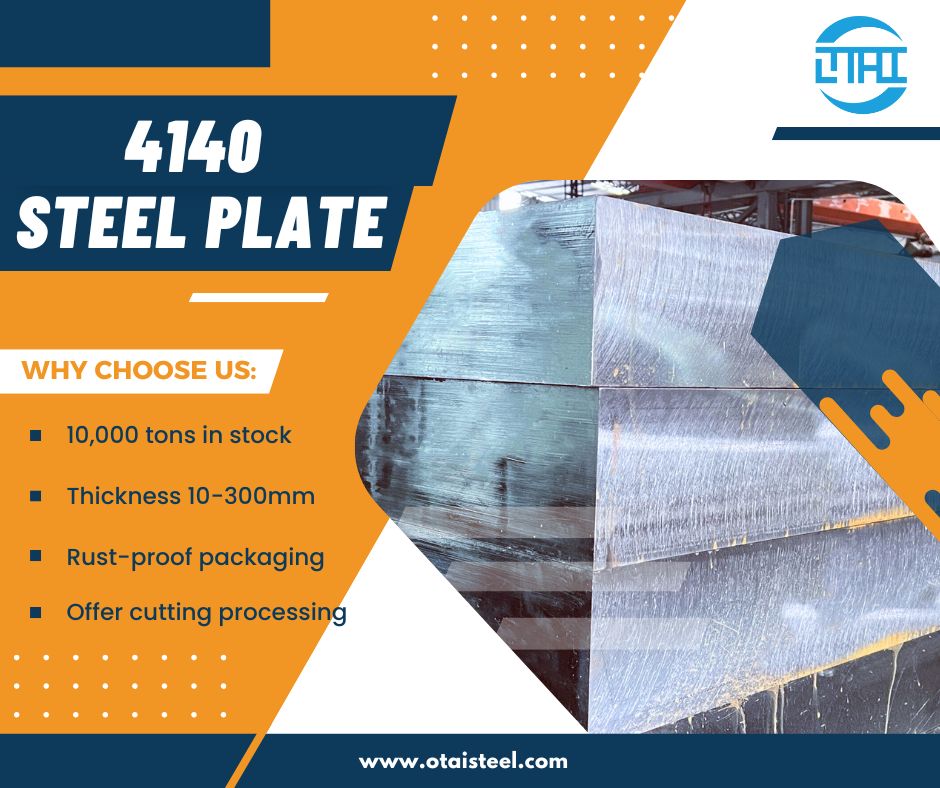
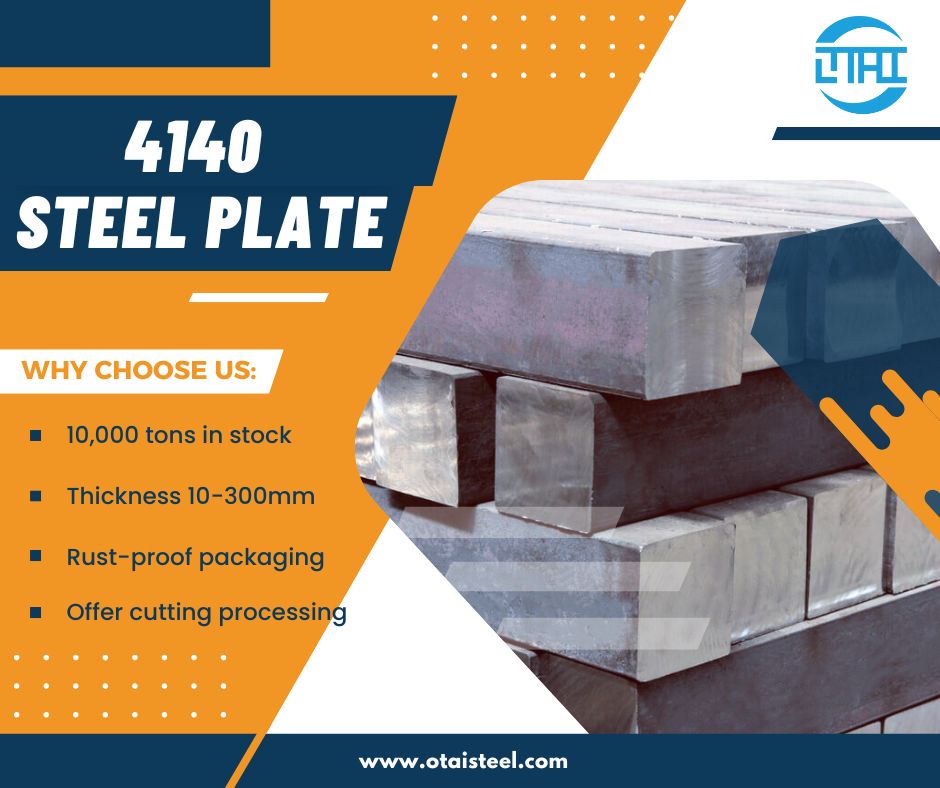
When it comes to combining strength, toughness, and excellent machinability in one compact shape, the 4140 steel square bar stands out as a top-tier choice. Whether you’re designing components for automotive, oil & gas, or heavy machinery, this bar stock offers exactly what engineers need: reliable performance under pressure.

Let’s dive into the technical details, practical uses, and why this steel grade is such a staple in modern manufacturing.


🔎 What Is a 4140 Steel Square Bar?

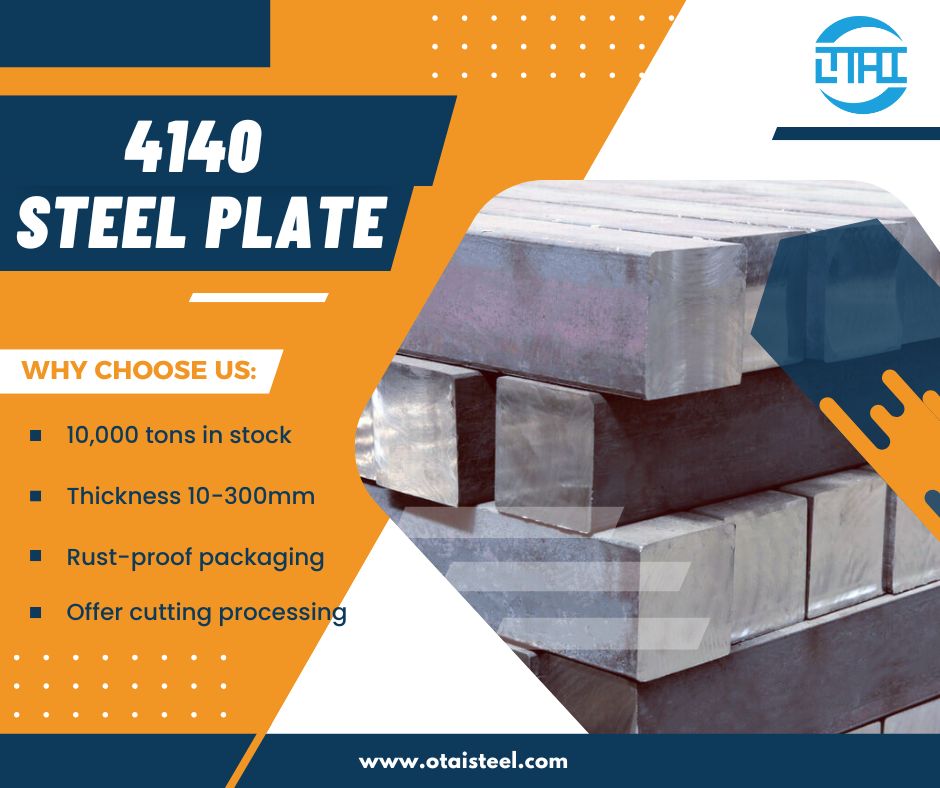
A 4140 steel square bar is a hot-rolled or forged bar with equal width and height, commonly used in precision parts, gears, dies, and shafts. Made from chromium-molybdenum alloy steel, it is known for its high tensile strength, impact resistance, and uniform hardness across sections.

This shape is ideal when strength and symmetry are key to the project—plus, it’s easy to handle in CNC machines, lathes, and mills.


📐 Chemical Composition of 4140 Steel

Here’s a breakdown of the typical chemical content:

Element Content (%)
Carbon (C) 0.38 – 0.43
Manganese (Mn) 0.75 – 1.00
Chromium (Cr) 0.80 – 1.10
Molybdenum (Mo) 0.15 – 0.25
Silicon (Si) 0.15 – 0.35
Phosphorus (P) ≤ 0.035
Sulfur (S) ≤ 0.040

This composition makes 4140 suitable for high-strength square bar stock applications, such as heat-treated tool holders and torsion-resistant parts.


⚙️ Mechanical Properties: How Strong Is It?

Whether it’s hot rolled or heat treated, 4140 square bar shows excellent strength and resilience:

Condition Tensile Strength (MPa) Yield Strength (MPa) Elongation (%) Hardness (HRC)
Annealed 655 – 850 415 – 655 ~25 15 – 22
Quenched & Tempered 850 – 1100 700 – 950 ~18 28 – 32
Hardened & Tempered Up to 1300 Up to 1100 ~14 35 – 45

These figures make it perfect for high-load square bar uses in everything from tool shanks to press frames.


🛠️ Applications of 4140 Steel Square Bars

Thanks to its machinability and toughness, the square form of 4140 is widely used in:

  • Mold bases and die blocks

  • Hydraulic cylinder rods

  • Drive shafts and axles

  • Crankshafts and spindles

  • Bolts and fasteners for high-stress assemblies

Its clean geometry helps with precision fitting and strength distribution, especially in parts requiring tight tolerances.


🔩 Why Choose 4140 Square Bar Over Round or Flat?

  • Symmetry: Ideal for applications requiring equal stress distribution

  • Ease of Fixturing: Clamps and mounts better in jigs or machines

  • Minimal Material Waste: Cuts cleanly with fewer offcuts

  • Superior Dimensional Stability: Less warping during heat treatment

This is especially important in CNC-machined 4140 bar stock where tolerances below ±0.01 mm are crucial.


🧪 Heat Treatment Compatibility

One of the biggest advantages of 4140 square bars is how well they respond to various heat treatments:

Process Effect
Normalizing Improves toughness and grain structure
Quenching & Tempering Maximizes strength and wear resistance
Stress Relieving Reduces internal stresses after machining
Flame/Induction Hardening Targets hardness on specific surfaces

This makes the square bar ideal for wear-prone tooling components and impact-resistant fixtures.


🧲 Machinability & Weldability

4140 steel is easily machinable in the annealed condition and moderately weldable with preheat and post-weld heat treatment.

Recommended cutting tools: Carbide inserts or coated HSS
Typical cutting speed: 25–35 m/min for turning and milling (with coolant)
Preheat for welding: 150–260°C
Post-weld treatment: Tempering to avoid cracking

This makes it suitable for custom-machined 4140 square bar products in both small-batch and large-scale production.


📏 Standard Sizes and Tolerances

Common Sizes (mm) Typical Lengths (mm) Tolerance (as rolled)
20 × 20 to 200 × 200 3000 / 6000 ±1.0 mm

Need something custom? Most suppliers offer cut-to-length square bar in 4140.


🏭 Otai Special Steel: Your Trusted 4140 Steel Supplier

At Otai Special Steel, we offer premium 4140 alloy in round bars, flat bars, and plates with full heat treatment services—including normalizing, annealing, quenching, and stress relieving.

We maintain a large inventory (6mm–300mm thickness, over 10,000 tons), ready for cutting, packaging, and export worldwide. Our clients include major corporations in automotive, oil & gas, and tool-making industries.

We also offer:

  • Ultrasonic testing (UT)
  • Full chemical composition reports
  • Third-party inspection (SGS, BV)
  • Custom mechanical property adjustment based on your specs

Need a quote for your next project? 📩 Contact us now and get expert advice tailored to your application!

📧 Contact us: jack@otaisteel.com
📱 WhatsApp: +8676923190193


❓ FAQ: Frequently Asked Questions

Q1: Is 4140 square bar available in both hot rolled and cold drawn forms?
A: Yes. Hot rolled is more common and economical; cold drawn offers better surface finish and tighter tolerances.

Q2: Can I use 4140 square bar for heat-treated tools?
A: Absolutely. It responds well to quenching, tempering, and surface hardening.

Q3: What’s the minimum order quantity at Otai?
A: We serve both small custom orders and bulk shipments—starting from just 1 piece.

Q4: Is 4140 steel square bar corrosion-resistant?
A: It has moderate corrosion resistance. Surface treatments like black oxide or plating are recommended for humid environments.

Q5: Do you offer export packaging?
A: Yes, we offer fumigation-free wooden cases, steel pallets, and rust-proof paper for sea shipment.
0 0 Continue Reading →

Specific Heat of 4140 Steel: Why It Matters for Engineering & Heat Treatment

Specific Heat of 4140 Steel: Why It Matters for Engineering & Heat TreatmentSpecific Heat of 4140 Steel: Why It Matters for Engineering & Heat Treatment

4140 steel is a powerhouse alloy widely used in mechanical engineering, mold making, automotive parts, and heavy-duty tools. But while most people focus on its hardness or tensile strength, there’s another vital property often overlooked: specific heat.

In this article, we’ll dive deep into the specific heat of 4140 steel, explain its implications in heat treatment and manufacturing, and how it compares with other materials. This is crucial information for engineers, machinists, and purchasing managers alike! 💡


📌 What Is Specific Heat?

Specific heat (also known as specific heat capacity) is the amount of heat required to raise the temperature of one kilogram of a material by one degree Celsius (°C). It plays a major role in:

  • Heat treatment planning

  • Cooling rate management

  • Welding temperature control

  • Thermal fatigue resistance


🧪 Specific Heat of 4140 Steel

Here is a detailed table of the thermal and physical properties of 4140 alloy, including its specific heat value:

Property Value
Specific Heat Capacity 460 J/kg·K (at 20°C)
Density 7.85 g/cm³
Thermal Conductivity 42.6 W/m·K
Melting Point 1416 – 1471°C
Coefficient of Thermal Expansion 12.2 µm/m·K (20–100°C)
Electrical Resistivity 205 nΩ·m

Specific heat of 4140 steel = 460 J/kg·K, which is fairly typical for medium carbon low-alloy steels.


🛠️ Why Specific Heat Matters in Heat Treatment

The specific heat capacity of 4140 steel directly affects how it heats up and cools down during heat treatment:

  • 🔥 Preheating is essential to reduce thermal shock—thanks to its moderate specific heat, 4140 heats steadily.

  • 🧯 Quenching must be controlled—because it doesn’t absorb heat too quickly, 4140 can crack if cooled too fast.

  • 💡 Tempering and stress relieving benefit from predictable heat absorption, allowing for consistent mechanical properties.

This is why the specific heat of 4140 is such a valuable reference in processes like normalizing, annealing, and austempering.


🔧 Practical Impacts in Manufacturing

Here are some practical uses of this property in real-world scenarios:

  • CNC Machining: Knowing the heat absorption rate helps avoid tool overheating.

  • Welding: Helps in calculating the preheat temperature and interpass temperature.

  • Forging: Ensures uniform temperature distribution during die heating.

  • Gear Hardening: Predicts surface vs core temperature gradients in induction hardening.

The specific heat value helps engineers design precise thermal cycles to avoid warping, microstructural issues, and uneven hardness.


🔍 Comparison with Other Steels

Let’s compare the specific heat of 4140 steel with other common engineering steels:

Material Specific Heat (J/kg·K)
4140 Steel 460
1045 Carbon Steel 490
Stainless Steel 304 500
Tool Steel D2 460
Aluminum (for ref.) 900

You can see that 4140 steel’s specific heat is in the middle range—lower than aluminum but typical for alloy steels. This makes it thermally stable and predictable.


💬 When Should You Care About Specific Heat?

You should especially consider the specific heat of 4140 steel in these situations:

  • You’re designing heat treatment cycles for tools, dies, or shafts.

  • You need to optimize preheat for welding 4140 steel to prevent cracking.

  • You want to predict distortion or stress in large 4140 steel forgings.

  • You’re performing finite element analysis (FEA) for thermal simulations.

Understanding this property helps reduce material waste, improve performance, and extend the life of your components.


🏭 Otai Special Steel: Your Trusted 4140 Steel Supplier

At Otai Special Steel, we offer premium 4140 alloy in round bars, flat bars, and plates with full heat treatment services—including normalizing, annealing, quenching, and stress relieving.

We maintain a large inventory (6mm–300mm thickness, over 10,000 tons), ready for cutting, packaging, and export worldwide. Our clients include major corporations in automotive, oil & gas, and tool-making industries.

We also offer:

  • Ultrasonic testing (UT)
  • Full chemical composition reports
  • Third-party inspection (SGS, BV)
  • Custom mechanical property adjustment based on your specs

Need a quote for your next project? 📩 Contact us now and get expert advice tailored to your application!

📧 Contact us: jack@otaisteel.com
📱 WhatsApp: +8676923190193


❓FAQ

Q1: Is the specific heat of 4140 steel temperature-dependent?
Yes. While 460 J/kg·K is typical at 20°C, this can increase slightly at elevated temperatures.

Q2: How does 4140 compare to stainless steel in heat absorption?
Stainless steel generally has a higher specific heat (~500 J/kg·K), meaning it absorbs heat slightly slower than 4140 under the same conditions.

Q3: Is specific heat important for welding 4140 steel?
Absolutely. It affects preheat temperature and cooling rate, which are critical for preventing weld cracks.

Q4: Can incorrect heat treatment damage 4140 steel?
Yes. Ignoring specific heat can lead to thermal shock, microcracking, and reduced toughness.

Q5: Does surface finish affect thermal properties?
Not significantly for specific heat, but it can influence heat transfer rate during machining or quenching.

0 0 Continue Reading →

Thermal Expansion of 4140 Steel: Why It Matters in Precision Applications

Thermal Expansion of 4140 Steel: Why It Matters in Precision ApplicationsThermal Expansion of 4140 Steel: Why It Matters in Precision Applications

When designing parts exposed to temperature changes, knowing the thermal expansion of 4140 steel isn’t just a nice-to-have—it’s essential. Whether you’re engineering shafts, dies, or structural components, understanding how much 4140 steel expands or contracts with heat can make or break your project. 📏💥

In this article, we’ll explore the thermal behavior of this versatile alloy steel, provide real data, and offer practical advice on choosing or designing components with expansion in mind.


📌 What Is the Thermal Expansion of 4140 Steel?

4140 is a chromium-molybdenum alloy steel with great strength and toughness. But like all materials, it expands when heated. The coefficient of thermal expansion for 4140 steel typically falls around:

Temperature Range (°C) Coefficient of Linear Expansion (µm/m·°C)
20 – 100 12.3
20 – 200 12.7
20 – 300 13.0
20 – 400 13.4
20 – 500 13.6

This means for every meter of 4140 steel, it expands about 13.6 micrometers per degree Celsius between 20°C and 500°C. Small in scale—but huge in impact if you’re machining precision parts.


🔍 Why Thermal Expansion Matters

Changes in dimension due to heat can affect:

  • 🔩 Fit tolerance between components

  • 🧱 Structural stability under load

  • ⚙️ Performance of rotating parts

  • 🛠️ Predictability during heat treatment of 4140 steel

For example, in applications like press-fit assemblies, using 4140 steel in high temperature environments requires compensating for expansion to avoid binding or loosening.


🧪 How 4140 Compares to Other Steels

Let’s take a quick look at how 4140 stacks up against other commonly used materials:

Material Thermal Expansion (µm/m·°C)
4140 Steel ~13.0
1018 Mild Steel ~12.5
Stainless 304 ~17.3
Aluminum 6061 ~23.6
Cast Iron ~10.8

As you can see, 4140 steel expands less than stainless steel or aluminum, which makes it favorable in moderate-heat precision applications.


🛠️ Practical Tips for Working with Thermal Expansion

Here are some real-world considerations when dealing with thermal expansion in 4140 steel:

  • ✅ Leave a slight tolerance gap in assemblies exposed to heat cycling.

  • ✅ When machining 4140 steel for hot applications, measure dimensions at operating temperature.

  • ✅ Use stress relieving on 4140 steel after welding to reduce expansion-induced warping.

  • ✅ Avoid designs with rigid constraints that don’t allow room for movement.


🧯 Is Thermal Expansion a Problem in Welding?

Absolutely—preheat for welding 4140 steel is essential to control heat input and expansion. If not preheated properly, differential expansion can lead to:

  • Cracking

  • Distortion

  • Weak weld joints

Use controlled welding techniques and follow post-weld heat treatment protocols.


🧩 Common Use Cases Where Expansion Matters

Let’s break down some real applications where 4140 steel’s expansion characteristics are crucial:

Application Area Consideration for Thermal Expansion
Hydraulic cylinder rods Dimensional stability during heating
Aerospace brackets Low to moderate expansion preferred
Dies and forming tools Heat cycling tolerance needed
Mold bases and supports Must stay dimensionally consistent

These use cases demonstrate why engineers often ask: “Is 4140 steel hot or cold rolled?”—because rolling condition also impacts dimensional consistency during temperature fluctuations.


💡 Summary of Key Expansion Facts

  • 📐 Expansion coefficient ~13 µm/m·°C (moderate)

  • 🔧 Good for medium-temp applications requiring strength + stability

  • 🧪 Must be considered in welding, machining, and design

  • ✅ Less expansion than aluminum or stainless steel


🏢 Company Advantages – Why Choose Otai for 4140 Steel?

At Otai Special Steel, we’re more than just a supplier—we’re your material solutions partner. Here’s what makes us stand out:

  • 📦 Large Inventory: Over 10,000 tons of 4140 alloy steel in stock, including plates, bars, and 4140 steel pipe.

  • 🔍 Quality Control: We offer ultrasonic testing, third-party inspections, and full material traceability.

  • 🛠️ Value-Added Services: Precise cutting, heat treatment (including normalizing of 4140 steel), and custom machining.

  • 🌍 Trusted by Global Clients: Including names like Thyssenkrupp, Borealis, and Schlumberger.

Need expert advice on thermal behavior or specs? Contact us for a free consultation or quote!

📧 Contact us: jack@otaisteel.com
📱 WhatsApp: +8676923190193


❓ FAQ – Frequently Asked Questions

Q1: What is the thermal expansion of 4140 steel per inch?
A: It’s roughly 7.2 x 10⁻⁶ in/in·°F—or about 13 µm/m·°C in metric.

Q2: Does heat treatment affect thermal expansion?
Yes, especially quenching and tempering of 4140 steel, which can subtly affect microstructure and expansion rate.

Q3: Is thermal expansion a problem in CNC machining?
If machining 4140 steel at elevated temps, you need to account for size shifts to maintain tolerance.

Q4: How does 4140 compare with EN19 in expansion?
Both are similar (EN19 is often considered the 4140 steel equivalent in Europe), with nearly identical expansion behavior.

Q5: Can I use 4140 steel for high-temperature applications?
Yes, within limits—its moderate expansion and good strength make it suitable for parts up to 500°C with proper design.

0 0 Continue Reading →

4140 Alloy Steel Ultimate Tensile: How Strong Is It Really?

4140 Alloy Steel Ultimate Tensile: How Strong Is It Really?4140 Alloy Steel Ultimate Tensile: How Strong Is It Really?

When it comes to alloy steels that can handle high stress and tough environments, 4140 alloy steel is a rock star. But what makes it so reliable? One word: tensile strength. More specifically, the 4140 alloy steel ultimate tensile strength is what truly defines its role in heavy-duty applications like gears, axles, and high-performance tools.

So, just how strong is it? Let’s dig into the numbers, heat treatments, and real-world uses to understand this steel’s ultimate potential. 💪


🔍 What Is Ultimate Tensile Strength (UTS)?

The ultimate tensile strength of 4140 alloy steel refers to the maximum amount of tensile (pulling) stress it can endure before breaking. It’s one of the most important mechanical properties to assess if a material can perform well under pressure—literally.

UTS is typically expressed in megapascals (MPa) or pounds per square inch (PSI).


📊 Mechanical Strength Data of 4140 Steel

Here’s a quick breakdown of the 4140 steel mechanical strength data under different heat treatment conditions:

Condition Ultimate Tensile Strength (MPa) Ultimate Tensile Strength (PSI) Yield Strength (MPa) Yield Strength (PSI)
As-rolled (annealed) 655 – 850 95,000 – 123,000 415 – 655 60,000 – 95,000
Normalized 850 – 1000 123,000 – 145,000 655 – 860 95,000 – 125,000
Quenched & Tempered (Q&T, 30-35 HRC) 1000 – 1100 145,000 – 160,000 860 – 1000 125,000 – 145,000
Q&T (Harder, 38-44 HRC) 1100 – 1250 160,000 – 181,000 1000 – 1100 145,000 – 160,000

These values demonstrate the versatility and strength of 4140 under different conditions. Particularly, the tensile strength of normalized 4140 already reaches impressive levels even before quenching and tempering.


🔥 Heat Treatment Makes a Big Difference

4140 alloy steel responds extremely well to heat treatment. The 4140 steel tensile properties after heat treatment vary significantly depending on whether it’s normalized, quenched, tempered, or annealed.

  • Annealed: Easy to machine but lower strength.

  • Normalized: Improves grain structure and raises strength.

  • Quenched and Tempered: Maximizes strength and toughness balance.

This tunability makes 4140 a go-to choice for industries that need precise control over performance.


⚖️ Yield vs Tensile Strength: What’s the Gap?

A common question we get is about yield vs tensile strength in 4140 steel. Yield strength is the stress at which the material begins to deform permanently, while UTS is the maximum stress before breaking.

Here’s a rough comparison:

Property Normalized 4140 Q&T 4140 (35 HRC)
Yield Strength ~860 MPa ~1000 MPa
UTS ~1000 MPa ~1100 MPa
Ratio (Yield/UTS) 0.86 0.91

A high yield-to-UTS ratio indicates a tougher, less brittle steel. That’s why 4140 alloy steel is often favored in load-bearing parts.


🛠️ Is Harder Always Stronger?

Not necessarily. One might ask, does hardness affect 4140 tensile strength? Yes, but the relationship isn’t always linear. Up to a certain point, increasing hardness via quenching and tempering will boost tensile strength—but too much hardness can lead to brittleness.

That’s why industries often specify a mid-range hardness (30-35 HRC) for high-load applications, achieving a sweet spot between toughness and tensile power.


🌍 Real-World Use Cases: Strength Matters

Let’s look at some practical applications where 4140 tensile strength in PSI and MPa really shines:

  • Oil & gas drilling shafts: These demand high UTS to survive torque and cyclic loading.

  • Forged gears & pinions: Must resist cracking under load—4140 gets the job done.

  • Motorcycle fork tubes: Require strength without too much weight.

  • Military-grade weapon components: UTS ensures safety and reliability.

In all these cases, knowing how strong is 4140 alloy steel—in numbers—is critical to design and safety.


🏢 Why Choose Otai Special Steel?

At Otai Special Steel, we understand how important consistent performance and strength are in your applications. Here’s why clients from over 60 countries trust us:

  • ✅ Over 10,000 tons of 4140 and other alloy steels in stock year-round
  • ✅ Thicknesses from 6mm to 300mm with custom cutting services
  • ✅ In-house heat treatment, UT inspection, and hardness testing
  • ✅ Support for custom tensile strength requirements
  • ✅ Fast delivery and full quality documentation (e.g., SGS, BV, mill certs)

Whether you need Q&T 4140 plates or normalized 4140 rounds, we’re ready to deliver exactly what your project requires.

📩 Contact us now for a free quote or technical consultation!

📧 Contact us: jack@otaisteel.com
📱 WhatsApp: +8676923190193


❓FAQ: All About 4140 Alloy Steel Ultimate Tensile

Q1: What is the maximum ultimate tensile strength of 4140 steel?
A1: In Q&T condition at 38–44 HRC, it can reach up to 1250 MPa (~181,000 PSI).

Q2: Is normalized 4140 strong enough for gears?
A2: Yes, the tensile strength of normalized 4140 (~1000 MPa) is sufficient for medium-duty gears.

Q3: How does heat treatment affect 4140’s strength?
A3: Heat treatment (especially Q&T) significantly increases both yield and tensile strength.

Q4: Can I request a custom tensile strength value?
A4: Yes! At Otai, we offer customized heat treatment services to meet specific UTS/yield requirements.

Q5: What’s the difference between hardness and tensile strength?
A5: Hardness measures resistance to indentation, while tensile strength measures resistance to pulling forces. They’re related, but not identical.

0 0 Continue Reading →

Uses for 4140 Steel: Where This Tough Alloy Shines Most

Uses for 4140 Steel: Where This Tough Alloy Shines MostUses for 4140 Steel: Where This Tough Alloy Shines Most

If you’re in the manufacturing, tooling, or automotive industry, chances are you’ve come across 4140 steel more than once. Known for its high strength, toughness, and versatility, 4140 steel is one of the most popular alloy steels on the market today. But what exactly are the uses for 4140 steel, and why is it so trusted in demanding applications? Let’s dive into the details and explore where this powerhouse of an alloy truly excels. 💪


🏭 What Makes 4140 Steel So Useful?

4140 is a chromium-molybdenum (Cr-Mo) alloy steel with excellent mechanical properties. It offers a perfect balance of hardness, tensile strength, and wear resistance, which makes it suitable for parts subjected to high stress and impact.

Here’s a quick look at its core properties:

Property Typical Value (Normalized or Quenched & Tempered)
Tensile Strength 850–1000 MPa
Yield Strength 655–900 MPa
Hardness (HRC) 22–35 (can be increased by heat treatment)
Elongation 20%
Modulus of Elasticity 205 GPa
Impact Toughness (Charpy V) High

These properties explain why uses of AISI 4140 steel extend across so many industries.


🛠️ Common Uses of 4140 Steel in Real Life

Let’s break down the most common uses of 4140 steel across industries:

1. 🚗 Automotive Industry

In the world of cars, trucks, and heavy-duty vehicles, strength matters.

4140 steel for automotive parts is especially common in:

  • Crankshafts

  • Connecting rods

  • Axle shafts

  • Steering knuckles

  • Suspension parts

The steel’s fatigue resistance and ability to withstand torsional loads make it ideal for high-performance and off-road applications.

2. ⚙️ Gears, Shafts & Rotating Parts

The combination of toughness and wear resistance makes 4140 perfect for dynamic, load-bearing components.

Key 4140 steel applications include:

  • Transmission gears

  • Pump shafts

  • Drive shafts

  • Spindles

  • Collars

These machinery parts made from 4140 often operate under continuous stress and motion, making durability non-negotiable.

3. 🏗️ Construction & Structural Engineering

4140 steel for structural components is ideal when standard carbon steel just isn’t tough enough.

Examples include:

  • High-strength bolts

  • Tie rods

  • Hydraulic systems

  • Heavy machinery frames

4140 can handle high loads and tough environments, such as mining or marine conditions.

4. 🔩 Tooling & Manufacturing Equipment

Tool steel is great, but sometimes you need something a little more machinable yet still strong.

4140 steel in manufacturing is widely used for:

  • Dies and molds

  • Jigs and fixtures

  • Machine tool holders

  • Drill collars

It strikes the right balance between machinability, toughness, and wear performance.

5. 🛠️ Oil & Gas Industry

The oil and gas sector operates under brutal conditions—extreme heat, pressure, and exposure to corrosive elements. That’s where 4140 steps in.

Industrial uses of 4140 steel here include:

  • Drill collars

  • Sub-surface safety valves

  • Tubing hangers

  • High-pressure valves

Its combination of strength and hardenability helps ensure safety and performance in critical applications.


📌 Typical Forms of 4140 Steel Used in Industry

You’ll find 4140 steel in several forms depending on the need:

Product Form Common Dimensions Application Example
Bar (round/square) Ø10–Ø500 mm Shafts, bolts, tools
Plate 6–300 mm thick Machine frames, molds
Tube/Pipe OD 30–400 mm Hydraulic cylinders, axles
Forgings Custom-sized Oilfield tools, gear blanks

Whether you’re designing 4140 steel for shafts and gears or critical forgings, it comes ready to perform.


💡 Why Choose 4140 Over Other Steels?

Wondering where is 4140 steel used instead of mild steel or tool steel? Here’s how it compares:

Feature 4140 Steel Mild Steel Tool Steel (D2)
Tensile Strength High Moderate Very High
Machinability Good Excellent Poor
Heat Treat Response Excellent Poor Excellent
Cost Moderate Low High
Applications Versatile General Precision tools

4140 offers a happy medium: stronger than carbon steels but easier to machine and cheaper than full tool steels.


🌟 Our Company Advantages

At Otai Special Steel, we offer:

  • 📦 Over 10,000 tons of 4140 steel plates and bars in stock

  • 🔍 Ultrasonic testing (UT), chemical composition analysis & third-party inspections (SGS, BV)

  • ⚙️ Heat treatment services (annealing, Q&T, stress relief, normalization)

  • ✂️ Precision cutting to size, packaging & worldwide delivery

  • 🤝 Trusted by international clients like Thyssenkrupp, Borealis, and Schlumberger

Let us help you source the high-strength 4140 steel you need—quickly, reliably, and affordably.

📩 Contact us now for a quote or free consultation!

📧 Contact us: jack@otaisteel.com
📱 WhatsApp: +8676923190193


❓FAQ About 4140 Steel Uses

Q1: Can 4140 steel be used for making tools?
Yes, especially for jigs, fixtures, dies, and other wear-resistant components. It’s not as hard as D2 or H13, but it’s much tougher.

Q2: Is 4140 steel suitable for welding?
Yes, with proper preheating and post-weld stress relieving, 4140 can be welded successfully.

Q3: Is 4140 overkill for simple parts like bolts?
Not always! For parts subject to fatigue, torsion, or dynamic loads, 4140 adds strength and longevity.

Q4: Can I use 4140 in corrosive environments?
With surface treatment (e.g., black oxide, chrome plating), yes—but for extreme corrosion, stainless steels are preferred.

Q5: Does Otai provide heat-treated 4140?
Absolutely. We offer normalized, quenched and tempered, or annealed 4140 steel per your application.

0 0 Continue Reading →

4140 Steel Wear Resistance: How Tough Is It Really?

4140 Steel Wear Resistance: How Tough Is It Really?4140 Steel Wear Resistance: How Tough Is It Really?

When it comes to high-strength, wear-resistant materials, 4140 steel is a crowd favorite. But how well does it actually hold up against wear? In this article, we’ll explore the real-world wear resistance of 4140 steel, how heat treatment and surface hardness affect its performance, and whether it can compete with tool steels in abrasion-heavy environments.

We’ll also throw in comparison tables, technical insights, and practical suggestions to help you decide whether 4140 steel is right for your application.


🧪 What Gives 4140 Steel Its Wear Resistance?

4140 is a chromium-molybdenum alloy steel with a balanced combination of toughness, strength, and hardness. Its wear resistance mainly comes from:

  • Moderate carbon content (0.38–0.43%): Adds hardness and abrasion resistance.

  • Chromium (0.8–1.1%): Improves hardenability and oxidation resistance.

  • Molybdenum (0.15–0.25%): Enhances wear resistance under heat and stress.

While it’s not in the same league as tool steels like D2 or H13, 4140 offers reliable wear resistance for parts exposed to moderate friction and load.


🔥 Heat Treatment & Wear Performance

One of the biggest factors influencing wear resistance is heat treatment. 4140 steel responds very well to processes like quenching and tempering, which dramatically increase its surface hardness — and therefore, its ability to withstand wear.

Here’s how heat treatment affects the wear resistance of 4140:

Heat Treatment Condition Hardness (HRC) Wear Resistance Notes
Annealed 15–22 HRC Low Soft and easily machinable
Normalized 25–32 HRC Moderate Balanced strength and ductility
Quenched & Tempered (Q&T) 28–45 HRC High Great for wear-intensive uses
Nitrided Surface (Q&T + N) Up to 60 HRC Very High Excellent surface wear resistance

Quenching and tempering bring out the best in 4140 steel wear resistance, especially in applications involving cyclic or sliding contact.


⚙️ Applications That Rely on 4140’s Wear Resistance

Is 4140 steel good for high wear applications? Yes—especially when it’s properly heat-treated. It’s a top pick for components that face repetitive friction but also require impact strength.

Common wear-prone uses include:

  • Hydraulic cylinders

  • Drive shafts

  • Gears and sprockets

  • Axles and spindles

  • Mining equipment

  • Forging dies (with surface treatment)

For more abrasive environments, surface hardening like nitriding or induction hardening can give 4140 steel a serious edge.


🆚 4140 Steel vs Tool Steels: Wear Resistance Comparison

How does 4140 steel abrasion resistance compare to classic tool steels like D2 or H13? Let’s take a look:

Material Max Hardness (HRC) Wear Resistance Impact Strength Cost
4140 Steel 45 (base) / 60 (surface) Good High Low
D2 Tool Steel 62 Excellent Moderate High
H13 Tool Steel 55 Very Good High High

4140 steel strikes a balance between cost, toughness, and wear resistance, making it suitable for general wear use, though not ideal for extremely abrasive environments like cold work tooling.


🛠️ Improving the Wear Resistance of 4140

If you’re planning to use 4140 in a high-wear application, here are a few ways to boost its durability:

  1. Proper Quenching + Tempering: Bring hardness to optimal range (30–40 HRC).

  2. Surface Treatments:

    • Nitriding: Enhances surface hardness up to 60 HRC.

    • Carburizing: Adds carbon to the surface layer.

    • Induction Hardening: Targeted hardening of wear zones.

  3. Polished Finishes: Reduce friction and surface abrasion.

  4. Oil-based Lubrication: Protects during continuous operation.

These strategies can help extend the wear life of 4140 steel under load and prevent premature failure.


🔬 Real-World Example: Tempered 4140 in Motion

In a case study from a mining operation, tempered 4140 steel was used for conveyor shaft pins, replacing lower-carbon steels. After quenching and tempering to ~38 HRC, the pins saw a 40% increase in service life, reducing maintenance downtime and wear-related costs.

The key? A careful combination of heat treatment and surface finishing.


✅ 4140 Steel Wear Resistance: Final Verdict

So, is 4140 steel wear resistant? The answer is a solid yes—especially when it’s heat-treated and optionally surface-hardened. While it can’t match ultra-hard tool steels in extreme abrasion, it offers an excellent strength-to-wear-resistance ratio at a lower cost.

4140 is a practical choice for components requiring medium-to-high wear resistance, combined with impact strength and good machinability.


🌟 Our Company Advantages

At Otai Special Steel, we offer:

  • 📦 Over 10,000 tons of 4140 steel plates and bars in stock

  • 🔍 Ultrasonic testing (UT), chemical composition analysis & third-party inspections (SGS, BV)

  • ⚙️ Heat treatment services (annealing, Q&T, stress relief, normalization)

  • ✂️ Precision cutting to size, packaging & worldwide delivery

  • 🤝 Trusted by international clients like Thyssenkrupp, Borealis, and Schlumberger

Let us help you source the high-strength 4140 steel you need—quickly, reliably, and affordably.

📩 Contact us now for a quote or free consultation!

📧 Contact us: jack@otaisteel.com
📱 WhatsApp: +8676923190193


❓ FAQ

Q1: Is 4140 steel wear-resistant enough for heavy machinery?
Yes, especially when quenched and tempered. It handles moderate to high wear applications well.

Q2: Does 4140 steel need surface treatment for wear?
Not always, but treatments like nitriding or induction hardening greatly improve surface hardness and wear life.

Q3: What is the best hardness for wear resistance in 4140?
Typically between 30–45 HRC, depending on the load and friction level.

Q4: How does 4140 compare to D2 in wear?
D2 outperforms 4140 in pure abrasion resistance but lacks the same impact toughness.

Q5: Can 4140 be used for gear or shaft components?
Absolutely! It’s a popular choice for both, especially when wear and shock loads are involved.

0 0 Continue Reading →

Yield Stress of 4140 Steel: How Strong Can It Get Under Load?

Yield Stress of 4140 Steel: How Strong Can It Get Under Load?Yield Stress of 4140 Steel: How Strong Can It Get Under Load?

When it comes to strength and performance, 4140 steel is one of the most trusted alloy steels in the industry. But what about its yield stress? How much stress can it really take before it starts to deform permanently? If you’re working on shafts, bolts, or structural parts, understanding the yield stress of 4140 steel is essential.

Let’s dive deep into its performance, look at numbers, heat treatment effects, and see how it stacks up in the real world! 💪


📌 What Is Yield Stress and Why It Matters for 4140?

Yield stress is the amount of force a material can handle before it permanently bends or stretches. For 4140 steel, this number varies depending on how it’s treated. If you’re designing parts that bear heavy loads, choosing the correct yield stress of 4140 steel could mean the difference between success and failure.

In many applications like gears, high-torque shafts, and aircraft components, engineers prefer 4140 exactly because of its reliable strength under pressure.


📊 Mechanical Properties of 4140 Steel (in Different Conditions)

Here’s a table summarizing the typical yield strength of annealed 4140 steel, normalized, quenched & tempered (Q&T), and more:

Condition Yield Strength (MPa) Yield Strength (ksi) Hardness (HRC)
Annealed 415 – 655 60 – 95 ~12–22
Normalized 655 – 725 95 – 105 ~22–28
Quenched & Tempered (Q&T) @ 400°C 930 – 1080 135 – 157 ~30–35
Q&T @ 200°C Up to 1200 Up to 174 ~45–48

As you can see, 4140 steel yield strength in MPa can range from just over 400 MPa to more than 1200 MPa, depending on heat treatment. That’s a massive difference! 🔥


🔥 Heat Treatment’s Impact on Yield Strength

The heat treatment effect on 4140 yield stress is dramatic. In its annealed condition, 4140 is soft and easy to machine. But once it’s quenched and tempered, it transforms into a beast.

This heat treatment process changes its internal microstructure, making it both harder and more resistant to deformation. That’s why 4140 steel yield strength vs tensile strength often becomes a critical comparison point in engineering decisions.


🧪 What Standards Define 4140 Yield Stress?

According to ASTM A29 4140 steel yield limit, the minimum specified yield strength varies by the product form and heat treatment condition. However, most engineers refer to the following minimum values:

  • Annealed: ~415 MPa (60 ksi)

  • Q&T (moderate): ~930 MPa (135 ksi)

  • Q&T (high): ~1100+ MPa (160+ ksi)

📈 These numbers confirm that 4140 steel mechanical properties chart can’t be looked at without considering treatment state.


🧰 Real-World Use Case: Load-Bearing Shaft

A client of ours in Germany needed high-strength shafts for hydraulic systems operating under 700 MPa cyclic loading. We supplied them with normalized 4140 steel bars, achieving a yield stress of normalized 4140 steel around 690 MPa. After surface hardening and stress relief, the shaft exceeded their fatigue requirements by 28%.

🔧 Lesson: Know the exact condition and treatment of the steel before trusting any number.


📉 Yield Stress vs. Ultimate Tensile Strength

While yield stress of 4140 steel defines the onset of plastic deformation, ultimate tensile strength of 4140 steel refers to the maximum stress it can withstand before breaking.

Property Value Range
Yield Stress (Q&T) 930–1100 MPa
Tensile Strength (Q&T) 1050–1250 MPa

This shows how 4140 steel offers a strong buffer between yield and failure, making it excellent for dynamic and safety-critical components.


🧲 Can Hardness Predict Yield Stress?

Yes, to some extent. A higher 4140 steel hardness and yield stress generally go hand in hand. For example:

  • ~20 HRC: Yield ~600 MPa

  • ~35 HRC: Yield ~1050 MPa

  • ~45 HRC: Yield ~1200 MPa

Still, hardness alone isn’t enough. Always cross-check with mechanical property tests or standards.


💡 Summary: How Strong Is 4140 Steel Really?

The yield stress of 4140 steel can be tailored between 400 MPa to over 1200 MPa depending on treatment. For parts that must endure stress without deformation—like spindles, bolts, or connecting rods—4140 is a top choice due to its flexibility between machinability and high strength.

Whether you’re selecting material for precision components or need performance data, 4140 steel is ready to deliver under pressure. 💪


🌟 Our Company Advantages

At Otai Special Steel, we offer:

  • 📦 Over 10,000 tons of 4140 steel plates and bars in stock

  • 🔍 Ultrasonic testing (UT), chemical composition analysis & third-party inspections (SGS, BV)

  • ⚙️ Heat treatment services (annealing, Q&T, stress relief, normalization)

  • ✂️ Precision cutting to size, packaging & worldwide delivery

  • 🤝 Trusted by international clients like Thyssenkrupp, Borealis, and Schlumberger

Let us help you source the high-strength 4140 steel you need—quickly, reliably, and affordably.

📩 Contact us now for a quote or free consultation!

📧 Contact us: jack@otaisteel.com
📱 WhatsApp: +8676923190193


❓ FAQ: Yield Stress of 4140 Steel

Q1: What is the typical yield strength of annealed 4140 steel?
A1: Around 415–655 MPa, depending on exact annealing condition.

Q2: Can I achieve over 1000 MPa yield stress with 4140?
A2: Yes, with proper quenching and tempering, you can exceed 1100 MPa.

Q3: Does hardness directly correlate with yield stress?
A3: Generally yes—higher HRC usually means higher yield strength, but testing is still essential.

Q4: Which standard defines 4140 steel yield values?
A4: ASTM A29, AISI, and EN standards all provide mechanical property references for 4140.

Q5: Is normalized 4140 strong enough for gear shafts?
A5: Often yes, especially if combined with surface hardening for wear resistance.

0 0 Continue Reading →

What Type of Steel is 4140?

What Type of Steel is 4140?What Type of Steel is 4140 – A Tough Alloy with Endless Potential

When it comes to choosing a versatile and high-strength steel, what type of steel is 4140 often comes up as a top candidate. Known for its excellent mechanical properties, toughness, and wear resistance, 4140 steel is widely used in industries ranging from automotive to oil and gas. But what exactly is 4140 steel? What kind of steel family does it belong to? And how does it perform under heat, pressure, or stress?

Let’s dive deep into the world of 4140 steel and answer all your burning questions in this in-depth guide! 🔍


✨ What Kind of Steel Is 4140?

4140 steel is a chromium-molybdenum alloy steel that belongs to the low alloy steel family. It’s often classified as medium-carbon steel due to its carbon content of approximately 0.38% to 0.43%. It offers a unique balance between strength, hardness, and ductility—making it an ideal material for components that require high fatigue resistance and impact strength.

It is commonly designated by the SAE/AISI classification system. In this system:

  • “41” stands for chromium-molybdenum steels

  • “40” represents the carbon content (0.40%)

Other designations and 4140 steel specifications include:

  • AISI 4140

  • UNS G41400

  • DIN 1.7225

  • EN 42CrMo4


🔬 Chemical Composition of 4140 Steel

Here’s a breakdown of the typical chemical composition of 4140 alloy steel:

Element Content (%)
Carbon (C) 0.38 – 0.43
Chromium (Cr) 0.80 – 1.10
Manganese (Mn) 0.75 – 1.00
Molybdenum (Mo) 0.15 – 0.25
Silicon (Si) 0.15 – 0.30
Sulfur (S) ≤ 0.040
Phosphorus (P) ≤ 0.035

This composition gives 4140 its excellent tensile strength and wear resistance.


⚙️ Mechanical Properties of 4140 Steel

One of the reasons what type of steel is 4140 is such a common query is due to its impressive mechanical performance. Here are the typical properties in its normalized condition:

Property Value
Tensile Strength 850–1000 MPa (123–145 ksi)
Yield Strength 650–800 MPa (94–116 ksi)
Elongation 20–25%
Hardness (HB) 197–235 Brinell (normalized)
Modulus of Elasticity ~205 GPa
Impact Toughness Good at moderate temperatures

These properties can be further enhanced by heat treatments like quenching and tempering, which is why 4140 is often used in high-stress machine parts.


🧪 Is 4140 Hot or Cold Rolled?

Both hot-rolled and cold-drawn forms are available, but hot-rolled 4140 is more common in plate or bar stock. Cold drawing is typically used for applications that require tighter tolerances and a smoother surface finish.

So, if you’re wondering is 4140 steel hot or cold rolled, the answer is—both, depending on the application!


🔩 Common Applications of 4140 Steel

Because of its excellent combination of strength and toughness, 4140 steel is a go-to material in several demanding industries.

Industry Typical Applications
Automotive Crankshafts, axles, gears
Oil & Gas Drill collars, wellhead equipment
Tooling Dies, jigs, and fixtures
Machinery Shafts, couplings, spindles
Aerospace Structural parts, landing gear components

Thanks to its outstanding fatigue strength, 4140 steel for tool making and 4140 steel for structural components are two commonly discussed long-tail applications.


🔧 Is 4140 Steel Weldable?

Yes, but with precautions. 4140 steel has higher hardenability, which means it can form brittle martensite if not welded properly. Preheating to around 315–400°C and post-weld stress relief are highly recommended. This is especially important in applications like preheat for welding 4140 steel and stress relieving 4140 steel after welding to avoid cracking.


🧠 Why Engineers Love 4140

Engineers often select 4140 because it checks all the right boxes:

  • High strength-to-weight ratio

  • Great wear resistance

  • Decent machinability (with the right tools and speeds)

  • Heat treatable to a wide range of hardness values

In fact, how strong is 4140 steel is a common engineering question—and the answer is: very strong when treated right!


🏆Why Choose Otai Special Steel?

At Otai Special Steel, we specialize in supplying high-quality 4140 steel in various forms—flat bar, round bar, and plates—with thicknesses ranging from 6mm to 300mm. Here’s what sets us apart:

  • Over 10,000 tons of stock ready for delivery
  • Customized cutting and heat treatment services
  • Ultrasonic testing (UT), hardness testing, and composition analysis
  • Experience serving top-tier clients like Thyssenkrupp and Schlumberger
  • Competitive pricing with fast, responsive customer service

Whether you’re sourcing 4140 steel for shafts, molds, or structural parts, we’ve got you covered.

📞 Contact us today for an instant quote or technical support!

📧 Contact us: jack@otaisteel.com
📱 WhatsApp: +8676923190193


❓ FAQ: What People Also Ask

Q1: Is 4140 steel the same as chromoly?
A: Yes, 4140 is a type of chromoly steel (chromium-molybdenum alloy). It’s a medium-carbon steel with enhanced strength and toughness.

Q2: Can 4140 steel be hardened?
A: Absolutely! Through quenching and tempering, 4140 can achieve hardness levels up to 60 HRC.

Q3: Is 4140 better than 1045 steel?
A: It depends on the application. 4140 offers higher strength and wear resistance, while 1045 is easier to machine.

Q4: What is the difference between 4140 and 4130 steel?
A: 4140 has higher carbon content, which means greater strength and hardness compared to 4130.

Q5: Is 4140 suitable for making knives?
A: It’s not commonly used for knives because it’s harder to sharpen than tool steels like D2 or O1. But it is tough and can be used in impact tools.

0 0 Continue Reading →

4140 Steel Specifications: What You Really Need to Know About This Alloy

4140 Steel Specifications: What You Really Need to Know About This Alloy4140 Steel Specifications: What You Really Need to Know About This Alloy

When it comes to tough, versatile alloy steels, 4140 steel specifications are among the most researched by engineers, machinists, and procurement teams alike. But what exactly do these specs include? Why do they matter so much for your projects?

In this guide, we break down the most essential details you need to know—no fluff, just solid facts, technical insights, and practical advice for choosing, using, and sourcing 4140 steel. 💪


📋 What Is 4140 Steel?

4140 is a chromium-molybdenum alloy steel under the AISI (American Iron and Steel Institute) designation system. Known for its excellent strength, toughness, and wear resistance, it’s a go-to material in automotive, oil & gas, die-making, and heavy machinery industries.


🧪 Chemical Composition of 4140 Steel

Let’s begin with the basics. Here’s the AISI 4140 steel chemical composition per standard specification:

Element Content (%)
Carbon (C) 0.38 – 0.43
Manganese (Mn) 0.75 – 1.00
Chromium (Cr) 0.80 – 1.10
Molybdenum (Mo) 0.15 – 0.25
Silicon (Si) 0.15 – 0.35
Phosphorus (P) ≤ 0.035
Sulfur (S) ≤ 0.040

This balanced composition offers the perfect foundation for excellent toughness, hardenability, and resistance to fatigue.


📈 Mechanical Specifications of 4140 Steel

The mechanical specifications of 4140 steel vary depending on the heat treatment condition (annealed, normalized, quenched & tempered). Here’s a comparison table for common conditions:

Property Annealed (HB) Quenched & Tempered (HRC)
Tensile Strength (MPa) 655 – 850 850 – 1000
Yield Strength (MPa) ~415 ≥ 655
Elongation (%) ~25 16 – 20
Impact Toughness (J) High Medium – High
Hardness ~197 HB 28 – 32 HRC

These values are part of the typical properties of 4140 steel, making it suitable for load-bearing parts and fatigue-prone environments.


🧊 Heat Treatment Specifications

Heat treatment dramatically affects 4140’s properties. Here’s how:

Treatment Type Temp Range (°C) Result
Annealing 800 – 850°C Improves machinability
Normalizing 870 – 900°C Refines grain structure
Quenching 850 – 880°C Strength increase after tempering
Tempering 400 – 650°C Adjusts toughness vs. hardness

If you’re working with specifications of annealed 4140 steel, it will typically be easier to machine but less wear-resistant than its quenched and tempered version.


🛠️ 4140 Steel Specs for Machining

Looking at 4140 steel specs for machining, this alloy is considered moderately difficult to machine in the hardened condition but fairly machinable when annealed. Machinists prefer it for shafts, gears, and tooling where high precision and wear resistance are needed.

Condition Machinability Rating
Annealed ~66% (of B1112)
Q&T (~30 HRC) ~50%
Over 35 HRC Difficult

Using appropriate tooling and coolant is critical for high-efficiency results.


📏 Common 4140 Steel Dimensions and Product Forms

4140 steel is widely available in a range of forms:

Product Type Typical Sizes
Round Bars 10mm – 600mm diameter
Flat Bars / Plates Thickness: 6mm – 300mm
Forgings Customized based on requirements
Pipes Refer to 4140 steel pipe specs

If you’re downloading a 4140 steel specifications PDF, these dimensional ranges are typically included.


📚 4140 Steel Standards and Equivalent Grades

The ASTM 4140 steel grade standard falls under ASTM A29/A29M and AISI. It also corresponds to other international equivalents:

Region Equivalent Grade
Europe 42CrMo4 (EN 10083)
Japan SCM440
China 42CrMo
Germany DIN 1.7225
India 20MnCr5 (partially interchangeable)

These equivalents make global sourcing easier while maintaining SAE 4140 material specification requirements.


🏭 Company Advantages – Why Choose Otai Special Steel?

At Otai Special Steel, we’ve spent over two decades helping manufacturers, end-users, and trading companies source high-quality 4140 steel plates, bars, and pipes in the exact specifications they need. Here’s what sets us apart:

  • ✅ Inventory of over 10,000 tons of 4140 and other alloy steels

  • ✅ Dimensions available: 6mm–300mm thick plates, round bars up to 600mm

  • ✅ Custom cutting, heat treatment, and surface grinding services

  • ✅ SGS, BV, and TUV third-party inspection support

  • ✅ Fast quote turnaround and international shipping

  • ✅ Trusted by global brands like Thyssenkrupp, Schlumberger, and Borealis

Need a quote on 4140 steel? Contact us now for competitive pricing and fast service!

📧 Contact us: jack@otaisteel.com
📱 WhatsApp: +8676923190193


❓ FAQ: 4140 Steel Specifications

Q1: Is there a difference between 4140 and 42CrMo4 specifications?
Yes, while they are chemically similar, small differences in tolerances and properties may exist due to regional standards.

Q2: What’s the maximum hardness achievable in 4140?
Up to 55 HRC when properly heat-treated.

Q3: Are there specific standards for 4140 steel pipes?
Yes. ASTM A519 covers 4140 seamless mechanical tubing.

Q4: Can you get 4140 with mill test certification?
Absolutely. At Otai, all products are delivered with MTCs upon request.

Q5: Is 4140 suitable for CNC machining?
Yes—especially in the annealed state. Proper tools and feeds are recommended.

0 0 Continue Reading →

How Much Does 4140 Steel Weight?

How Much Does 4140 Steel Weight?How Much Does 4140 Steel Weight? A Practical Guide for Engineers & Buyers

When you’re working with structural alloy steels, weight isn’t just a number—it’s a key factor in cost, machining, and logistics. So let’s dive into the question: how much does 4140 steel weight per meter, per inch, or per sheet? Whether you’re ordering for shafts, plates, or bars, this guide will help you calculate precisely what you need. 💡


⚙️ What Is 4140 Steel?

Before we jump into the weight, a quick recap. 4140 steel is a low-alloy steel containing chromium, molybdenum, and manganese. It offers excellent strength, toughness, and wear resistance, making it ideal for high-stress applications like axles, crankshafts, and gears.

Common forms include:

  • 4140 round bars

  • 4140 steel plates

  • 4140 tubing and pipes

  • 4140 forged blocks


📦 Density of 4140 Steel (Key to Weight Calculation)

To calculate how much 4140 steel weighs, you need to know its density, which is approximately:

Unit Density
g/cm³ 7.85
kg/m³ 7850
lb/in³ 0.284

This value is very close to mild steel, making it easy to estimate unless alloy content slightly changes.


🧮 How to Calculate Weight of 4140 Steel

Let’s say you want to calculate the weight of a 1-meter-long round bar or a square plate. Use the standard formula:

Weight = Volume × Density

For round bars:

Weight (kg) = π × (Diameter/2)² × Length × Density

For plates:

Weight (kg) = Width × Length × Thickness × Density

📊 Weight Chart for Common 4140 Steel Forms

To make life easier, here’s a quick 4140 steel weight chart based on standard dimensions.

1. 📏 4140 Round Bar Weight (in kg/m)

Diameter (mm) Weight per meter (kg)
20 2.47
25 3.85
30 5.55
40 9.86
50 15.41
60 22.19

2. 📐 4140 Plate Weight (in kg/m²)

Thickness (mm) Weight per m² (kg)
10 78.5
20 157.0
30 235.5
50 392.5
100 785.0

These weights assume cold drawn or normalized 4140 material with standard density.


🚚 Why 4140 Steel Weight Matters

Weight plays a crucial role in:

  • Shipping costs: Heavier parts increase logistics expenses.

  • Design safety: Accurate weight ensures your parts won’t overload systems.

  • Cost estimation: More weight = more material cost.

  • Machining: Heavier billets may need slower feed rates or larger tooling setups.


🔍 Related Long-Tail Search Questions

To help you get more value out of this topic, we’ll answer some common questions users search for along with how much does 4140 steel weight:

  1. Weight of 4140 alloy plate per square foot
    → Simply multiply the weight per m² by 0.0929 to get kg/ft².

  2. What is the weight of 4140 steel per inch?
    → Convert from metric to imperial: 1 inch = 25.4 mm.

  3. Does heat treatment affect 4140 steel weight?
    → Not significantly. 4140 steel weight after heat treatment may vary slightly due to scaling, but density remains nearly unchanged.

  4. How heavy is 4140 steel tubing?
    → Depends on outer diameter, wall thickness, and length. Use the formula for hollow cylinders.

  5. 4140 steel vs mild steel
    → The difference is negligible. Both have nearly the same density (~7.85 g/cm³).


🏭 Why Choose Otai Special Steel?

At Otai Special Steel, we stock a wide range of 4140 steel bars, plates, and tubes in sizes from 6mm to 300mm thick. Here’s why engineers and buyers worldwide choose us:

  • 🌍 Over 10,000 tons in stock—quick delivery guaranteed

  • 🔍 Ultrasonic testing & composition certificates

  • 🛠️ Custom cutting, heat treatment, and packaging

  • 💬 Expert technical support in both English and Spanish

  • 🚢 Exporting to 50+ countries, trusted by global brands like Thyssenkrupp, Borealis, and Schlumberger

Need a quote on 4140 steel? Contact us now for competitive pricing and fast service!

📧 Contact us: jack@otaisteel.com
📱 WhatsApp: +8676923190193


❓ FAQ: How Much Does 4140 Steel Weight

Q1: How do I calculate the weight of a 4140 round bar?
A: Use the formula π × (D/2)² × L × density (7.85 g/cm³), or refer to our weight chart.

Q2: Does heat treating change the steel’s weight?
A: Not meaningfully. Minor scaling can occur, but the core density stays the same.

Q3: What units are best for calculating steel weight?
A: Typically kg/m for round bar, kg/m² for plates. For the U.S. market, lb/ft is common.

Q4: What if I need to estimate weight for irregular shapes?
A: Use 3D CAD software or break it into geometric sections for approximation.

Q5: Can Otai provide custom weight estimates?
A: Yes! Send us your dimensions, and we’ll calculate it for you—accurate and fast.

0 0 Continue Reading →