Skip to Content

Blog Archives

Understanding the 4140 Q&T steel properties

Understanding the 4140 Q&T steel propertiesUnderstanding the 4140 Q&T steel properties

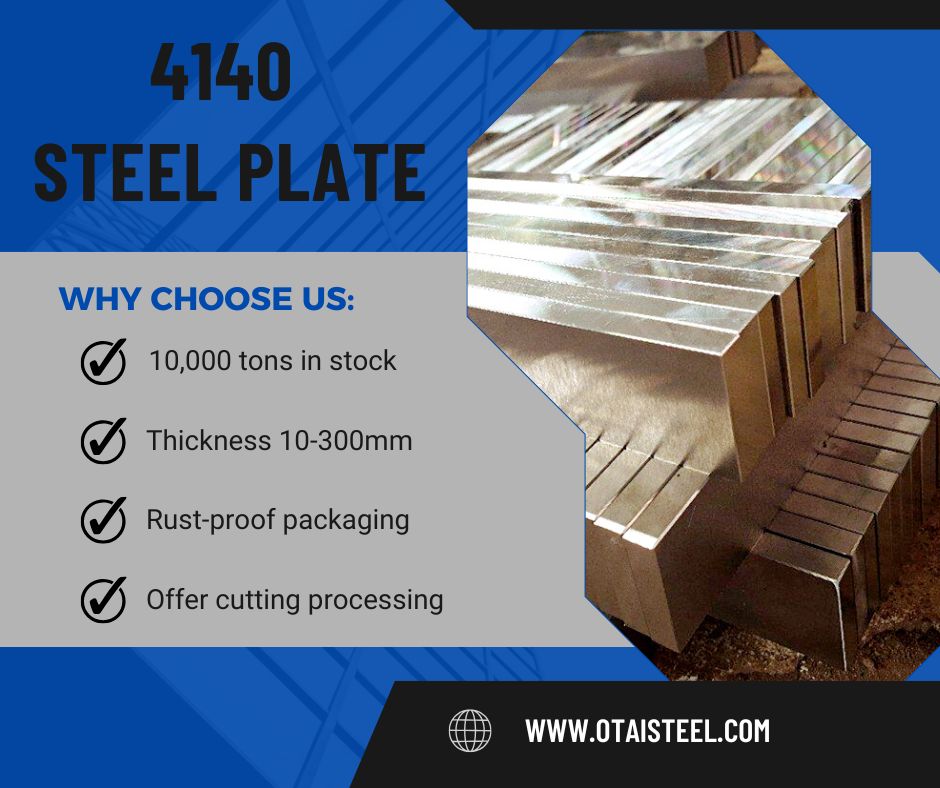
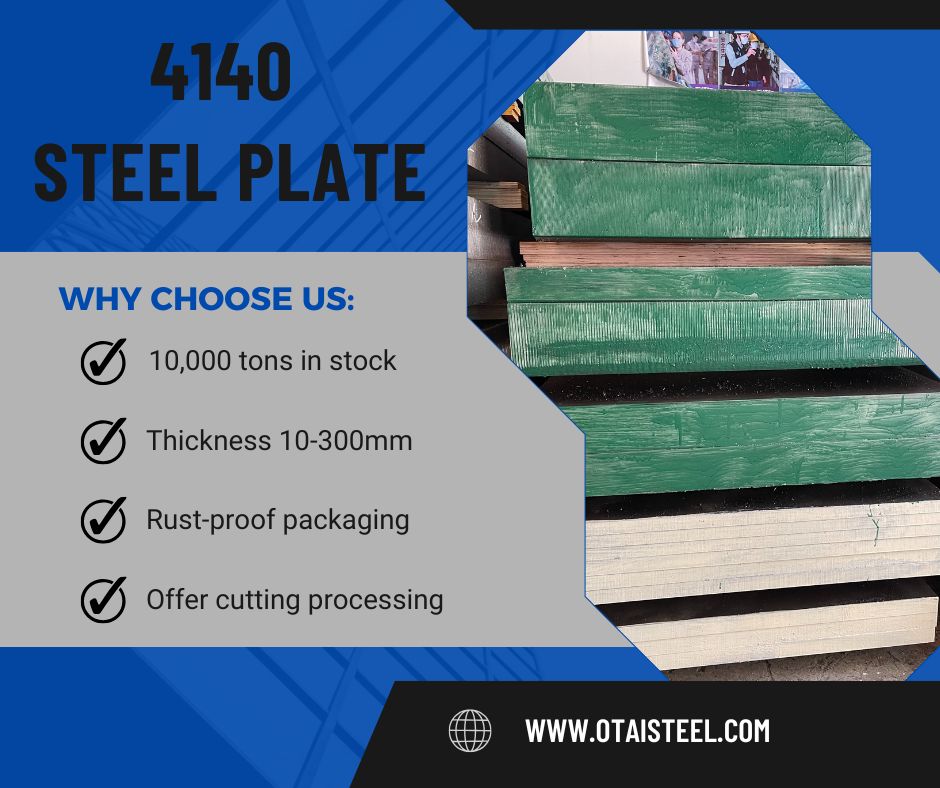
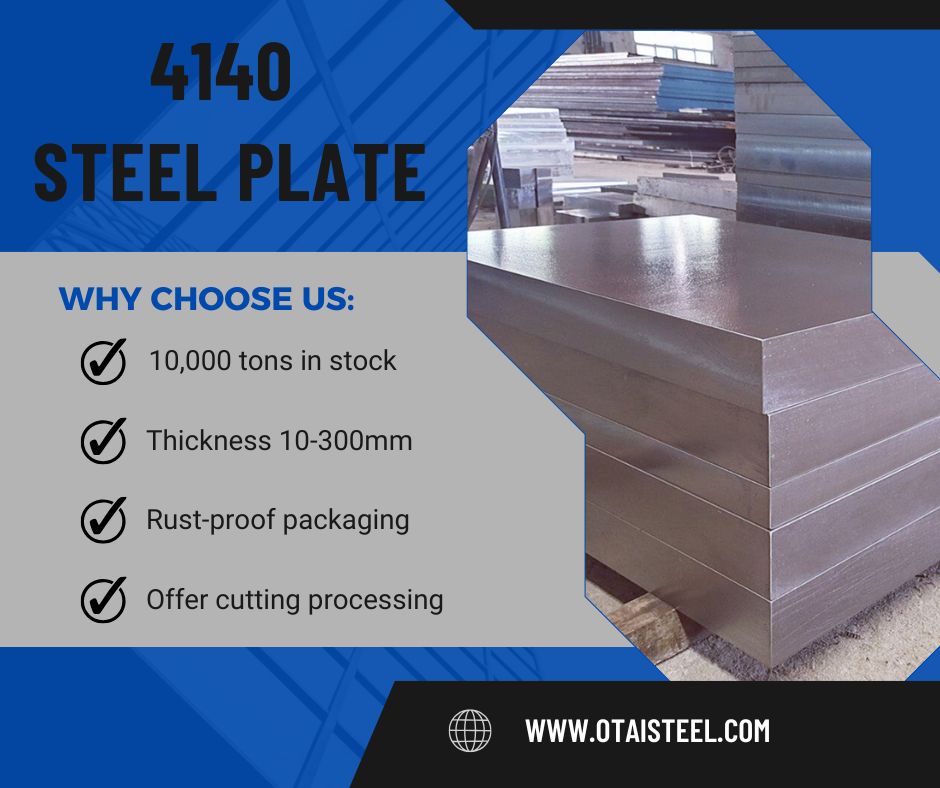
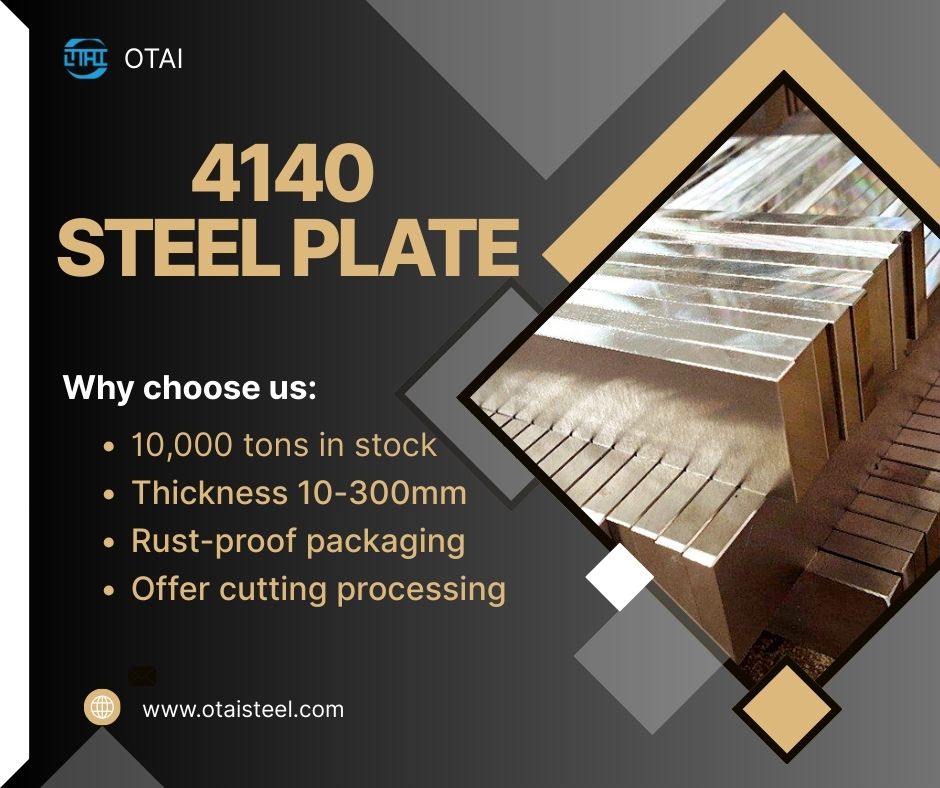
When it comes to high-performance alloy steels, 4140 Q&T steel (quenched and tempered) is a material that strikes a balance between strength, toughness, and machinability. Whether you’re in automotive, aerospace, tooling, or energy industries, understanding the 4140 Q&T steel properties can be a game-changer in selecting the right material for critical components.

Let’s dive into the technical details, real-world uses, and performance metrics of this powerhouse alloy.


📌 What Is 4140 Q&T Steel?

4140 is a chromium-molybdenum low-alloy steel. When it undergoes quenching and tempering (Q&T), its microstructure transforms, boosting its mechanical strength, hardness, and resistance to fatigue.

Quenching involves rapid cooling from high temperatures to lock in hardness, while tempering reduces brittleness and adjusts the final properties.

This process makes 4140 Q&T steel an excellent candidate for demanding applications where durability is non-negotiable.


📐 Chemical Composition of 4140 Q&T Steel

Element Typical Content (%)
Carbon (C) 0.38 – 0.43
Chromium (Cr) 0.80 – 1.10
Manganese (Mn) 0.75 – 1.00
Molybdenum (Mo) 0.15 – 0.25
Silicon (Si) 0.15 – 0.35
Sulfur (S) (max) 0.035
Phosphorus (P) (max) 0.035

These elements are carefully balanced to ensure optimum performance during heat treatment and in service.


🧪 Mechanical Properties of 4140 Q&T Steel

The 4140 Q&T steel properties depend on heat treatment parameters, especially final tempering temperature and section thickness. Here’s a general overview:

Property Value (Typical)
Tensile Strength 850 – 1000 MPa
Yield Strength 700 – 900 MPa
Elongation at Break 20 – 25%
Impact Toughness (Charpy V-notch @ RT) 25 – 35 J
Hardness (HRC) 28 – 32 HRC (typical)

For applications requiring hardness with moderate ductility, this range makes it ideal.


🔩 Key Benefits of Using 4140 Q&T Steel

Benefits in a nutshell:

  • ⚙️ Excellent strength-to-weight ratio

  • 🔧 Good machinability (especially post-tempering)

  • 🔩 Strong fatigue and wear resistance

  • 🔥 Withstands thermal and mechanical shock

  • 🛠️ Accepts surface treatments like nitriding or induction hardening


🏭 Application Examples of 4140 Q&T Steel

You’ll find 4140 Q&T steel across diverse sectors:

Industry Common Uses
Automotive Gears, crankshafts, axles
Oil & Gas Drill collars, tool joints
Heavy Equipment Pins, shafts, bushings
Aerospace Landing gear, brackets
Tool & Die Tool holders, molds, dies

Its versatility in design and function makes it a go-to material in scenarios where failure is not an option.


🔎 Comparison: Q&T vs Other Conditions

Property 4140 Annealed 4140 Q&T
Yield Strength ~415 MPa ~850 MPa
Hardness (HRC) ~20 28 – 32
Machinability High Moderate
Wear Resistance Moderate High
Application Scope General machining Structural & load-bearing

This shows why many engineers and buyers choose Q&T 4140 steel for tools and parts that face continuous loading or abrasive wear.


🧠 Technical Tips: Working with 4140 Q&T

  • 🔩 Machining: Use coated carbide tools; reduce speed to improve surface finish.

  • 🔧 Welding: Requires preheating (~200–400°C) and post-weld heat treatment to avoid cracking.

  • 🌡️ Stress Relief: Recommended after heavy machining; ideal range is 540–650°C.

  • ❄️ Storage: Keep dry and avoid water exposure to prevent rust on machined surfaces.


💡 Why 4140 Q&T Beats the Competition

If you’re comparing this to other steels like 1045, 4340, or 8620, the 4140 Q&T steel properties offer a sweet spot in cost, strength, and availability. It may not be as tough as 4340, but it’s easier to machine and more affordable—perfect for high-volume production parts.


🏆 Why Choose Otai Special Steel?

At Otai Special Steel, we provide 4140 Q&T steel plates, bars, and blocks with:

  • 📦 Over 10,000 tons in stock, thicknesses from 6mm to 300mm

  • 🔍 UT-tested & certified materials, traceable by batch

  • ✂️ Cut-to-size, CNC processing, and heat treatment services

  • 🌍 Trusted by top brands like Thyssenkrupp, Schlumberger, and Borealis

We solve customer challenges in quality, delivery, and performance — no more sourcing headaches!

Need a quote for your next project? 📩 Contact us now and get expert advice tailored to your application!


❓ Frequently Asked Questions (FAQ)

Q1: Can 4140 Q&T steel be welded?
Yes, but preheating and post-weld stress relief are recommended to avoid cracking.

Q2: What’s the maximum hardness after Q&T treatment?
It typically reaches around 28–32 HRC but can go higher with special processes.

Q3: Is 4140 Q&T better than annealed 4140?
For structural strength and wear resistance, yes. But annealed is better for machining.

Q4: Does Q&T change the chemical composition?
No. It changes the microstructure, not the chemistry.

Q5: Where can I buy 4140 Q&T steel with certifications?
Contact Otai Special Steel — we offer certified 4140 Q&T steel with full test reports and inspection records.
0 0 Continue Reading →

Is 4140 Steel Good for Knife Making?

Is 4140 Steel Good for Knife Making?Is 4140 Steel Good for Knife Making?

If you’ve ever wondered “is 4140 steel good for knife making”, you’re not alone. Knife makers, blacksmiths, and even hobbyists frequently ask whether this popular alloy steel can work as a blade material. Let’s dig deep into its chemical composition, hardness, machinability, heat treatment response, and see whether knife making with 4140 steel is a smart choice.


🌟 What is 4140 Steel?

4140 steel is a chromium-molybdenum alloy steel known for its combination of toughness, strength, and wear resistance. Its typical composition includes:

Element Percentage (%)
Carbon (C) 0.38 – 0.43
Chromium (Cr) 0.80 – 1.10
Molybdenum (Mo) 0.15 – 0.25
Manganese (Mn) 0.75 – 1.00
Silicon (Si) 0.15 – 0.35

This mix gives 4140 steel high impact resistance and good fatigue strength, which makes it ideal for gears, shafts, and automotive components. But does that mean it’s a good candidate for knives?


🔧 Pros of Using 4140 Steel for Knives

Many knife makers experiment with 4140 steel for knives because of its workability and durability. Here are the main advantages:

  • Excellent Toughness – 4140 steel resists cracking under impact, making it good for large choppers or survival tools.

  • Good Machinability – Compared to high-carbon tool steels, 4140 machines relatively easily, especially in the annealed condition.

  • Affordable and Widely Available – You can find 4140 steel bar stock and plate almost anywhere, which makes it attractive for first-time makers.

  • Good Heat Treatment Response – Proper quenching and tempering can bring the hardness up to around HRC 50–55, enough for a functional cutting edge.


⚠️ Cons and Limitations

Despite its benefits, there are reasons why 4140 isn’t the top choice for most knife makers:

  • Lower Carbon Content – With ~0.4% carbon, it doesn’t reach the hardness or edge retention of tool steels like 1095 or D2.

  • Moderate Edge Holding4140 steel edge retention is limited; the blade may dull faster with heavy use.

  • Requires Careful Heat Treatment – Overheating during quench can cause warping or microcracks.

  • Not Stainless – It can rust if left unprotected, so you must oil it regularly.


🔥 Heat Treatment Tips for 4140 Knife Blades

If you decide to try knife making with 4140 steel, heat treatment becomes critical. A basic process looks like this:

  1. Normalize: Heat to ~870 °C (1600 °F), then air cool to refine grain structure.

  2. Austenitize: Heat to ~845 °C (1550 °F) and hold to allow full transformation.

  3. Quench: Use oil or polymer quench to achieve hardness.

  4. Temper: Reheat to 200–600 °C (400–1100 °F) depending on desired toughness.

Proper tempering can achieve a hardness range of HRC 28–50, with higher tempering temperatures resulting in softer, tougher blades.


🔄 4140 Steel vs. Common Knife Steels

Property 4140 Steel 1095 Carbon Steel D2 Tool Steel
Carbon Content 0.4% 0.95% 1.5%
Max Hardness (HRC) ~50–55 ~65 ~62
Edge Retention Moderate High Very High
Toughness High Medium Medium
Corrosion Resistance Low Low Moderate

This comparison shows that 4140 steel knives excel in toughness but can’t compete with tool steels in edge performance.


🛠️ When to Use 4140 Steel for Knives

  • Great for Practice: Beginners can practice forging and heat treating without worrying about wasting expensive steel.

  • Good for Large Blades: Ideal for machetes, camp knives, and impact tools where toughness matters more than extreme sharpness.

  • Budget Projects: Perfect when cost is a factor and the knife won’t see heavy culinary or fine cutting use.


🏭 Company Advantages – Why Choose Us as Your 4140 Steel Supplier

At Otai Special Steel, we stock a large inventory of 4140 steel bar and plate from 6mm to 300mm thickness. Here’s why global customers trust us:

  • 10,000+ tons of stock, ready for quick delivery.

  • Custom cutting service to provide exact sizes for knife blanks or projects.

  • Heat treatment service available to deliver pre-hardened material if requested.

  • Strict quality testing – ultrasonic (UT), composition check, and SGS inspection available.

  • International experience – we supply major clients worldwide and understand export requirements.


❓ FAQ – Knife Makers’ Common Questions

Q1: Can you make a functional knife out of 4140 steel?
Yes, especially for large, tough knives, but it won’t have the edge retention of higher-carbon steels.

Q2: What hardness should I target for 4140 knives?
HRC 50 is a good balance between edge strength and toughness.

Q3: Does 4140 steel rust easily?
Yes, it’s not stainless. Apply oil or protective coatings regularly.

Q4: Should beginners use 4140 for knife making?
Absolutely. It’s forgiving to work with and relatively inexpensive, making it ideal for practice.

0 0 Continue Reading →

4140 Steel Suppliers – How to Find Reliable Sources for Your Business

4140 Steel Suppliers – How to Find Reliable Sources for Your BusinessHow to Find Reliable Sources for Your Business

When engineers and buyers search for 4140 steel suppliers, they usually want a source that can provide consistent quality, competitive pricing, and reliable delivery. 4140 steel is one of the most widely used chromium-molybdenum alloy steels, found in shafts, gears, molds, and machine components. Choosing the right supplier ensures you avoid delays, rework, and costly downtime.


🔍 What to Look for in 4140 Steel Suppliers

Not all steel suppliers offer the same service level. Here are key factors to evaluate:

  • Inventory Size: Look for suppliers who carry a wide range of bar and plate thicknesses.
  • Processing Services: Cutting, heat treatment, and machining-ready blanks save you time.
  • Certifications: Request mill test certificates (MTCs) and ultrasonic test (UT) reports.
  • Lead Times: Suppliers with in-stock material can ship faster, avoiding production delays.
  • Global Shipping Capability: Especially important if you need international supply.
  • Technical Support: Good suppliers provide material property data and selection advice.

📦 Types of 4140 Steel Suppliers

Different suppliers focus on different forms of 4140 steel. Common categories include:

Supplier Type Best For
4140 Steel Bar Suppliers Shafts, axles, pins, studs
4140 Steel Plate Suppliers Base plates, dies, fixtures
4140 Steel Stockists Bulk availability, multiple grades
4140 Steel Distributors Regional distribution, fast delivery
Wholesale Suppliers Large volume orders at better pricing

If you search for 4140 steel suppliers near me, you’ll likely find local distributors or warehouses that can deliver within a day.


🌍 Global Supply and Regional Availability

For buyers outside the US, finding 4140 steel suppliers USA can be a good option for consistent quality and ASTM-certified material. However, you should:

  • Confirm international shipping terms (FOB, CIF, EXW)
  • Ask about export packing standards to avoid rust or damage
  • Request HS codes for customs clearance

Buyers in Europe often look for 42CrMo4 suppliers (the DIN equivalent of 4140 steel), while in Asia, JIS SCM440 suppliers are common. A good supplier will understand these equivalents and cross-reference them.


🏭 Quality Control Checklist for 4140 Steel Procurement

Before placing large orders, verify the following:

  • Chemical Composition: Meets ASTM A29 / AISI 4140 requirements.
  • Mechanical Properties: Tensile and yield strength match your design.
  • Surface Condition: Scaled, turned, or ground – choose based on machining needs.
  • Tolerances: Check diameter/flatness tolerances if ordering pre-machined bars.
  • Documentation: MTC, UT, and third-party inspection reports if required.

💡 Expert Tips for Choosing the Best 4140 Steel Supplier

  • Work with suppliers that have large inventories so they can support repeat orders.
  • Ask for a 4140 steel weight chart to calculate shipping and handling requirements.
  • Evaluate whether they offer cut-to-size service to minimize your machining time.
  • Check if they have an in-house quality team to inspect material before shipment.
  • Establish a long-term relationship to lock in better pricing and priority allocation.

🌟 Company Advantages

At Otai Special Steel, we are among the leading 4140 steel suppliers in Asia with over 10,000 tons of stock. We offer:

  • Round bar, flat bar, and plate from 6 mm to 300 mm thickness
  • Precision cutting, heat treatment, and packaging services
  • Certified MTCs, ultrasonic testing (UT), and SGS third-party inspection support
  • International shipping with proper export documentation

This means you get consistent quality, competitive pricing, and reliable delivery every time.


❓ FAQ

Q: How do I find the best 4140 steel suppliers near me?
A: Search for local distributors with stock on hand, or work with global suppliers who offer fast shipping.

Q: Can I buy small quantities of 4140 steel?
A: Yes, many suppliers sell cut-to-size pieces for prototypes or small batch production.

Q: What documents should I request from a supplier?
A: Mill Test Certificate (MTC), ultrasonic testing report, and packing list with weight data.

Q: Do suppliers offer machining services?
A: Some suppliers provide rough machining, saw cutting, or even heat-treated blanks to save your processing time.

Q: How do I ensure consistent quality from batch to batch?
A: Work with ISO-certified suppliers and request chemical and mechanical property verification for every lot.

0 0 Continue Reading →

4140 Steel in SolidWorks – How to Use It for Accurate Design & Simulation

4140 Steel in SolidWorks – How to Use It for Accurate Design & Simulation4140 Steel in SolidWorks – How to Use It for Accurate Design & Simulation

If you work with mechanical design or FEA, you’ve probably wondered how to set up 4140 steel in SolidWorks correctly. Whether you’re designing shafts, gears, or machine frames, using the right material data is essential for realistic results. In this article, we’ll show you how to add 4140 steel material properties in SolidWorks, set its density, yield strength, and even run simulations with confidence.


🏗️ Why 4140 Steel Matters in SolidWorks

4140 is a chromium-molybdenum alloy steel known for its balance of strength, toughness, and machinability. In SolidWorks, choosing the wrong material or leaving it as “Plain Carbon Steel” can lead to inaccurate weight, stress, and deflection predictions.

Using 4140 steel in SolidWorks ensures:

  • Correct mass calculation for weight-sensitive parts
  • Accurate center of gravity for assemblies
  • Proper stress results in FEA (finite element analysis)
  • Reliable factor of safety predictions
  • Precise bill of materials for purchasing

⚙️ Adding 4140 Steel to the Material Library

By default, SolidWorks doesn’t include every steel grade in its library. To add 4140 steel material properties in SolidWorks:

  1. Open the Material Library – Right-click on “Material” in the Feature Manager > Edit Material.
  2. Create a Custom Material – Select a custom material folder and click New Material.
  3. Enter Density – Input 0.284 lb/in³ (7.85 g/cm³) under the Physical Properties tab.
  4. Add Mechanical Properties
    • Yield Strength: ~95,000 psi (655 MPa)
    • Tensile Strength: ~150,000 psi (1,034 MPa) (quenched & tempered)
    • Elastic Modulus: 29,000 ksi (200 GPa)
    • Poisson’s Ratio: 0.29
  5. Save the Material – Give it a clear name like “AISI 4140 QT”.

This step ensures every part or assembly that uses this material will have consistent data.


⚖️ SolidWorks 4140 Steel Density

SolidWorks uses density to compute weight and mass properties. If you model a 2″ × 2″ × 36″ bar with 4140 steel density, you’ll get:

  • Volume = 144 in³
  • Weight = 144 × 0.284 = 40.9 lbs

This matches handbook values and ensures accurate BOMs and shipping weight estimates.


📈 SolidWorks 4140 Steel Yield Strength in Simulation

When running Simulation studies, SolidWorks uses yield strength to determine factor of safety. Entering the correct 4140 steel yield strength (~95 ksi) helps predict:

  • Permanent deformation under loads
  • Safety margins in shafts and frames
  • Stress concentrations around fillets or holes

💡 Tip: If you use different heat treatments (annealed, normalized, quenched & tempered), update the yield and tensile strength values accordingly.


🖥️ Running FEA with 4140 Steel

Once the material is applied, you can run static, frequency, or fatigue studies.

Example: A crankshaft modeled in 4140 steel:

  • Apply torque loads
  • Fix bearing surfaces
  • Run a static study
  • Check maximum von Mises stress against 95 ksi yield strength

This allows you to determine if the shaft design is safe before manufacturing.


📊 Table: Typical 4140 Steel Properties for SolidWorks Input

Property Value
Density 0.284 lb/in³ (7,850 kg/m³)
Elastic Modulus 29,000 ksi (200 GPa)
Poisson’s Ratio 0.29
Yield Strength 95,000 psi (655 MPa)
Tensile Strength 150,000 psi (1,034 MPa)
Shear Modulus 11,500 ksi (79 GPa)

🔧 Best Practices for Using 4140 in SolidWorks

  • Keep a custom material database so the whole design team uses the same data.
  • Document which heat-treatment condition you’re using.
  • Use mass properties tool to double-check weight before ordering material.
  • Validate simulation results with hand calculations or reference data.
  • If needed, run a sensitivity study to see how design changes affect stress and weight.

🌟 Company Advantages

At Otai Special Steel, we provide customers with accurate 4140 steel mechanical property data that you can plug directly into SolidWorks. We offer:

  • 10,000+ tons of 4140 in stock, all with certified MTCs
  • Data sheets with density, yield strength, and modulus
  • Custom heat treatment services so you can match simulation to real-world conditions
  • Pre-cut blanks to save machining time and reduce material waste

This makes your CAD and simulation process more reliable and efficient.


❓ FAQ

Q: Does SolidWorks have 4140 steel by default?
A: No, you must create a custom material or import from a material database.

Q: Which heat treatment should I use in simulation?
A: Choose the condition that matches your final part — annealed for machinability, quenched & tempered for strength.

Q: Will density change after heat treatment?
A: Not significantly. You can use the same value across conditions.

Q: Can I share my custom 4140 material file with my team?
A: Yes, copy the .sldmat file to a shared network folder for consistent results.

Q: How do I verify that my weight matches reality?
A: Compare SolidWorks mass properties with supplier-provided weight charts before production.

0 0 Continue Reading →

How Much Does 4140 Steel Weigh?

How Much Does 4140 Steel Weigh?How Much Does 4140 Steel Weigh ?

When engineers ask “how much does 4140 steel weigh?”, they usually need precise numbers for design, quoting, or logistics. 4140 steel is a chromium-molybdenum alloy steel widely used in shafts, gears, tooling, and heavy-duty components — so its weight matters for handling, transport, and performance calculations. This guide gives you 4140 steel density, weight formulas, bar and plate charts, and practical tips for engineers.


⚖️ Density of 4140 Steel

The density of 4140 steel is approximately 7.85 g/cm³ (or 0.284 lb/in³). This makes it almost identical to other medium-carbon steels like 1045, meaning you can use standard steel weight charts with confidence.

Unit Density
g/cm³ 7.85
kg/m³ 7,850
lb/in³ 0.284
lb/ft³ 490

This means a cubic foot of 4140 weighs about 490 lbs, and a cubic meter weighs nearly 7.85 metric tons.


🧮 Weight Calculation Formula

Weight = Volume × Density

Example: A 4140 bar measuring 2 in × 2 in × 36 in:

  • Volume = 2 × 2 × 36 = 144 in³
  • Weight = 144 × 0.284 = 40.9 lbs

You can use this formula for plates, bars, rings, or custom shapes if you know the volume.


📊 4140 Steel Weight by Shape

Shape Formula Example Weight
Cube (1 ft³) 1 × 490 490 lbs
1 in³ block 1 × 0.284 0.284 lbs
Round bar Ø1″ × 12″ π × (0.5²) × 12 × 0.284 2.68 lbs
Plate 1″ × 12″ × 12″ 144 × 0.284 40.9 lbs
Hollow Tube Ø3″ × Ø2″ × 24″ π × (1.5² – 1.0²) × 24 × 0.284 36.1 lbs

📋 4140 Steel Bar Weight Chart

Diameter (in) Weight per Foot (lbs) Weight per Meter (kg)
1.00 2.67 3.97
1.50 6.01 8.94
2.00 10.68 15.9
3.00 24.01 35.7
4.00 42.74 63.6
6.00 96.14 142.9

This 4140 steel bar weight chart helps you quickly estimate weight for cutting orders or transport planning.


📐 Plate Weight per Square Foot

Thickness (in) Weight per ft² (lbs) Weight per m² (kg)
0.50 20.45 99.9
1.00 40.90 199.8
2.00 81.80 399.6
3.00 122.70 599.4

For large projects like base plates or machine beds, knowing the 4140 steel plate weight per square foot avoids overloading lifting equipment or exceeding truck capacity.


🏭 Practical Engineering Applications

Engineers rely on accurate weight data to:

  • Calculate shipping loads and choose proper freight options.
  • Select cranes, hoists, or forklifts with the right lifting capacity.
  • Estimate inertia for rotating parts like flywheels or gear trains.
  • Predict structural loads in frames, machine beds, or support beams.
  • Determine part cost based on price per kg or lb.

For example, an oilfield drill collar weighing several hundred kilograms must be calculated precisely to avoid imbalance in drilling rigs.


💡 Expert Tips for Weight Calculation

  • Add machining allowance: starting stock will always weigh more than the finished part.
  • Use CAD software mass properties for complex shapes.
  • Don’t forget weight of holes, slots, and cutouts — they can significantly reduce final mass.
  • For welded fabrications, add weld metal weight if required by design code.
  • Always verify with supplier’s 4140 steel weight calculator for large or high-value orders.

🌟 Company Advantages

At Otai Special Steel, we maintain comprehensive 4140 steel bar weight charts and help customers with weight-based quotations. With over 10,000 tons of 4140 in stock:

  • We supply round, flat, and plate forms in multiple thicknesses
  • Offer precision cutting to save machining cost
  • Provide weight data on all quotations and packing lists
  • Support international shipping with accurate documentation

This makes your material planning and logistics easier and more reliable.


❓ FAQ

Q: Does heat treatment change the weight of 4140 steel?
A: No, heat treatment slightly changes microstructure but not density, so weight remains nearly the same.

Q: How do I calculate the weight for hollow shafts?
A: Subtract the inner volume from the outer volume, then multiply by density.

Q: Can I use standard carbon steel density for 4140?
A: Yes, 4140 has almost the same density as mild steel, so standard charts apply.

Q: Is weight data included on MTCs?
A: Usually no, but reputable suppliers like Otai include weight on quotations and invoices.

Q: What if my calculated weight and actual delivery weight differ?
A: Small differences can happen due to tolerances. Always allow a margin in logistics planning.

0 0 Continue Reading →

Is 4140 Steel Easy to Machine?

Is 4140 Steel Easy to Machine?Is 4140 Steel Easy to Machine?

If you’ve ever asked yourself “is 4140 steel easy to machine?”, you’re not alone. 4140 steel is one of the most widely used alloy steels, thanks to its excellent balance of strength, toughness, and wear resistance. But when it comes to machining, its behavior depends heavily on its heat treatment condition. Understanding these differences helps you save tooling costs, improve surface finish, and meet tight tolerances.


🔍 Understanding 4140 Steel Machinability

The term 4140 steel machinability refers to how easily this alloy can be cut, drilled, milled, or turned without excessive tool wear. 4140 contains chromium and molybdenum, giving it high strength and hardenability — but also making it more challenging to cut than mild steel.

Machinability by Condition

Condition Typical Hardness (HRC) Machinability Rating* Comment
4140 Annealed 18 – 22 ~65% Easiest to machine, excellent for roughing operations
4140 Prehard 28 – 32 ~50% Requires rigid setups and slower speeds
4140 Quenched & Tempered (Q&T) 35 – 50 ~40% Hardest to machine, used mainly for finishing

*Relative to AISI 1112 steel (100% machinability).


🛠 Machining 4140 Steel Tips

When working with this alloy, following best practices makes a huge difference. Here are the top machining 4140 steel tips:

  • Use rigid machine setups – Minimize vibration to protect tool life and achieve consistent tolerances.
  • Select the right tooling – For hard 4140, use coated carbide, CBN, or ceramic inserts.
  • Control cutting speed – High speeds generate heat and cause rapid tool wear.
  • Apply coolant generously – Especially for drilling, tapping, and deep-hole boring.
  • Consider staged machining – Rough in annealed state, heat treat, then finish machine.
  • Use sharp tools – Dull tools create heat and work-hardening, increasing machining difficulty.

📊 Recommended Speeds and Feeds

Operation Tool Material Annealed (SFM) Prehard (SFM) Notes
Turning Carbide 400 – 600 250 – 350 Use positive rake inserts
Drilling HSS 50 – 70 35 – 50 Peck drilling recommended
Milling Carbide 350 – 500 200 – 300 Use climb milling for better finish
Tapping HSS 10 – 20 6 – 12 Use plenty of cutting fluid

Tip: Reduce feeds and speeds by 20-30% for 4140 prehard machinability to improve tool life and avoid chatter.


⚙️ Tooling Recommendations

Choosing the best tooling for 4140 steel is critical for productivity:

  • Carbide Inserts: PVD or CVD-coated inserts work well for general turning.
  • CBN or Ceramic: Best for hard turning (> 40 HRC) in Q&T condition.
  • HSS Tools: Suitable for low-speed drilling and tapping in annealed state.
  • Coolant: Use flood coolant or high-pressure coolant for deep holes.
  • Workholding: Ensure rigid clamping to prevent part deflection during cuts.

🏭 Applications Where Machinability Matters

When machining components like shafts, gears, spindles, and hydraulic parts, starting with the right condition saves time and cost. 4140 annealed machinability is ideal for rough machining before heat treatment. For molds, fixtures, and production tooling, many choose prehard 4140 to skip heat treatment and go directly to use.


💡 Practical Engineering Advice

  • Always check hardness on the MTC (mill test certificate) before machining.
  • If tight tolerances are required, machine in the HTSR condition to avoid distortion.
  • Plan heat treatment sequence early: rough machine first, then heat treat, then finish.
  • Stress relieve after heavy machining to avoid warpage in service.
  • Use toolpath simulation to reduce unexpected tool breakage in expensive materials.

🌟 Company Advantages

At Otai Special Steel, we supply 4140 annealed, 4140 prehard, and Q&T bars and plates ready for machining. With over 10,000 tons in stock, we offer:

  • Cut-to-size service for easy handling
  • Heat treatment and stress-relief options
  • Technical advice for machinability optimization
  • Third-party inspection (SGS, UT, chemical test) upon request

This ensures you receive the right condition for your machining project, saving time and cost.


❓ FAQ

Q: Is 4140 steel difficult to machine?
A: In annealed condition, it’s quite machinable (~65%). In prehard or quenched state, it requires proper tooling and slower speeds.

Q: Can I machine 4140 after heat treatment?
A: Yes, but use carbide or CBN tools for best results and adjust cutting speeds.

Q: Should I machine before or after heat treatment?
A: Rough machine before heat treatment, finish machine after to achieve final tolerance.

Q: Do I need coolant when machining 4140?
A: Yes, coolant is strongly recommended to manage heat and extend tool life.

Q: What’s the best cutting tool for 4140 prehard steel?
A: Coated carbide inserts with moderate cutting speed give the best balance of tool life and surface finish.

0 0 Continue Reading →

Different Types of 4140 Steel – Choosing the Right for Your Project

Different Types of 4140 Steel – Choosing the Right for Your ProjectDifferent Types of 4140 Steel – Choosing the Right for Your Project

When engineers talk about different types of 4140 steel, they usually refer to the heat treatment conditions and hardness levels that transform 4140 from a raw alloy into a material suitable for specific applications. Understanding these variations helps you select the right grade, minimize machining costs, and optimize performance.


🔎 Overview of 4140 Steel Grades

The term 4140 steel grades covers several forms of this chromium-molybdenum alloy, classified mainly by hardness, heat treatment, and delivery condition. In its simplest state, 4140 is delivered as annealed bar stock, but many suppliers also provide prehardened or heat-treated options.

Grade / Condition Typical Hardness (HRC) Typical Use
4140 Annealed 18 – 22 Easy machining, forging, heat-treatment-ready
4140 Prehard Steel 28 – 32 Tooling, molds, fixtures, shafts
4140 HTSR Steel (Heat Treated, Stress Relieved) 28 – 32 Precision components with minimal distortion
4140 Quenched & Tempered 30 – 50 High-strength parts, gears, axles

Each type has unique mechanical properties, machinability, and cost implications.


🧪 4140 Annealed vs Quenched

One of the most common questions is the difference between 4140 annealed vs quenched. Annealed 4140 is soft and easy to machine, making it ideal for rough machining and parts that will undergo final heat treatment later. Quenched and tempered 4140, on the other hand, is much harder and ready for use in demanding applications.

Key takeaway: If you need maximum toughness and wear resistance, choose quenched and tempered 4140. If you need flexibility for custom hardness, go with the annealed condition.


🔧 Heat Treatment Options for 4140 Steel

Engineers can specify 4140 steel heat treatment options to achieve precise hardness levels:

  • Annealing: Produces a soft, uniform structure, improves machinability.
  • Normalizing: Improves grain structure, raises strength slightly.
  • Quenching & Tempering: Achieves maximum hardness and toughness.
  • Stress Relieving: Used in 4140 HTSR steel to reduce internal stresses, ensuring dimensional stability during machining.

Selecting the right process depends on the application and whether you will machine before or after hardening.


⚖️ Mechanical Properties by Condition

Condition Tensile Strength (MPa) Yield Strength (MPa) Elongation (%)
Annealed 655 415 25
Prehard (28-32 HRC) 965 – 1030 760 – 850 17
Quenched & Tempered (40 HRC) 1250+ 1080+ 12

Harder grades offer higher strength but lower ductility, so balance is key.


🏭 Applications of Different 4140 Types

Each 4140 grade is chosen based on its properties. Here are typical 4140 steel applications:

  • 4140 Annealed: gears, shafts, forgings that will be heat treated later
  • 4140 Prehard Steel: fixtures, dies, molds where moderate hardness is enough
  • 4140 HTSR Steel: precision shafts, spindles, and tooling that require minimal warpage
  • 4140 Quenched & Tempered: axles, drill collars, crankshafts, machine parts under heavy load

Using the right type prevents costly part failure and machining rework.


🧠 Practical Tips for Engineers

  • If you plan extensive machining, start with annealed material to save tooling costs.
  • For tight-tolerance parts, consider HTSR condition to reduce stress-related distortion.
  • If your supplier offers prehard, you may eliminate the need for in-house heat treatment, saving time and money.
  • Always verify hardness range on the mill test certificate before finalizing your purchase.

🌟 Company Advantages

At Otai Special Steel, we stock a wide range of different types of 4140 steel, including annealed, prehard, and quenched-and-tempered bars and plates. With more than 10,000 tons in inventory, we provide:

  • Customized cutting to size
  • Heat treatment services (QT, HTSR)
  • Ultrasonic testing (UT) and chemical composition reports
  • Fast global delivery and competitive pricing

This ensures you get the exact grade you need with minimal lead time.


❓ FAQ

Q: How do I choose between annealed and prehard 4140?
A: Choose annealed if you plan to heat treat later. Choose prehard if you want to skip heat treatment and go straight to machining.

Q: Can 4140 prehard be further hardened?
A: Yes, prehard 4140 can be quenched and tempered to higher hardness if needed.

Q: What is HTSR exactly?
A: HTSR stands for Heat Treated, Stress Relieved, meaning the material has been heat treated and then stress relieved to minimize warpage.

Q: Is 4140 suitable for welding?
A: Yes, but preheating and post-weld stress relief are recommended to avoid cracking.

Q: Can I use the same cutting tools for all grades?
A: Harder grades require tougher cutting tools and slower speeds. Adjust your machining parameters accordingly.

0 0 Continue Reading →

Heat Treating 4140 alloy Steel: Complete practical tips

Heat Treating 4140 alloy Steel: Complete practical tipsHeat Treating 4140 alloy Steel: Complete practical tips

When it comes to engineering materials, 4140 steel is a favorite among machinists, engineers, and manufacturers worldwide. But the real magic happens when you heat treat 4140 steel — unlocking its maximum strength, toughness, and wear resistance. If you’re working on gears, shafts, axles, or high-stress components, understanding the best heat treatment for 4140 steel can make the difference between an average part and a high-performance one.

In this guide, we’ll break down Heat Treating 4140 alloy Steel, covering processes, temperatures, benefits, and practical tips.


🌟 What Makes 4140 Steel Special?

4140 steel is a chromium-molybdenum alloy steel with a balance of hardness and ductility. In its annealed condition, it’s machinable, but once heat treated, it becomes incredibly strong.

Chemical Composition of 4140 Steel (Typical %):

Element Percentage (%)
Carbon (C) 0.38 – 0.43
Chromium (Cr) 0.80 – 1.10
Molybdenum (Mo) 0.15 – 0.25
Manganese (Mn) 0.75 – 1.00
Silicon (Si) 0.15 – 0.35
Sulfur (S) ≤ 0.040
Phosphorus (P) ≤ 0.035

🔥 Why Heat Treat 4140 Steel?

Heat treating changes the steel’s internal microstructure, improving properties like:

  • Increased tensile strength

  • Higher fatigue resistance

  • Better wear resistance

  • Improved dimensional stability

For example, 4140 steel quenching and tempering can take hardness from ~20 HRC in the annealed state up to 50+ HRC, depending on the exact process.


⚙️ Main Heat Treatment Methods for 4140 Steel

1️⃣ Annealing (Softening for Machining)

Before hardening, some users anneal 4140 alloy steel to make it easier to machine.

  • Temperature: 800–850°C (1472–1562°F)

  • Slow furnace cooling to 480°C (896°F) then air cool.

  • Results in ~200 Brinell hardness.


2️⃣ Normalizing

Used to refine grain size and prepare for hardening.

  • Temperature: 870–900°C (1598–1652°F)

  • Air cooling.

  • Produces uniform microstructure for consistent hardening.


3️⃣ Quenching & Tempering (Q&T)

The most common heat treatment for 4140 steel when strength and wear resistance are required.

  • Quenching: Heat to 840–875°C (1544–1607°F), then oil quench.

  • Tempering: Reheat to 200–650°C (392–1202°F) depending on hardness requirements.

Tempering Temperature vs. Hardness for 4140 Steel:

Tempering Temp (°C) Approx. Hardness (HRC)
200 50–55
400 38–42
600 28–32

4️⃣ Nitriding (Surface Hardening)

If you need extreme surface wear resistance, nitriding is a great option.

  • Conducted at 500–550°C (932–1022°F) without quenching.

  • Produces a hard surface (~60–65 HRC) while maintaining a tough core.


🛠 Practical Tips for Heat Treating 4140 Steel

  1. Preheat before quenching — reduces thermal shock.

  2. Avoid overheating — grain growth reduces toughness.

  3. Choose oil quench over water quench — reduces risk of cracking.

  4. Always temper after hardening — untempered martensite is brittle.

  5. Consider part geometry — thick sections cool slower, affecting hardness.


📦 Applications That Rely on Heat Treated 4140 Steel

  • Heavy-duty crankshafts and camshafts

  • Gears for mining and construction equipment

  • Tool holders in CNC machining

  • Axles for heavy vehicles

  • Hydraulic cylinder shafts

These applications often require high-strength 4140 steel to handle repeated stress without failure.


🏆 Company Advantages – Why Choose Otai Special Steel?

  • Massive Inventory – Over 10,000 tons of 4140 steel in stock, thickness from 6mm to 300mm.

  • Custom Heat Treatment Services – Quenching, tempering, annealing, nitriding, tailored to your specs.

  • Quality Assurance – Ultrasonic testing, chemical composition analysis, third-party inspections (SGS).

  • Global Reputation – Trusted by industry leaders like Thyssenkrupp, Borealis, Schlumberger.

  • Fast Delivery – Stable supply chain and efficient logistics to meet urgent deadlines.


❓ FAQ

Q1: What’s the maximum hardness after heat treating 4140 steel?
A: With oil quenching and low-temperature tempering (~200°C), it can reach 50–55 HRC.

Q2: Can 4140 steel be water quenched?
A: Technically yes, but it’s risky — water quenching can cause cracking due to rapid cooling.

Q3: Is heat treated 4140 steel still machinable?
A: In high hardness states, machinability is poor; machining is best done in the annealed state before heat treating.

Q4: What’s the difference between 4140 and 42CrMo?
A: They are chemically similar; 42CrMo is the Chinese GB equivalent of 4140.

Q5: Can you weld heat treated 4140 steel?
A: Yes, but it requires preheating and post-weld heat treatment to avoid cracking.

Jack Tan


📧 jack@otaisteel.com

📱 WhatsApp: +8676923190193

0 0 Continue Reading →

What Does “Quenched and Tempered” Mean for 4140 Steel?

What Does “Quenched and Tempered” Mean for 4140 Steel?When it comes to balancing strength, toughness, and wear resistance, 4140 steel quenched and tempered is a go-to choice for engineers, machinists, and manufacturers. This versatile alloy steel undergoes a specific heat treatment process that significantly boosts its mechanical performance, making it ideal for high-stress applications such as gears, shafts, bolts, and hydraulic components.

In this guide, we’ll dive deep into what quenching and tempering 4140 steel actually means, how it changes the steel’s microstructure, and why it’s so popular across industries. We’ll also share practical machining tips, hardness ranges, and real-world examples to help you choose the right material for your project.


🌟 What Does “Quenched and Tempered” Mean for 4140 Steel?

Quenching is a heat treatment step where the steel is heated to a high temperature—usually around 850–870°C (1560–1600°F)—to transform its internal structure into austenite. Then, it’s rapidly cooled in oil or water to lock in a hard, martensitic structure.

While this gives the steel exceptional hardness, it also makes it brittle. That’s where tempering comes in. Tempering involves reheating the quenched steel to a lower temperature—typically 400–650°C (750–1200°F)—to relieve stresses and adjust the hardness-toughness balance.

This process results in a tough yet strong steel that resists wear, fatigue, and impact damage, all while maintaining good machinability.


📊 Typical Mechanical Properties of Quenched and Tempered 4140 Steel

Property Typical Range After Q&T
Ultimate Tensile Strength (UTS) 850–1100 MPa (123–160 ksi)
Yield Strength 655–950 MPa (95–138 ksi)
Rockwell Hardness (HRC) 28–38 HRC (depending on tempering temperature)
Elongation 15–25%
Impact Toughness (Charpy V-Notch) Good (varies by heat treatment)

These values can shift depending on the exact tempering temperature used. Higher tempering temperatures lower hardness but improve toughness—lower temperatures do the opposite.


🔍 Why Choose Quenched and Tempered 4140 Steel?

  1. Excellent strength-to-weight ratio – Ideal for parts that need high strength without excessive mass.

  2. Wear resistance – Great for sliding or rotating components under heavy loads.

  3. Impact toughness – Handles sudden shocks without fracturing.

  4. Good machinability – Easier to machine than ultra-hard tool steels.

  5. Versatile hardness control – You can tailor hardness via tempering temperature.

Industries love it for parts like drill collars, crankshafts, high-strength bolts, and connecting rods—all of which benefit from its unique property mix.


🛠️ Heat Treatment Steps for 4140 Steel Quenching and Tempering

1. Preheating
Before hardening, 4140 steel is preheated in two stages—first at 400–500°C (750–930°F), then at 600–650°C (1110–1200°F)—to prevent thermal shock.

2. Austenitizing
The steel is heated to the critical temperature range of 850–870°C (1560–1600°F) until fully austenitic.

3. Quenching
Rapid cooling is done in oil (most common) or polymer solutions. Water quenching is less common because it increases the risk of cracking.

4. Tempering
The quenched steel is reheated to 400–650°C (750–1200°F) for 1–2 hours per inch of thickness, then air cooled.


⚙️ Machining Tips for Quenched and Tempered 4140 Steel

Even though Q&T 4140 is strong, it still machines well compared to harder tool steels. Here are some tips:

  • Use carbide tooling for extended tool life.

  • Reduce cutting speeds slightly compared to annealed 4140.

  • Ensure good coolant flow to prevent workpiece overheating.

  • For threading or tapping, use sharp, coated tools to handle the hardness.


📦 Applications of Quenched and Tempered 4140 Steel

  • Gears and pinions – Wear-resistant under heavy load.

  • Hydraulic shafts – High strength with good fatigue resistance.

  • Crankshafts and camshafts – Withstand cyclic stress.

  • High-strength bolts and studs – Maintain preload without failure.

  • Mining equipment – Handles abrasive environments.


🧪 How Quenching & Tempering Affects Microstructure

The process transforms the microstructure into tempered martensite, which combines the high strength of martensite with the improved toughness of tempered steel. This is why 4140 quenched and tempered steel offers such a balanced performance profile.


🏭 Why Choose Otai Special Steel

At Otai Special Steel, we provide a massive inventory of 4140 steel in various forms, including pre-hardened plates, Q&T bars, and custom-cut blanks. Our advantages include:

  • Over 10,000 tons of stock all year round

  • ✅ Customized cutting and heat treatment

  • ✅ UT-tested quality with third-party inspection options (SGS, etc.)

  • ✅ Competitive prices and fast global shipping

  • ✅ Technical support for material selection and machinability consultation

We’re proud to serve global giants like Thyssenkrupp, Borealis, and Schlumberger, providing stable, high-quality supply for every project.


❓ FAQ

Q1: What hardness can I expect from quenched and tempered 4140 steel?
A1: Usually between 28–38 HRC, depending on the tempering temperature.

Q2: Can 4140 Q&T be welded?
A2: Yes, but preheating and post-weld heat treatment are recommended to avoid cracking.

Q3: Is oil quenching better than water quenching for 4140?
A3: Yes, oil quenching is safer and reduces the risk of distortion or cracking.

Q4: Can I machine it after Q&T?
A4: Yes, but expect higher tool wear compared to annealed 4140.

Jack Tan


📧 jack@otaisteel.com

📱 WhatsApp: +8676923190193

0 0 Continue Reading →

4140 Steel Yield Strength vs Hardness – What’s the Difference?

4140 Steel Yield Strength vs Hardness – What’s the Difference?4140 Steel Yield Strength vs Hardness – What’s the Difference?

When choosing 4140 steel for critical parts, two numbers matter most: yield strength and hardness. They’re related, but they don’t mean the same thing—and knowing the difference can help you make smarter choices for machining, heat treating, and design.

Let’s break down exactly what 4140 steel yield strength vs hardness means in the real world, with data, heat treatment tips, and industry examples.


📌 Yield Strength vs Hardness – What’s the Difference?

  • Yield Strength: The stress level (force per area) at which the steel starts to deform permanently. It’s measured in MPa or ksi and tells you how much load it can handle before bending for good.

  • Hardness: A measure of resistance to indentation or scratching, often measured in Rockwell C (HRC) or Brinell Hardness Number (BHN). It correlates with wear resistance but not directly with flexibility or toughness.

In 4140 alloy steel, both values change depending on heat treatment. Increasing hardness usually increases yield strength—up to a point—but can also reduce ductility.


🧪 Typical Mechanical Properties of 4140 Steel

Here’s a quick reference for 4140 steel yield strength and hardness in different conditions:

Condition Yield Strength (MPa) Yield Strength (ksi) Hardness (HRC) Notes
Annealed 415–550 60–80 ~20 Soft, easy to machine
Normalized 655–725 95–105 22–28 Balanced properties
Q&T @ 500°C 850–900 123–131 28–32 Common industrial grade
Q&T @ 300°C 1100+ 160+ 40–45 Very high strength, lower toughness
Nitrided (surface) Core same as Q&T Core same as Q&T Surface ~55–60 Wear-resistant skin, tough core

🔥 How Heat Treatment Affects Yield Strength and Hardness

4140 chromium-molybdenum steel responds extremely well to heat treatment:

  • Annealing → lowers hardness, improves machinability.

  • Normalizing → increases both yield strength and hardness slightly.

  • Quenching & Tempering (Q&T) → main method to boost both strength and hardness to target levels.

  • Nitriding → boosts surface hardness dramatically without changing core yield strength.

💡 Tip: For high-stress applications like 4140 steel shafts or gear components, you often want a hardness of 28–32 HRC for a balance of toughness and wear resistance.


🆚 Yield Strength vs Hardness – Why the Balance Matters

If you push hardness too high in 4140 steel, yield strength can increase—but impact toughness drops. This is dangerous in parts exposed to shock loads (e.g., 4140 steel drive shafts).

Hardness (HRC) Approx. Yield Strength (MPa) Toughness Rating Best Use
20–25 500–700 High Bending/forming parts
28–32 800–950 Medium-High Shafts, gears, couplings
35–40 950–1100 Medium Tooling, wear parts
45+ 1200+ Low Cutting tools, not for impact loads

🛠 Industry Example – Oilfield Coupling Failures

A drilling company used 4140 Q&T steel couplings at 40 HRC for better wear life. The hardness gave great abrasion resistance, but in service, the parts cracked after repeated torque shocks.

The fix? Dropping to 30–32 HRC reduced yield strength slightly but doubled service life because the steel absorbed more impact without cracking.


📐 Practical Guidelines for Choosing 4140 Hardness vs Yield Strength

  1. Heavy Load + Shock → Medium hardness (28–32 HRC) for high yield strength and good ductility.

  2. Wear-Critical Parts → Higher hardness (35–40 HRC) if shock loads are minimal.

  3. Machining Before Heat Treat → Keep in annealed state (~20 HRC) for easy cutting.

  4. Nitriding Applications → Core kept at 28–32 HRC, surface hardened to 55–60 HRC.


🏭 Applications Where the Balance Matters

  • Oil & Gas: drill collars, couplings

  • Automotive: axles, crankshafts, transmission gears

  • Aerospace: landing gear, high-load linkages

  • Industrial Tooling: dies, molds with balanced hardness for wear and strength


🏭 Company Advantages – Why Choose Otai Special Steel

At Otai Special Steel, we stock 4140 alloy steel in all common heat-treated states, ready to meet your yield strength and hardness requirements.

  • ✅ 10,000+ tons of 4140 steel in stock (6–300 mm thick)
  • ✅ Supply in annealed, normalized, Q&T, or nitrided condition
  • ✅ Precision cutting for custom sizes
  • ✅ Full mechanical and chemical testing
  • ✅ Heat treatment and surface hardening services
  • ✅ SGS/BV inspection available
  • ✅ Global clients: Thyssenkrupp, Borealis, Schlumberger

❓ FAQ – 4140 Steel Yield Strength vs Hardness

Q1: Does higher hardness always mean higher yield strength?
A: Generally yes, but excessive hardness can reduce toughness.

Q2: What is the ideal hardness for high fatigue strength?
A: Around 28–32 HRC for most load-bearing applications.

Q3: Can 4140 steel be too hard?
A: Yes—over 45 HRC it can become brittle for impact loads.

Q4: How do I adjust hardness without losing yield strength?
A: Proper tempering after quenching, or surface hardening like nitriding.

Q5: Is there a direct formula between yield strength and hardness?
A: There’s a correlation, but the exact relationship depends on microstructure and heat treatment.

[/vc_column_text][/vc_column][/vc_row]

Jack Tan


📧 jack@otaisteel.com

📱 WhatsApp: +8676923190193

0 0 Continue Reading →