Skip to Content

Blog Archives

Importance of Brinell Hardness in 16MnCr5 Steel

Importance of Brinell Hardness in 16MnCr5 SteelImportance of Brinell Hardness in 16MnCr5 Steel

16MnCr5 steel is widely used in industries that require high strength, toughness, and wear resistance. One of its key properties is its Brinell hardness, which affects its performance in demanding applications. This article explores the Brinell hardness of 16MnCr5, its significance, and its applications.


🔍 What is 16MnCr5 Steel?

16MnCr5 is a low-alloy, medium-carbon steel that contains manganese (Mn) and chromium (Cr) as its main alloying elements. This composition makes it ideal for gears, shafts, and axles that require a balance of strength and wear resistance. The steel can undergo heat treatment to enhance its mechanical properties.

Chemical Composition of 16MnCr5 Steel:

Element Percentage (%)
Carbon (C) 0.14–0.20
Manganese (Mn) 1.00–1.30
Chromium (Cr) 0.80–1.10
Silicon (Si) 0.30–0.50
Phosphorus (P) 0.035 max
Sulfur (S) 0.035 max

This composition gives 16MnCr5 a unique combination of properties, such as high strength, good toughness, and wear resistance, which makes it ideal for use in components that undergo significant stress and wear.


🧪 Brinell Hardness of 16MnCr5 Steel

The Brinell hardness test measures a material’s resistance to indentation. A steel ball is pressed into the material under a specific load, and the diameter of the resulting indentation determines the hardness. For 16MnCr5, the Brinell hardness typically ranges from 170 to 230 HB, depending on the heat treatment applied.

Brinell Hardness Ranges for 16MnCr5 Steel:

Condition Brinell Hardness (HB)
Normal Condition 170–210
Carburized and Quenched 230 or higher

This hardness level indicates that 16MnCr5 has sufficient resistance to wear, while maintaining good toughness for high-stress applications.


🔨 Importance of Brinell Hardness in 16MnCr5 Steel

Brinell hardness is crucial because it directly impacts how 16MnCr5 steel performs in demanding environments. A higher hardness means better wear resistance, which is vital for components subjected to abrasion and friction. Let’s examine the importance of Brinell hardness in different aspects:

Property Impact of Brinell Hardness
Wear Resistance Higher hardness = better resistance to abrasion. Ideal for gears, shafts, and bearings.
Impact Toughness Maintains toughness while increasing hardness, making it ideal for high-stress applications.
Surface Durability Heat treatment increases surface hardness, enhancing durability while maintaining core strength.

🧰 Applications of 16MnCr5 Steel Based on Brinell Hardness

Given its Brinell hardness, 16MnCr5 is highly versatile and is commonly used in industries that require materials with high wear resistance, strength, and toughness. Below are some of the primary applications of 16MnCr5 steel:

Industry Application
Automotive Gears, axles, shafts, and crankshafts require wear resistance and high strength.
Aerospace Turbine shafts, landing gears, and other parts require high impact resistance and fatigue strength.
Industrial Machinery Used for gears, crankshafts, and camshafts in high-stress machinery.
Marine Propeller shafts and marine gears need high durability and resistance to wear in harsh environments.
Heavy Equipment Components like bearings, gears, and shafts in construction machinery require durability under heavy loads.

⚙️ Why 16MnCr5 Steel is a Top Choice

The Brinell hardness of 16MnCr5 makes it a top choice for applications where components face significant wear and stress. Its resistance to wear combined with impact toughness makes it ideal for high-stress environments, such as in automotive, aerospace, and industrial machinery applications. When heat treated, it achieves superior surface hardness while maintaining core toughness, ensuring long-lasting performance.

The steel’s versatility across industries comes from its ability to withstand both abrasion and impact. Moreover, its strength ensures that it can endure heavy loads without deformation. Whether you need it for gears, shafts, or bearing components, 16MnCr5 offers an ideal combination of mechanical properties for demanding applications.


🏆 Why Choose Otai Special Steel for 16MnCr5 Steel?

At Otai Special Steel, we provide high-quality 16MnCr5 steel for various applications. Our products undergo strict quality control and Brinell hardness testing to ensure top performance. Whether you need gears, shafts, or industrial parts, we can provide the right material for your needs.


Frequently Asked Questions (FAQ)

Q1: What is the Brinell hardness range for 16MnCr5 steel?
A1: The typical Brinell hardness for 16MnCr5 steel ranges from 170 to 230 HB depending on its heat treatment.

Q2: How does heat treatment affect the hardness of 16MnCr5?
A2: Heat treatment, like carburizing and quenching, increases the Brinell hardness of 16MnCr5, making it more wear-resistant.

Q3: What are the common applications of 16MnCr5 steel?
A3: 16MnCr5 steel is used in the automotive, aerospace, industrial machinery, and marine industries for parts like gears, shafts, and crankshafts.
0 0 Continue Reading →

Why Choose 16MnCr5 Flat Bars?

Why Choose 16MnCr5 Flat Bars?Why Choose 16MnCr5 Flat Bars?

16MnCr5 flat bars are an excellent choice in industries that require durable, high-strength materials for manufacturing components exposed to wear and high stress. Known for its toughness, wear resistance, and strength, 16MnCr5 has a wide range of applications, especially in the automotive, aerospace, and industrial machinery sectors. In this article, we will explore the properties, advantages, and applications of 16MnCr5 flat bars.


🔍 What is 16MnCr5 Steel?

16MnCr5 is a medium-carbon alloy steel that combines manganese (Mn) and chromium (Cr) to improve its mechanical properties. The carbon content in this steel is carefully controlled to achieve a good balance between strength and toughness. The 16MnCr5 flat bar is widely used for manufacturing gears, shafts, and other components that require high wear resistance and strength under stress.

Chemical Composition of 16MnCr5 Steel:

Element Percentage (%)
Carbon (C) 0.14–0.20
Manganese (Mn) 1.00–1.30
Chromium (Cr) 0.80–1.10
Silicon (Si) 0.30–0.50
Phosphorus (P) 0.035 max
Sulfur (S) 0.035 max

🧪 Mechanical Properties of 16MnCr5 Flat Bar

The mechanical properties of 16MnCr5 flat bars are what make them ideal for gears, shafts, and machine tools. These properties depend heavily on the steel’s heat treatment and chemical composition. Here are the typical mechanical properties for 16MnCr5:

Property Value
Tensile Strength 700–900 MPa
Yield Strength 450–650 MPa
Elongation 14–20%
Brinell Hardness 170–230 HB
Impact Toughness 40–50 J (at -20°C)

These values can vary based on the heat treatment process, such as quenching, tempering, or carburizing, which helps improve the hardness and toughness of 16MnCr5 flat bars.


🔨 Heat Treatment for 16MnCr5 Flat Bar

To optimize its mechanical properties, 16MnCr5 flat bar can undergo a variety of heat treatments. These processes are crucial for improving the hardness, wear resistance, and toughness of the material. The main heat treatments used for 16MnCr5 include:

  • Quenching: Heating the flat bar to a high temperature and rapidly cooling it in oil or water to increase its hardness and strength.

  • Tempering: This process follows quenching and involves reheating the steel to a lower temperature to relieve internal stresses while maintaining toughness.

  • Carburizing: A heat treatment that adds carbon to the surface of the steel, enhancing its surface hardness while retaining core toughness.

Heat Treatment Process Effect on Material
Quenching Increases hardness and strength
Tempering Relieves stresses and maintains toughness
Carburizing Enhances surface hardness

🧰 Applications of 16MnCr5 Flat Bar

16MnCr5 flat bars are highly versatile and widely used across multiple industries due to their excellent strength, wear resistance, and toughness. Here are some common applications for 16MnCr5 flat bars:

Industry Application
Automotive Axles, crankshafts, gears, and steering components require high strength and wear resistance.
Aerospace Components like turbine shafts, landing gear, and engine parts benefit from the high toughness and resilience of 16MnCr5.
Industrial Machinery Used in the manufacturing of machine tools, gears, and shafts for high-stress applications.
Heavy Equipment Hydraulic pistons, shafts, and crankshafts in heavy machinery require 16MnCr5 flat bars for long-lasting durability.

Because 16MnCr5 flat bars offer exceptional resistance to wear and high stress, they are used in applications where components are exposed to challenging environments, such as gears and machine shafts that need long-lasting strength and performance.


⚙️ Why Choose 16MnCr5 Flat Bar?

The combination of strength, toughness, and wear resistance makes 16MnCr5 flat bars an ideal choice for industries where high-performance materials are essential. Whether for automotive, aerospace, or industrial applications, 16MnCr5 delivers the reliability required for demanding components.

16MnCr5 flat bars offer the following benefits:

  • High tensile strength and wear resistance for high-demand applications

  • Excellent toughness under impact stress

  • Ability to be heat-treated to enhance surface hardness and core toughness

Choosing 16MnCr5 flat bars means selecting a material that provides long-lasting durability and excellent performance in high-stress environments.


🏆 Why Choose Otai Special Steel for 16MnCr5 Flat Bar?

At Otai Special Steel, we provide high-quality 16MnCr5 flat bar that meet the strictest industry standards. Our materials undergo rigorous testing for mechanical properties like Brinell hardness and impact toughness to ensure their suitability for demanding applications.

Company Advantages:

  • Superior Quality: Our products undergo strict quality control checks, ensuring top-notch material properties.

  • Extensive Inventory: We maintain a large inventory, ensuring quick delivery and minimal lead times.

  • Tailored Solutions: We offer customized services, including cutting, heat treatment, and surface finishing, to meet specific requirements.

  • Competitive Pricing: Thanks to our partnerships with leading mills, we offer competitive pricing without compromising quality.


FAQ

Q1: What is the main use of 16MnCr5 flat bar?

  • A1: 16MnCr5 flat bars are ideal for gears, shafts, and machine tools in automotive, aerospace, and industrial machinery applications.

Q2: How does heat treatment affect 16MnCr5 flat bar?

  • A2: Heat treatment processes like quenching and tempering improve the hardness, strength, and toughness of 16MnCr5 flat bars, making them suitable for high-stress and high-wear applications.

Q3: What is the Brinell hardness of 16MnCr5?

  • A3: The Brinell hardness of 16MnCr5 ranges from 170 HB to 230 HB, depending on the heat treatment process used.

Q4: Can 16MnCr5 flat bar be used in the aerospace industry?

  • A4: Yes, 16MnCr5 flat bars are used in the aerospace industry for components like turbine shafts and landing gear, where high impact toughness and resilience are required.

Q5: How can I order 16MnCr5 flat bar?

  • A5: You can contact Otai Special Steel for premium-quality 16MnCr5 flat bars. We offer competitive pricing, customized services, and fast delivery.

0 0 Continue Reading →

16MnCr5 Steel Usage: Versatility and Applications in Industry

16MnCr5 Steel Usage: Versatility and Applications in Industry16MnCr5 Steel Usage: Versatility and Applications in Industry

16MnCr5 steel is a high-performance, medium-carbon alloy steel known for its strength, toughness, and wear resistance. These qualities make it a preferred material for components that must endure high mechanical stress and harsh operating conditions. 16MnCr5 steel excels in applications where toughness, fatigue resistance, and wear resistance are crucial. In this article, we’ll explore its various uses and how it performs across industries.


🏗️ What is 16MnCr5 Steel?

16MnCr5 steel is a low-alloy, medium-carbon steel that includes manganese and chromium as its main alloying elements. Manganese improves its strength and toughness, while chromium enhances its wear resistance and hardness. The combination of these properties makes 16MnCr5 a well-balanced material for a wide range of demanding applications.


🔧 Key Properties of 16MnCr5 Steel

Before we explore its uses, let’s review the key properties of 16MnCr5 steel:

  1. Tensile Strength: 16MnCr5 steel offers high tensile strength, typically ranging from 800 MPa to 1000 MPa, allowing it to withstand substantial mechanical stress.

  2. Hardness: With a Brinell hardness between 200-250 HB, 16MnCr5 steel provides excellent wear resistance, making it ideal for parts exposed to friction and wear.

  3. Ductility and Toughness: This steel has good ductility, allowing it to absorb energy under stress without fracturing. This property makes it suitable for components that undergo impact loading.

  4. Fatigue Resistance: 16MnCr5 steel performs well under cyclic loading and fatigue, making it perfect for parts exposed to repetitive stresses over time.


🔨 Common Usage of 16MnCr5 Steel

Thanks to its high strength and wear resistance, 16MnCr5 steel finds applications in several industries. Here are some of its most common uses:

1. Automotive Industry

  • 16MnCr5 steel is used extensively in the automotive industry to manufacture gears, shafts, crankshafts, and axles. These parts face high torque and dynamic stresses, and 16MnCr5 ensures they remain durable and reliable under tough conditions.

  • 16MnCr5‘s wear resistance makes it an excellent choice for gears in transmissions and differentials, where performance and reliability are essential.

2. Industrial Machinery

  • 16MnCr5 steel is essential in industrial machinery for bearings, gears, and camshafts. These parts endure continuous wear, high torque, and high-speed rotation. The hardness and toughness of 16MnCr5 guarantee long-term performance under demanding conditions.

  • Machine tools like spindles, crankshafts, and levers made from 16MnCr5 withstand abrasive conditions and high mechanical stress, ensuring long-lasting functionality.

3. Mining and Heavy Equipment

  • 16MnCr5 steel plays a vital role in the mining and heavy equipment industries for gears, axles, and drive shafts. These parts need to withstand heavy impact, abrasive wear, and high loads. 16MnCr5 provides the necessary toughness to handle shock loading, making it perfect for harsh environments such as mining and construction equipment.

4. Tooling and Dies

  • 16MnCr5 steel is a go-to material for tooling and dies that require strength, wear resistance, and toughness. Common applications include press tools, molds, and cutting tools.

  • The wear resistance and toughness of 16MnCr5 ensure that tools and dies perform well under high-stress, repetitive conditions, maintaining functionality over time.

5. Oil and Gas Industry

  • 16MnCr5 steel finds use in the oil and gas industry for valves, pumps, and drill bits. These parts must endure high pressures and extreme operating conditions.

  • The fatigue resistance and abrasion resistance of 16MnCr5 make it well-suited for demanding drilling and production environments.

6. Aerospace Industry

  • 16MnCr5 steel is also used in aerospace components such as landing gear parts, connectors, and valves. These components require both high strength and fatigue resistance, qualities that 16MnCr5 provides effectively.


📊 Applications of 16MnCr5 Steel Compared to Other Materials

Property/Use 16MnCr5 Steel Other Steels
Wear Resistance Excellent Moderate
Tensile Strength 800-1000 MPa 600-850 MPa
Common Uses Gears, Shafts, Crankshafts Gears, Bearings
Fatigue Resistance High Moderate
Machinability Good Good to Moderate

🏆 Why Choose Otai Special Steel for 16MnCr5 Steel?

At Otai Special Steel, we provide premium 16MnCr5 steel that undergoes strict quality control to ensure it meets the highest performance standards. Our 16MnCr5 steel offers strength, wear resistance, and fatigue resistance for a wide variety of applications. We also offer custom cutting, heat treatment, and machining services to meet your specific project requirements.

Advantages of Working with Otai Special Steel:

  • High-Quality Materials: Our 16MnCr5 steel ensures high strength, wear resistance, and fatigue resistance for optimal performance.

  • Customization: We offer custom cutting, machining, and heat treatment services tailored to your needs.

  • Competitive Pricing: We provide high-performance steel at competitive prices, delivering excellent value for your projects.

  • Fast Delivery: With an extensive inventory, we guarantee fast and reliable delivery to meet your deadlines.


Frequently Asked Questions (FAQ)

Q1: What are the main uses of 16MnCr5 steel?

  • A1: 16MnCr5 steel is widely used in the automotive, machinery, mining, tooling, and aerospace industries due to its strength, wear resistance, and fatigue resistance.

Q2: How does 16MnCr5 steel compare to other steels in terms of wear resistance?

  • A2: 16MnCr5 steel offers superior wear resistance, making it ideal for gears and bearings that experience constant friction and wear.

Q3: Can 16MnCr5 steel be used for high-stress components?

  • A3: Yes, 16MnCr5 steel offers high tensile strength and fatigue resistance, making it suitable for high-stress components like crankshafts, shafts, and gears.

0 0 Continue Reading →

16MnCr5 Steel Chemical Composition: What Makes This Alloy Ideal for Case-Hardened Components

16MnCr5 Steel Chemical Composition: What Makes This Alloy Ideal for Case-Hardened Components16MnCr5 Steel Chemical Composition: What Makes This Alloy Ideal for Case-Hardened Components

When manufacturers select 16MnCr5 steel, they rarely do so by name alone. In real projects, buyers and engineers care about one thing first: chemical composition. The alloying elements inside the steel directly control hardness depth, wear resistance, machinability, and long-term reliability.

This article explains the chemical composition of 16MnCr5 steel in a practical way. Instead of academic metallurgy, we focus on how each element affects real industrial performance and why this steel remains a top choice for carburized parts.


🔍 What Is 16MnCr5 Steel?

16MnCr5 is a low-carbon alloy case-hardening steel defined by EN 10084. Engineers widely use it for components that require:

  • A hard, wear-resistant surface

  • A tough, shock-resistant core

  • Stable performance under cyclic loads

Typical applications include gears, shafts, pinions, bushings, and transmission components.

The secret behind this performance lies in its carefully balanced chemical composition.


🧪 Standard Chemical Composition of 16MnCr5 Steel

The table below shows the nominal chemical composition range specified by EN standards.

📊 16MnCr5 Steel Chemical Composition (EN 10084)

Element Content (%) Practical Function
Carbon (C) 0.14 – 0.19 Enables carburizing and core toughness
Manganese (Mn) 1.00 – 1.30 Improves hardenability and strength
Chromium (Cr) 0.80 – 1.10 Enhances wear resistance and hardness depth
Silicon (Si) ≤ 0.40 Strengthens matrix and improves stability
Phosphorus (P) ≤ 0.025 Controlled to avoid brittleness
Sulfur (S) ≤ 0.035 Improves machinability when controlled

👉 Key takeaway:
16MnCr5 does not rely on high carbon. Instead, it uses alloy synergy to achieve surface hardness without sacrificing core toughness.


⚙️ Role of Each Alloying Element in Real Applications

🔹 Carbon (C): Controlled, Not High

Carbon content stays deliberately low. This allows:

  • Easy machining before heat treatment

  • Excellent toughness after carburizing

  • Reduced cracking risk compared with medium-carbon steels

🔹 Manganese (Mn): Strength and Hardenability

Manganese supports:

  • Deeper case hardening

  • Improved fatigue resistance

  • Better response during quenching

In shafts and gears, manganese ensures uniform hardness from batch to batch.

🔹 Chromium (Cr): Wear Resistance Driver

Chromium plays a critical role:

  • Promotes hard carbide formation

  • Increases surface hardness after carburizing

  • Improves wear life under sliding contact

That is why 16MnCr5 performs so well in gear teeth and transmission systems.


🔥 Why This Composition Works So Well for Carburizing

The chemical balance allows carburizing to work efficiently.

📊 Composition vs Performance After Carburizing

Property Result
Surface Hardness 58–62 HRC
Case Depth Stable and controllable
Core Toughness High impact resistance
Distortion Risk Lower than high-carbon steels

Because of this balance, engineers trust 16MnCr5 for high-volume, precision components.


🏭 Comparison: 16MnCr5 vs Medium-Carbon Alloy Steel

Buyers often compare 16MnCr5 with steels like 4140. The difference starts with chemistry.

📊 Chemical Strategy Comparison

Steel Grade Carbon Level Typical Treatment Result
16MnCr5 Low Carburizing Hard surface + tough core
4140 Medium Quench & temper Uniform hardness throughout

👉 If your component needs surface wear resistance without brittleness, 16MnCr5 usually wins.


🛠️ Machinability Before Heat Treatment

Because of its chemical composition:

  • 16MnCr5 machines easily in the soft state

  • Tool life remains stable

  • Chips break cleanly

Manufacturers often finish machining before carburizing, which reduces costs and scrap risk.


🏗️ Typical Applications Driven by Chemical Composition

Thanks to its alloy design, industries commonly use 16MnCr5 for:

  • Automotive gears and pinions

  • Transmission shafts

  • Cam components

  • Bushings and sleeves

  • Industrial gearboxes

The steel delivers consistent performance even in high-cycle fatigue environments.


🏅 Company Advantages – Why Choose Otai Special Steel?

Chemical composition only matters when the supplier controls it precisely. At Otai Special Steel, we offer:

  • Strict Chemistry Control: Each batch meets EN 10084 composition limits

  • Large Inventory: Bars, plates, and forgings available year-round

  • Custom Heat Treatment Support: Carburizing, quenching, tempering coordination

  • Quality Assurance: Chemical analysis, UT testing, and SGS inspection

  • Global Trust: Long-term supplier to automotive and industrial clients worldwide

We help customers avoid composition-related failures before production begins.


❓ FAQ

Q1: Why does 16MnCr5 use low carbon instead of high carbon?
Low carbon improves machinability and core toughness while carburizing provides surface hardness.

Q2: Which element mainly controls wear resistance?
Chromium plays the biggest role in surface wear performance.

Q3: Can small composition deviations affect carburizing results?
Yes. Poor control leads to uneven case depth and hardness variation.

Q4: Is 16MnCr5 suitable for heavy shock loads?
Yes. Its tough core handles impact far better than high-carbon steels.

Q5: Can Otai supply composition certificates?
Yes. We provide full chemical analysis with each shipment.

0 0 Continue Reading →

How the Chemical Composition Affects 16MnCr5 Steel Properties


How the Chemical Composition Affects 16MnCr5 Steel PropertiesHow the Chemical Composition Affects 16MnCr5 Steel Properties

16MnCr5 steel is a versatile alloy used in industries such as automotive, aerospace, and heavy machinery. Known for its excellent balance of strength, toughness, and wear resistance, 16MnCr5 steel is the material of choice for components like gears, shafts, and crankshafts. The steel’s performance directly depends on its chemical composition, which determines key properties such as hardness, fatigue resistance, and machinability.
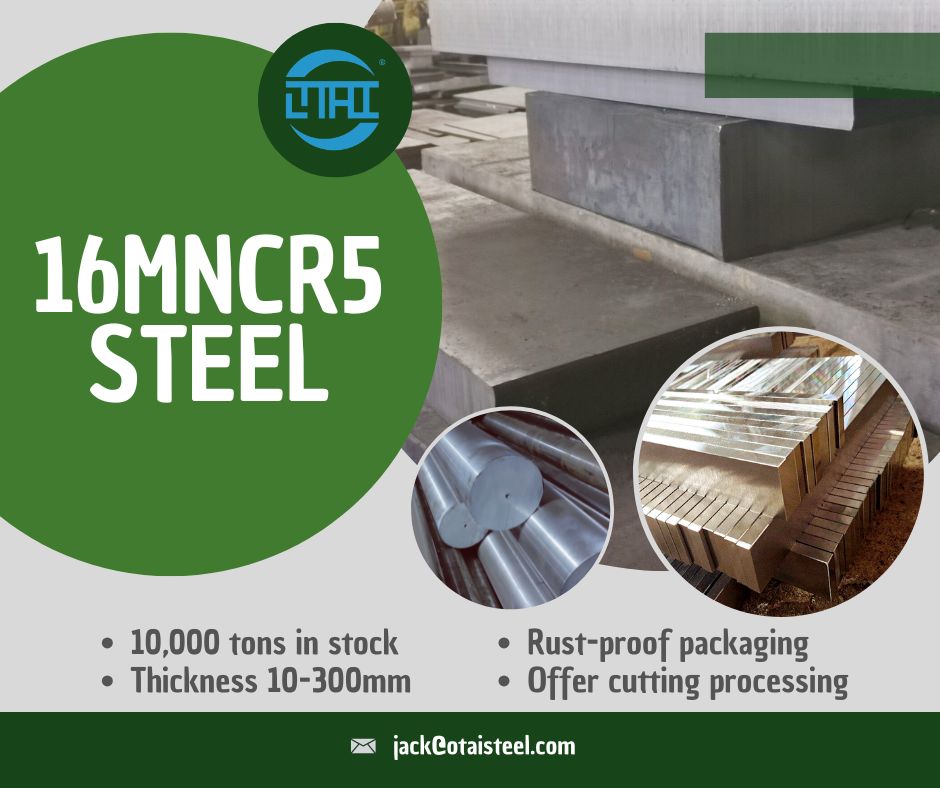
In this article, we will explore the chemical composition of 16MnCr5 steel, discuss how each alloying element affects the steel’s properties, and explain why this steel grade is suitable for demanding applications.


🏗️ What is 16MnCr5 Steel?

16MnCr5 is a medium-carbon, low-alloy steel that contains manganese (Mn) and chromium (Cr) as key alloying elements. The number “16” in the name refers to the carbon content of approximately 0.16%, while MnCr indicates the presence of manganese and chromium. These alloying elements enhance the steel’s hardness, strength, and wear resistance.

The typical chemical composition of 16MnCr5 steel includes:

  • Carbon (C): 0.14% – 0.20%

  • Manganese (Mn): 0.60% – 0.90%

  • Chromium (Cr): 0.80% – 1.10%

  • Silicon (Si): 0.15% – 0.35%

  • Phosphorus (P): ≤ 0.025%

  • Sulfur (S): ≤ 0.025%

These elements work together to give 16MnCr5 steel a balance of strength, ductility, and resistance to wear, making it suitable for applications that demand durability and high performance.


🔧 How the Chemical Composition Affects 16MnCr5 Steel Properties

The chemical composition of 16MnCr5 steel directly influences its mechanical properties. Each alloying element plays a role in determining the steel’s strength, toughness, hardness, and resistance to wear.

1. Carbon (C)

  • Carbon is crucial in determining a steel’s hardness and strength. With a carbon content ranging from 0.14% to 0.20%, 16MnCr5 steel achieves a good balance between strength and ductility. The presence of carbon allows 16MnCr5 to be hardened through heat treatment methods such as tempering and quenching, while maintaining sufficient toughness and fatigue resistance.

2. Manganese (Mn)

  • Manganese enhances hardness, strength, and toughness in 16MnCr5 steel. It also acts as a deoxidizer, helping to remove impurities during the steelmaking process. The manganese content (0.60% – 0.90%) improves tensile strength and wear resistance, making the steel ideal for components like gears and shafts that face friction and mechanical stress. Additionally, manganese increases the hardenability of the steel, allowing it to maintain its strength during heat treatment.

3. Chromium (Cr)

  • Chromium plays an important role in improving hardness and wear resistance in 16MnCr5 steel. With a chromium content of 0.80% to 1.10%, it helps enhance the material’s fatigue strength and allows the steel to endure mechanical loads. Chromium also improves the steel’s ability to resist corrosion and contributes to hardenability, which is important for applications where parts undergo significant wear, such as gears and axles.

4. Silicon (Si)

  • Silicon (0.15% – 0.35%) acts as a deoxidizer during the steelmaking process. It helps to increase the steel’s strength and hardness while contributing to its toughness. Silicon improves the resistance to fracture and makes the material more resistant to deformation under high stress.

5. Phosphorus (P) and Sulfur (S)

  • Phosphorus and sulfur are considered impurities in most steels because they can negatively affect the ductility and toughness of the material. Both elements are kept to low levels in 16MnCr5 steel (≤ 0.025%) to ensure that the material maintains its desirable mechanical properties. Excess phosphorus and sulfur can cause brittleness, making the steel more prone to cracking under stress.


🔨 Why Choose 16MnCr5 Steel for High-Performance Applications?

Thanks to its well-balanced chemical composition, 16MnCr5 steel performs exceptionally well in various high-performance applications. The steel’s combination of strength, toughness, and resistance to wear makes it ideal for components subjected to mechanical loads and harsh conditions.

1. High Wear Resistance

  • The presence of chromium, manganese, and carbon in 16MnCr5 steel improves its wear resistance. This makes it suitable for applications where components, such as gears, shafts, and bearings, experience constant friction and mechanical wear.

2. Fatigue Strength

  • The manganese and chromium content in 16MnCr5 steel increases its fatigue strength, which allows it to withstand repeated loading and unloading cycles without cracking or failing. This property is particularly important in automotive components like crankshafts, axles, and suspension components.

3. Hardenability

  • 16MnCr5 steel exhibits excellent hardenability due to the combined effects of manganese and chromium. This property allows the material to undergo heat treatment and form a hard surface layer that resists wear, while keeping the core tough and ductile to absorb shocks.

4. Good Toughness

  • Despite its high hardness and strength, 16MnCr5 steel maintains good toughness, especially when subjected to the appropriate heat treatment. This ensures that the material can absorb impacts and resist cracking in dynamic loading applications.


📊 Comparison of 16MnCr5 Steel with Other Materials

To better understand how 16MnCr5 steel compares with other materials, here is a comparison of chemical composition and key properties:

Material Carbon (C) Manganese (Mn) Chromium (Cr) Hardness (HRC) Applications
16MnCr5 Steel 0.14% – 0.20% 0.60% – 0.90% 0.80% – 1.10% 55–62 Automotive gears, shafts, industrial machinery
AISI 1045 Steel 0.45% 0.60% – 0.90% 30–50 General engineering, shafts
AISI 4340 Steel 0.38% – 0.43% 0.60% – 0.80% 0.70% – 0.90% 35–55 Aerospace, heavy machinery
EN 19 Steel 0.38% – 0.43% 0.60% – 0.90% 0.80% – 1.10% 40–60 Heavy-duty machinery, automotive components
AISI 4130 Steel 0.28% – 0.33% 0.60% – 0.90% 0.80% – 1.10% 28–50 Aerospace, military, automotive

🏆 Why Choose Otai Special Steel for Your 16MnCr5 Steel Needs?

At Otai Special Steel, we provide high-quality 16MnCr5 steel that meets international standards for strength, toughness, and wear resistance. We offer custom cutting, heat treatment, and packaging services to ensure the material meets your project’s specific needs.

Advantages of Working with Otai Special Steel:

  • Premium Materials: We offer 16MnCr5 steel that meets the highest industry standards for strength, wear resistance, and toughness.

  • Customization: We provide custom cutting, heat treatment, and machining to suit your exact specifications.

  • Competitive Pricing: We deliver high-performance steel at competitive prices, providing excellent value.

  • Fast Delivery: With our extensive inventory, we guarantee fast, reliable delivery to meet your deadlines.


Frequently Asked Questions (FAQ)

Q1: What is 16MnCr5 steel used for?

  • A1: 16MnCr5 steel is used in automotive parts, gears, shafts, and industrial machinery due to its high strength, wear resistance, and fatigue resistance.

Q2: How does the chemical composition of 16MnCr5 steel affect its properties?

  • A2: The manganese, chromium, and carbon content give 16MnCr5 steel its high wear resistance, toughness, and hardenability, making it ideal for high-performance components.

Q3: Is 16MnCr5 steel suitable for high-stress applications?

  • A3: Yes, 16MnCr5 steel is well-suited for high-stress applications due to its fatigue strength, hardness, and toughness.

0 0 Continue Reading →

16MnCr5 alloy Heat Treatment: Processes, Effects, and Applications

16MnCr5 alloy Heat Treatment: Processes, Effects, and Applications16MnCr5 alloy Heat Treatment: Processes, Effects, and Applications

16MnCr5 steel is a medium-carbon, low-alloy steel used in a variety of industries that require components to withstand high mechanical stress and wear. Known for its strength, toughness, and wear resistance, 16MnCr5 steel performs well in applications where durability and fatigue resistance are essential. Heat treatment plays a vital role in enhancing the mechanical properties of 16MnCr5 alloy. In this article, we will examine the heat treatment processes, the effects on the material’s properties, and the common applications of 16MnCr5 steel.


🏗️ What is 16MnCr5 Steel?

16MnCr5 steel is an alloy steel that includes manganese and chromium to improve its mechanical properties, such as strength, toughness, and wear resistance. The number “16” in the name refers to the carbon content (around 0.16%). The manganese and chromium elements help improve hardenability, fatigue resistance, and wear resistance, which are crucial for parts exposed to high mechanical loads.

The composition of 16MnCr5 steel typically includes:

  • Carbon (C): 0.14% – 0.20%

  • Manganese (Mn): 0.60% – 0.90%

  • Chromium (Cr): 0.80% – 1.10%

  • Silicon (Si): 0.15% – 0.35%

  • Phosphorus (P): ≤ 0.025%

  • Sulfur (S): ≤ 0.025%

This composition gives 16MnCr5 steel a balance of strength, ductility, and resistance to wear, making it ideal for components that must withstand harsh conditions and repetitive stresses.


🔧 Heat Treatment Processes for 16MnCr5 alloy

Heat treatment allows you to modify the mechanical properties of 16MnCr5 steel to meet the specific requirements of various applications. Through heat treatment, you can enhance its strength, hardness, toughness, and wear resistance. Below are the most commonly used heat treatment processes for 16MnCr5 steel:

1. Carburizing

  • Carburizing is a surface-hardening process that adds carbon to the outer layer of 16MnCr5 steel. This process creates a hard surface while keeping the inner core tough and ductile. Carburizing improves the wear resistance and fatigue strength, making it ideal for parts like gears, shafts, and sprockets.

  • Process:

    1. Heat the steel to a temperature of 900°C to 950°C.

    2. Expose the material to a carbon-rich atmosphere, such as carbon monoxide.

    3. Quench the steel to lock in the carbon at the surface.

    4. Optionally, temper the steel to restore some of its ductility.

  • Benefits: Increased surface hardness and wear resistance while maintaining a tough core.

2. Quenching and Tempering

  • Quenching and tempering are often applied together to increase strength and hardness while maintaining ductility. Quenching involves rapidly cooling the steel to lock in its hard martensitic structure, and tempering restores the material’s toughness by reheating it at a lower temperature.

  • Process:

    1. Heat the steel to around 850°C to 900°C.

    2. Quench it in oil or water to form martensite.

    3. Temper the steel at 400°C to 650°C to relieve stresses and improve toughness.

  • Benefits: Improved tensile strength, fatigue resistance, and impact toughness.

3. Normalizing

  • Normalizing is a heat treatment that refines the grain structure of 16MnCr5 steel to improve its toughness and uniformity.

  • Process:

    1. Heat the steel to 850°C to 900°C.

    2. Allow the steel to cool in air, resulting in a more uniform grain structure.

  • Benefits: Enhanced toughness, strength, and improved formability.

4. Annealing

  • Annealing is a heat treatment designed to soften 16MnCr5 steel by relieving internal stresses and improving machinability.

  • Process:

    1. Heat the steel to 750°C to 800°C.

    2. Cool it slowly to reduce internal stresses and soften the material.

  • Benefits: Reduced internal stresses and improved ductility and machinability.


🔨 Effects of Heat Treatment on 16MnCr5 Steel

The heat treatment processes enhance various mechanical properties of 16MnCr5 steel, tailoring it for specific applications. Here’s how each process affects its properties:

1. Hardness

  • Carburizing and quenching increase the surface hardness of 16MnCr5 steel, making it more resistant to wear and abrasion. This is especially useful for components such as gears and bearings that experience high friction.

2. Strength and Toughness

  • Quenching increases the strength but may also make the steel brittle. Tempering after quenching restores the material’s toughness, improving its ability to absorb shocks and resist impact.

3. Ductility

  • Normalizing and annealing improve the ductility of 16MnCr5 steel, making it easier to work with and shape. This is important when the material needs to withstand deformation without cracking or breaking.

4. Wear Resistance

  • Carburizing increases the wear resistance of 16MnCr5 steel, which makes it ideal for parts exposed to continuous friction and abrasive forces.


🏗️ Applications of 16MnCr5 Steel

Due to its excellent mechanical properties and versatile heat treatment options, 16MnCr5 steel is used in a wide variety of applications, particularly in industries that require components to endure high stress, impact, and wear.

1. Automotive Industry

  • 16MnCr5 steel is commonly used in the automotive industry for manufacturing gears, axles, crankshafts, and suspension components. These components require the steel to withstand high mechanical loads while maintaining fatigue strength and impact resistance.

2. Industrial Machinery

  • 16MnCr5 steel is used for bearings, shafts, sprockets, and pulleys in industrial machinery. The material’s wear resistance and toughness make it perfect for heavy-duty machinery exposed to constant friction.

3. Heavy Equipment

  • Parts in heavy equipment, such as those used in construction and mining, benefit from the high strength and toughness of 16MnCr5 steel. This steel can endure harsh working conditions with high mechanical stresses.

4. Gears and Shafts

  • 16MnCr5 steel is particularly suitable for gears and shafts that experience high torque, dynamic loads, and frequent wear. The material’s combination of hardness and ductility makes it durable and reliable in demanding applications.


📊 Comparison of 16MnCr5 Steel with Other Materials

For a clearer understanding of how 16MnCr5 steel compares to other materials, here is a comparison of tensile strength, yield strength, and hardness:

Material Tensile Strength (MPa) Yield Strength (MPa) Hardness (HRC) Applications
16MnCr5 Steel 600–900 450–650 55–62 Automotive parts, gears, shafts, industrial machinery
AISI 5120 Steel 600–850 400–650 28–50 Automotive gears, axles, crankshafts
EN 19 (1.4511) 850–1,100 450–650 30–40 Engine components, industrial machinery
42CrMo4 (1.7225) 900–1,050 600–750 30–50 Gears, axles, crankshafts
AISI 4130 Steel 670–1,000 430–600 28–50 Aerospace, military, automotive

🏆 Why Choose Otai Special Steel for Your 16MnCr5 Steel Needs?

At Otai Special Steel, we offer high-quality 16MnCr5 steel that meets international standards. We provide precision cutting, heat treatment, and packaging services to ensure the material meets your project requirements. Whether you need gears, shafts, or machinery parts, we can help you get the right material for your application.

Advantages of Working with Otai Special Steel:

  • Top-Quality Materials: We offer 16MnCr5 steel that meets industry standards for strength, wear resistance, and toughness.

  • Customization: We provide custom cutting, heat treatment, and machining to meet your exact specifications.

  • Competitive Pricing: We offer high-performance steel at competitive prices, ensuring excellent value.

  • Fast Delivery: With our extensive inventory, we guarantee fast, reliable delivery to meet your deadlines.


Frequently Asked Questions (FAQ)

Q1: What is 16MnCr5 steel used for?

  • A1: 16MnCr5 steel is used in automotive parts, gears, shafts, and industrial machinery components that require high strength, wear resistance, and fatigue resistance.

Q2: How does heat treatment affect 16MnCr5 steel?

  • A2: Heat treatments like carburizing, quenching, and tempering significantly improve the strength, hardness, and wear resistance of 16MnCr5 steel, making it suitable for heavy-duty applications.

Q3: Is 16MnCr5 steel weldable?

  • A3: Yes, 16MnCr5 steel is weldable, but it requires proper preheating and post-weld heat treatment to avoid cracking and ensure the best mechanical properties.

0 0 Continue Reading →

16MnCr5 Steel Specifications: Understanding Its Key Properties

16MnCr5 Steel Specifications: Understanding Its Key Properties16MnCr5 Steel Specifications: Understanding Its Key Properties

16MnCr5 is a high-performance alloy steel widely used in industries such as automotive and machinery manufacturing. Its strong mechanical properties make it ideal for critical applications, especially where wear resistance, toughness, and high strength are needed. In this article, we will dive into the specifications of 16MnCr5 steel, covering its chemical composition, mechanical properties, and heat treatment processes.


🔍 What Is 16MnCr5 Steel?

16MnCr5 is a medium-carbon alloy steel that contains manganese (Mn) and chromium (Cr) as its primary alloying elements. These additions enhance the material’s overall strength, wear resistance, and hardenability, making it suitable for demanding applications like gears, shafts, and crankshafts.
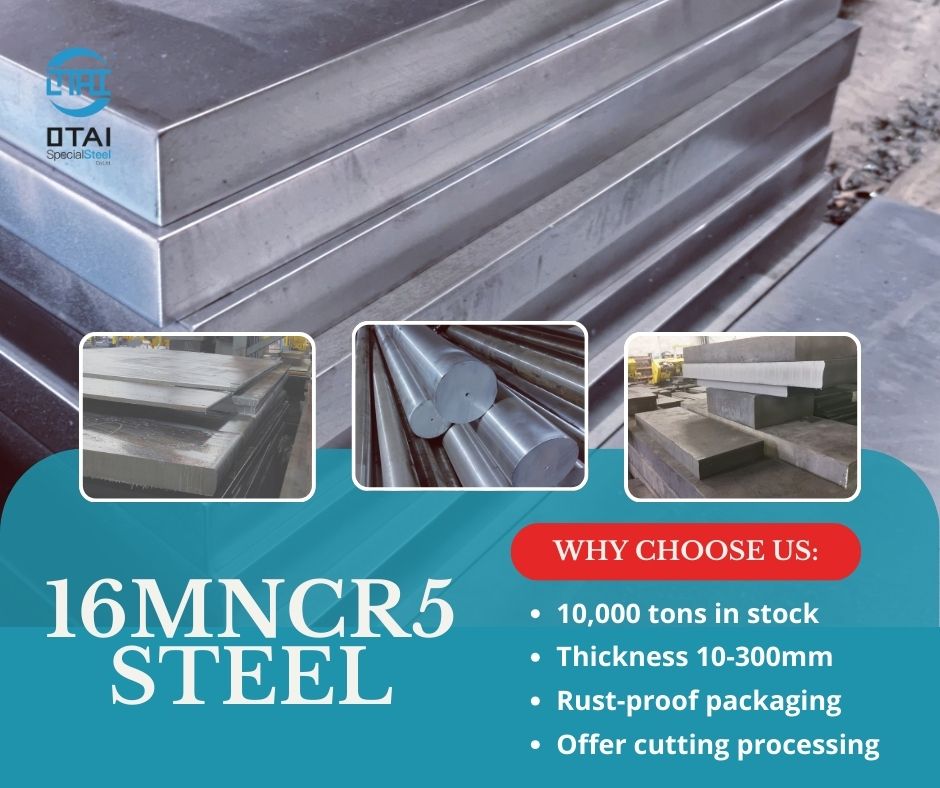
Here’s a quick breakdown of its chemical composition:

  • Manganese (Mn): 0.60-0.90% (increases strength and wear resistance)

  • Chromium (Cr): 0.80-1.10% (improves hardness and corrosion resistance)

  • Carbon (C): 0.14-0.19% (medium-carbon content for toughness)

  • Iron (Fe): The remaining percentage, serving as the base metal.


🧪 Chemical Composition of 16MnCr5 Steel

Element Composition Range
Carbon (C) 0.14-0.19%
Manganese (Mn) 0.60-0.90%
Chromium (Cr) 0.80-1.10%
Silicon (Si) 0.15-0.35%
Phosphorus (P) ≤ 0.025%
Sulfur (S) ≤ 0.025%

⚙️ Mechanical Properties of 16MnCr5 Steel

16MnCr5 combines high strength, toughness, and wear resistance. Its mechanical properties make it ideal for components like gears, shafts, and crankshafts that undergo continuous mechanical stress.

Here’s an overview of the key mechanical properties of 16MnCr5:

Property Value
Tensile Strength 800-1000 MPa
Yield Strength 550 MPa
Elongation 12-18%
Hardness (as quenched) 58-62 HRC (depending on heat treatment)
Impact Toughness High (especially in carburized conditions)

Highlights:

  • Tensile Strength: 16MnCr5 offers 800-1000 MPa, which makes it suitable for high-load components.

  • Yield Strength: It can withstand 550 MPa of stress without permanent deformation.

  • Elongation: With an elongation of 12-18%, it remains ductile and resistant to cracking under stress.


🛠️ Heat Treatment of 16MnCr5

The heat treatment of 16MnCr5 significantly enhances its mechanical properties. By applying specific processes, the steel can achieve high surface hardness while maintaining a tough, ductile core.

Carburizing and Quenching:

  • Carburizing increases the carbon content on the steel surface at high temperatures, improving wear resistance.

  • Quenching rapidly cools the steel, locking in the surface hardness at 58-62 HRC.

  • Tempering follows to relieve internal stresses, improving toughness without losing the hardened surface.

These heat treatments allow 16MnCr5 to be highly resistant to wear while maintaining toughness in applications such as gears and shafts.


🏭 Applications of 16MnCr5 Steel

16MnCr5 excels in high-stress, high-wear applications. It is used widely in industries like automotive and machinery manufacturing. Key applications include:

  • Automotive: Crankshafts, camshafts, drive shafts, and gears.

  • Heavy Machinery: Bearings, shafts, and gears.

  • Industrial Equipment: Structural components, molds, and valves.

  • Tooling: Cutting tools, dies, and blades.

These applications require high wear resistance, toughness, and strength, all of which 16MnCr5 provides in abundance.


⚖️ Comparison: 16MnCr5 Steel vs. Other Steel Grades

Steel Grade Carbon Content Alloy Elements Primary Properties
16MnCr5 0.14-0.19% Manganese, Chromium High hardness, wear resistance, toughness, and good machinability
AISI 1045 0.45% Manganese Medium strength, good machinability, lower wear resistance
AISI 4130 0.30% Chromium, Molybdenum High strength, toughness, and excellent hardenability
AISI 4340 0.40-0.50% Nickel, Chromium High toughness, used in aerospace and heavy-duty applications

As the table shows, 16MnCr5 offers a unique combination of strength, toughness, and wear resistance, which makes it well-suited for a variety of high-performance applications.


Frequently Asked Questions (FAQ)

Q1: What is the hardness of 16MnCr5 steel after heat treatment?
A1: After carburizing and quenching, 16MnCr5 achieves a surface hardness between 58-62 HRC.

Q2: Can 16MnCr5 be welded?
A2: Yes, 16MnCr5 can be welded, but it requires careful handling due to its medium-carbon content. Preheating and post-weld heat treatment can help avoid cracking.

Q3: Why is 16MnCr5 used in automotive applications?
A3: 16MnCr5 is ideal for automotive components like crankshafts and gears because of its excellent combination of strength, wear resistance, and toughness.


🏁 Conclusion

In conclusion, 16MnCr5 is a medium-carbon alloy steel that offers excellent mechanical properties for demanding applications. Its unique balance of toughness, wear resistance, and high strength makes it perfect for components in the automotive, machinery, and industrial sectors. It is not low-carbon steel, but its carburizing capability enhances its performance in high-stress conditions.

For premium 16MnCr5 steel and expert advice on heat treatment and applications, reach out to Otai Special Steel for reliable materials and personalized service.


💪 Company Advantages

At Otai Special Steel, we provide top-quality materials to meet your needs. Here’s why you should choose us:

  • Extensive Inventory: We carry over 10,000 tons of various steel products, ensuring quick and reliable supply.

  • Customized Solutions: We offer cutting, heat treatment, and packaging services tailored to your specifications.

  • Rigorous Testing: Our products undergo chemical composition analysis, ultrasonic testing (UT), and third-party inspections to guarantee top-quality steel.

  • Global Presence: We supply to major international clients across various industries, offering high-quality steel products worldwide.

0 0 Continue Reading →

Factors Affecting the cost of 16MnCr5 Steel

Factors Affecting the cost of 16MnCr5 SteelFactors Affecting the cost of 16MnCr5 Steel

When sourcing high-quality steel for manufacturing and industrial purposes, understanding the price of 16MnCr5 steel is essential. This alloy steel, commonly used in automotive and machinery applications, is known for its excellent hardness, tensile strength, and wear resistance. In this article, we’ll explore the factors that influence the price of 16MnCr5 steel, current market trends, and how to make cost-effective purchasing decisions.


🔧 What is 16MnCr5 Steel?

16MnCr5 is a medium-carbon alloy steel that contains manganese and chromium as its main alloying elements. This combination enhances the steel’s mechanical properties, making it an excellent choice for components that require high strength, resistance to wear, and hardness.

Chemical Composition of 16MnCr5:

Element Percentage (%)
Carbon (C) 0.14–0.19
Manganese (Mn) 1.00–1.30
Chromium (Cr) 0.80–1.10
Silicon (Si) 0.10–0.35
Phosphorus (P) ≤0.035
Sulfur (S) ≤0.035
Iron (Fe) Balance

The composition of 16MnCr5 makes it ideal for parts such as gears, shafts, and crankshafts, which are subjected to high stresses and need a material that can withstand wear and fatigue.


💰 Factors Affecting the Price of 16MnCr5 Steel

The price of 16MnCr5 steel can fluctuate based on a number of factors. Understanding these factors is crucial for companies and engineers looking to optimize costs while maintaining product quality.

1. Material Quality and Grade

Higher-quality 16MnCr5 steel with strict compliance to international standards like DIN or ASTM typically comes at a higher price. Steel that undergoes advanced testing methods such as ultrasonic testing or chemical composition analysis will also cost more due to the increased quality assurance processes.

2. Market Demand

The demand for 16MnCr5 steel in various sectors, such as automotive, heavy machinery, and industrial equipment manufacturing, can drive prices up. For instance, high demand for components like gears and transmission parts often increases the steel’s price.

3. Steel Production Costs

The price of raw materials used in the production of 16MnCr5, such as iron ore, manganese, and chromium, has a significant impact on the overall cost. When the prices of these materials rise, steel producers often increase their prices as well.

4. Processing and Manufacturing

The cost of processing 16MnCr5 steel can influence its final price. Processes such as heat treatment, cutting, and machining add extra costs to the material. Custom sizes or specialized requirements for heat treatment will also increase the final price.

5. Supply Chain and Transportation Costs

For large-scale industrial projects, transportation costs and supply chain efficiency also play a role in the price of 16MnCr5 steel. International shipping fees, import duties, and the cost of distribution can contribute to price variations, especially if you are purchasing from a different country.

6. Volume of Purchase

Typically, purchasing 16MnCr5 steel in bulk can reduce the cost per ton. Companies that order large quantities can often negotiate better pricing, while smaller orders may incur higher per-unit costs.


📊 Price Range for 16MnCr5 Steel

While steel prices are subject to market fluctuations, the average price of 16MnCr5 steel generally falls within a specific range. The prices can vary depending on the form (plate, rod, bar, etc.), heat treatment, and additional services.

Form of Steel Average Price Range (per ton)
Steel Plate (16MnCr5) $900 – $1,500
Round Bar (16MnCr5) $950 – $1,700
Steel Rod (16MnCr5) $1,000 – $1,800

Please note that these prices are approximations and may vary depending on market conditions, suppliers, and additional processing requirements.


🛠️ Where to Buy 16MnCr5 Steel?

Purchasing 16MnCr5 steel involves sourcing it from reliable suppliers who can provide the material at competitive prices while ensuring top-notch quality. Here are a few tips for finding the right supplier:

  1. Choose Reputable Suppliers: Look for suppliers with a strong reputation in the steel industry. Established companies often offer better material quality and services like custom cutting, heat treatment, and packaging.

  2. Get Multiple Quotes: Request quotes from several suppliers to ensure you’re getting competitive prices for 16MnCr5 steel. Don’t forget to account for shipping costs and delivery times.

  3. Check Certifications: Ensure that the steel complies with international standards and certifications such as ISO or ASTM.

  4. Consider Bulk Orders: For large projects, bulk orders often result in better pricing. If you require a significant amount of 16MnCr5 steel, discuss possible discounts with suppliers.


🏗️ Why Choose Otai Special Steel for 16MnCr5 Steel?

At Otai Special Steel, we provide 16MnCr5 steel with guaranteed high quality, ensuring that your project meets the highest standards of performance and reliability. With our extensive inventory and value-added services, we can supply 16MnCr5 steel for a variety of applications.

Company Advantages:

  • Top Quality: Our 16MnCr5 steel meets international standards and undergoes thorough quality control.

  • Custom Services: We provide custom cutting, heat treatment, and machining services tailored to your specific needs.

  • Competitive Pricing: Our strong relationships with steel mills allow us to offer competitive prices.

  • Fast Delivery: We maintain a large inventory to ensure quick and reliable delivery, helping you meet tight project timelines.


FAQ

Q1: What is the typical hardness of 16MnCr5 steel?

  • A1: 16MnCr5 steel typically has a hardness of 55-62 HRC after proper heat treatment, making it ideal for applications requiring high wear resistance.

Q2: Can 16MnCr5 steel be heat treated?

  • A2: Yes, 16MnCr5 steel can undergo heat treatment processes such as tempering, quenching, and normalizing to enhance its strength, hardness, and wear resistance.

Q3: How does 16MnCr5 steel compare to other alloy steels?

  • A3: Compared to other alloy steels, 16MnCr5 offers a good balance of toughness, hardness, and resistance to fatigue, making it ideal for high-stress automotive and machinery applications.

Q4: Can I buy 16MnCr5 steel in bulk from Otai Special Steel?

  • A4: Yes, we offer bulk purchasing options for 16MnCr5 steel, allowing you to save on material costs while ensuring the quality and reliability of your steel products.

0 0 Continue Reading →

16MnCr5 Steel Heat-Treating: Key Processes and Benefits

16MnCr5 Steel Heat-Treating: Key Processes and Benefits16MnCr5 Steel Heat-Treating: Key Processes and Benefits

16MnCr5 steel, a low-alloy manganese-chromium steel, is widely used in the production of components requiring good wear resistance, toughness, and fatigue strength. Its heat-treatment process plays a critical role in optimizing its mechanical properties, making it suitable for a wide range of industrial applications. In this article, we’ll explore the heat-treating process for 16MnCr5 steel, its benefits, and its key applications.


🧪 What is 16MnCr5 Steel?

16MnCr5 steel is a low-alloy steel containing manganese (Mn) and chromium (Cr), which enhance its hardness, strength, and wear resistance. The steel’s composition typically includes:

  • Carbon (C): 0.14% to 0.20%

  • Manganese (Mn): 0.70% to 1.00%

  • Chromium (Cr): 0.90% to 1.20%

These alloying elements provide 16MnCr5 steel with good hardness, fatigue resistance, and strength, especially after undergoing proper heat treatment. This steel is commonly used for parts like gears, shafts, axles, and other components requiring high wear resistance and toughness.


🔥 Heat-Treating Process of 16MnCr5 Steel

Heat treatment significantly affects the mechanical properties of 16MnCr5 steel. It enhances its hardness, strength, and resistance to wear while maintaining its toughness. The main heat-treatment processes for 16MnCr5 steel are quenching, tempering, and carburizing.

1. Carburizing

During carburizing, 16MnCr5 steel gets heated in a carbon-rich environment at about 900°C to 950°C. Carbon diffuses into the surface layer, hardening it to 58-62 HRC while the core stays soft and tough. This process makes the steel ideal for parts needing a hard outer layer and a tough core.

Benefits of Carburizing:

  • Increases wear resistance on the surface.

  • Improves fatigue resistance.

  • Maintains a tough core for better impact resistance.

Carburized 16MnCr5 steel is commonly used in the manufacture of gears, camshafts, and axles, where high surface hardness and resilience are crucial.

2. Quenching and Tempering

Quenching heats 16MnCr5 steel to around 850°C to 900°C and rapidly cools it in water or oil, boosting hardness but risking brittleness. Tempering reheats it to 200°C to 500°C and cools it gradually, reducing brittleness and boosting toughness while retaining high strength.

The quenching and tempering process results in 16MnCr5 steel with a hardness of 30-40 HRC. This makes it ideal for parts that require a balance of high strength, toughness, and wear resistance.

Benefits of Quenching and Tempering:

  • Provides good toughness.

  • Maintains a balance between strength and hardness.

  • Improves resistance to impact and fatigue.

16MnCr5 steel treated with quenching and tempering is often used in applications like automotive components, machine parts, and heavy-duty equipment.

3. Normalizing

Normalizing is a heat treatment process in which 16MnCr5 steel is heated to a temperature of about 850°C to 900°C and then allowed to cool in air. This process refines the steel’s grain structure and enhances uniformity. It results in a material with improved machinability and better toughness.

The hardness after normalizing typically falls in the range of 220 HB to 250 HB, making 16MnCr5 steel suitable for applications that require moderate hardness and good workability.

Benefits of Normalizing:

  • Improves machinability.

  • Refines the grain structure, enhancing toughness.

  • Ensures uniform mechanical properties.

Normalizing is often used for general-purpose machining where the steel does not require a high surface hardness but needs to be easily machined and tough.


🏗️ Applications of 16MnCr5 Steel after Heat Treatment

16MnCr5 steel, after undergoing heat treatment, can take on a wide range of applications that demand diverse mechanical properties. Here’s how it actively serves in key areas:

1. Gears and Shafts

Carburized 16MnCr5 steel actively forms gears and shafts. The carburized layer actively provides a hard, wear-resistant surface, while the tough core actively ensures the components can handle high mechanical loads and resist fatigue.

2. Automotive Components

In the automotive sector, 16MnCr5 steel actively makes axles, camshafts, gears, and crankshafts. These parts actively require high surface hardness and impact resistance, both of which are actively achieved through carburizing and quenching treatments.

3. Machine Parts

For machine parts such as bearings and tooling components, 16MnCr5 steel actively provides a balance of strength, toughness, and wear resistance through quenching and tempering.

4. Heavy Duty Equipment

For heavy-duty equipment that experiences significant stress and wear, 16MnCr5 steel treated with carburizing or quenching and tempering is an excellent choice. It ensures that parts such as pins, bushings, and spindles maintain their performance under challenging operating conditions.


📊 Comparison of Heat-Treated 16MnCr5 Steel

Heat Treatment Process Hardness Key Benefits Ideal Applications
Carburizing 58-62 HRC Increased surface hardness, improved wear resistance Gears, Shafts, Camshafts
Quenching + Tempering 30-40 HRC Balanced strength and toughness Automotive components, Machine parts
Normalizing 220-250 HB Improved machinability, uniform properties General-purpose machining

🏅 Company Advantages – Otai Special Steel

At Otai Special Steel, we specialize in providing 16MnCr5 steel with tailored heat treatment options to meet the specific requirements of your project. We offer custom cutting, precision machining, and material certification to ensure the highest quality and performance.

Why Choose Otai Special Steel?

  • Custom Heat Treatment: We provide 16MnCr5 steel with precise heat treatment to optimize its properties.

  • High-Quality Materials: We supply 16MnCr5 steel with consistent and reliable mechanical properties.

  • Fast Delivery: We maintain a large inventory for quick delivery.

  • Expert Support: Our engineers provide guidance to help you choose the best material for your application.


Frequently Asked Questions (FAQ)

Q1: What is the typical hardness of 16MnCr5 steel after carburizing?
A1: After carburizing, 16MnCr5 steel can achieve a surface hardness of 58-62 HRC, providing high wear resistance for critical parts.

Q2: How does heat treatment affect 16MnCr5 steel?
A2: Heat treatment improves the hardness, strength, and resilience of 16MnCr5 steel. Processes like carburizing, quenching, and tempering allow engineers to customize the steel’s properties for different applications.

0 0 Continue Reading →

16MnCr5 Steel Hardness: Achieving Optimal Performance Through Hardness Control

16MnCr5 Steel Hardness: Achieving Optimal Performance Through Hardness Control16MnCr5 Steel Hardness: Achieving Optimal Performance Through Hardness Control

16MnCr5 steel is a widely used low-alloy steel known for its combination of strength, toughness, and wear resistance. A key factor influencing its performance in demanding applications is its hardness. The hardness of 16MnCr5 steel determines its ability to resist wear, deformation, and cracking under stress. Achieving the optimal hardness is essential for ensuring that 16MnCr5 steel performs reliably in components such as gears, shafts, crankshafts, and bearings.

In this article, we will explore the significance of hardness in 16MnCr5 steel, how it is measured, the heat treatment processes that influence it, and its impact on the steel’s overall performance.


🧪 What is 16MnCr5 Steel?

16MnCr5 steel is a low-alloy carburizing steel commonly used for parts requiring high strength, wear resistance, and fatigue resistance. It contains manganese and chromium as its main alloying elements, which enhance its hardenability and overall mechanical properties. This steel grade is commonly used for gears, bearings, axles, and other industrial components that need a combination of high surface hardness and toughness.

Due to its ability to achieve high surface hardness through carburizing, 16MnCr5 steel plays a crucial role in components subjected to heavy wear and stress.


🔧 The Importance of Hardness in 16MnCr5 Steel

Hardness refers to the material’s resistance to indentation, abrasion, and deformation. In 16MnCr5 steel, achieving the right level of hardness improves the material’s ability to perform in high-stress, high-wear conditions. Hardness directly affects:

  • Wear resistance: Harder surfaces resist abrasion and friction, making them ideal for parts exposed to wear and corrosion.

  • Fatigue resistance: The right hardness helps prevent components from fatiguing under cyclic loads, especially in rotating or moving parts.

  • Deformation resistance: Hardness ensures that parts do not deform or warp under heavy loads.

Hardness and Heat Treatment

Heat treatment plays a crucial role in controlling the hardness of 16MnCr5 steel. Through processes such as carburizing, quenching, and tempering, the steel’s surface hardness can be significantly improved, while the core remains tough to withstand dynamic loads and impacts.


🔥 Heat Treatment Processes that Influence Hardness

The hardness of 16MnCr5 steel can be modified using various heat treatment processes, including carburizing, quenching, and tempering. These processes ensure that the material exhibits the necessary balance of surface hardness and core toughness.

1. Carburizing and Quenching

Carburizing is a heat treatment process that introduces carbon into the surface of 16MnCr5 steel, increasing its surface hardness. After carburizing, the steel is quenched (rapidly cooled) in oil or water, which hardens the surface layer. This process creates a hard outer layer with a tough core, providing both wear resistance and impact resistance.

Effects of Carburizing and Quenching on Hardness:

Property Before Carburizing After Carburizing + Quenching
Surface Hardness 170 – 220 HB 56 – 62 HRC
Core Hardness 150 HB 30 – 40 HRC

Carburizing significantly increases the surface hardness, making 16MnCr5 steel ideal for high-wear applications like gears and bearings.

2. Quenching and Tempering

After quenching, the steel becomes very hard but also brittle. To improve its toughness, the steel undergoes tempering, where it is reheated to a lower temperature (usually between 400°C and 650°C) and then slowly cooled. This process reduces brittleness and improves the overall strength and toughness while maintaining the desired hardness.

Effects of Quenching and Tempering on Hardness:

  • Surface Hardness: Remains high after quenching, but can be adjusted through tempering.

  • Core Toughness: Improved while maintaining the strength achieved by quenching.

This combination of hardness and toughness makes quenching and tempering a widely used treatment for components like axles and screws.

3. Normalizing

Normalizing involves heating the steel to a temperature between 850°C and 900°C and then air-cooling it. This process refines the grain structure, ensuring uniform properties throughout the material. While normalizing does not provide as high a surface hardness as carburizing, it is useful for improving the machinability and strength of 16MnCr5 steel.


📊 Hardness and Performance of 16MnCr5 Steel

The hardness of 16MnCr5 steel directly correlates to its performance in various applications. Here is an overview of how different heat treatments influence the material’s performance:

Heat Treatment Process Surface Hardness Core Hardness Ideal Application
Carburizing + Quenching 56 – 62 HRC 30 – 40 HRC Gears, Bearings, Crankshafts
Quenching + Tempering 50 – 55 HRC 30 – 40 HRC Axles, Shafts, Machine Parts
Normalizing 170 – 220 HB 150 HB General Engineering Components

🏗️ Applications of 16MnCr5 Steel

The high surface hardness and tough core of 16MnCr5 steel make it suitable for a wide variety of industrial applications. It is commonly used in:

  • Automotive: Axles, gears, crankshafts, and suspension components that require a combination of wear resistance and toughness.

  • Aerospace: Landing gear components, fasteners, and wheels that must withstand high stress and fatigue.

  • Oil and Gas: Drill rods, pumps, and valves exposed to harsh conditions.

  • Industrial Machinery: Machine tool components, gears, bearings, and spindles that require high strength and fatigue resistance.


🏅 Company Advantages – Otai Special Steel

At Otai Special Steel, we provide high-quality 16MnCr5 steel with tailored hardness for your specific application. Whether you need custom cutting, heat treatment, or material certification, we ensure your order meets the highest quality standards.

Why Choose Otai Special Steel?

  • High-Quality Materials: We offer 16MnCr5 steel with consistent properties to meet your application needs.

  • Customization: Custom cutting, heat treatment, and precision machining available.

  • Fast Delivery: Our large inventory and reliable logistics ensure timely delivery.

  • Technical Support: We provide expert guidance to help you select the right material for your project.


Frequently Asked Questions (FAQ)

Q1: What is the ideal hardness for 16MnCr5 steel?
A1: The ideal hardness depends on the application. For wear resistance, carburizing and quenching provide the highest surface hardness. For strength and toughness, quenching and tempering offer a balanced solution.

Q2: Can I achieve high surface hardness without compromising the core toughness of 16MnCr5 steel?
A2: Yes, carburizing and quenching creates a hard surface while maintaining a tough core, making it suitable for high-wear applications where the material needs both strength and toughness.

Q3: Does 16MnCr5 steel require special treatment to improve fatigue resistance?
A3: Quenching and tempering improve fatigue resistance by balancing hardness with toughness. Carburizing enhances wear resistance while improving fatigue performance.

0 0 Continue Reading →