 Rockwell C Hardness of 4140 Steel: HRC Values, Heat Treatment, and Applications
When evaluating alloy steels for demanding applications, hardness is one of the most important mechanical properties. Engineers frequently search for the rockwell c hardness of 4140 steel to understand how this material performs under wear, load, and impact conditions.
AISI 4140 is a chromium-molybdenum alloy steel known for its excellent strength, toughness, and hardenability. Its hardness can vary significantly depending on heat treatment, making it highly versatile for different engineering requirements.
Understanding the 4140 steel hardness in Rockwell C scale helps engineers select the right condition for specific applications.
🔍 What Is Rockwell C Hardness?
Rockwell hardness is a widely used method for measuring material hardness. The Rockwell C (HRC) scale is specifically used for hardened steels and measures resistance to indentation.
Higher HRC values indicate greater hardness and wear resistance, while lower values indicate better ductility and machinability.
Knowing what is the hardness of 4140 steel in different conditions allows engineers to balance strength and toughness for optimal performance.
📊 Rockwell C Hardness of 4140 Steel
The rockwell hardness of 4140 steel HRC values vary depending on the heat treatment condition.
| Condition | Hardness |
|---|---|
| Annealed | ~197 HB (≈ 10–15 HRC) |
| Normalized | ~20–25 HRC |
| Quenched & Tempered | 28–32 HRC |
| Hardened (oil quenched) | Up to 50–55 HRC |
| Surface hardened | Up to 55–60 HRC |
These values show the wide hardness range achievable with proper heat treatment.
The maximum hardness of 4140 steel HRC typically reaches around 55 HRC in through-hardening conditions, and even higher on the surface with specialized treatments.
⚙️ Heat Treatment and Hardness Control
The heat treated 4140 steel hardness HRC depends on quenching and tempering processes.
Annealing
Produces low hardness for improved machinability.
Quenching
Rapid cooling increases hardness significantly by forming martensite.
Tempering
Reduces brittleness while maintaining strength and hardness.
The 4140 steel hardness after quenching and tempering is commonly adjusted to 28–32 HRC for structural applications, offering a good balance between strength and toughness.
📈 Hardness Conversion Chart (HRC vs HB)
Engineers often compare hardness values using different scales. The 4140 steel hardness chart HRC vs HB provides a useful reference.
| HRC | Approx. HB |
|---|---|
| 10 | ~200 |
| 20 | ~235 |
| 30 | ~285 |
| 40 | ~375 |
| 50 | ~515 |
| 55 | ~600 |
🔩 Mechanical Properties vs Hardness
Hardness directly affects other mechanical properties of 4140 steel.
| Hardness (HRC) | Tensile Strength (MPa) | Characteristics |
|---|---|---|
| 20 – 25 | ~850 | Good machinability |
| 28 – 32 | 900 – 1000 | Balanced strength and toughness |
| 40 – 50 | 1100 – 1300 | High strength and wear resistance |
| 50+ | 1300+ | Maximum hardness, reduced ductility |
The 4140 steel hardness in Rockwell C scale must be selected carefully based on the application requirements.
🏭 Industrial Applications Based on Hardness
Different hardness levels are suitable for different industrial applications.
Low Hardness (Annealed)
- Machined components
- Pre-heat treatment parts
Medium Hardness (28–32 HRC)
- Shafts
- Structural components
- Hydraulic parts
High Hardness (40–55 HRC)
- Gears
- Wear-resistant components
- Tooling and dies
Understanding the rockwell c hardness of 4140 steel helps engineers match the material condition to the application.
🔍 Factors Affecting Hardness
Several factors influence the final hardness of 4140 steel:
- Heat treatment temperature and cooling rate
- Section thickness
- Alloy composition
- Surface treatment processes
Controlling these factors ensures consistent material performance.
🌟 Company Advantages
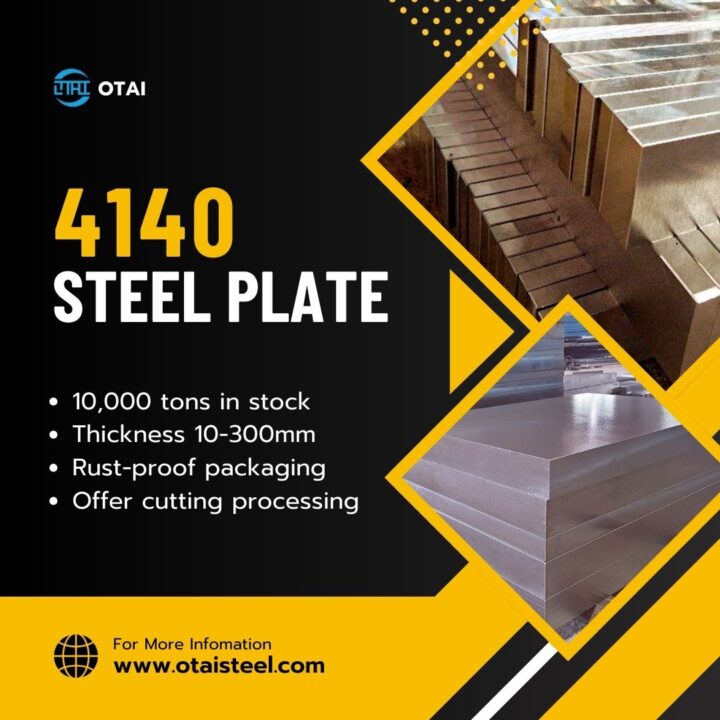
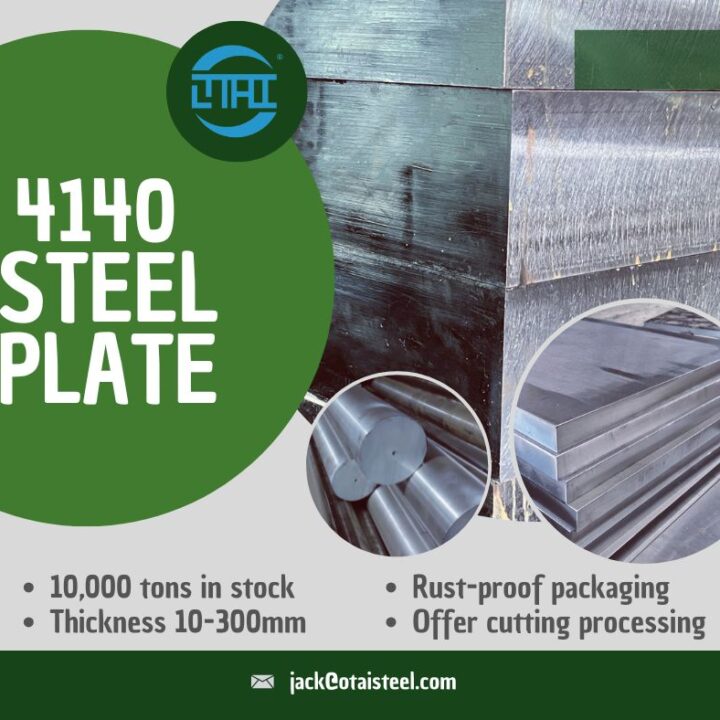
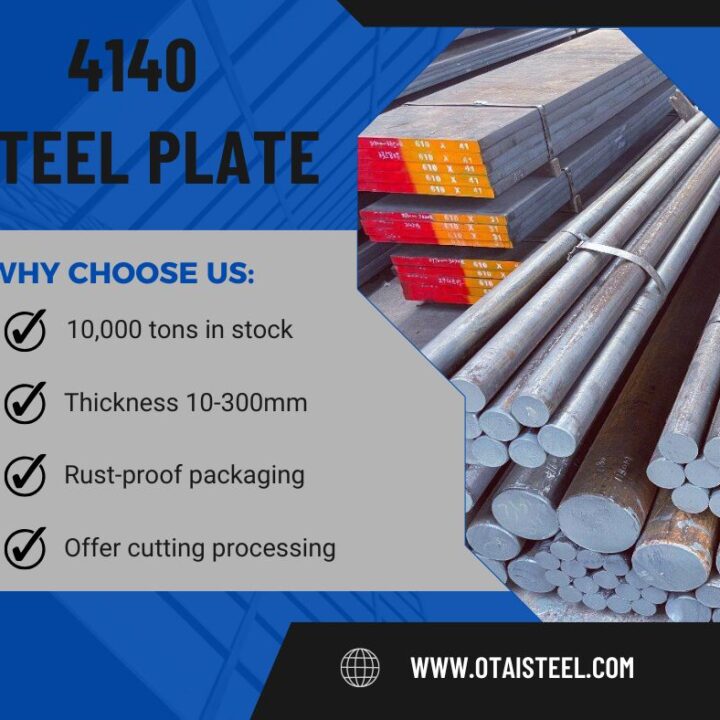
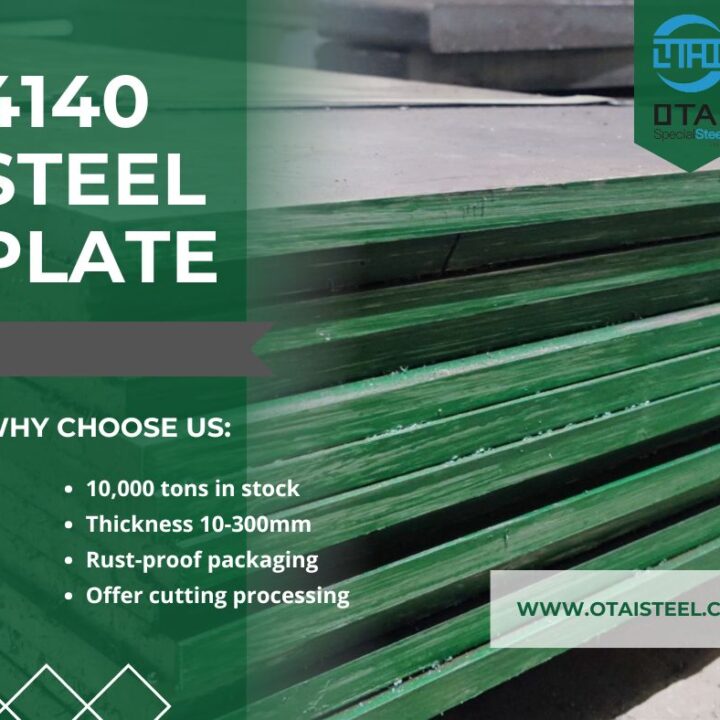
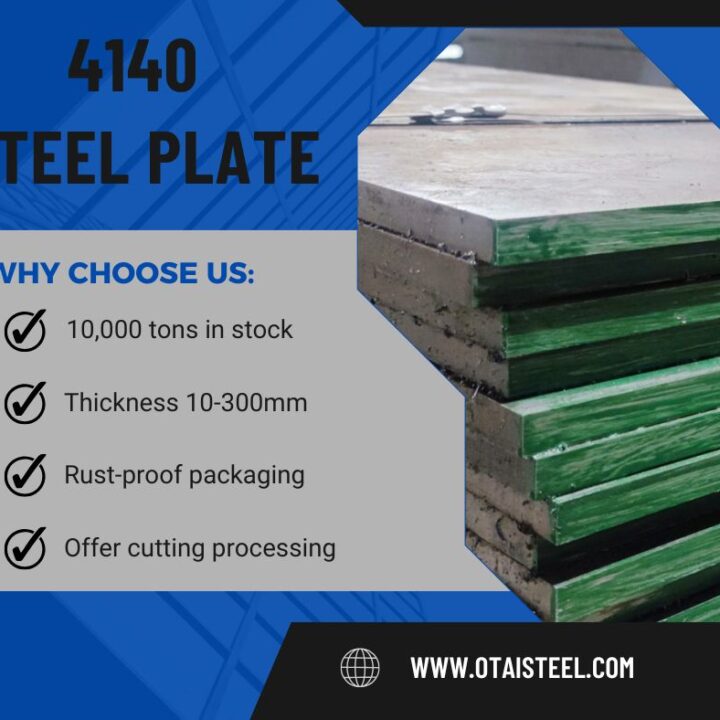
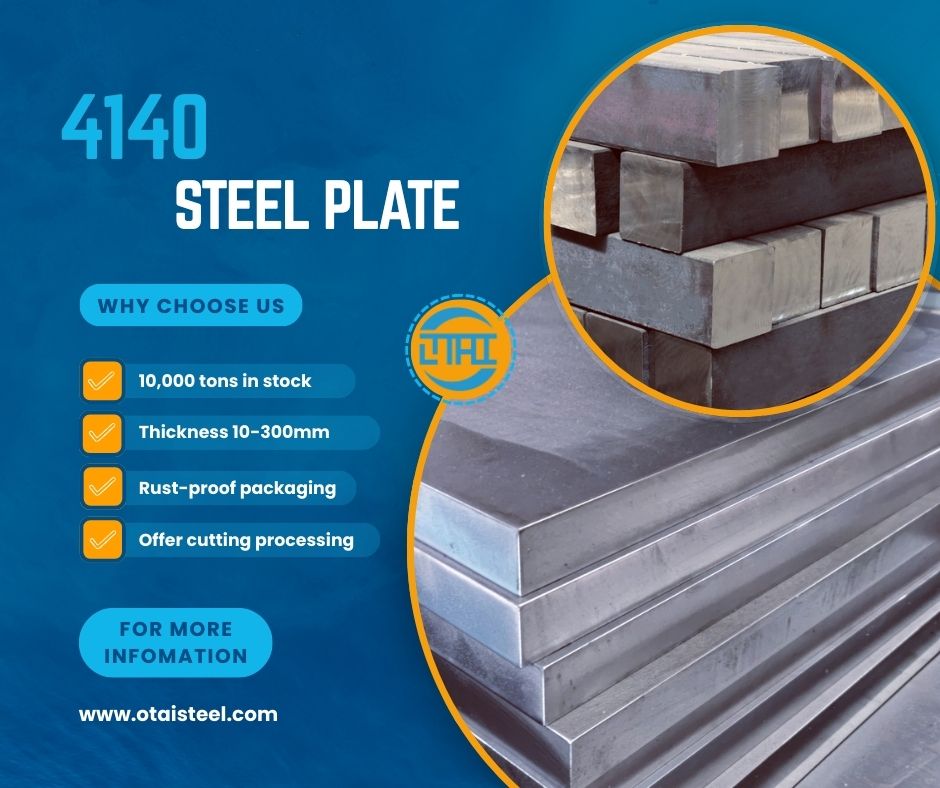
At Otai Special Steel, we supply high-quality AISI 4140 alloy steel tailored to meet specific hardness and performance requirements.
Our advantages include:
- Over 10,000 tons of alloy steel inventory available year-round
- Plate thickness range from 6 mm to 300 mm
- Precision cutting and processing services
- Strict ultrasonic testing (UT) quality control
- Full chemical composition inspection
- Trusted by global companies such as Thyssenkrupp, Borealis, and Schlumberger
We help customers achieve precise hardness control for demanding industrial applications.
❓ FAQ
1. What is the Rockwell C hardness of 4140 steel?
It typically ranges from 10 HRC (annealed) up to 55 HRC (hardened), depending on heat treatment.
2. What is the maximum hardness of 4140 steel?
The maximum hardness is usually around 50–55 HRC for through-hardened conditions.
3. What hardness is commonly used for 4140 steel?
A hardness of 28–32 HRC is commonly used for structural applications due to its balance of strength and toughness.