 AISI 4140 Steel Yield Strength: What Engineers and Buyers Should Really Know
When engineers evaluate alloy steels for shafts, gears, or load-bearing components, AISI 4140 steel yield strength often becomes a decisive factor. Yield strength determines how much stress the material can withstand before permanent deformation begins. In real projects, this value directly affects safety margins, service life, and machining strategy.
This article explains how the yield strength of AISI 4140 steel changes with heat treatment, why it matters in real applications, and how buyers should interpret the numbers when sourcing material.
🔍 What Does Yield Strength Mean for AISI 4140 Steel?
Yield strength defines the maximum stress a material can handle without plastic deformation. Once stress exceeds this limit, the steel does not return to its original shape.
For AISI 4140 steel, yield strength plays a critical role in:
-
Shaft deflection control
-
Load-bearing capacity
-
Fatigue resistance
-
Dimensional stability during service
Unlike simple carbon steels, 4140 allows engineers to adjust yield strength through heat treatment, making it extremely flexible.
🧪 Typical Yield Strength of AISI 4140 Steel
The AISI 4140 steel yield strength varies significantly depending on condition. Buyers must never rely on a single number without confirming heat treatment status.
📊 Yield Strength by Heat Treatment Condition
| Condition | Yield Strength (MPa) | Yield Strength (ksi) | Typical Use |
|---|---|---|---|
| Annealed | ~415 MPa | ~60 ksi | Machining, forming |
| Normalized | ~655 MPa | ~95 ksi | Structural components |
| Quenched & Tempered (30 HRC) | ~850 MPa | ~123 ksi | Shafts, axles |
| Quenched & Tempered (40 HRC) | ~1000–1100 MPa | ~145–160 ksi | High-load gears |
| Quenched & Tempered (45+ HRC) | 1200 MPa+ | 175 ksi+ | Heavy-duty tooling |
👉 Key takeaway: Yield strength increases rapidly with hardness, but toughness decreases if pushed too far.
⚙️ Why Yield Strength Matters in Real Applications
Engineers rarely design parts based on tensile strength alone. Yield strength defines working limits, not failure limits.
🏗️ Common Scenarios Where Yield Strength Matters
-
Drive shafts → Prevent permanent bending under torque
-
Hydraulic rods → Maintain straightness under pressure
-
Gears → Resist tooth deformation under load
-
Machine spindles → Control vibration and deflection
AISI 4140 steel delivers reliable yield strength while maintaining machinability when properly specified.
🔥 Heat Treatment: The Real Strength Lever
Heat treatment controls yield strength more than chemistry.
Common Heat Treatment Routes
-
Annealing → Lowest yield strength, best machinability
-
Normalizing → Balanced strength and toughness
-
Quenching & Tempering → High yield strength with controlled toughness
Engineers often specify Q&T 4140 to target a precise yield strength range without sacrificing service reliability.
⚠️ Common Buyer Mistakes with Yield Strength
🚫 Assuming all 4140 has the same strength
🚫 Ignoring hardness tolerance on drawings
🚫 Over-hardening parts that require toughness
🚫 Comparing yield strength without confirming condition
👉 Yield strength without heat treatment context leads to mis-specification and premature failure.
🆚 AISI 4140 vs Carbon Steel (Yield Strength Perspective)
| Material | Typical Yield Strength | Adjustment Flexibility |
|---|---|---|
| AISI 1045 | ~310–530 MPa | Limited |
| AISI 4140 | 415–1200+ MPa | Excellent |
| Mild Steel | ~250 MPa | Very Low |
4140 clearly outperforms plain carbon steels when load stability matters.
🏭 How Buyers Should Specify AISI 4140 Yield Strength
To avoid confusion, buyers should specify:
-
Steel grade: AISI 4140
-
Condition: Annealed / Normalized / Q&T
-
Target hardness range (HRC)
-
Required yield strength (if critical)
This approach ensures consistent performance across suppliers.
🏅 Company Advantages – Why Buyers Choose Otai Special Steel
At Otai Special Steel, we help customers match yield strength to real application needs, not generic standards.
-
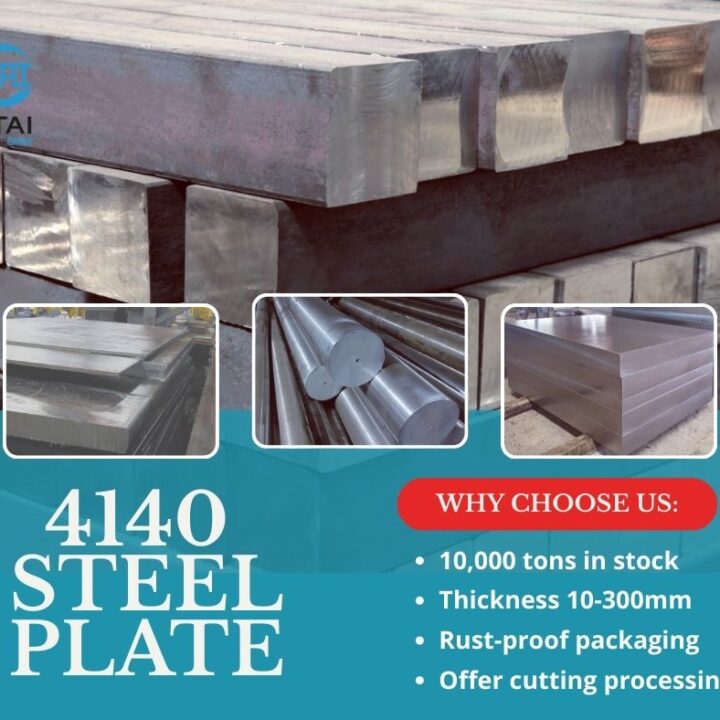
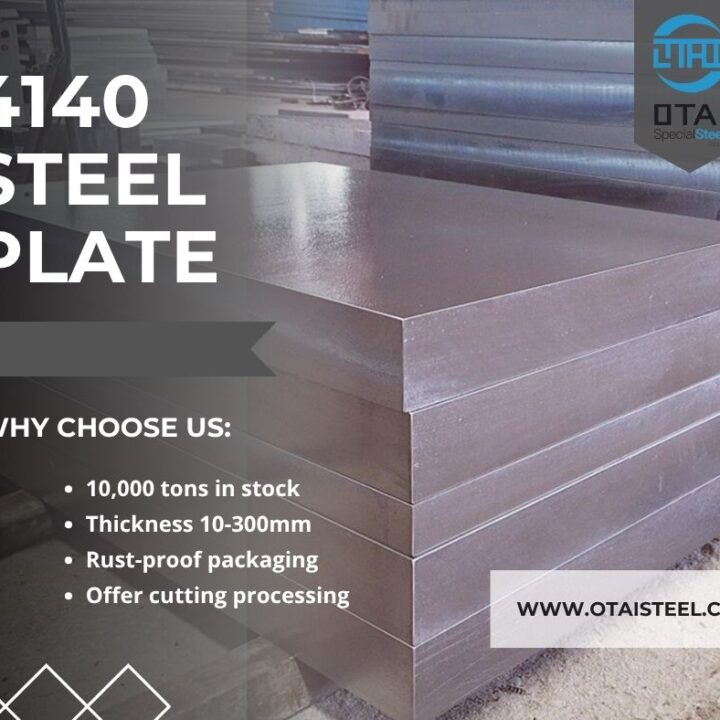
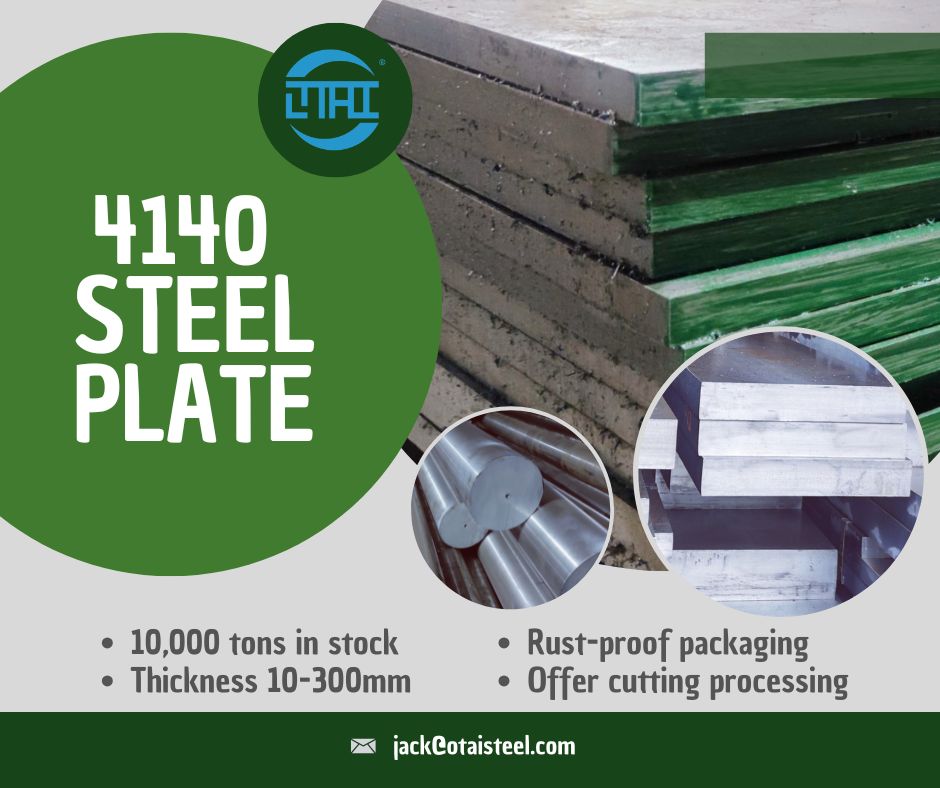
Large Inventory: Over 10,000 tons of AISI 4140 plates, bars, and blocks
-
Multiple Conditions: Annealed, normalized, pre-hardened, Q&T
-
Thickness Range: 6–300 mm available year-round
-
Quality Assurance: UT testing, chemical analysis, SGS inspection
-
Global Experience: Long-term supplier to Thyssenkrupp, Borealis, Schlumberger
We supply steel that performs as expected, not just steel that meets paperwork.
❓ Frequently Asked Questions (FAQ)
Q1: What is the typical yield strength of AISI 4140 steel?
It ranges from about 415 MPa in annealed condition to over 1200 MPa when quenched and tempered.
Q2: Does higher hardness always mean better yield strength?
Yes, but excessive hardness reduces toughness and increases cracking risk.
Q3: Can I machine 4140 after heat treatment?
Yes, but machining becomes harder above 30–32 HRC. Carbide tools are recommended.
Q4: Is yield strength more important than tensile strength?
For most load-bearing parts, yield strength matters more than ultimate tensile strength.
Q5: Can Otai supply 4140 with a specified yield strength range?
Yes. We tailor heat treatment to meet your mechanical property requirements.