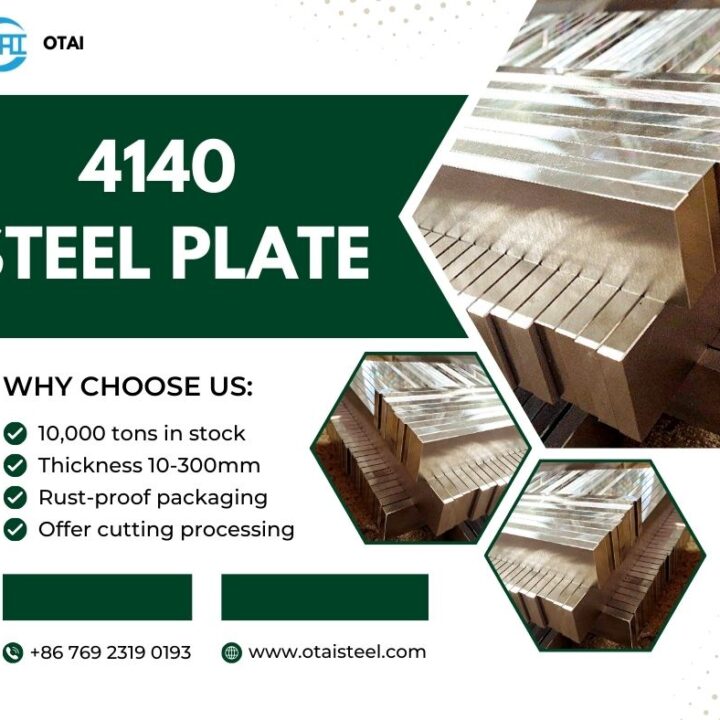
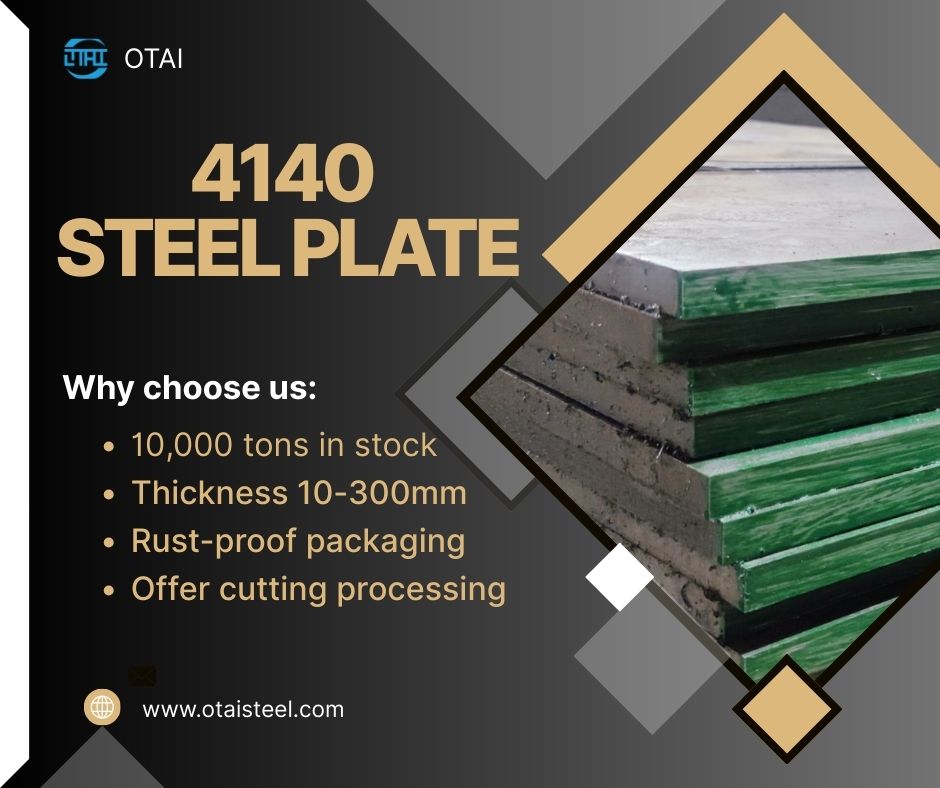
 AISI 4140 Steel Mechanical Properties: Understanding What Makes It a High-Performance Material
AISI 4140 steel is one of the most widely used alloy steels due to its combination of high strength, toughness, and excellent hardenability. Whether you’re working in the automotive, aerospace, or manufacturing industry, understanding the mechanical properties of AISI 4140 steel is essential for selecting the right material for your application. In this article, we will break down the key mechanical properties of AISI 4140 steel and explore how these characteristics affect its performance in various industrial applications.
🌟 What is AISI 4140 Steel?
AISI 4140 is a low-alloy steel that contains chromium, molybdenum, and carbon as its key alloying elements. These additions provide the steel with an impressive balance of toughness, strength, and wear resistance. This makes 4140 steel ideal for applications requiring a combination of hardness, durability, and fatigue resistance, such as in gears, crankshafts, and industrial machinery components.
The mechanical properties of AISI 4140 steel can be modified through heat treatment, allowing for customization of the material’s strength and toughness to suit specific applications.
🔧 Key Mechanical Properties of AISI 4140 Steel
AISI 4140 steel is known for its versatile mechanical properties, which can be tailored through various heat treatment processes. The most important mechanical properties include:
1. Tensile Strength
Tensile strength refers to the maximum amount of tensile (pulling or stretching) stress that a material can withstand before breaking. For AISI 4140 steel, tensile strength can range from 650 MPa to 1000 MPa (megapascals), depending on its heat-treated condition.
-
Normalized 4140 Steel: Tensile strength is typically in the range of 620 MPa to 850 MPa.
-
Quenched and Tempered 4140 Steel: Tensile strength can go up to 830 MPa to 1000 MPa.
2. Yield Strength
Yield strength is the stress at which a material begins to deform plastically. For AISI 4140 steel, the yield strength typically ranges from 450 MPa to 900 MPa, depending on the treatment and processing condition.
-
Normalized 4140 Steel: Yield strength ranges from 450 MPa to 600 MPa.
-
Quenched and Tempered 4140 Steel: Yield strength can reach 670 MPa to 900 MPa, offering higher strength for heavy-duty applications.
3. Hardness
Hardness is a measure of a material’s resistance to deformation, especially permanent deformation, indentation, and scratching. AISI 4140 steel can be heat-treated to achieve varying hardness levels:
-
Normalized 4140 Steel: Hardness typically ranges from 22 to 30 HRC (Rockwell C).
-
Quenched and Tempered 4140 Steel: Hardness can increase to 28 to 35 HRC, offering excellent wear resistance for demanding applications.
-
Annealed 4140 Steel: Softness is higher in the annealed condition, with hardness around 15 to 20 HRC, making it easier to machine.
4. Impact Toughness
Impact toughness measures the material’s ability to absorb energy before fracturing. AISI 4140 steel is known for its high impact toughness, especially in low temperatures. Its toughness allows it to withstand shocks, vibrations, and extreme stresses without failure.
-
Normalized 4140 Steel: Impact toughness is typically around 40-60 J (Joules) at room temperature.
-
Quenched and Tempered 4140 Steel: This treatment improves the toughness, making it ideal for high-stress components like gears and shafts.
5. Ductility
Ductility is the ability of a material to undergo significant plastic deformation before fracture. AISI 4140 steel has good ductility, which means it can be stretched or bent without breaking, especially in the annealed or normalized conditions.
-
Normalized 4140 Steel: It has moderate ductility, which allows it to be bent or formed without cracking.
-
Quenched and Tempered 4140 Steel: While it becomes harder and stronger, the ductility decreases slightly compared to the normalized condition.
🏗️ Mechanical Properties of AISI 4140 Steel in Different Conditions
Here’s a breakdown of how different heat treatment processes affect the mechanical properties of AISI 4140 steel:
| Condition | Tensile Strength (MPa) | Yield Strength (MPa) | Hardness (HRC) | Impact Toughness (J) | Ductility |
|---|---|---|---|---|---|
| Annealed 4140 Steel | 415 – 620 | 275 – 450 | 15 – 20 | Moderate | High |
| Normalized 4140 Steel | 620 – 850 | 450 – 600 | 22 – 30 | Good | Moderate |
| Quenched & Tempered 4140 Steel | 830 – 1000 | 670 – 900 | 28 – 35 | Excellent | Low to Moderate |
As you can see, quenched and tempered 4140 steel offers the highest strength and hardness, making it ideal for heavy-duty applications. However, the trade-off is that its ductility and toughness are somewhat reduced compared to the normalized or annealed versions.
🛠️ Applications of AISI 4140 Steel Based on Mechanical Properties
AISI 4140 steel’s mechanical properties make it suitable for a variety of demanding applications. Here are some common uses based on different heat treatment conditions:
1. Quenched and Tempered 4140 Steel
-
Heavy-duty shafts: Used in industries requiring high strength and resistance to wear.
-
Gears: Especially in automotive and aerospace, where high tensile strength and durability are critical.
-
Crankshafts: Withstands extreme torsional forces and impacts.
2. Normalized 4140 Steel
-
Machinery components: Such as axles, rods, and rollers that require moderate strength and toughness.
-
Forged components: Ideal for parts that require good machinability while maintaining decent strength.
3. Annealed 4140 Steel
-
Machining and fabrication: The softer annealed version is easier to machine and form, making it suitable for custom parts or intricate designs that don’t require the highest strength.
🏆 Why Choose Otai Special Steel for Your AISI 4140 Steel Needs?
At Otai Special Steel, we are proud to offer AISI 4140 steel in various conditions to meet the needs of your project. Here’s why you should choose us:
-
Extensive Inventory: We maintain an inventory of over 10,000 tons of 4140 steel available year-round.
-
Customization: We offer cutting, heat treatment, and packaging to tailor the material to your exact specifications.
-
Quality Assurance: Through rigorous quality control processes, including ultrasonic testing and chemical composition analysis, we ensure that every batch meets the highest standards of quality.
-
Global Reach: With years of experience supplying to top-tier international clients like Thyssenkrupp, Borealis, and Schlumberger, we guarantee reliable and timely delivery.
❓ FAQ: Common Questions About AISI 4140 Steel Mechanical Properties
Q1: Can AISI 4140 steel be used for high-temperature applications?
A1: While AISI 4140 steel offers excellent strength and toughness at room temperature, its performance at high temperatures can be limited. For extreme heat, you might want to consider alloys specifically designed for high-temperature resistance.
Q2: How does the heat treatment process affect the machinability of AISI 4140 steel?
A2: The machinability of AISI 4140 steel decreases as the hardness increases. Annealed 4140 steel is the easiest to machine, while quenched and tempered 4140 steel may require more advanced machining techniques due to its increased hardness.
Q3: How does the carbon content of AISI 4140 steel affect its mechanical properties?
A3: The carbon content in AISI 4140 (approximately 0.40%) contributes to its hardness and tensile strength. Higher carbon content generally increases hardness but may decrease toughness and machinability.