5140 Steel Grade: What Is It and Where Is It Used?
When selecting an alloy steel for shafts, gears, fasteners, and other mechanical components, buyers often compare 5140 with 4140, 40Cr, and other chromium alloy steels. Although these grades may serve similar engineering purposes, their chemical composition, hardenability, heat-treatment response, and applicable standards are not necessarily identical. Choosing the right grade therefore requires more than checking a material name on a quotation.
AISI 5140 is a medium-carbon chromium alloy steel designed to provide a useful combination of strength, toughness, wear resistance, and machinability after suitable processing. Its performance depends on the product form, section size, heat-treatment condition, and technical requirements of the finished component. This article explains what the 5140 steel grade means, where manufacturers commonly use it, and what international buyers should evaluate when sourcing it.
📑 Table of Contents
- 🔍 What Is the 5140 Steel Grade?
- 🧪 5140 Steel Chemical Composition
- ⚙️ 5140 Steel Properties and Performance
- 🔥 Heat Treatment of 5140 Alloy Steel
- 🏭 Where Is 5140 Steel Used?
- 🔄 5140 Steel vs. Other Alloy Steel Grades
- 📋 What Should Buyers Check Before Purchasing?
- 💰 Factors Affecting 5140 Steel Purchasing Costs
- 📦 Why Source 5140 Steel from Otai?
- ❓ Frequently Asked Questions
🔍 What Is the 5140 Steel Grade?
Understanding the AISI 5140 designation
5140 is an AISI/SAE alloy steel grade belonging to the chromium alloy structural steel family. Its designation identifies a steel with approximately 0.40% carbon and chromium as its principal alloying element. The carbon content provides the foundation for strength and hardness after heat treatment, while chromium improves hardenability and contributes to wear resistance.
Unlike plain carbon steel, 5140 contains a controlled chromium addition. This allows manufacturers to achieve a more useful balance of strength and toughness in components that experience mechanical loads, friction, or repeated movement. However, chromium does not make 5140 stainless steel. The grade still requires suitable surface protection when the working environment exposes it to moisture or corrosive substances.
Is 5140 a carbon steel or alloy steel?
5140 is classified as an alloy steel, more specifically a medium-carbon chromium alloy steel. Its alloy content distinguishes it from ordinary carbon steels such as 1045. The chromium addition improves its response to hardening, while its medium-carbon composition allows manufacturers to develop different combinations of hardness and toughness through heat treatment.
For procurement purposes, buyers should identify the complete material designation and governing specification. A quotation that simply states “5140 steel” does not establish every technical requirement. The product standard, delivery condition, dimensions, inspection requirements, and certificate details still need confirmation.
Common product forms
Manufacturers and steel distributors supply 5140 in several product forms, depending on production capability and market demand. Common forms include:
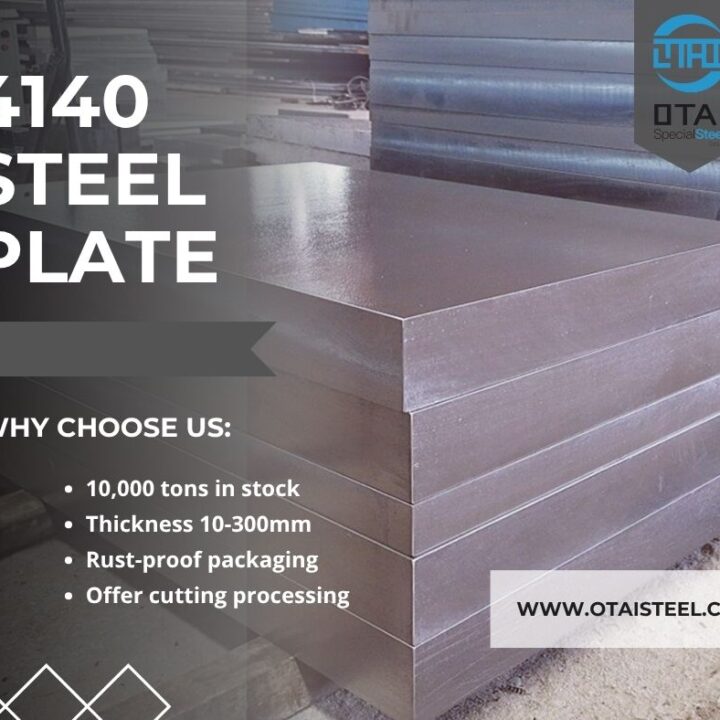
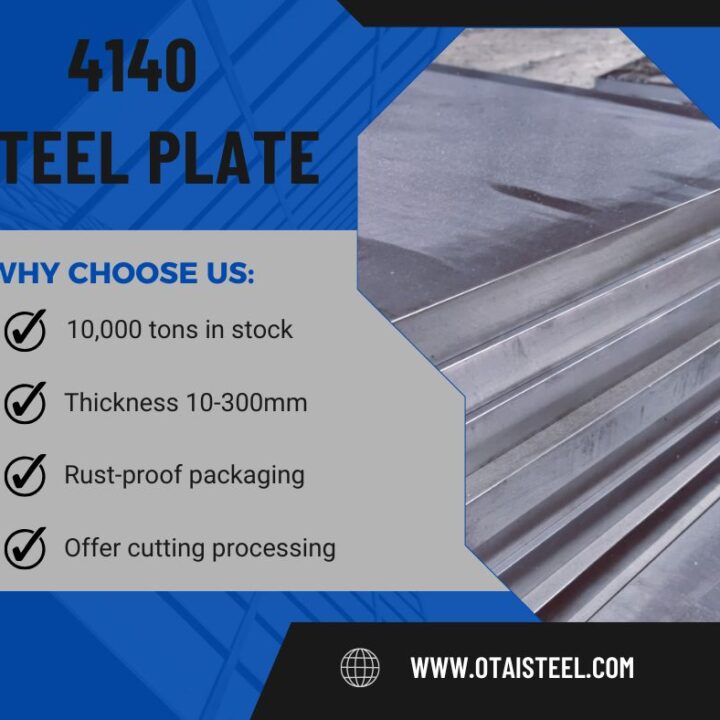
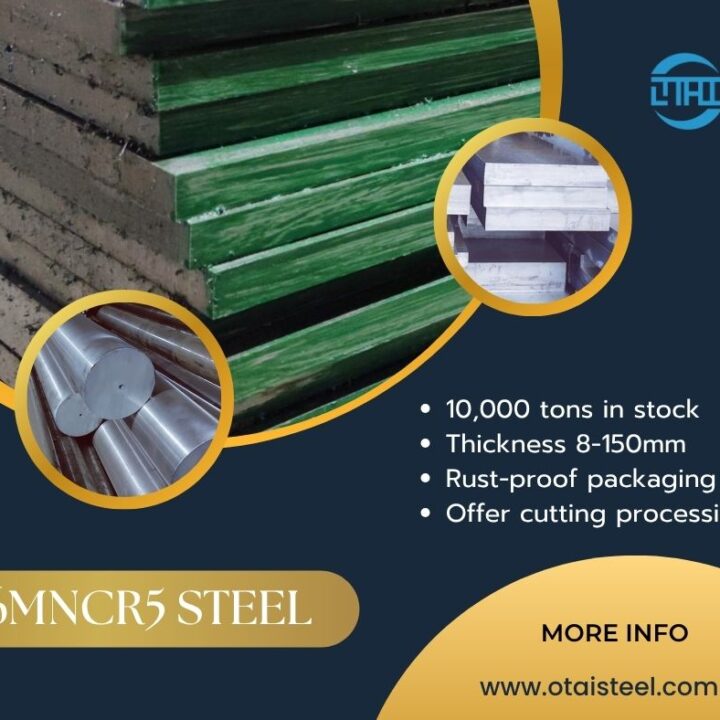
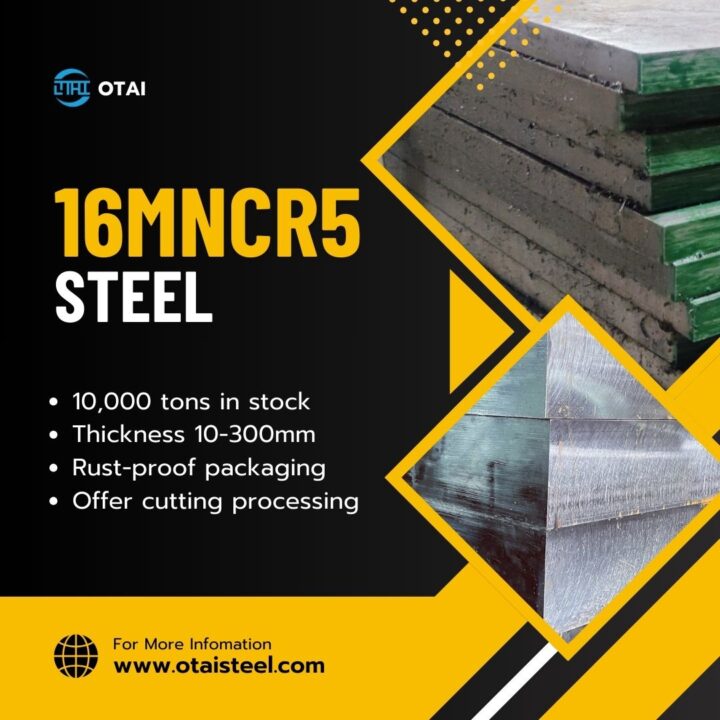
- Steel plate: Used for machined structural parts, blocks, and industrial components.
- Round bar: Suitable for shafts, pins, axles, and turned components when the required bar specification is available.
- Flat bar: Used for rectangular components and machining stock.
- Cut-to-size material: Prepared to reduce customers’ initial cutting work and material waste.
Not every supplier stocks every form or dimension. Buyers should confirm actual availability rather than assume that a listed product range represents current inventory.
🧪 5140 Steel Chemical Composition
Main alloying elements and their functions
The chemical composition of 5140 explains why manufacturers use it for medium- to high-load mechanical components. Carbon supports hardness and strength, chromium improves hardenability, and manganese contributes to strength and hardening response. Silicon also serves as a deoxidizing element during steelmaking and contributes to the material’s strength characteristics.
The following table provides a commonly published composition reference for AISI 5140. Exact permitted limits can vary with the governing specification and product standard. Buyers should therefore use the applicable standard and the actual mill test certificate (MTC) rather than treating this table as a substitute for contractual requirements.
| Element | Common Reference Range (wt.%) | Main Contribution |
|---|---|---|
| Carbon (C) | 0.38–0.43 | Strength and hardening response |
| Silicon (Si) | 0.15–0.35 | Deoxidation and strength contribution |
| Manganese (Mn) | 0.70–0.90 | Hardenability and strength |
| Chromium (Cr) | 0.70–0.90 | Hardenability and wear resistance |
| Phosphorus (P) | Specification-dependent maximum | Controlled as an impurity |
| Sulfur (S) | Specification-dependent maximum | Controlled for cleanliness and toughness requirements |
Why the MTC matters more than a generic composition table
A published composition range describes the limits of a particular specification. It does not tell buyers the exact chemical composition of the material being offered. Actual values vary from heat to heat, and the MTC records the measured results for the supplied batch.
When reviewing a 5140 steel certificate, procurement teams should check:
- Whether the material designation matches the purchase order.
- Whether the certificate identifies the applicable standard or specification.
- Whether carbon, chromium, manganese, and other reported elements meet the agreed limits.
- Whether the heat number provides traceability between the certificate and the delivered material.
- Whether additional restrictions on phosphorus, sulfur, or residual elements apply to the project.
Do not assume that every supplier’s typical analysis is a universal 5140 composition. For critical components, the actual MTC and the purchase specification should control acceptance.
Does 5140 contain molybdenum?
5140 is primarily a chromium alloy steel, not a chromium-molybdenum grade like 4140. Some supplier data may list a small permitted or residual molybdenum value, but buyers should not interpret that as the defining alloy addition of 5140. If molybdenum content is important to the application, specify the required grade and chemical limits clearly.
⚙️ 5140 Steel Properties and Performance
Strength and toughness
5140 provides a useful combination of strength and toughness when manufacturers select an appropriate heat-treatment condition. Its medium-carbon content supports the development of higher hardness through quenching, while chromium improves the hardening response compared with many plain carbon steels.
These characteristics make the grade suitable for components that carry mechanical loads and experience repeated stress. Shafts, gears, pins, and similar parts may require sufficient tensile strength to resist deformation, together with adequate toughness to reduce the risk of brittle failure.
Hardness and wear resistance
Heat treatment can increase the hardness of 5140 and improve its resistance to surface wear. Manufacturers may also use induction hardening when a component requires a hard surface and a tougher supporting core. This approach can be useful for shafts, gear-related parts, and other components that experience localized contact or friction.
However, buyers should not specify hardness without considering the complete component. Excessive hardness may reduce toughness, while insufficient hardness may lead to premature wear. The appropriate target depends on the component’s load, geometry, service conditions, and manufacturing process.
Mechanical properties depend on the supply condition
One important purchasing mistake is comparing mechanical-property values without checking the condition in which the steel was tested. Annealed, normalized, quenched-and-tempered, and induction-hardened 5140 can show substantially different results.
| Property | What It Indicates | What Buyers Should Confirm |
|---|---|---|
| Tensile strength | Resistance to pulling forces | Required value and test condition |
| Yield strength | Resistance to permanent deformation | Minimum value for the relevant section size |
| Elongation | Ductility before fracture | Specified gauge length and test result |
| Impact toughness | Resistance to impact loading | Test temperature, specimen, and acceptance value |
| Hardness | Resistance to indentation | Scale, location, and delivery condition |
There is no single mechanical-property table that applies to every 5140 product. Section size, manufacturing route, heat treatment, and testing requirements all influence the final results. For this reason, buyers should request condition-specific values instead of relying on generic online figures.
Machinability and weldability
5140 can be machined in suitable delivery conditions. Annealed or normalized material is generally easier to machine than hardened material, although the actual cutting performance also depends on hardness, tooling, machine rigidity, and machining parameters.
Welding requires more care because 5140 contains medium carbon and chromium. These elements increase hardening potential in the heat-affected zone. If welding is necessary, the fabricator should develop a suitable procedure that considers preheating, interpass temperature, filler selection, and post-weld heat treatment where required. Do not treat 5140 as a freely weldable low-carbon steel.
🔥 Heat Treatment of 5140 Alloy Steel
Annealing
Annealing softens the steel and helps create a more suitable condition for machining or subsequent manufacturing operations. It can also reduce internal stresses associated with earlier processing. Buyers who plan extensive machining may prefer an annealed supply condition, provided it meets the requirements of their production route.
Otai’s 5140 product information lists an annealing temperature range of approximately 680–720°C. Actual treatment schedules should follow the applicable material specification and the steel producer’s technical recommendations. Heating rate, holding time, section size, and cooling method all affect the result.
Normalizing
Normalizing involves heating the steel to an appropriate temperature above its critical transformation range and then cooling it in air under controlled conditions. This treatment can refine the microstructure and produce a more uniform condition than some as-rolled supply routes.
For 5140, supplier reference information commonly lists a normalizing range around 840–880°C. The correct temperature and cooling procedure depend on the product dimensions and required properties. Buyers should not assume that normalizing automatically produces the same hardness or strength in every section size.
Quenching and tempering
Quenching and tempering (Q&T) is a common route for developing the strength and toughness required by loaded mechanical components. The steel is heated to an appropriate austenitizing temperature, quenched using a specified medium, and then tempered to adjust hardness and reduce brittleness.
Otai’s published reference information gives the following general heat-treatment ranges for 5140:
| Process | Reference Temperature | Purpose |
|---|---|---|
| Annealing | 680–720°C | Softening and machining preparation |
| Normalizing | 840–880°C | Microstructure refinement |
| Quenching | Approximately 820–860°C, depending on quenching route | Hardening |
| Tempering | 540–680°C | Balancing strength and toughness |
Note: These are general reference ranges, not a guaranteed heat-treatment procedure for every 5140 product. The required temperature, holding time, quenching medium, and tempering schedule must be selected according to the actual section size, target properties, and applicable specification.
Induction hardening
Induction hardening heats the surface rapidly using electromagnetic induction and then cools it under controlled conditions. This process can create a hard surface layer while retaining a comparatively tougher core. It is useful when a component needs surface wear resistance without requiring the entire cross-section to reach the same hardness.
Before purchasing, buyers should clarify whether the material will undergo induction hardening after machining. The required surface hardness, effective case depth, inspection method, and component geometry should be included in the technical discussion.
🏭 Where Is 5140 Steel Used?
Automotive and transportation components
Automotive manufacturers use medium-carbon chromium steels for mechanical parts that must withstand repeated loads, friction, and movement. Depending on the design and heat-treatment condition, 5140 may be suitable for shafts, axles, pins, gear-related components, and other load-bearing parts.
For these applications, material selection should consider fatigue performance, impact loading, surface hardness, and the required dimensional accuracy after machining. A component that operates under cyclic loading may need more than a minimum tensile-strength value. Buyers should also evaluate the design’s stress concentration points and the required inspection level.
Gears and power-transmission parts
Gears and power-transmission components experience contact stress and repeated mechanical forces. 5140 can provide a useful combination of core strength and surface-hardening potential when manufacturers select a suitable process.
For gear applications, the required hardness profile is particularly important. Buyers should confirm whether the design requires through-hardening, induction hardening, or another surface-treatment route. The gear geometry, tooth loading, operating speed, and lubrication conditions also influence the material decision.
Shafts, pins, and spindles
Shafts and spindles transmit torque and support rotating components. They may experience bending, torsion, vibration, and fatigue loading during service. 5140 is a practical candidate when the component requires higher strength and hardenability than a basic carbon steel can provide.
Pins and similar parts may also benefit from a hardened surface, particularly when they operate against moving or contacting components. However, the selected hardness must remain compatible with the required toughness and impact resistance.
Industrial machinery and agricultural equipment
Industrial machinery often includes gears, drive shafts, connecting parts, and other components that experience mechanical loads. Agricultural equipment adds further challenges because parts may operate under shock loading, dust, vibration, and variable working conditions.
5140 may be used for selected mechanical components in these sectors. Nevertheless, it is not automatically suitable for every high-load application. Designers should compare the required strength, fatigue life, section size, heat-treatment capability, and cost before approving the grade.
Typical application overview
| Industry | Typical Components | Important Performance Requirements |
|---|---|---|
| Automotive | Shafts, axles, pins | Strength, fatigue resistance, toughness |
| Power transmission | Gears, spindles, drive components | Hardness, contact resistance, dimensional stability |
| Industrial machinery | Machine parts, connecting components | Load capacity, machinability, wear resistance |
| Agricultural equipment | Pins, shafts, mechanical parts | Impact resistance, strength, service durability |
🔄 5140 Steel vs. Other Alloy Steel Grades
5140 vs. 4140 steel
5140 and 4140 are both medium-carbon alloy steels, but their alloying systems differ. 5140 is primarily a chromium steel, whereas 4140 contains chromium and a deliberate molybdenum addition. Molybdenum improves hardenability and can support strength retention during tempering.
As a result, 4140 may be a better option for some larger cross-sections or applications that require a higher hardening response. However, 5140 can remain a cost-effective choice when its properties meet the component requirements. Buyers should compare the actual specification, section size, delivery condition, and test results rather than selecting a grade based on its name alone.
5140 vs. 1045 steel
1045 is a medium-carbon plain carbon steel. It can achieve useful strength and hardness through heat treatment, but it does not contain the same chromium alloy addition as 5140. Therefore, 5140 generally offers better hardenability and may be more suitable for components where the required properties extend deeper into the section.
For relatively simple components with moderate loads, 1045 may provide adequate performance at a lower material cost. When the design requires improved hardening response or a stronger combination of core properties, 5140 deserves consideration.
5140 vs. 40Cr and 41Cr4
40Cr is a Chinese alloy structural steel grade, while 41Cr4 is a European designation commonly associated with the 1.7035 material number. Both are frequently compared with AISI 5140 because their composition and engineering applications can overlap.
However, similar grade names or application descriptions do not prove complete interchangeability. Chemical limits, product standards, delivery conditions, and mechanical-property requirements may differ. Before substituting one grade for another, buyers should compare the governing specifications and obtain approval from the design or quality department.
| Grade | Material Family | Main Difference to Consider |
|---|---|---|
| 5140 | Chromium alloy steel | Medium-carbon steel with chromium addition |
| 4140 | Chromium-molybdenum steel | Molybdenum improves hardenability and tempering response |
| 1045 | Medium-carbon steel | No comparable intentional chromium alloy addition |
| 40Cr | Chinese alloy structural steel | Similar application range; verify GB specification and limits |
| 41Cr4 | European chromium alloy steel | Compare EN requirements and material condition |
For buyers evaluating alternatives, the most reliable method is to compare the chemical composition, hardenability, mechanical-property requirements, product dimensions, and certification standard together. A grade substitution should never rely on a simple equivalence chart alone.
📋 What Should Buyers Check Before Purchasing?
Confirm the complete material specification
Start by identifying the exact grade, governing standard, and product form. If the drawing specifies SAE 5140 under a particular product standard, the supplier should confirm that the offered material meets those requirements. A general statement such as “equivalent to 5140” is not sufficient for a critical engineering purchase.
When a buyer considers 40Cr, 41Cr4, or another alternative, the technical department should review the differences before approving substitution. This step helps prevent problems during incoming inspection or component qualification.
Specify dimensions and tolerances
Dimensions directly affect material yield, machining allowance, transport costs, and final production time. Buyers should provide the required thickness, width, length, quantity, and dimensional tolerances. If the supplier will cut the material, specify whether the dimensions refer to the raw stock or finished cut pieces.
For precision machining, buyers should also clarify flatness, straightness, surface condition, and any machining allowance. These requirements help suppliers select suitable stock and processing methods.
Clarify the delivery condition
Always state whether the material is required in an annealed, normalized, quenched-and-tempered, or another specified condition. If the component requires a particular hardness or mechanical-property range, include the target values and test requirements in the purchase order.
Do not compare quotations for annealed and Q&T material as though they describe identical products. The processing route, delivery condition, and inspection requirements can change both price and production suitability.
Review inspection and certification requirements
For international B2B purchases, certification and traceability are important parts of supplier evaluation. Buyers should determine which documents and inspections their project requires before placing an order.
- MTC: Confirm the required certificate type and whether it must report actual heat analysis and mechanical test results.
- Heat traceability: Ensure the heat number on the certificate can be linked to the delivered material.
- Ultrasonic testing: Specify the applicable testing standard, acceptance level, and inspection coverage if required.
- Third-party inspection: Agree on the inspection organization, scope, timing, and acceptance criteria.
- Dimensional inspection: Define the measurement points and tolerance requirements.
Clear requirements help suppliers prepare the correct material and avoid disagreements during inspection or delivery.
Evaluate the supplier’s processing and export capability
Material quality is only one part of a successful international purchase. Buyers should also evaluate whether the supplier can cut the required sizes, maintain dimensional tolerances, coordinate additional processing, and protect the steel during transportation.
For overseas shipments, confirm the packaging method, rust prevention, bundle identification, shipping marks, and document requirements. These details can reduce handling problems and make receiving inspections more efficient.
💰 Factors Affecting 5140 Steel Purchasing Costs
Material dimensions and quantity
The dimensions and total order quantity influence the material cost and processing arrangement. Large or non-standard dimensions may require special sourcing or additional cutting work. Smaller cut pieces may also create more processing time and material waste than standard stock sizes.
When requesting a quotation, provide the complete dimensions and quantity rather than asking for a general price per ton. This allows the supplier to calculate the material requirement more accurately.
Delivery condition and additional processing
Annealed, normalized, and Q&T material may have different costs because they involve different processing routes. Cutting, CNC machining, grinding, heat-treatment coordination, and additional inspection can also affect the final quotation.
Buyers should compare quotations on the same technical basis. For example, a lower price for untreated material may not represent a real saving if the project requires Q&T properties and the buyer must arrange additional processing separately.
Inspection, packaging, and shipping
Special inspection requirements, third-party verification, ultrasonic testing, export packaging, and delivery terms can influence the total purchasing cost. These services should be discussed before the order is finalized.
A useful quotation comparison should include more than the unit price. Consider material compliance, processing scope, inspection documents, packaging, lead time, and transportation arrangements. A supplier that provides the required services in one coordinated package may reduce purchasing complexity and improve delivery control.
📦 Why Source 5140 Steel from Otai?
For buyers sourcing 5140 alloy steel for machinery, automotive components, and industrial manufacturing, a reliable supply partner should provide suitable stock, practical processing support, and clear quality documentation. Otai Special Steel serves international customers with alloy steel and tool steel supply, cutting, machining, and export services.
- 📏 5140 steel plate thickness: 4–300 mm in stock. Buyers can discuss suitable stock dimensions for different machining requirements.
- 🏭 More than 10,000 tons of steel stock: A broad inventory supports different industrial purchasing requirements.
- ✂️ 20 saw-cutting machines: Cutting services help prepare material to requested dimensions.
- ⚙️ CNC machining and grinding: Processing support helps customers obtain customized sizes and tolerances.
- 🔧 One-stop service: Material supply, cutting, machining, heat-treatment coordination, and export packaging can be discussed together.
- 🔍 Quality support: Material certificates, traceability, ultrasonic testing, and third-party inspection support are available according to agreed requirements.
- 🌍 International supply experience: Otai has exported to more than 54 countries since 1999.
- 📦 Export packaging: Anti-rust protection, strapping, bundling, and wooden cases help protect materials during overseas transportation.
When requesting a quotation, provide the required 5140 plate dimensions, quantity, delivery condition, applicable standard, and inspection requirements. If your project needs a specific hardness range, mechanical properties, ultrasonic testing, or third-party inspection, include these details in your inquiry so the supply arrangement can be evaluated accurately.
For product details, visit the AISI 5140 alloy steel product page. Otai can help buyers discuss available stock, cutting requirements, and customized supply arrangements for their projects.
❓ Frequently Asked Questions
1. What type of steel is 5140?
5140 is a medium-carbon chromium alloy steel. It offers a combination of strength, toughness, and hardenability, making it suitable for selected mechanical components such as shafts, gears, pins, and other load-bearing parts.
2. Is 5140 steel equivalent to 40Cr?
5140 and 40Cr are commonly compared because their chemical composition and applications overlap. However, they belong to different designation systems, and their exact requirements may differ. Buyers should compare the governing standards and actual MTC results before approving substitution.
3. What is the difference between 5140 and 4140 steel?
5140 is primarily a chromium alloy steel, while 4140 contains chromium and molybdenum. The molybdenum addition in 4140 improves hardenability and tempering response. The better choice depends on section size, required properties, service conditions, and cost.
4. Can 5140 steel be hardened?
Yes. 5140 can be hardened through suitable quenching and tempering processes. Manufacturers may also use induction hardening when they need a hard surface and a comparatively tough core. The treatment schedule and target hardness should match the component’s design requirements.
5. What should buyers check when purchasing 5140 steel?
Buyers should confirm the grade and governing standard, chemical composition, product dimensions, delivery condition, mechanical properties, hardness requirements, MTC, traceability, and inspection scope. They should also clarify cutting, packaging, and delivery arrangements before placing an order.