5140 Alloy Steel: What Makes This Grade Suitable for Industrial Components?
📑 Table of Contents
- 🔍 What Is 5140 Alloy Steel?
- 🧪 Chemical Composition of AISI 5140
- 💪 Mechanical Properties and Performance
- 🔥 How Heat Treatment Changes 5140 Steel
- ⚙️ Common Industrial Applications of 5140
- 🔄 5140 vs. 4140 and Other Alloy Steel Grades
- 📦 What Buyers Should Check Before Purchasing
- 🏭 Why Source 5140 Alloy Steel from Otai?
- ❓ Frequently Asked Questions
For industrial buyers, choosing 5140 alloy steel involves more than confirming the grade designation. The required strength, hardness, toughness and machinability depend on how the component will be manufactured and used. AISI 5140 supplied in an annealed condition, for example, offers a different balance of properties from quenched-and-tempered material.
This article examines the composition, mechanical characteristics, heat-treatment response and industrial applications of 5140. It also explains the differences between 5140 and related grades, helping procurement teams evaluate technical specifications and compare supplier quotations more accurately.
🔍 What Is 5140 Alloy Steel?
AISI 5140 is a medium-carbon chromium alloy steel commonly classified as a chromium steel. Its nominal carbon content is around 0.40%, while chromium is its principal alloying element. This composition allows the material to develop useful strength and hardness through heat treatment.
Unlike plain-carbon steel, 5140 contains chromium to improve hardenability. As a result, it can achieve a hardened structure more effectively during quenching, particularly when manufacturers select an appropriate process for the product dimensions.
What makes 5140 different from ordinary carbon steel?
Carbon steel can provide good strength and machinability at a competitive cost, but its hardening response may be limited in larger sections. Chromium improves the hardenability of 5140, helping manufacturers obtain a stronger hardened structure beyond the immediate surface.
This characteristic makes 5140 useful for components that carry mechanical loads and require a combination of strength and toughness. Nevertheless, the achievable properties depend on section size, quenching conditions and tempering temperature.
Where does the 5140 designation come from?
5140 belongs to the AISI/SAE alloy steel designation system. The grade is also associated with UNS G51400. Depending on the country and applicable standard, buyers may encounter related designations such as 41Cr4, 40Cr4 and SCr440.
These grades are often considered alternatives, but their chemical composition limits and product requirements can differ. Therefore, a buyer should not approve a substitution based on the grade name alone. The applicable standard and actual MTC should support the decision.
Is 5140 a high-strength alloy steel?
5140 can achieve substantial strength after suitable quenching and tempering. However, it is more accurate to describe it as a medium-carbon chromium alloy steel with a useful heat-treatment response rather than assign it one universal strength level.
For procurement purposes, the delivery condition and required mechanical properties should accompany the grade designation. This helps ensure that the supplied steel matches the intended component and manufacturing process.
🧪 Chemical Composition of AISI 5140
The chemical composition of 5140 determines its response to heat treatment and contributes to its mechanical performance. Carbon provides the potential for hardening, chromium improves hardenability, and manganese supports strength and hardening response.
The following table presents commonly referenced AISI 5140 composition limits. Buyers should always confirm the exact requirements against the applicable material standard and product specification because limits may vary between standards and product forms.
| Element | Common reference range / limit (wt.%) | Main contribution |
|---|---|---|
| Carbon (C) | 0.38–0.43 | Hardness, strength and hardening response |
| Manganese (Mn) | 0.70–0.90 | Strength and hardenability |
| Silicon (Si) | 0.15–0.30 | Deoxidation and strength |
| Chromium (Cr) | 0.70–0.90 | Hardenability and wear resistance |
| Phosphorus (P) | 0.035 max. | Controlled as an impurity |
| Sulfur (S) | 0.040 max. | Controlled to limit unwanted effects on toughness |
Why carbon and chromium matter
Carbon is particularly important because it determines how much hardness the steel can develop during hardening. With approximately 0.40% carbon, 5140 can achieve a useful combination of strength and toughness after an appropriate heat-treatment process.
Chromium improves hardenability, which helps the steel develop hardened structures more effectively through its cross-section. This is valuable when manufacturers produce shafts, axles and other components with relatively substantial dimensions.
Does 5140 contain molybdenum?
Standard AISI 5140 is a chromium alloy steel and does not specify molybdenum as a principal alloying addition. This point matters when buyers compare 5140 with AISI 4140, which contains chromium and molybdenum.
Do not transfer the chemical composition of 4140 to 5140 simply because both grades have similar carbon content. Their alloying systems differ, and that difference can influence hardenability and performance during heat treatment.
Standard limits, typical analysis and MTC results
When reviewing chemical composition, buyers should distinguish three types of information:
- Standard composition limits: The permitted ranges or maximum values defined by the applicable material specification.
- Typical analysis: Representative chemical values published by a supplier or steel producer. These values are not necessarily the limits of the standard.
- Actual heat analysis: The measured chemical composition of the specific production heat, normally reported on the MTC.
For critical applications, the actual MTC chemistry should be checked against the purchase specification. This is more reliable than treating a typical analysis from a general datasheet as a guaranteed result.
💪 Mechanical Properties and Performance
The mechanical properties of 5140 alloy steel depend on its heat-treatment condition and product dimensions. Annealed material is generally softer and easier to machine, while quenched-and-tempered material can achieve higher strength and hardness.
Therefore, buyers should avoid using one tensile strength or hardness figure to describe every 5140 product. A meaningful property comparison must identify the delivery condition, specimen details and test requirements.
Representative mechanical properties in the annealed condition
The following figures are representative published data for AISI 5140 annealed at 830°C. They provide an example of the material’s properties in this specific condition, not universal minimum requirements for every product form or size.
| Mechanical property | Representative value |
|---|---|
| Tensile strength | 570 MPa |
| Yield strength | 295 MPa |
| Elongation | 28.6% |
| Reduction of area | 57.3% |
| Brinell hardness | 167 HB |
These values illustrate why annealed 5140 can be suitable for machining before final heat treatment. Its relatively low hardness and good elongation make it easier to process than a fully hardened condition.
Understanding the main mechanical properties
- Tensile strength: The maximum tensile stress a material withstands before fracture. It helps buyers evaluate the material’s resistance to pulling forces.
- Yield strength: The stress at which permanent deformation begins under the specified test method. This is important for components carrying mechanical loads.
- Elongation: The percentage increase in specimen length before fracture. It provides an indication of ductility.
- Hardness: Resistance to indentation, commonly measured using Brinell or Rockwell methods. It is relevant to wear resistance and machining considerations.
- Impact toughness: The ability to absorb energy under sudden loading. It matters for components exposed to shock or impact.
Why higher strength does not always mean better performance
A component designed for heavy loads may require high yield strength, but a component exposed to impact also needs sufficient toughness. Increasing hardness without considering toughness can create an unsuitable balance of properties.
For this reason, buyers should define the operating conditions before selecting a delivery condition. A suitable 5140 specification should address the required strength, hardness, ductility and, where necessary, impact performance.
🔥 How Heat Treatment Changes 5140 Steel
One of the main advantages of 5140 alloy steel is its response to heat treatment. Manufacturers can adjust its mechanical properties to suit different machining processes and service requirements.
Common heat-treatment routes include annealing, normalizing, quenching and tempering. The appropriate process depends on the initial material condition, component geometry and final property targets.
Annealing: improving machinability
Annealing softens the steel and reduces its hardness. A commonly referenced soft-annealing range for 5140 is approximately 650–720°C, followed by slow cooling under controlled conditions.
This condition is useful when manufacturers need to remove a significant amount of material through machining. It can also provide a suitable starting condition before further heat treatment.
Normalizing: refining the structure
Normalizing generally involves heating 5140 to approximately 850–880°C, followed by cooling in still air. This treatment can refine the microstructure and produce a more uniform structure than some annealed conditions.
Normalized material generally has higher strength and hardness than annealed material, although actual results depend on section size and processing conditions.
Quenching: increasing hardness and strength
During hardening, 5140 is heated to a suitable austenitizing temperature, commonly within approximately 830–870°C, and then cooled rapidly using an appropriate quenching medium.
Quenching forms a hard martensitic structure, increasing strength and hardness. However, the process can also introduce internal stresses and brittleness. For many industrial applications, manufacturers therefore temper the material after quenching.
Tempering: balancing strength and toughness
Tempering reheats the quenched steel to a controlled temperature below its critical transformation range. A commonly referenced tempering range for 5140 is approximately 540–680°C.
In general, a higher tempering temperature reduces hardness and strength while improving ductility and toughness. A lower tempering temperature tends to retain more hardness and strength. The actual response depends on the complete heat-treatment process.
For demanding applications, buyers should request the required hardness and mechanical-property range rather than simply asking for “heat-treated 5140.” The supplier should clarify whether the material is annealed, normalized or quenched and tempered.
⚙️ Common Industrial Applications of 5140
5140 alloy steel is used in machinery and automotive components that require a practical combination of strength, toughness and wear resistance. Its heat-treatment response makes it suitable for parts that experience mechanical loads, repeated movement or contact stress.
Shafts and axles
Shafts and axles transmit torque and support mechanical loads. These components may experience bending, torsion and repeated stress during operation.
Quenched-and-tempered 5140 can provide a useful balance of strength and toughness for these applications. Depending on the design, manufacturers may also use surface hardening to improve wear resistance in selected areas.
Gears and transmission components
Gears transfer motion and power between rotating components. Their teeth experience contact pressure and repeated loading, so the material must provide suitable strength and resistance to surface damage.
5140 can be considered for certain gears and transmission components when the design and heat-treatment requirements match its capabilities. However, the required surface hardness, core properties and fatigue performance must be evaluated for the specific gear design.
Pins, studs and connecting components
Pins, studs, bolts and other connecting components may experience tension, shear, friction or impact. Heat-treated 5140 can provide the strength needed for selected applications, while its machinability in softer conditions supports manufacturing operations.
Industrial machinery components
Manufacturers also use 5140 for spindles, rollers, machine parts and other mechanical components. The grade can be suitable where ordinary carbon steel does not provide the required hardenability or strength.
Can 5140 be induction hardened?
Yes. 5140 can undergo induction hardening when the component requires a harder surface while retaining a tougher core. This approach can be useful for shafts, pins and other parts exposed to localized wear.
However, the final surface hardness and hardened depth depend on the material condition, induction parameters, component geometry and cooling process. Buyers should specify these requirements when surface hardening forms part of the production route.
🔄 5140 vs. 4140 and Other Alloy Steel Grades
When sourcing 5140, buyers may encounter several alternative grades in supplier quotations. Some have similar carbon content or are commonly used for comparable components. Nevertheless, differences in alloying elements and standard requirements can affect hardenability, heat-treatment response and final performance.
5140 vs. 4140
AISI 5140 and AISI 4140 are both medium-carbon alloy steels with similar carbon ranges. Their main difference lies in the alloying system.
| Comparison | AISI 5140 | AISI 4140 |
|---|---|---|
| Carbon (C) | 0.38–0.43% | 0.38–0.43% |
| Chromium (Cr) | 0.70–0.90% | 0.80–1.10% |
| Molybdenum (Mo) | Not specified as a principal addition | 0.15–0.25% |
| Steel type | Chromium alloy steel | Chromium-molybdenum alloy steel |
The molybdenum addition and higher chromium range in 4140 generally provide better hardenability and help it retain strength during tempering. This can make 4140 a better option for some larger or more demanding components.
However, 5140 remains a practical choice when its mechanical properties meet the design requirements. Buyers should compare the required properties and actual supply conditions rather than assume that one grade is always superior.
5140 and 41Cr4
41Cr4 is frequently listed as a close European counterpart to AISI 5140. Both grades belong to the medium-carbon chromium steel family and serve similar heat-treatment applications.
However, their composition limits are not identical. Commonly referenced 41Cr4 specifications can permit a higher chromium range than AISI 5140. Therefore, buyers should check the exact standard and certificate before accepting 41Cr4 as a substitute.
5140 and 40Cr
40Cr is another grade that buyers may encounter when comparing Chinese alloy steel quotations with AISI 5140. Both materials have similar carbon content and are used for machinery components.
Nevertheless, their manganese and chromium ranges differ. The final suitability depends on the required properties, product dimensions and applicable standard. A grade comparison table alone is not enough to establish interchangeability.
How should buyers choose between these grades?
- Choose 5140 when its chromium-steel composition and achievable properties meet the component requirements.
- Consider 4140 when the application needs the benefits of a chromium-molybdenum alloy steel, particularly for demanding hardenability requirements.
- Consider 41Cr4 or 40Cr when the applicable regional specification and actual chemistry meet the engineering requirements.
- Request an MTC and compare the actual mechanical properties before approving any substitution.
📦 What Buyers Should Check Before Purchasing
For international procurement, the correct 5140 grade is only the starting point. Buyers should also confirm the product form, dimensions, delivery condition, testing requirements and documentation before placing an order.
1. Confirm the standard and grade designation
Specify AISI/SAE 5140 and identify the applicable standard or purchase specification. If the drawing uses another designation, ask the supplier to confirm whether the proposed material meets the required chemistry and mechanical properties.
This step helps prevent confusion between 5140 and nearby grades such as 4140, 41Cr4 and 40Cr.
2. Define the product form and dimensions
State whether the project requires plate or another product form, together with the exact thickness, width, length or diameter. Product dimensions influence machining allowance, heat-treatment response and mechanical test requirements.
For thick sections, do not assume that the mechanical properties of a small test specimen represent the entire cross-section.
3. Specify the delivery condition
Tell the supplier whether you need annealed, normalized or quenched-and-tempered material. If the component requires a particular hardness range, include the test method and acceptable range in the purchase specification.
A clear condition requirement makes quotations easier to compare and reduces the risk of receiving material that requires unexpected additional processing.
4. Review the MTC and traceability
Request a material test certificate showing the heat number, chemical analysis and relevant mechanical test results. Check that the certificate corresponds to the supplied material and meets the purchase requirements.
For projects with additional quality requirements, agree on ultrasonic testing, third-party inspection or other checks before confirming the order.
5. Evaluate processing and export services
Material price is only one part of the total purchasing cost. Cutting, machining, grinding, packaging and delivery arrangements can affect the final cost and production schedule.
Buyers should confirm whether the supplier can provide the requested dimensions and tolerances, suitable anti-rust protection and export packaging. These details are particularly important when steel travels long distances by sea or through multiple handling stages.
6. Compare quotations on an equivalent basis
When comparing suppliers, make sure each quotation covers the same grade, standard, dimensions, delivery condition and inspection requirements. A quotation for annealed 5140 should not be compared directly with a Q&T quotation without accounting for the difference in condition and processing.
Clear technical requirements help procurement teams identify genuine cost differences instead of comparing products that do not meet the same specification.
🏭 Why Source 5140 Alloy Steel from Otai?
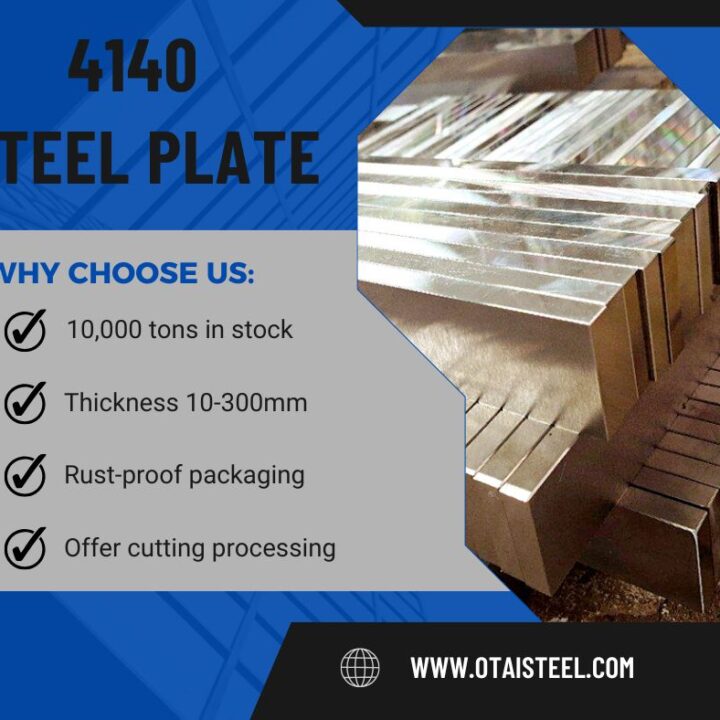
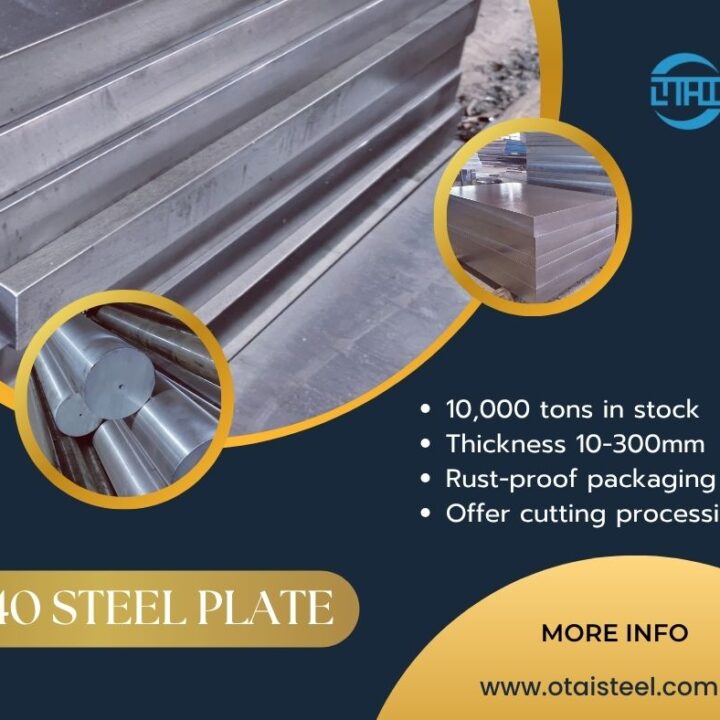
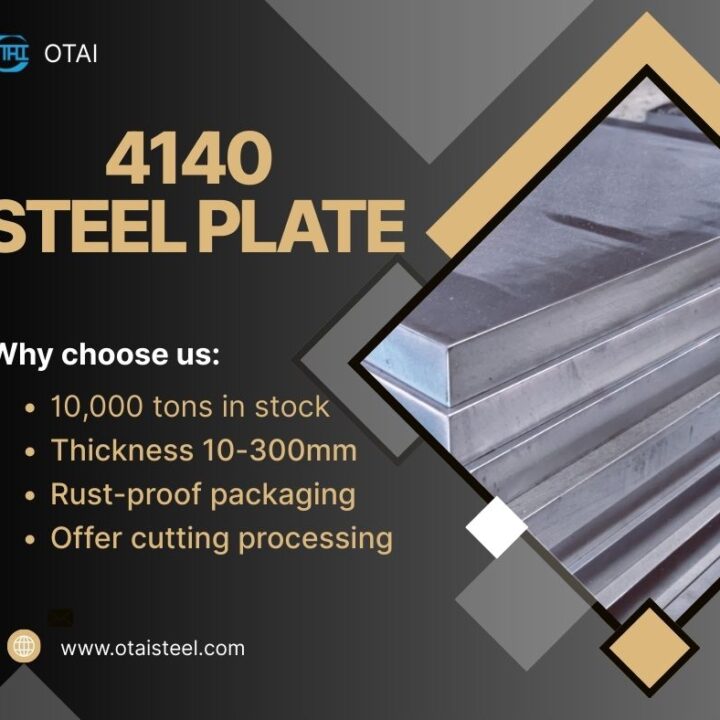
- 5140 steel plate thickness: 4–300 mm in stock.
- Large inventory: More than 10,000 tons of steel stock to support different industrial purchasing requirements.
- Cutting capacity: 20 saw-cutting machines for supplying steel in requested dimensions.
- Precision processing: CNC machining and grinding services, with customized sizes and tolerances.
- One-stop service: Material supply, cutting, machining, heat-treatment coordination and export packaging.
- Quality support: Material test certificates and traceability, with ultrasonic testing and third-party inspection support when required and agreed.
- Export experience: Supplying customers in more than 54 countries since 1999.
- Export packaging: Anti-rust protection, strapping, bundling and wooden cases for overseas transportation.
- Procurement support: Stable supply, practical processing options and cost-effective quotations for international buyers.
Otai supplies AISI 5140 alloy steel for industrial buyers who need material for machining and manufacturing applications. Our stock includes 5140 steel plate in thicknesses from 4–300 mm.
When requesting a quotation, provide your required dimensions, delivery condition, quantity and technical specification. If your project requires specific hardness, mechanical properties, ultrasonic testing or third-party inspection, include those requirements in your inquiry so we can evaluate the appropriate supply arrangement.
❓ Frequently Asked Questions
1. What is 5140 alloy steel used for?
5140 alloy steel is used for shafts, axles, gears, pins, studs and other machinery components that require strength, toughness and a suitable response to heat treatment. The exact application depends on the component design, delivery condition and required mechanical properties.
2. Is 5140 steel the same as 4140?
No. Both grades have similar carbon content, but 5140 is a chromium alloy steel, while 4140 is a chromium-molybdenum alloy steel. AISI 4140 contains molybdenum and has a different chromium range. The two grades may serve similar applications, but they should not be treated as automatically interchangeable.
3. What is the difference between 5140 and 41Cr4?
41Cr4 is commonly considered a close European counterpart to AISI 5140. However, their chemical composition limits can differ, particularly in chromium content. Buyers should check the applicable standard and actual MTC before approving a substitution.
4. Can 5140 alloy steel be hardened?
Yes. 5140 can be hardened through quenching and then tempered to adjust its strength, hardness and toughness. It can also be induction hardened for applications that require a harder surface and a tougher core. The final properties depend on the heat-treatment process and product dimensions.
5. What is the stock thickness range of 5140 steel plate at Otai?
Otai stocks 5140 alloy steel plate in thicknesses from 4–300 mm. Buyers can provide their required dimensions, quantity and delivery condition to request a quotation and confirm the suitable supply option.