What Is the Tensile Strength of 42CrMo4 Steel?
📑 Table of Contents
- 🔩 What Is the Tensile Strength of 42CrMo4 Steel?
- 📊 42CrMo4 Tensile Strength by Thickness
- ⚙️ Tensile Strength vs. Yield Strength
- 🔥 How Heat Treatment Changes Tensile Strength
- 📏 How Section Size Affects Mechanical Properties
- 🧪 Chemical Composition and Strength Development
- 🧰 How to Select 42CrMo4 for Industrial Applications
- 📋 How Buyers Should Verify Tensile Strength
- 🏭 Company Advantages
- ❓ Frequently Asked Questions
🔩 What Is the Tensile Strength of 42CrMo4 Steel?
42CrMo4 tensile strength depends mainly on the delivery condition, heat treatment, product thickness and applicable material specification. For 42CrMo4 alloy steel in the quenched-and-tempered (+QT) condition, commonly referenced values under EN 10083-3:2006 vary by product thickness. Depending on the specified thickness range, tensile strength can fall within approximately 750–1,300 MPa.
This range is not a single guaranteed value for every 42CrMo4 steel plate or bar. A thin product may meet a higher tensile-strength range than a thick section because section size affects hardenability and the final microstructure. Likewise, annealed material should not be evaluated against requirements intended for quenched-and-tempered steel.
42CrMo4 is a chromium-molybdenum alloy steel used in demanding mechanical applications. Its alloying elements improve hardenability, while its carbon content supports strength after appropriate heat treatment. Manufacturers use it for shafts, gears, machinery components, highly loaded parts and other applications that require a balance of strength and toughness.
Why tensile strength matters to buyers
Tensile strength, represented by Rm, describes the maximum engineering stress reached during a tensile test. Engineers use it alongside yield strength, elongation, hardness and, where required, impact toughness to assess material suitability.
For procurement, the important question is not simply whether 42CrMo4 has high tensile strength. Buyers need to establish whether the supplied material meets the required minimum or range in the specified delivery condition and product dimensions. The material test certificate (MTC) provides the actual reported test results for the supplied heat or product, according to the applicable certification arrangement.
Before requesting a quotation, identify the grade, standard, thickness or diameter, delivery condition and required mechanical properties. This information helps a supplier quote the correct material rather than a product that carries the same grade name but has a different property condition.
📊 42CrMo4 Tensile Strength by Thickness
For quenched-and-tempered 42CrMo4, EN 10083-3:2006 provides mechanical-property requirements that depend on product form and size. The following table summarizes commonly referenced values for flat products in the +QT condition. Verify the applicable standard edition and purchase specification before using these figures as contractual acceptance criteria.
| Product thickness | Tensile strength, Rm | Minimum yield strength, Re |
|---|---|---|
| ≤ 8 mm | 1,100–1,300 MPa | 900 MPa |
| > 8–20 mm | 1,000–1,200 MPa | 750 MPa |
| > 20–60 mm | 900–1,100 MPa | 650 MPa |
| > 60–100 mm | 800–950 MPa | 550 MPa |
| > 100–160 mm | 750–900 MPa | 500 MPa |
Important: These figures refer to the specified +QT condition and the flat-product thickness categories shown. They should not be applied automatically to round bars, annealed material, larger thicknesses or products supplied under a different specification. The applicable standard and purchase agreement determine the acceptance requirements.
Why thickness changes the applicable strength range
Thicker steel sections cool more slowly at their core during quenching than thinner sections under comparable conditions. This difference can affect the microstructure and the mechanical properties achieved throughout the section. Therefore, a material specification may set different tensile-strength and yield-strength requirements for different thickness ranges.
Consider a buyer who needs a 12 mm plate and another who needs a 120 mm plate. Even if both orders specify 42CrMo4 +QT, the applicable thickness categories differ. The buyer should check the relevant requirements for each size instead of applying the higher strength range from the thinner product to both orders.
Use standard requirements and MTC results together
A standard table establishes the requirements applicable to its stated scope. The MTC reports the results for the material actually supplied. A proper purchasing review compares the certificate with the order, including the product form, dimensions, heat-treatment condition, test method and acceptance limits.
When the application requires a specific minimum tensile strength, state it in the purchase specification and confirm that the supplier can provide material tested to that requirement. This is more reliable than relying on a generic product description or a value copied from an unrelated data sheet.
⚙️ Tensile Strength vs. Yield Strength
Tensile strength and yield strength are related, but they describe different points in a material’s response to a tensile load. Confusing the two can lead to incorrect material selection or design assumptions.
| Property | Symbol | Meaning | Engineering relevance |
|---|---|---|---|
| Tensile strength | Rm | Maximum engineering stress recorded during a tensile test | Helps evaluate the material’s ultimate tensile capacity |
| Yield strength | Re or Rp0.2 | Stress at the defined onset of permanent deformation | Important when limiting permanent deformation |
| Elongation | A | Extension measured after fracture under the specified test method | Indicates ductility |
| Hardness | HBW or HRC | Resistance to indentation | Helps assess material condition and surface-related requirements |
Why yield strength may matter more in service
Many components must resist permanent deformation during normal operation. For such designs, yield strength may be more directly relevant than ultimate tensile strength. For example, a shaft may experience bending or torsion, and the engineer needs to control the stress level to avoid permanent deformation or unacceptable changes in alignment.
Tensile strength still matters because it helps characterize the material’s overall strength and forms part of many engineering assessments. However, it does not independently establish the component’s safe working load. Design calculations must also account for geometry, stress concentrations, loading direction, fatigue, operating temperature and the relevant design standard.
Do not estimate every property from tensile strength
Hardness often changes alongside strength during heat treatment, but the relationship is approximate and depends on the steel’s condition. Similarly, tensile strength alone cannot establish impact toughness or fatigue life. Where a design requires impact testing, a specific hardness range or fatigue performance, specify and verify those requirements separately.
For buyers, a practical specification should identify the properties that affect the component’s function. Requesting a tensile-strength value without stating delivery condition, product size and any additional acceptance criteria may leave important requirements unresolved.
🔥 How Heat Treatment Changes Tensile Strength
Heat treatment has a major influence on the tensile strength of 42CrMo4. The grade’s chromium and molybdenum content improves hardenability, while controlled quenching and tempering can produce a combination of strength and toughness suitable for demanding mechanical components.
Annealed condition
Annealing generally softens the material and can improve machinability. Manufacturers may prefer this condition when they need to remove a significant amount of material before carrying out a later hardening process. However, annealed steel should not be assumed to meet the tensile-strength requirements specified for quenched-and-tempered material.
For soft-annealed 42CrMo4, commonly referenced specifications include a maximum hardness around 241 HBW, depending on the applicable standard and product requirements. This hardness reference does not itself establish a guaranteed tensile strength. Buyers should confirm the required delivery condition and the properties that the supplier will certify.
Quenching and tempering
Quenching heats the steel to a suitable austenitizing temperature and then cools it under controlled conditions. The process can create a hard microstructure. Tempering subsequently reheats the quenched material to adjust hardness, strength, ductility and toughness.
A lower tempering temperature generally retains more hardness and strength, while a higher tempering temperature tends to reduce strength and increase toughness and ductility. The actual result depends on the complete heat-treatment cycle, section size, original material condition and quenching method.
| Condition or process | Typical effect | What buyers should confirm |
|---|---|---|
| Annealing | Lower hardness and generally easier machining | Delivery condition and hardness requirement |
| Quenching | Increases hardness and strength potential | Quenching method, section size and cracking risk |
| Tempering after quenching | Adjusts the strength-toughness balance | Final tensile strength, hardness and toughness requirements |
| Induction hardening | Creates a hardened surface while retaining a different core condition | Surface hardness, effective case depth and core properties |
Specify the final condition, not just the process name
For an industrial order, stating “heat-treated 42CrMo4” may not provide enough detail. A buyer should define the required final condition and acceptance properties. If the material must arrive quenched and tempered, specify the applicable standard, size range and mechanical requirements. If the supplier must also provide a particular hardness or impact value, include it in the order.
These details help prevent a mismatch between the steel’s supplied condition and the manufacturer’s production route. They also make it easier to compare quotations on a like-for-like basis.
📏 How Section Size Affects Mechanical Properties
Section size affects the cooling rate during quenching. A small bar or thin plate can cool more rapidly through its cross-section than a thick plate or large-diameter bar under otherwise similar conditions. Consequently, the surface and core may develop different microstructures and mechanical properties.
Why thick sections need closer review
42CrMo4 has good hardenability compared with many plain-carbon steels, but hardenability does not mean that every section will achieve the same properties throughout. The core of a thick section may cool more slowly and develop a different structure from the outer region. The final result depends on the steel chemistry, quenching medium, agitation, component geometry and heat-treatment process.
This is why strength values published for a particular thickness range should not automatically be applied to a substantially thicker product. The applicable standard may set different limits for different size categories, and the actual test results must reflect the agreed requirements.
Product form and test location matter
Flat products and round bars may have different property requirements or testing provisions. The test specimen’s location and orientation can also affect the reported result. For critical applications, the buyer and supplier should agree on the sampling position and test method before production or shipment.
- Thin plates: Check the applicable thin-product requirements and ensure that the test condition matches the intended delivery condition.
- Thick plates: Confirm the relevant thickness category, core-property expectations and test location.
- Round bars: Verify the applicable diameter category and the specification governing mechanical tests for bars.
- Large components: Consider whether additional hardness mapping, ultrasonic testing or other inspection is necessary for the intended application.
When comparing suppliers, avoid treating the same nominal grade as proof of identical through-section properties. A reliable quotation should identify the product dimensions and delivery condition clearly, and the final documentation should show whether the agreed mechanical requirements have been met.
🧪 Chemical Composition and Strength Development
The chemical composition of 42CrMo4 helps determine its response to heat treatment. Carbon supports the development of strength and hardness, while chromium and molybdenum improve hardenability. Manganese also contributes to hardenability and strength. However, the composition does not independently guarantee a particular tensile-strength result.
| Element | Common EN 10083-3 composition range or limit (wt.%) | Influence on performance |
|---|---|---|
| Carbon (C) | 0.38–0.45 | Supports strength and hardness after suitable heat treatment |
| Silicon (Si) | 0.10–0.40 | Contributes to deoxidation and strength |
| Manganese (Mn) | 0.60–0.90 | Supports hardenability and strength |
| Chromium (Cr) | 0.90–1.20 | Improves hardenability and wear-related performance after treatment |
| Molybdenum (Mo) | 0.15–0.30 | Supports hardenability and the response to tempering |
| Phosphorus (P) | 0.025 max. | Controlled as an impurity |
| Sulfur (S) | 0.035 max. | Controlled because it can affect toughness and machinability |
Specification note: These are commonly published composition limits for 42CrMo4 under the referenced EN standard family. The applicable edition, product requirements and ordering specification should be checked before acceptance. Actual heat analysis values reported on the MTC are specific to the supplied heat; they are not universal typical values for every producer.
Why chemistry and mechanical testing must be reviewed separately
A chemical analysis confirms whether the supplied steel meets the applicable composition requirements. A tensile test measures mechanical performance under defined conditions. Even when two heats meet the same composition limits, different heat-treatment cycles and section sizes can produce different mechanical results.
For that reason, buyers should not use a chemistry table as proof that a particular tensile strength has been achieved. Check both the chemical analysis and the mechanical test results, with the correct product form, size and delivery condition shown in the documentation.
🧰 How to Select 42CrMo4 for Industrial Applications
The required tensile strength depends on the function of the finished component. A rotating shaft, transmission gear and heavily loaded machine part may all use 42CrMo4, but their design requirements are not necessarily the same. Material selection should consider the complete loading environment rather than the highest available strength value alone.
| Application | Properties to evaluate | Procurement considerations |
|---|---|---|
| Drive shafts | Yield strength, tensile strength and fatigue resistance | Confirm the Q&T condition, section size and required test results |
| Gears and transmission parts | Core strength, surface hardness and fatigue performance | Specify surface hardening and case-depth requirements when needed |
| Hydraulic components | Strength, toughness, dimensional stability and surface condition | Confirm machining allowance, tolerances and inspection needs |
| Heavy-duty machinery parts | Through-section properties and impact performance | Review size category, test location and internal inspection requirements |
| High-load fasteners | Tensile strength, ductility and fracture resistance | Check the applicable finished-fastener specification, not just the raw steel grade |
Balance strength with toughness and manufacturing cost
Higher tensile strength may support a more compact design, but it does not automatically improve every aspect of component performance. The finished part must also withstand its actual loads, operating environment and manufacturing processes. Depending on the design, excessive hardness or an unsuitable heat-treatment condition may increase machining difficulty or reduce the desired toughness.
For components subject to cyclic loads, fatigue resistance may be more important than a small increase in tensile strength. Where impact loads occur, the design may require specified impact energy and test temperature. If the component needs a hardened surface and a tougher core, the buyer should specify the required surface treatment and core properties separately.
Material buyers can control cost by defining the essential acceptance criteria before requesting quotations. This approach helps suppliers recommend the appropriate stock condition and processing route without adding unnecessary heat treatment or inspection. It also reduces the risk of receiving material that meets a general grade designation but fails the finished component’s requirements.
📋 How Buyers Should Verify Tensile Strength
Before purchasing 42CrMo4 steel, prepare a clear specification that connects the required mechanical properties to the product’s size and delivery condition. This makes quotations easier to compare and gives the supplier a defined basis for material selection and certification.
Information to include in a purchase inquiry
- Grade and standard: Specify 42CrMo4 and the applicable standard edition, such as the relevant EN 10083-3 requirements.
- Product form: Identify plate, round bar or another required form.
- Dimensions and quantity: Provide thickness or diameter, width, length, dimensional tolerances and order quantity.
- Delivery condition: State whether the material must be annealed, quenched and tempered (+QT), or supplied in another specified condition.
- Mechanical properties: Define the required tensile-strength range or minimum, yield strength, elongation and hardness as applicable.
- Test requirements: Identify the test method, specimen location, orientation and impact requirements where relevant.
- Documentation: State MTC requirements, heat-number traceability and any third-party inspection requirements.
- Processing and packaging: Confirm cutting dimensions, machining needs, rust prevention and export packaging.
Check the MTC against the order
The material test certificate should identify the supplied heat and report the relevant chemical analysis and test results. Compare the actual tensile strength with the requirement for the specified product form, dimensions and condition. If the certificate reports a result but does not clearly establish that it meets the purchase specification, request clarification before accepting the shipment.
Hardness results can supplement tensile data, but they should not replace a required tensile test unless the applicable specification explicitly permits that approach. Likewise, if the component requires impact testing or other special inspection, confirm that the agreed documentation covers those requirements.
Confirm the product and processing route before ordering
Stock availability can help shorten lead time, but the actual size, condition and quantity must match the order. Confirm the available product dimensions and whether cutting, machining, heat treatment or additional inspection will be necessary. If the application is safety-critical, resolve the acceptance criteria and test arrangements before production rather than after delivery.
42CrMo4 is commonly compared with AISI 4140 and JIS SCM440. These are related chromium-molybdenum alloy steels, but buyers should not assume that all standards, product forms and delivery conditions are fully interchangeable. Before approving a substitute, compare the governing chemistry, mechanical requirements, dimensions, heat treatment and certification terms.
🏭 Company Advantages
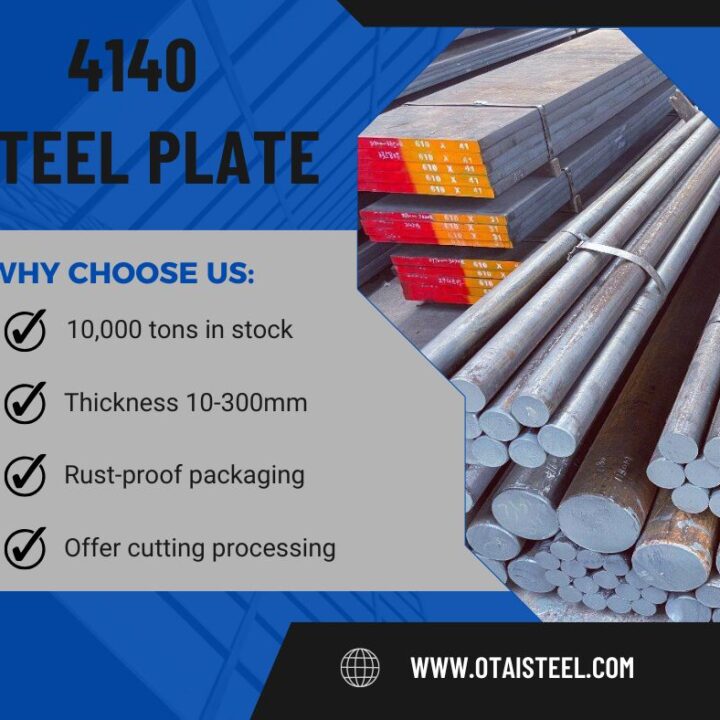
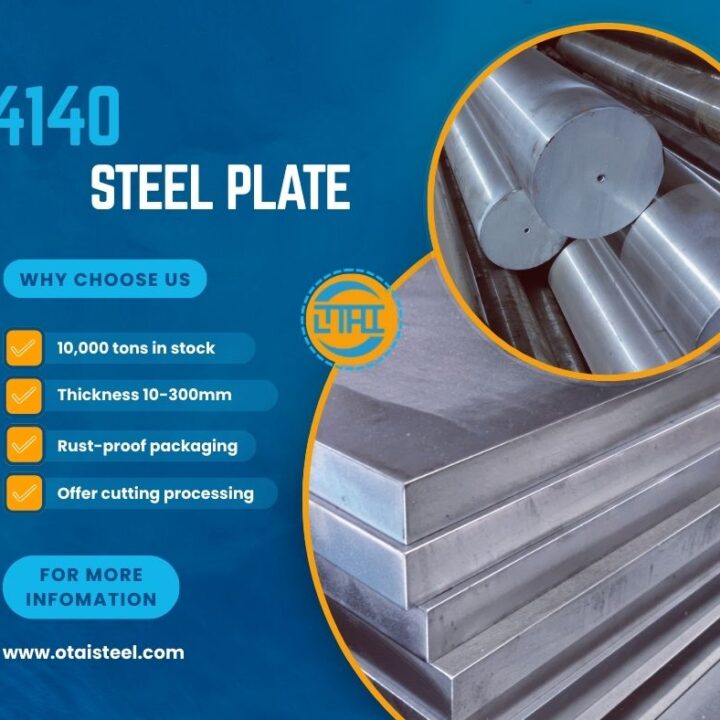
- 42CrMo4 steel plate in stock: Plate thickness from 4–380 mm, subject to confirmation of current inventory, condition and quantity.
- 42CrMo4 quenched-and-tempered plate: Thickness from 13–200 mm is listed within the company’s supply range. Confirm the required dimensions and current availability before ordering.
- 42CrMo4 round bar: Diameter from 14–500 mm is listed within the company’s supply range. Verify the requested diameter, delivery condition and available quantity.
- Established export experience: Otai Special Steel has served international customers since 1999 and exported steel to more than 54 countries.
- Substantial inventory: More than 10,000 tons of steel stock supports industrial purchasing requirements across multiple grades.
- Cutting capability: 20 saw-cutting machines support customized cutting and order preparation.
- Precision processing: CNC machining, grinding and customized size and tolerance services help meet downstream manufacturing requirements.
- Inspection support: Material test certificates, ultrasonic testing and third-party inspection can be discussed according to project requirements.
- Export packaging: Anti-rust protection, bundling and wooden-case packaging can be arranged according to product dimensions and shipping requirements.
- One-stop service: Cutting, processing coordination, quality documentation and export services help simplify steel procurement.
For an accurate quotation, provide the required 42CrMo4 product form, dimensions, delivery condition, tensile-strength requirements and quantity. Confirm current stock and certificate arrangements before placing the order.
❓ Frequently Asked Questions
1. What is the tensile strength of 42CrMo4 steel?
For quenched-and-tempered 42CrMo4 flat products, commonly referenced EN 10083-3:2006 values vary by thickness, with ranges of approximately 750–1,300 MPa across the categories shown in this article. The applicable value depends on product size, condition and specification. Check the relevant standard and MTC for the supplied material.
2. What is the difference between 42CrMo4 tensile strength and yield strength?
Tensile strength is the maximum engineering stress reached during a tensile test, while yield strength indicates the stress at which permanent deformation begins under the defined test method. Both properties may matter in design, but yield strength is particularly important when the component must avoid permanent deformation during service.
3. Does heat treatment increase 42CrMo4 tensile strength?
Quenching and tempering can significantly increase the strength of 42CrMo4 compared with an annealed condition. The final result depends on the austenitizing and tempering cycle, cooling conditions, section size and material chemistry. A specified tensile-strength value must be verified under the applicable testing requirements.
4. Why does 42CrMo4 tensile strength vary with thickness?
Thickness affects the cooling rate during quenching and can influence the microstructure through the section. The core of a thick plate or bar may not develop the same properties as a smaller section under the same process. Therefore, applicable mechanical-property requirements and test locations should be checked for the actual product size.
5. What documents should buyers request when purchasing 42CrMo4 steel?
Buyers should specify the applicable material standard, delivery condition, dimensions, mechanical requirements and inspection criteria. Request the MTC showing the relevant heat analysis and mechanical test results. For critical applications, also agree on specimen location, impact testing, ultrasonic testing or third-party inspection as required by the project.