42CrMo4 Heat Treatment and Hardness: What Should Buyers Specify?
📑 Table of Contents
- 🔥 1. What Is 42CrMo4 Heat Treatment?
- 🧪 2. 42CrMo4 Material and Heat-Treatment Response
- 🌡️ 3. 42CrMo4 Annealing and Normalizing
- 💧 4. 42CrMo4 Quenching Process
- 🔥 5. 42CrMo4 Tempering Process and Hardness
- ⚙️ 6. How Heat Treatment Changes Mechanical Properties
- 📏 7. Heat Treatment for 42CrMo4 Plate and Bar
- 📋 8. What Buyers Should Confirm Before Purchasing
- 🏭 9. 42CrMo4 Supply, Cutting and Inspection
- 🏢 Otai Special Steel Advantages
- ❓ FAQ About 42CrMo4 Heat Treatment
🔥 1. What Is 42CrMo4 Heat Treatment?
42CrMo4 heat treatment controls the microstructure, hardness, strength and toughness of this chromium-molybdenum alloy steel. The grade corresponds to material number 1.7225 and belongs to the European family of steels for quenching and tempering under EN 10083-3.
In industrial purchasing, heat treatment is not simply a production step. It is part of the material specification. A buyer ordering 42CrMo4 plate or bar needs to know whether the material will arrive annealed, normalized, quenched and tempered, or in another specified condition. That condition directly affects machining, hardness, mechanical performance and the subsequent manufacturing route.
The most common high-strength route involves austenitizing, quenching and tempering. Quenching raises hardness by transforming the steel structure, while tempering reduces excessive brittleness and establishes a more useful balance between strength and toughness. EN 10083-3 classifies 42CrMo4 as a steel intended for quenching and tempering, and published data shows that its final mechanical properties depend strongly on section size and delivery condition.
For procurement, therefore, the question should not simply be “What temperature is used for 42CrMo4?” A more useful question is: What heat-treatment condition and mechanical-property requirements does my application actually need?
That distinction becomes especially important when comparing quotations. Two suppliers may quote the same 42CrMo4 grade but offer different delivery conditions, processing levels and inspection documents.
🧪 2. 42CrMo4 Material and Heat-Treatment Response
42CrMo4 contains carbon, chromium and molybdenum as important alloying elements. These elements contribute to the steel’s hardenability and strength response during heat treatment. The grade is commonly supplied for shafts, gears, bolts, mechanical components and other parts where strength and toughness matter.
Under EN 10083-3, the commonly referenced chemical composition limits for 42CrMo4 include the following:
| Element | EN 10083-3 Requirement, wt.% | Heat-Treatment Relevance |
|---|---|---|
| C | 0.38–0.45 | Supports hardness and strength after quenching |
| Si | ≤0.40 | Contributes to deoxidation and strength |
| Mn | 0.60–0.90 | Improves hardenability |
| Cr | 0.90–1.20 | Improves hardenability and wear resistance |
| Mo | 0.15–0.30 | Supports hardenability and tempering response |
| P | ≤0.025 | Controlled as an impurity |
| S | ≤0.035 | Controlled for material quality |
These are standard-specified composition limits, not a universal actual heat analysis. When purchasing material, the actual chemical composition should come from the Mill Test Certificate (MTC) for the supplied heat.
For buyers comparing 42CrMo4 with AISI 4140 or JIS SCM440, the grades are commonly treated as closely related materials, but the applicable standards can specify different chemical and mechanical requirements. Therefore, the purchase order should identify the required standard rather than rely only on an “equivalent” label.
If your project requires 42CrMo4 1.7225 specifically, you can also review the 42CrMo4 steel product specifications before requesting a quotation.
🌡️ 3. 42CrMo4 Annealing and Normalizing
Not every 42CrMo4 purchase requires immediate quenching and tempering. In many machining projects, the supplier delivers the material in an annealed or otherwise softened condition so that the customer can cut, mill, drill or turn the steel before final heat treatment.
Annealing reduces hardness and improves machinability. Otai’s technical information lists approximately 872°C for annealing followed by slow furnace cooling. This type of cycle promotes a softer structure suitable for subsequent machining. The exact process, however, should follow the applicable material specification and the supplier’s qualified heat-treatment procedure.
Normalizing provides another thermal-processing route. Published technical data for 42CrMo4-related material commonly places normalizing within the approximate 840–880°C range. Normalizing can refine the structure and establish a suitable starting condition before further processing.
| Condition | Typical Purpose | Buyer Consideration |
|---|---|---|
| Annealed | Improve machinability and provide a softer condition | Useful when the customer will machine before final treatment |
| Normalized | Refine and stabilize the steel structure | Confirm required mechanical properties and standard |
| Quenched & Tempered | Develop higher strength and controlled toughness | Specify hardness or mechanical-property requirements |
For procurement, the important point is to tell the supplier what happens after delivery. If you need extensive CNC machining, an annealed condition may be more practical. If the material will go directly into a high-load mechanical application, you may need a qualified quenched-and-tempered condition instead.
💧 4. 42CrMo4 Quenching Process
Quenching is the step that creates the hard martensitic structure required for high-strength 42CrMo4 applications. The steel is heated into the austenitizing range, held long enough to achieve a suitable temperature throughout the section, and then cooled rapidly in a selected medium.
Published technical information commonly places the quenching temperature for 42CrMo4 around 820–850°C, although specific procedures can vary according to product form, section size, equipment and applicable specification. Otai’s product information also describes a higher initial heating stage followed by a second heating range before quenching. This illustrates why a supplier’s qualified procedure should take precedence over a generic internet temperature.
Oil is a commonly selected quenching medium for 42CrMo4 because it provides substantial cooling while helping control the risk of distortion and cracking compared with more severe cooling media. Water can provide faster cooling, but it may increase thermal stress, distortion and cracking risk, particularly for complex or large components.
The cooling method should therefore match the geometry and required properties. A large plate, a long shaft and a small machined component do not necessarily require the same quenching practice.
For purchasing, confirm these points:
- Required heat-treatment standard or technical specification
- Austenitizing temperature range
- Holding or soaking requirements based on section size
- Quenching medium and cooling procedure
- Final hardness or mechanical-property requirements
- Distortion and dimensional-control requirements
After quenching, the steel should normally proceed to tempering rather than remain in the freshly quenched condition. This is particularly important for components where toughness, dimensional stability and service reliability matter.
🔥 5. 42CrMo4 Tempering Process and Hardness
Tempering follows quenching and provides the practical balance between hardness, strength and toughness. Freshly quenched martensitic steel can be excessively hard and brittle. Tempering reduces internal stresses and modifies the microstructure so that the material can perform under service loads.
Published technical data gives a broad tempering range for 42CrMo4, commonly around 540–680°C for conventional engineering applications. Other technical sources provide broader tempering ranges depending on the desired hardness and application. The correct temperature should therefore come from the specified mechanical-property target rather than from the grade name alone.
In general, a lower tempering temperature tends to retain higher hardness and strength, while a higher tempering temperature normally produces a tougher and more ductile condition with lower hardness.
| Tempering Approach | General Effect | Typical Procurement Focus |
|---|---|---|
| Lower tempering range | Higher retained hardness and strength | Wear and strength requirements |
| Medium tempering range | Balanced strength and toughness | General mechanical components |
| Higher tempering range | Greater toughness and lower hardness | Impact-loaded or toughness-sensitive components |
When purchasing ready-to-use QT material, do not specify only “42CrMo4 QT” if the application has a defined hardness or mechanical-property requirement. Instead, state the required hardness range, tensile strength, yield strength, impact requirement or other applicable specification.
For reference, EN 10083-3 mechanical-property tables show that strength requirements vary with product size. Therefore, a hardness or tensile value measured on a small bar should not automatically be assumed to represent a very thick plate or large forging.
⚙️ 6. How Heat Treatment Changes Mechanical Properties
The main reason manufacturers use heat treatment on 42CrMo4 is to control its mechanical performance. Chemical composition establishes the steel’s potential, but the thermal cycle determines much of the final microstructure and therefore the balance between hardness, strength and toughness.
After quenching and tempering, 42CrMo4 can achieve substantially higher strength than an annealed condition. Published EN 10083-3 data shows that tensile strength requirements for QT material change with product diameter or thickness. For example, smaller sections can have higher specified tensile-strength levels than larger sections.
This size effect matters when purchasing thick steel. The center of a large section cools more slowly than the surface during quenching. As a result, the final structure and mechanical properties can differ across the section.
For that reason, buyers should avoid copying a hardness value from a small-diameter bar into a specification for a thick plate. Instead, confirm the applicable standard, product size, delivery condition and inspection requirements.
Heat treatment can also affect dimensional stability. Quenching introduces thermal and transformation stresses, and these stresses can cause distortion. Machining allowance, straightness requirements and post-treatment grinding may therefore need to be considered during purchasing.
If your component has tight dimensional tolerances, discuss the sequence with the supplier before production. A practical route may involve rough machining, heat treatment and then finish machining or grinding. This approach can reduce the risk of losing final dimensions after quenching.
In other words, 42CrMo4 heat treatment should be specified together with the final application and dimensional requirements, rather than treated as an isolated temperature-setting exercise.
📏 7. Heat Treatment for 42CrMo4 Plate and Bar
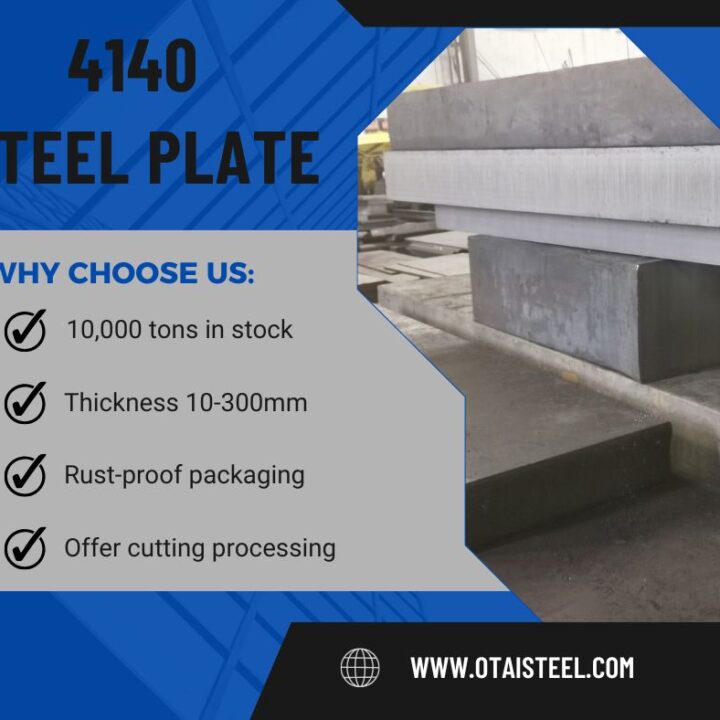
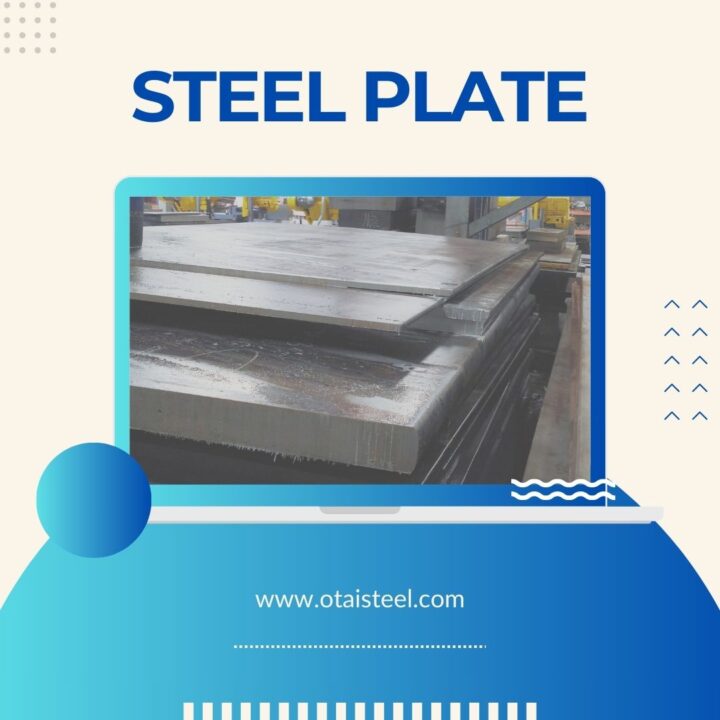
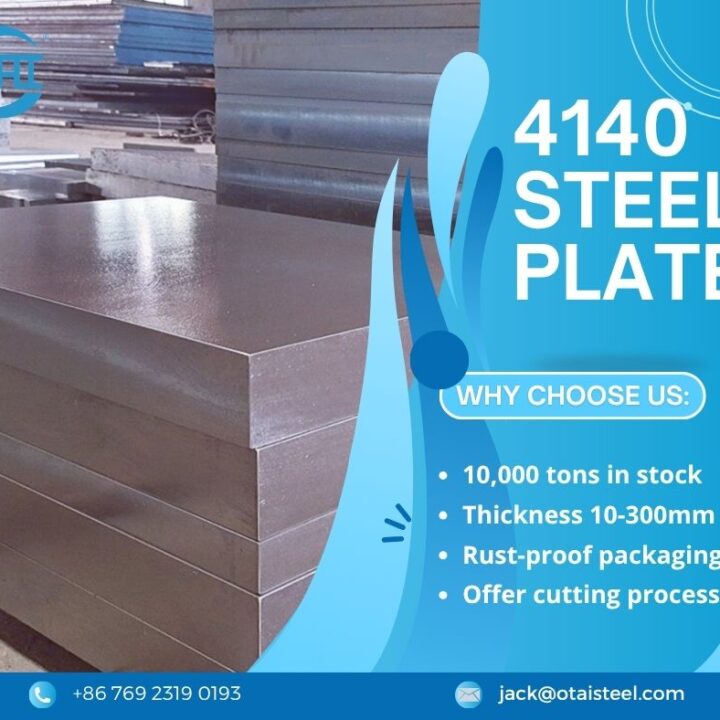
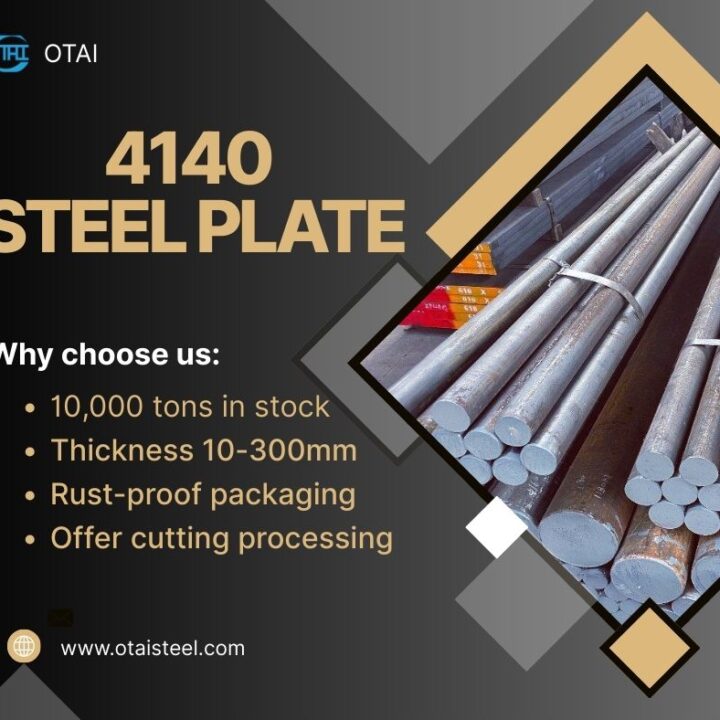
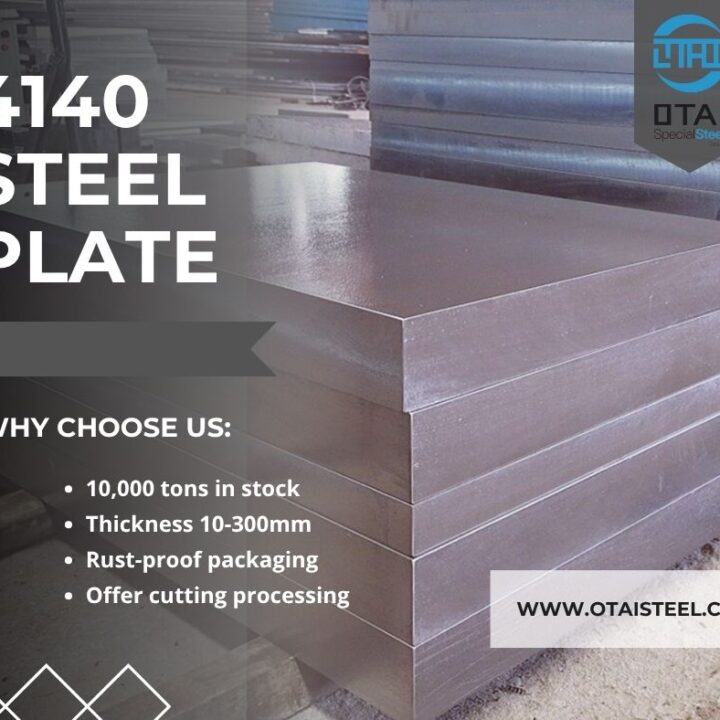
The product form has a direct influence on heat-treatment planning. 42CrMo4 is available in forms such as plate, round bar, flat sections and other machined or forged forms, depending on the supplier and specification.
For a 42CrMo4 round bar, the diameter determines the distance from the surface to the center. For plate, thickness plays the same role. As section size increases, achieving uniform transformation throughout the material becomes more demanding.
This difference explains why a supplier may quote different mechanical-property ranges for different dimensions even though the grade designation remains 42CrMo4.
For buyers purchasing plate, the key questions include:
- Is the plate supplied annealed, normalized or quenched and tempered?
- What thickness range can the supplier process under the requested condition?
- What hardness or mechanical properties are required?
- Will the plate be machined after heat treatment?
- Is ultrasonic testing required for the intended application?
- Does the MTC identify the heat-treatment condition?
For round bar, buyers should additionally confirm diameter, straightness, cutting length, surface condition and whether the material will be supplied as hot-rolled, annealed or QT.
Large-section material deserves particular attention. If the component requires high strength throughout its cross-section, ask the supplier how the heat-treatment condition was established and what inspection data is available for the supplied size.
When you purchase 42CrMo4 1.7225 from a steel supplier, providing the required form, dimensions, delivery condition and mechanical properties together can make quotation and production confirmation much more accurate.
📋 8. What Buyers Should Confirm Before Purchasing
For an industrial order, the most useful heat-treatment specification is one that can be checked objectively. Instead of writing only “42CrMo4 heat treated,” provide measurable requirements wherever possible.
| Item to Confirm | What to Specify | Why It Matters |
|---|---|---|
| Grade | 42CrMo4 / 1.7225 | Prevents confusion between related grades |
| Standard | Applicable EN or customer specification | Defines chemistry and property requirements |
| Size | Thickness/diameter × width × length | Section size affects heat-treatment response |
| Condition | Annealed, normalized or QT | Determines machining and service performance |
| Hardness | Required HBW/HRC/HV range | Provides a measurable acceptance criterion |
| Mechanical properties | Yield, tensile, elongation and impact where applicable | Confirms suitability for the component |
| Inspection | MTC, UT, third-party inspection if required | Supports incoming quality verification |
The MTC is particularly important. The certificate should allow the buyer to verify the actual heat chemistry and, where specified, mechanical test results and delivery condition. A generic product datasheet can explain the grade, but it cannot replace the actual certificate for the supplied heat.
If the project has a customer drawing, purchase specification or inspection plan, send those requirements to the supplier before quotation. This gives the supplier an opportunity to confirm whether the requested heat treatment, dimensions and inspection can be supplied together.
Also confirm whether the quoted price includes heat treatment, cutting, machining, testing and packaging. These services can materially affect the final delivered cost.
🏭 9. 42CrMo4 Supply, Cutting and Inspection
For international buyers, heat treatment is only one part of the purchasing process. The supplier also needs to manage material availability, cutting, dimensional requirements, inspection and export packaging.
Otai Special Steel supplies 42CrMo4 / 1.7225 in several product forms and provides cutting services for customers who do not need full-length material. According to the product information, the material can be supplied as round bar, flat sections and plate, with cutting and machining options available according to the order.
For a procurement request, a clear inquiry can include the following information:
- 42CrMo4 / 1.7225 grade and required standard
- Plate or bar dimensions
- Total quantity and individual cutting sizes
- Annealed, normalized or quenched-and-tempered condition
- Required hardness or mechanical properties
- MTC requirements
- Ultrasonic testing or third-party inspection requirements
- Surface and dimensional tolerances
- Packaging and shipping destination
This information allows a supplier to quote the actual purchasing specification rather than a generic grade price.
For buyers who need additional processing, Otai can also coordinate cutting, CNC machining and grinding. This can be useful when the customer wants to purchase material closer to the dimensions required for production rather than process a large standard-size plate internally.
When evaluating quotations, compare the complete supply scope. A lower material price may not represent a lower delivered cost if another quotation includes cutting, inspection, heat treatment, documentation or export packaging.
🏢 Otai Special Steel Advantages
- 10,000+ tons of steel stock: Large inventory supports regular industrial purchasing and project-based requirements.
- 20 saw cutting machines: Material can be cut to requested lengths and dimensions before shipment.
- CNC and grinding services: Additional machining and precision processing can be arranged for suitable orders.
- Custom sizes and tolerances: Buyers can discuss dimensional requirements before production and cutting.
- One-stop service: Material supply, cutting, machining, heat treatment, inspection and export packaging can be coordinated according to project requirements.
- International export experience: Otai has supplied steel to customers in 54+ countries since 1999.
- Quality documentation: MTC and inspection support can be arranged according to customer requirements.
- Packaging for export: Steel can be supplied with strapping, bundling, wooden cases and anti-rust protection according to the shipping requirement.
❓ FAQ About 42CrMo4 Heat Treatment
1. What is the typical heat treatment for 42CrMo4?
The most common high-strength route is quenching followed by tempering. Annealing or normalizing may be selected when the material needs a softer or different starting condition for machining and fabrication. The exact cycle should follow the applicable standard, product size and qualified supplier procedure.
2. What temperature is used to quench 42CrMo4?
Published technical data commonly places the quenching temperature around 820–850°C for 42CrMo4, while individual procedures may specify different heating stages or ranges. Section size, furnace conditions and the required properties affect the final procedure, so buyers should not specify one generic temperature without considering the applicable technical specification.
3. What is the tempering temperature for 42CrMo4?
A commonly published engineering range is approximately 540–680°C, but the appropriate temperature depends on the required hardness and mechanical properties. Lower tempering generally retains more hardness and strength, while higher tempering generally increases toughness and reduces hardness.
4. Can 42CrMo4 be supplied in quenched and tempered condition?
Yes. 42CrMo4 is specifically used as a quenched-and-tempered alloy structural steel. When ordering QT material, specify the required hardness or mechanical properties rather than simply requesting “heat treated,” because different thermal cycles can produce different final properties.
5. What should I provide when asking for a 42CrMo4 heat-treatment quotation?
Provide the grade and standard, dimensions, quantity, delivery condition, hardness or mechanical-property requirements, MTC requirements, inspection requirements and cutting or machining needs. For large sections or tight tolerances, also explain the final application so the supplier can confirm a suitable processing route.