42CrMo4 Price: What Determines the Cost of 1.7225 Alloy Steel?
📑 Table of Contents
💰 1. What Is the Current 42CrMo4 Price?
🔍 2. Why Does 42CrMo4 Price Vary?
🧪 3. How Chemical Composition Affects 42CrMo4 Price
📐 4. 42CrMo4 Price per Kg vs. Price per Ton
🔥 5. Does Heat Treatment Increase 42CrMo4 Price?
📏 6. How Size and Thickness Affect 42CrMo4 Steel Price
🌍 7. China 42CrMo4 Price and Export Purchasing
🧾 8. What Should Be Included in a 42CrMo4 Quotation?
⚖️ 9. 42CrMo4 Price vs. 4140 and SCM440
🏭 10. How to Get a Better 42CrMo4 Price
💰 1. What Is the Current 42CrMo4 Price?
If you are searching for 42CrMo4 price, the first thing to understand is that there is no single international price for 42CrMo4 steel. The actual quotation depends on the product form, dimensions, quantity, delivery condition, heat treatment, machining, inspection, packaging and shipping terms.
Public supplier listings can provide a rough market reference, but they should not be treated as a fixed 42CrMo4 steel price. For example, online listings for 42CrMo4 alloy steel products show substantially different price levels depending on whether the product is plate, bar, forged material, machined material or another form.
For buyers comparing quotations, the more useful question is therefore not simply “What is the 42CrMo4 price per ton?” but rather:
- What product form is being quoted?
- What thickness or dimensions are required?
- Is the material annealed, normalized or quenched and tempered?
- What quantity is being purchased?
- Does the quotation include cutting?
- Is machining included?
- What inspection documents are supplied?
- Are freight, packaging and export costs included?
A low advertised price may apply to a different product condition or minimum order quantity. Therefore, buyers should compare quotations based on the same technical specification and commercial terms.
🔍 2. Why Does 42CrMo4 Price Vary?
Several factors can change the price of 42CrMo4 steel. In practice, the material grade itself is only one part of the final quotation.
| Price Factor | Why It Matters |
|---|---|
| Product form | Plate, bar, forged block and machined material have different production costs |
| Thickness / dimensions | Large or non-standard dimensions can increase processing and production costs |
| Heat treatment | QT material requires additional controlled processing and inspection |
| Quantity | Larger orders can distribute production and handling costs more efficiently |
| Cutting | Cut-to-size orders require additional saw cutting and handling |
| Machining | CNC machining or grinding adds processing costs |
| Inspection | UT, third-party inspection and additional testing add cost |
| Shipping terms | EXW, FOB, CIF and other terms produce different landed costs |
For this reason, two suppliers can quote different prices while both offering technically acceptable 42CrMo4. The difference may come from processing scope, inventory status, order quantity or commercial terms rather than the basic steel grade.
When purchasing for an engineering project, comparing the total delivered cost is usually more useful than comparing only the nominal steel price.
🧪 3. How Chemical Composition Affects 42CrMo4 Price
42CrMo4 is a chromium-molybdenum alloy steel commonly specified as EN 10083-3 / 1.7225. Its alloying system includes carbon, chromium and molybdenum, with manganese and silicon also contributing to the material’s performance.
When discussing chemical composition, buyers should distinguish the standard composition range from an individual steelmaker’s typical analysis. The values below represent commonly referenced EN 10083-3 limits rather than one manufacturer’s fixed heat analysis.
| Element | Commonly Referenced 42CrMo4 Range / Limit, wt.% | Effect on Material |
|---|---|---|
| C | 0.38–0.45 | Strength and hardenability |
| Si | ≤0.40 | Deoxidation and strengthening |
| Mn | 0.60–0.90 | Strength and hardenability |
| Cr | 0.90–1.20 | Hardenability and strength |
| Mo | 0.15–0.30 | Tempering resistance and hardenability |
| P | ≤0.025 | Controlled residual element |
| S | ≤0.035 | Controlled residual element |
The alloying elements also influence raw material cost. Molybdenum, for example, is a significant alloying addition, so changes in alloy surcharge and raw-material markets can influence the cost structure of Cr-Mo steels.
However, buyers should not calculate a 42CrMo4 price simply by adding the market price of each alloying element. Steelmaking, rolling, forging, heat treatment, testing, inventory, cutting, logistics and supplier margin all contribute to the final quotation.
For actual procurement, the heat-specific MTC remains the correct document for verifying the delivered chemical composition.
📐 4. 42CrMo4 Price per Kg vs. Price per Ton
Buyers commonly search for both “42CrMo4 price per kg” and “42CrMo4 price per ton.” These are simply different ways of expressing the quotation, but the commercial meaning depends on quantity and delivery terms.
1 metric ton = 1,000 kg. Therefore, a quotation of US$900 per metric ton corresponds mathematically to US$0.90 per kg before considering any differences in freight, packaging, taxes or other commercial charges.
| Quotation Unit | Example Conversion | Buyer Consideration |
|---|---|---|
| US$/kg | US$0.90/kg = US$900/ton | Check whether freight and processing are included |
| US$/metric ton | US$900/ton = US$0.90/kg | Confirm whether the quotation is EXW, FOB or CIF |
| Total order value | Unit price × actual chargeable weight | Check cutting loss, packaging and freight |
A buyer ordering several tons should also ask whether the supplier uses actual weight or theoretical weight for invoicing. For cut-to-size plate, this distinction can affect the final amount paid.
Small quantities can also show a higher unit price because cutting, handling and documentation costs are distributed over fewer kilograms. Consequently, the cheapest published price per kilogram is not necessarily the lowest cost for a small custom order.
🔥 5. Does Heat Treatment Increase 42CrMo4 Price?
Yes. Quenched-and-tempered 42CrMo4 normally costs more than untreated or softer material because heat treatment requires additional furnace processing, quenching, tempering, quality control and handling.
42CrMo4 is commonly supplied in different conditions depending on the application. A buyer who needs material for further machining may request annealed or normalized material, while a finished mechanical component may require quenched-and-tempered steel.
As a reference, one technical material specification for 42CrMo4 describes a heat-treatment route using austenitizing around 860°C ±20°C, followed by quenching and tempering around 550°C ±20°C. The exact industrial process depends on the product form, section size, furnace and required properties.
| Condition | Typical Purchasing Purpose | Price Consideration |
|---|---|---|
| Annealed | Machining and further processing | Usually lower processing cost than QT |
| Normalized | General engineering and fabrication | Intermediate processing requirement |
| Quenched & Tempered | High-strength mechanical components | Additional heat-treatment and inspection cost |
Therefore, when comparing a 42CrMo4 price, never compare an annealed quotation directly with a QT quotation without adjusting the specification.
📏 6. How Size and Thickness Affect 42CrMo4 Steel Price
Dimensions have a direct effect on the quotation. Standard sizes can usually move through production and inventory more efficiently, while unusual thicknesses or large cut pieces may require additional processing.
For example, a buyer requesting a complete 42CrMo4 plate may pay a different unit price from another buyer requesting ten precisely cut blanks from the same grade. The second order requires saw cutting, measurement, handling and potentially additional packaging.
Thickness also matters because thicker alloy steel products may require different production routes and longer thermal cycles. Large cross-sections can require more demanding heat-treatment control to achieve the specified properties.
| Specification | Potential Cost Impact |
|---|---|
| Standard thickness | Often easier to source from existing inventory |
| Very thick plate | May involve additional production and heat-treatment requirements |
| Custom-cut blanks | Saw cutting and handling add processing cost |
| CNC-machined blocks | Machining hours and material removal increase total cost |
| Ground surfaces | Grinding adds precision-processing cost |
For this reason, buyers should send the supplier the complete dimension requirement instead of asking only for a generic “42CrMo4 price.” A precise inquiry usually produces a more useful quotation.
🌍 7. China 42CrMo4 Price and Export Purchasing
China is an important source for 42CrMo4 and other Cr-Mo alloy steels. However, buyers should compare Chinese suppliers based on the complete supply package rather than selecting a quotation from the lowest advertised number.
For export orders, the final cost may include steel production, cutting, heat treatment, inspection, packaging, inland transportation, export documentation, ocean freight and destination charges.
The Incoterm also matters. An EXW quotation and a CIF quotation should never be compared directly because they transfer transportation and cost responsibilities at different points.
For example, a supplier may quote a relatively low EXW 42CrMo4 price because the buyer arranges inland transportation and export logistics. Another supplier may quote FOB or CIF, which includes more logistics within the stated price.
Buyers should therefore request the following information:
- 42CrMo4 grade and governing standard
- Product form and dimensions
- Delivery condition
- Quantity and expected weight
- Unit price and total price
- Incoterm
- Lead time
- MTC availability
- Inspection requirements
- Packaging method
This approach makes supplier quotations much easier to compare and reduces unexpected costs after order confirmation.
🧾 8. What Should Be Included in a 42CrMo4 Quotation?
A professional quotation should contain enough information for the buyer to determine exactly what the quoted 42CrMo4 price covers.
| Quotation Item | Example Requirement |
|---|---|
| Grade | 42CrMo4 |
| Standard | EN 10083-3 / applicable specification |
| Product | Plate, bar or other required form |
| Dimensions | Thickness × width × length |
| Condition | Annealed, normalized or QT |
| Inspection | MTC, hardness, UT or third-party inspection if required |
| Price basis | US$/kg or US$/metric ton |
| Trade term | EXW, FOB, CIF or agreed Incoterm |
| Lead time | Stock or production schedule |
If the buyer needs cut-to-size material, the quotation should also identify whether cutting is included. The same applies to CNC machining, grinding, heat treatment and special inspection.
A good quotation makes the scope of the price clear before the purchase order is issued.
⚖️ 9. 42CrMo4 Price vs. 4140 and SCM440
42CrMo4 is frequently compared with AISI 4140 and SCM440 because all three are chromium-molybdenum alloy steels used in demanding mechanical applications.
However, buyers should not assume that a supplier can replace one grade with another simply because the grades are commonly described as equivalents. Their governing standards have different chemical composition limits and technical requirements.
| Grade | Common Standard Association | Procurement Note |
|---|---|---|
| 42CrMo4 | EN / DIN, 1.7225 | Specify EN requirement and delivery condition |
| AISI 4140 | AISI / SAE system | Confirm the exact ASTM/SAE specification required |
| SCM440 | JIS | Use JIS requirements when purchasing under the SCM440 designation |
For price comparison, the important point is to compare equivalent specifications. If one supplier quotes 42CrMo4 QT and another quotes annealed SCM440, the difference cannot be explained by the steel grade alone.
Similarly, if one quotation includes precision cutting and MTC while another covers only the raw material, the lower nominal price may not represent the lower total purchasing cost.
🏭 10. How to Get a Better 42CrMo4 Price
Getting a competitive 42CrMo4 price does not necessarily mean asking a supplier to reduce the material price. Buyers can often improve the total purchasing cost by optimizing the specification and processing route.
1. Check stock before ordering new production. Stock material can reduce production lead time and may avoid unnecessary minimum quantities.
2. Consolidate quantities where possible. Larger orders can make cutting, handling, inspection and logistics more efficient.
3. Provide exact dimensions. A supplier can calculate the most economical cutting plan when the required blank sizes are known.
4. Specify only necessary processing. If your factory can perform final machining, purchasing a raw or semi-finished plate may reduce the supplier’s processing cost.
5. Confirm the required heat-treatment condition. Do not automatically order QT material if the component will receive its own heat treatment later.
6. Compare the same Incoterm. Compare EXW with EXW, FOB with FOB and CIF with CIF whenever possible.
7. Request the MTC and inspection scope in advance. This prevents additional testing requirements from appearing after the quotation has been accepted.
For international buyers, the most useful quotation request is therefore specific: grade + standard + size + quantity + condition + inspection + delivery term. This gives the supplier enough information to calculate a realistic 42CrMo4 price.
🏢 11. Why Buy 42CrMo4 from Otai?
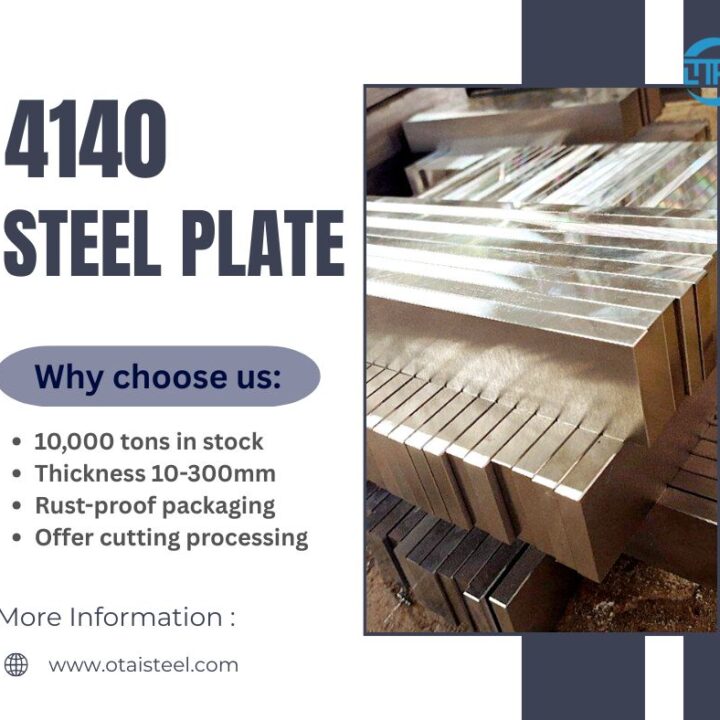
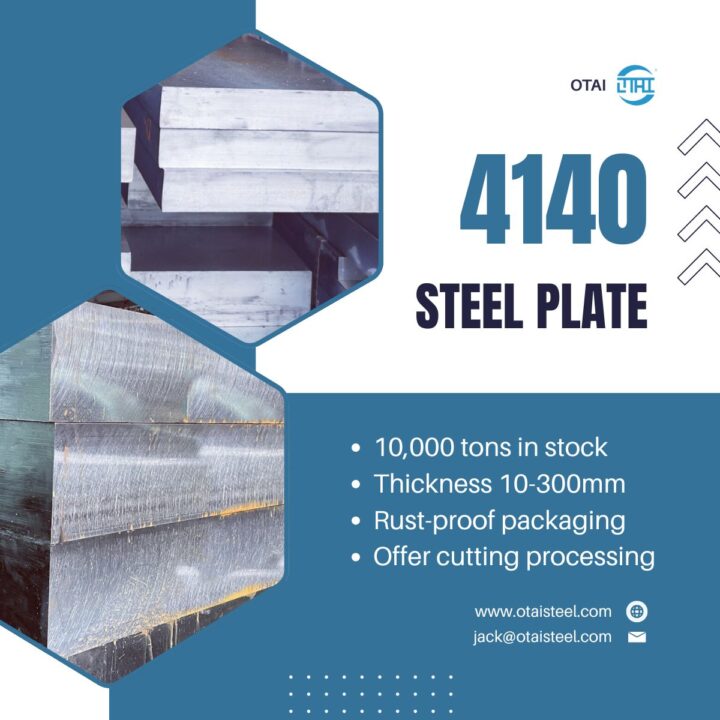
- Large inventory: Otai maintains more than 10,000 tons of total steel stock, supporting regular industrial purchasing and project orders.
- 42CrMo4 / SCM440 / 4140 supply: These related Cr-Mo alloy steel grades can be discussed according to the customer’s required standard and application.
- Custom cutting: 20 saw cutting machines support cut-to-size requirements and reduce unnecessary material handling at the customer’s facility.
- CNC & grinding: Additional machining and precision processing can be coordinated when required.
- Custom size and tolerance: Buyers can specify required dimensions and machining allowances before quotation.
- One-stop service: Cutting, machining, heat treatment, inspection and export packaging can be coordinated through one supplier.
- Quality documentation: MTC, quality testing, ultrasonic testing and third-party inspection can be arranged according to project requirements.
- Export experience: Otai has exported steel to 54+ countries since 1999.
- International B2B support: The quotation can be discussed according to grade, standard, size, condition, quantity, inspection and delivery requirements rather than using a generic steel price.
For a buyer comparing 42CrMo4 suppliers, the final purchasing decision should consider both the quoted unit price and the complete supply scope. A clear quotation helps prevent additional processing, inspection or logistics costs from appearing later.
❓ 12. FAQ
1. What is the 42CrMo4 price per ton?
There is no single fixed 42CrMo4 price per ton. Public supplier listings can vary significantly according to product form, dimensions, quantity, heat treatment, processing and delivery terms. Buyers should request a quotation based on an exact specification rather than relying on a generic online price.
2. What is the 42CrMo4 price per kg?
The price per kilogram is simply the ton price divided by 1,000 when both use the same commercial basis. However, the buyer should confirm whether cutting, packaging, freight, inspection and other charges are included before comparing the quoted price per kg.
3. Why is 42CrMo4 QT more expensive?
Quenched-and-tempered 42CrMo4 requires controlled austenitizing, quenching and tempering, followed by quality control. These additional processes generally increase the material cost compared with softer delivery conditions.
4. Is 42CrMo4 the same as 4140 or SCM440?
42CrMo4, AISI 4140 and SCM440 are commonly compared Cr-Mo alloy steels, but they belong to different standards and do not have identical chemical composition requirements. The applicable standard and actual MTC should be checked before substitution.
5. How can I get an accurate 42CrMo4 price?
Provide the supplier with the grade, standard, product form, thickness or dimensions, quantity, delivery condition, inspection requirements, cutting or machining requirements and Incoterm. The more complete the specification, the more accurate the quotation will be.