 Flame Hardening 4140 Steel – Heat Treatment Process & Failure Analysis
Flame hardening 4140 steel is one of the most practical surface hardening methods used in mechanical engineering, especially for medium-carbon alloy steels requiring localized wear resistance without affecting core toughness.
Unlike carburizing or full quenching processes, flame hardening is a localized heat treatment technique that uses high-temperature gas flames to selectively harden the surface layer of 4140 steel. This makes it highly suitable for large components where full heat treatment would be costly or cause distortion.
This article provides a deep industrial-level explanation of flame hardening 4140 steel from metallurgical principles to real-world engineering applications.
🔥 1. What is Flame Hardening 4140 Steel in Engineering Terms?
To understand flame hardening 4140 steel, we must first understand the base material: AISI 4140 is a chromium-molybdenum medium carbon alloy steel widely used in shafts, gears, axles, and structural components requiring high strength and toughness.
In its normalized or annealed state, 4140 steel has moderate hardness and excellent machinability. However, many industrial applications require a wear-resistant surface while maintaining a tough core. This is where flame hardening becomes essential.
Flame hardening is a surface heat treatment process where an oxy-fuel flame rapidly heats the steel surface above the austenitizing temperature (typically 850–950°C), followed by immediate quenching. This transforms the surface into martensite while the core remains unaffected.
Therefore, flame hardening 4140 steel means a controlled transformation of the outer layer into a hardened structure without altering the internal mechanical properties.
⚙️ 2. Why 4140 Steel is Suitable for Flame Hardening
Not all steels respond well to flame hardening. The reason 4140 steel is ideal lies in its chemical composition and hardenability characteristics.
| Element | Typical Range | Function |
|---|---|---|
| Carbon (C) | 0.38–0.43% | Provides martensite formation capability |
| Chromium (Cr) | 0.80–1.10% | Improves hardenability and wear resistance |
| Molybdenum (Mo) | 0.15–0.25% | Reduces temper brittleness and improves strength |
| Manganese (Mn) | 0.75–1.00% | Enhances depth hardening response |
These alloying elements make 4140 steel highly responsive to localized heat treatment. When flame heating is applied, the surface transforms rapidly into austenite and then martensite upon quenching.
This is why flame hardening 4140 steel is widely used in industrial wear-resistant components.
🔥 3. Flame Hardening Process Mechanism (Step-by-Step Engineering View)
The flame hardening process is not simply heating and cooling. It is a controlled thermal cycle that requires precise temperature and time management.
Standard industrial process includes:
- Surface cleaning and preparation
- Oxy-acetylene flame heating
- Rapid heating to austenitizing temperature
- Immediate water or polymer quenching
- Low-temperature tempering (optional)
During heating, the surface layer of 4140 steel undergoes phase transformation into austenite. When quenched, this transforms into martensite, a hard and wear-resistant structure.
The depth of hardening depends on heating time, flame intensity, and steel thermal conductivity.
Typically, flame hardening 4140 steel produces a hardened layer of 1–6 mm depending on process control.
🧪 4. Microstructure Transformation in Flame Hardening 4140 Steel
Microstructure evolution is the core of flame hardening 4140 steel performance.
Before flame hardening, 4140 steel consists of tempered martensite or ferrite-pearlite depending on heat treatment history.
After flame hardening, the structure changes into three zones:
- Outer layer: high-carbon martensite (hard zone)
- Transition zone: mixed bainite and tempered martensite
- Core: original tempered martensite or ferrite-pearlite
This gradient structure is extremely important for fatigue resistance. The hard outer layer resists wear, while the core absorbs impact energy.
Therefore, flame hardening 4140 steel is essentially a dual-property engineering system.
⚙️ 5. Hardness Profile and Mechanical Performance
The hardness distribution in flame hardened 4140 steel is not uniform. It decreases gradually from surface to core.
| Zone | Hardness |
|---|---|
| Surface layer | 52–60 HRC |
| Transition zone | 35–45 HRC |
| Core | 25–35 HRC |
This gradient is critical. If the surface is too hard, it may crack under impact. If too soft, wear resistance decreases.
Proper flame hardening 4140 steel achieves a balance between wear resistance and toughness.
🚗 6. Industrial Applications of Flame Hardened 4140 Steel
Flame hardening 4140 steel is widely used in heavy-duty mechanical systems where localized wear resistance is required.
- Gear shafts and transmission shafts
- Crane wheels and rail components
- Hydraulic cylinder rods
- Heavy machinery pins and bushings
- Mining and construction equipment parts
These components require surface wear resistance while maintaining internal toughness to resist shock loads.
🛠 7. Advantages and Limitations of Flame Hardening 4140 Steel
Flame hardening offers several industrial advantages:
- Localized hardening reduces distortion
- Cost-effective for large components
- Fast processing time
- Flexible application on complex shapes
However, it also has limitations:
- Depth control is less precise than induction hardening
- Risk of overheating surface if poorly controlled
- Non-uniform hardness distribution if process is unstable
Therefore, process control is critical in flame hardening 4140 steel applications.
⚖️ 8. Flame Hardening vs Other Heat Treatments
| Process | Feature | Application |
|---|---|---|
| Flame hardening | Localized surface hardening | Large shafts, wheels |
| Induction hardening | Precise controlled heating | Automotive parts |
| Carburizing | Carbon diffusion hardening | Gears |
This comparison shows why flame hardening 4140 steel is preferred for large-scale mechanical parts.
🧭 9. Failure Mechanisms in Flame Hardened 4140 Steel
Even with proper processing, failure can occur in flame hardened 4140 steel components.
Main failure modes include:
- Surface cracking due to overheating
- Thermal stress induced distortion
- Insufficient hardening depth
- Fatigue failure under cyclic loading
Cracks usually initiate at the hardened surface due to stress concentration. Proper tempering can reduce this risk significantly.
🏭 10. Industrial Supply Capability – Otai Special Steel
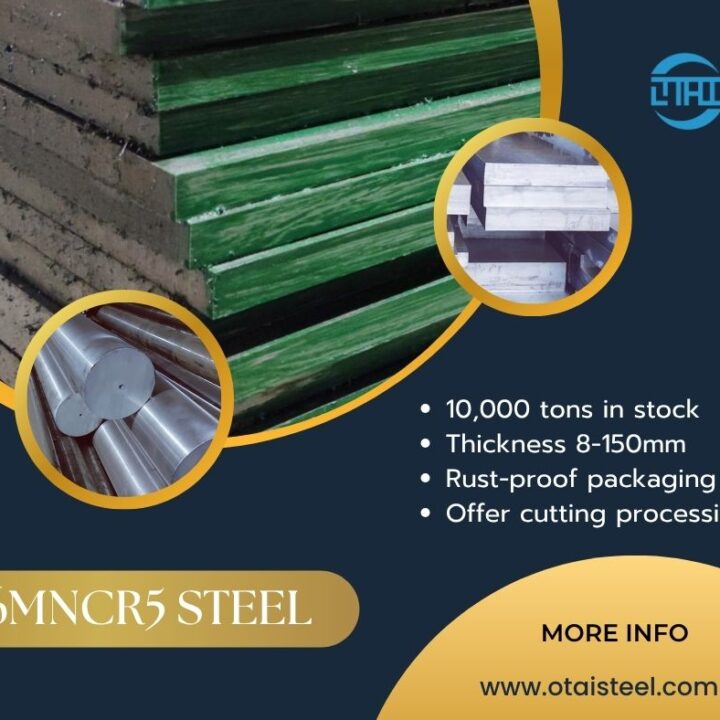
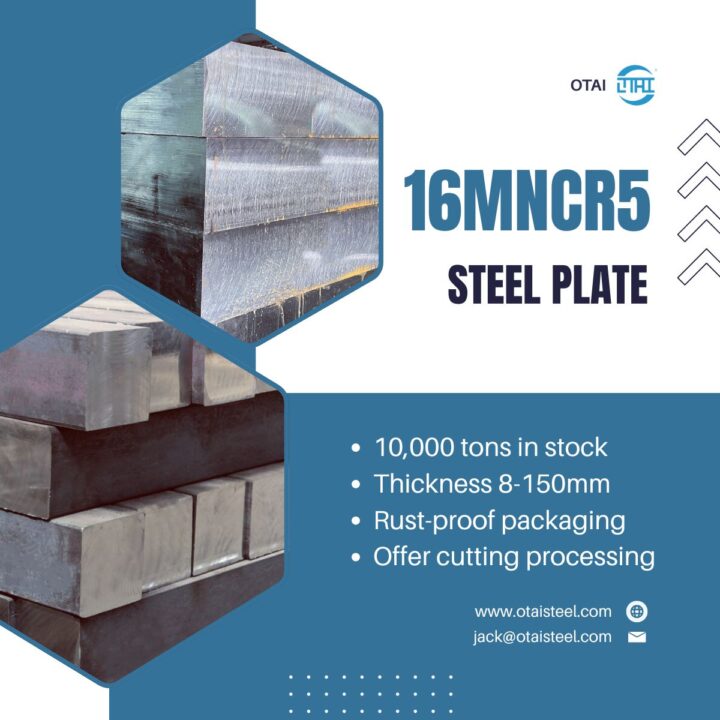
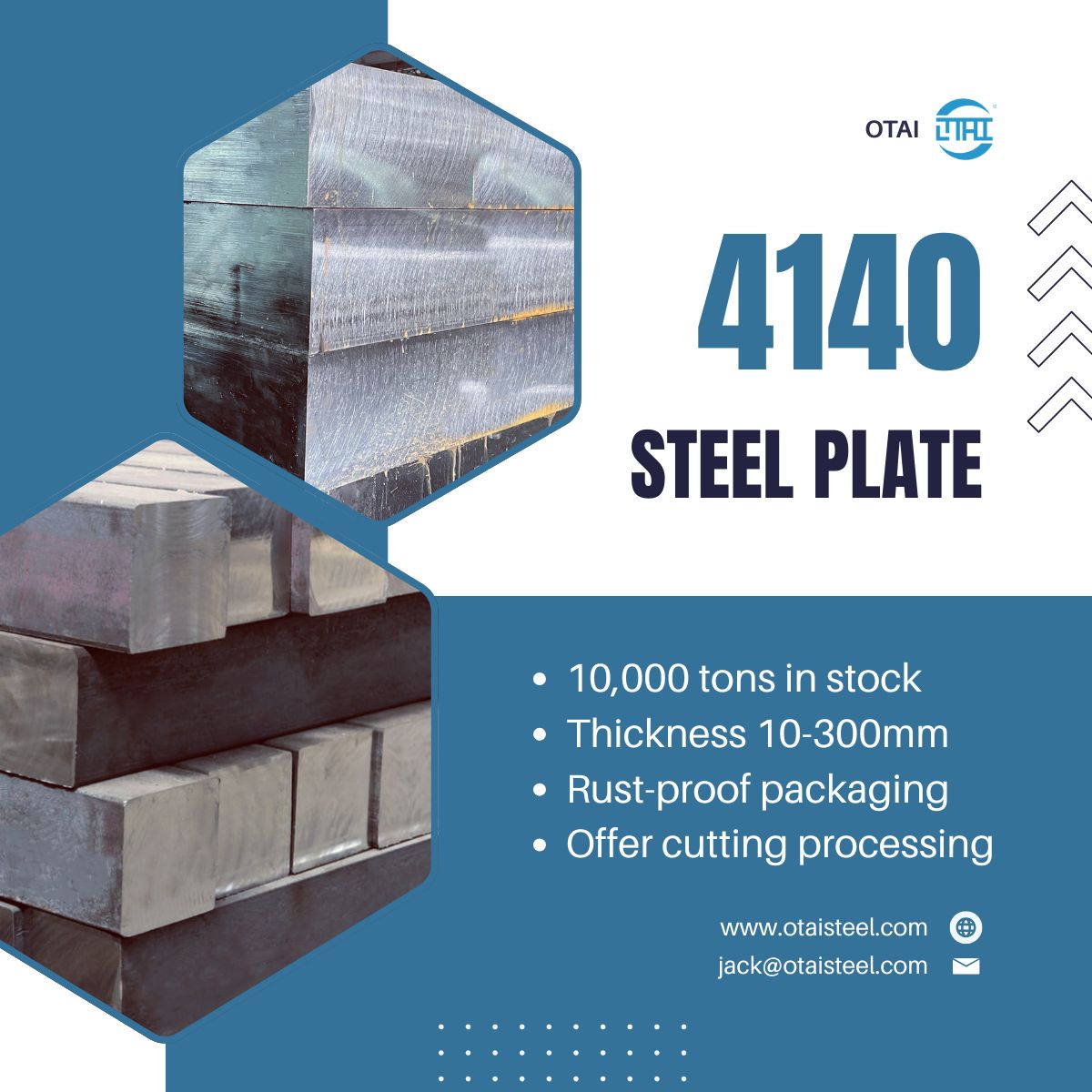
- 📦 More than 10,000 tons of alloy steel inventory available in various plate sizes and thicknesses.
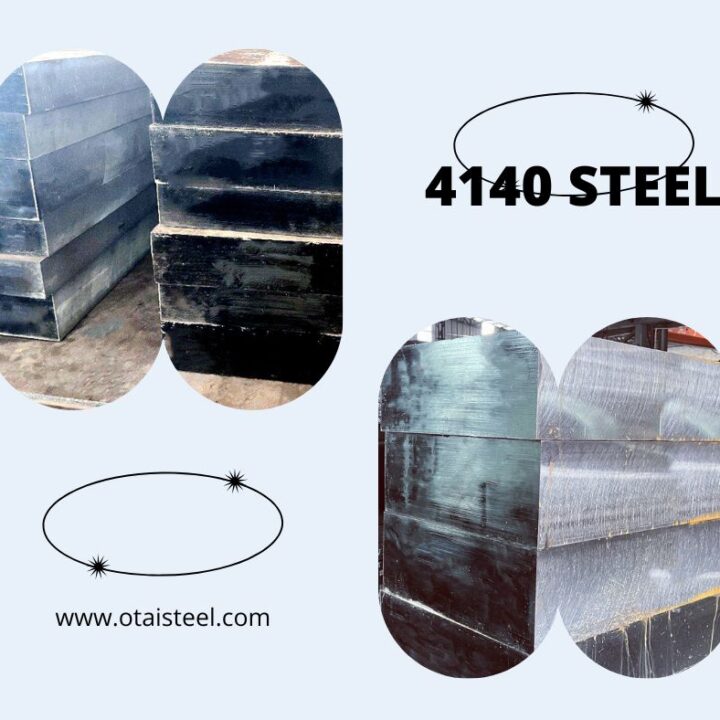
- 📏 4140 PHT plates stocked in multiple dimensions for fast delivery.
- ✂️ Precision cutting, milling, machining, drilling, and customized processing services.
- 🔥 Heat treatment support and technical assistance for special applications.
- 🔬 Ultrasonic testing (UT) and third-party inspection available upon request.
- 📦 Export-standard anti-rust packaging, steel strapping, and wooden case packaging.
- 🌍 Proven experience supplying Fortune Global 500 companies and customers in more than 80 countries.
❓ FAQ
Q1: What is flame hardening 4140 steel?
It is a localized heat treatment process that hardens the surface of 4140 steel using flame heating and rapid quenching.
Q2: Why use flame hardening instead of full hardening?
Because it preserves core toughness while improving surface wear resistance.
Q3: How deep is flame hardening on 4140 steel?
Typically 1–6 mm depending on process control.
Q4: What is the hardness after flame hardening?
Usually 52–60 HRC on the surface.
Q5: What are common applications?
Shafts, gears, wheels, and heavy machinery components.