4140 QT Steel Properties – Mechanical Behavior, Heat Treatment & Industrial Performance
The demand for knowledge about 4140 qt steel properties continues to grow in industries such as automotive shafts, oil and gas equipment, hydraulic systems, and heavy machinery. Engineers rely on this material because it delivers stable hardness, predictable tensile strength, and excellent fatigue resistance after proper heat treatment. However, the final performance strongly depends on quenching temperature, tempering process, and cooling medium selection.
Many technical buyers also search for long-tail keywords such as 4140 quenched and tempered steel properties, heat treated 4140 steel strength, 4140 QT hardness range, mechanical properties of 4140 steel after quenching, and 4140 steel heat treatment behavior. These queries reflect the importance of understanding how processing directly affects performance.
🔵 What Does QT Mean in 4140 Steel?
QT stands for Quenched and Tempered, a heat treatment process applied to alloy steels such as 4140 to enhance mechanical properties. In this process, steel is first heated to an austenitizing temperature and then rapidly cooled (quenched), typically in oil or water. After quenching, the steel becomes very hard but also brittle. To restore toughness, the material is reheated to a lower temperature during tempering.
This controlled thermal cycle directly defines 4140 qt steel properties. Quenching increases hardness and strength, while tempering improves ductility and impact resistance. The balance between these two steps determines whether the steel performs well under dynamic or static loading conditions.
Because of this process, 4140 QT steel is widely used in structural and mechanical components that require both strength and toughness, such as gears, crankshafts, bolts, and hydraulic parts.
| Heat Treatment Stage | Process Description | Effect on Properties |
|---|---|---|
| Quenching | Rapid cooling after austenitizing | Increases hardness and strength |
| Tempering | Reheating at controlled temperature | Improves toughness and ductility |
| Final QT Condition | Combined process | Balanced mechanical performance |
🟢 Chemical Composition Behind 4140 QT Steel Properties
The performance of 4140 qt steel properties is strongly influenced by its chemical composition. AISI 4140 is a chromium-molybdenum alloy steel containing medium carbon content, which provides an excellent balance between hardness and toughness after heat treatment.
Chromium improves wear resistance and hardenability, while molybdenum enhances strength and reduces the risk of brittleness during quenching. Carbon content controls the achievable hardness level, making it a key element in determining final mechanical behavior.
| Element | Typical Range (%) | Function |
|---|---|---|
| Carbon (C) | 0.38–0.43 | Hardness control |
| Chromium (Cr) | 0.80–1.10 | Wear resistance |
| Molybdenum (Mo) | 0.15–0.25 | Strength & toughness |
| Manganese (Mn) | 0.75–1.00 | Hardenability |
🟠 Mechanical Properties of 4140 QT Steel
The mechanical behavior of 4140 qt steel properties varies depending on tempering temperature and cooling conditions. However, when properly heat treated, 4140 exhibits high tensile strength combined with good impact resistance, making it suitable for demanding mechanical environments.
Engineers carefully control tempering temperature to achieve the required balance between hardness and toughness. Lower tempering temperatures increase strength, while higher temperatures improve ductility and reduce brittleness.
| Property | Typical Range (QT Condition) |
|---|---|
| Tensile Strength | 850–1100 MPa |
| Yield Strength | 650–950 MPa |
| Hardness | 28–32 HRC (typical QT) |
| Elongation | 10–15% |
| Impact Toughness | High (after tempering) |
🟣 Why Industries Use 4140 QT Steel
Industries rely on 4140 qt steel properties because the material performs well under both static and dynamic loads. After quenching and tempering, 4140 steel achieves a strong combination of hardness and toughness that allows it to resist fatigue, shock, and wear simultaneously.
This makes it ideal for automotive crankshafts, drilling equipment, hydraulic rods, and heavy-duty machinery components. Manufacturers choose 4140 QT steel because it provides predictable performance and reduces the risk of sudden failure in high-stress environments.
In addition, the material maintains good machinability in the annealed state, which allows manufacturers to produce complex parts before heat treatment.
🔷 Comparison of Heat Treatment Conditions
| Condition | Hardness | Strength | Toughness |
|---|---|---|---|
| Annealed | Low | Medium | High |
| Quenched Only | Very High | Very High | Low |
| QT Condition | Balanced | High | High |
The QT condition provides the best overall performance balance, which explains why most engineering applications specify this condition when using 4140 steel.
⚙️ Key Engineering Applications
The versatility of 4140 qt steel properties makes it suitable for a wide range of industrial applications. Engineers select this material for components that require high strength combined with resistance to fatigue and wear.
Typical applications include automotive drivetrain components, oilfield equipment, structural shafts, fasteners, and machine tooling systems. Its ability to maintain stable performance under cyclic loading makes it a preferred choice in demanding environments.
In many cases, 4140 QT steel replaces lower alloy steels because it offers superior reliability and longer service life.
🏭 Company Advantages – Otai Special Steel
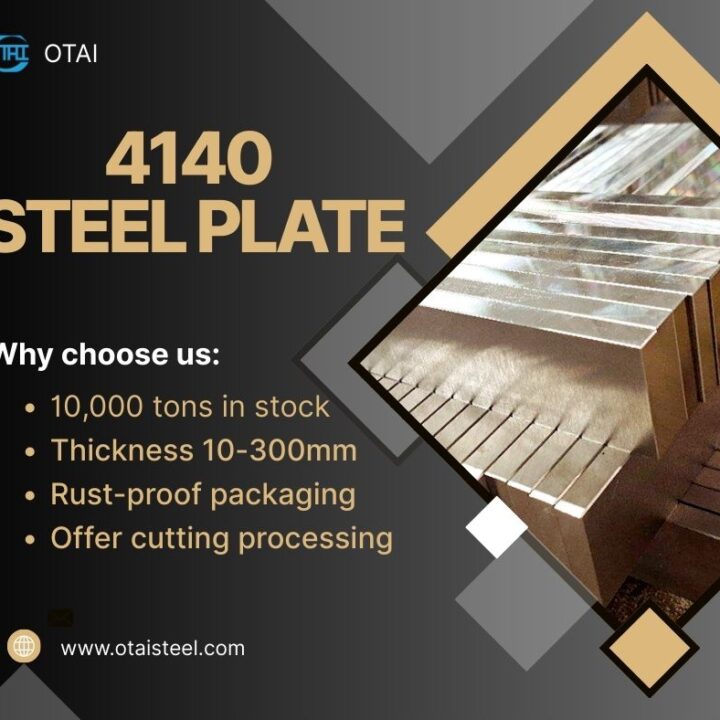
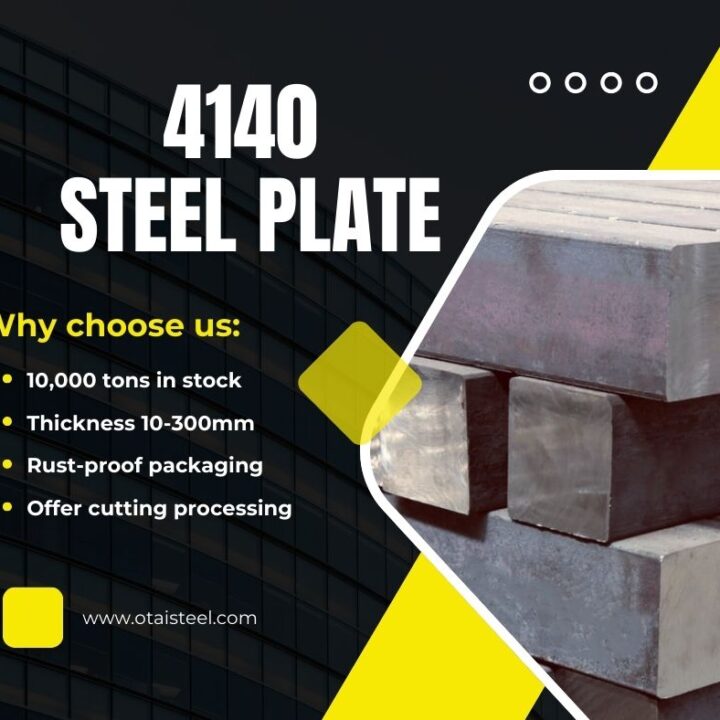
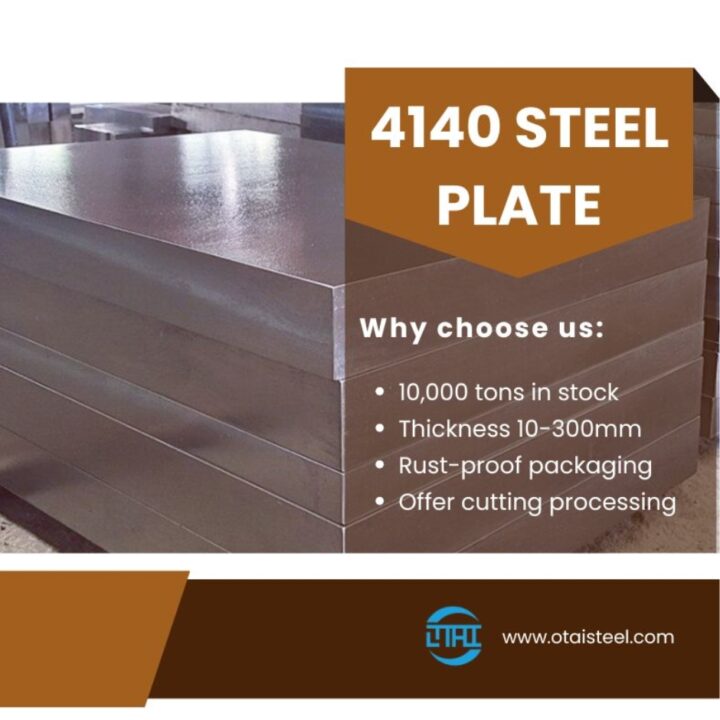
- 📦 Over 10,000 tons 4140 steel inventory in various sizes
- 📏 4140 steel plate stock available for fast delivery
- ✂️ Cutting, machining, heat treatment services
- 🔬 Ultrasonic testing and third-party inspection
- 🌍 Global export experience in alloy steel supply
❓ FAQ – 4140 QT Steel Properties
1. What are 4140 QT steel properties?
They refer to the mechanical and physical properties of 4140 steel after quenching and tempering, including strength, hardness, and toughness.
2. What is the hardness of 4140 QT steel?
Typical hardness ranges from 28–32 HRC depending on tempering conditions.
3. Why is 4140 QT steel widely used?
Because it offers a strong balance of strength, toughness, and wear resistance.
4. Can 4140 QT steel be machined?
Yes, but machining is easier before heat treatment in the annealed condition.
5. What industries use 4140 QT steel?
Automotive, oil & gas, machinery, and structural engineering industries.
🏁 Conclusion
Understanding 4140 qt steel properties is essential for selecting the right material for high-performance engineering applications. The quenched and tempered condition provides an optimal balance of hardness, strength, and toughness, making it one of the most reliable alloy steels in industrial use.
Proper heat treatment control ensures consistent performance, allowing manufacturers to achieve long service life and stable mechanical behavior in demanding environments.