 4140 Aircraft Quality Steel: Why Aerospace Engineers Trust It for Critical Components
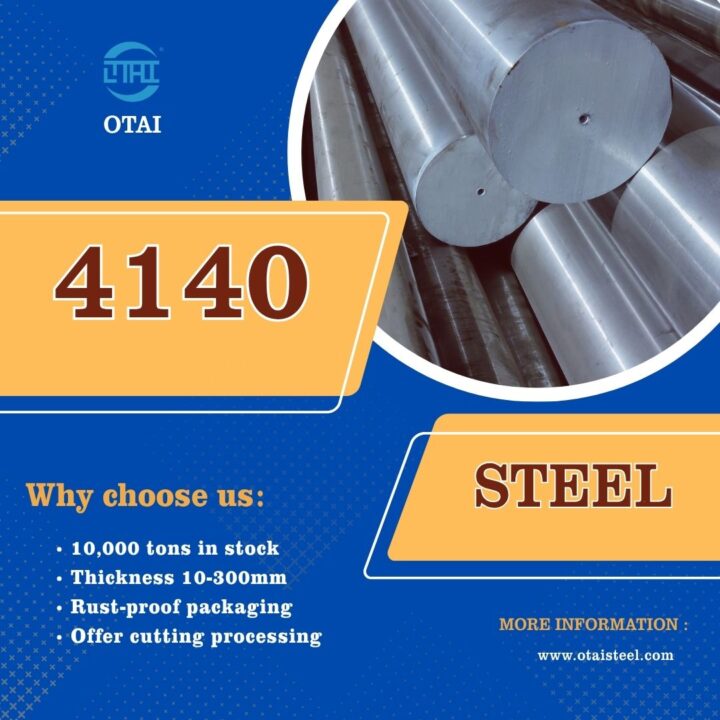
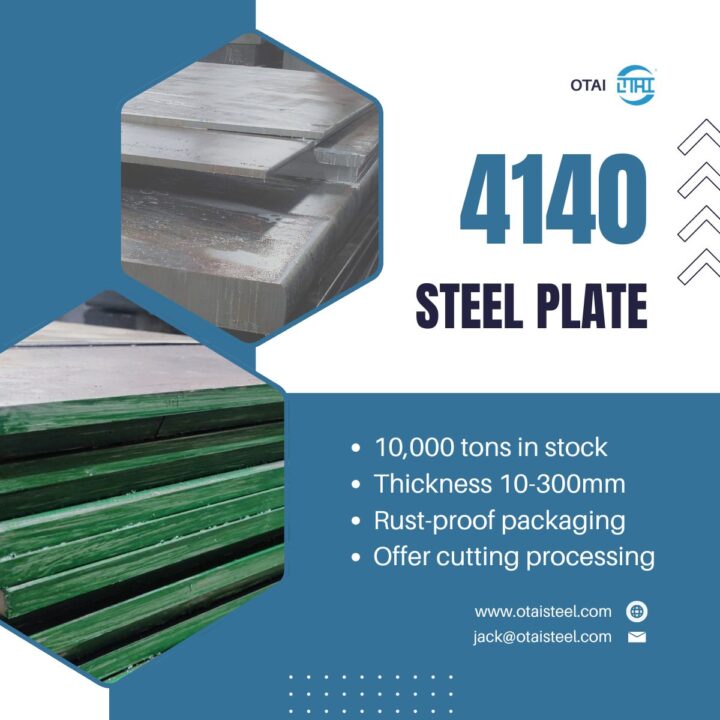
4140 aircraft quality steel is a premium-grade chromium-molybdenum alloy steel widely used in aerospace and high-performance engineering applications requiring high strength, toughness, fatigue resistance, and reliability. Compared with standard commercial grades, aircraft quality (AQ) 4140 steel undergoes stricter manufacturing and inspection processes to ensure superior cleanliness, consistency, and mechanical performance.
Engineers frequently select 4140 aircraft quality steel for components exposed to:
- High cyclic stress
- Dynamic loading
- Shock and impact forces
- Fatigue conditions
- Elevated operating temperatures
Because of its excellent balance of mechanical properties, this material is commonly used in:
- Aircraft landing gear components
- Aerospace fasteners
- High-strength shafts
- Structural support parts
- Hydraulic systems
- Motorsports and defense equipment
🔍 What is 4140 Aircraft Quality Steel?
4140 AQ steel is a refined version of standard AISI 4140 alloy steel manufactured with tighter control over:
- Chemical composition
- Inclusion content
- Grain structure
- Mechanical uniformity
- Ultrasonic integrity
The term “aircraft quality” does not indicate a different alloy composition. Instead, it refers to a higher standard of production and testing intended for critical applications where material reliability is extremely important.
Main Characteristics of 4140 AQ Steel
- High tensile strength
- Excellent toughness
- Superior fatigue resistance
- Good hardenability
- Reliable machinability
- Consistent mechanical properties
- Improved cleanliness and reduced inclusions
These characteristics make 4140 AQ steel ideal for precision aerospace and defense components.
⚗️ Chemical Composition of 4140 Aircraft Quality Steel
The alloy composition of aircraft quality 4140 steel remains similar to standard 4140 steel.
| Element | Content (%) | Function |
|---|---|---|
| Carbon (C) | 0.38 – 0.43 | Increases hardness and strength |
| Silicon (Si) | 0.15 – 0.35 | Improves strength and oxidation resistance |
| Manganese (Mn) | 0.75 – 1.00 | Enhances toughness and hardenability |
| Chromium (Cr) | 0.80 – 1.10 | Improves wear resistance and hardening response |
| Molybdenum (Mo) | 0.15 – 0.25 | Improves high-temperature strength |
| Phosphorus (P) | ≤ 0.035 | Controlled impurity |
| Sulfur (S) | ≤ 0.040 | Improves machinability |
Engineering Insight: Chromium and molybdenum help 4140 AQ steel maintain excellent strength and toughness after heat treatment, even under cyclic aerospace loading conditions.
📊 Mechanical Properties of 4140 AQ Steel
The mechanical properties depend heavily on heat treatment condition.
| Property | Annealed Condition | Quenched & Tempered Condition |
|---|---|---|
| Tensile Strength | 95,000 – 120,000 psi | 150,000 – 180,000 psi |
| Yield Strength | 60,000 – 90,000 psi | 130,000 – 160,000 psi |
| Hardness | 197 – 229 HB | 28 – 40 HRC |
| Elongation | 20 – 25% | 12 – 18% |
| Fatigue Resistance | Good | Excellent |
These properties allow aircraft quality 4140 steel to withstand high loads while maintaining dimensional stability and fatigue performance.
🔥 Heat Treatment of 4140 Aircraft Quality Steel
Heat treatment plays a major role in aerospace applications because it controls final strength and toughness.
| Heat Treatment Process | Temperature Range | Main Purpose |
|---|---|---|
| Annealing | 815 – 870°C | Improve machinability |
| Normalizing | 870 – 925°C | Refine grain structure |
| Quenching | 845 – 870°C | Form martensitic structure |
| Tempering | 200 – 650°C | Adjust hardness and toughness |
🔹 Quenching and Tempering
After quenching, 4140 AQ steel forms a martensitic microstructure with high hardness. Tempering then adjusts the balance between:
- Tensile strength
- Toughness
- Ductility
- Fatigue resistance
Lower tempering temperatures increase hardness and strength, while higher tempering temperatures improve toughness and impact resistance.
Practical Tip: Aerospace shafts and landing gear components often use tempering temperatures around 500–600°C to optimize fatigue life and structural reliability.
⚙️ Why Aircraft Quality Matters
Aircraft quality steel undergoes stricter inspection procedures than standard commercial material.
🔹 Improved Cleanliness
Aircraft quality production reduces:
- Non-metallic inclusions
- Segregation
- Internal defects
Cleaner steel improves fatigue life and crack resistance.
🔹 Ultrasonic Testing (UT)
Manufacturers often perform ultrasonic inspection to detect:
- Internal voids
- Cracks
- Lamination defects
This helps ensure reliability in critical aerospace applications.
🔹 Better Mechanical Consistency
AQ steel offers more uniform:
- Hardness distribution
- Grain structure
- Heat treatment response
This consistency is essential for precision aerospace components.
✈️ Aerospace Applications of 4140 AQ Steel
Because of its high strength and reliability, 4140 aircraft quality steel is widely used in aerospace systems.
| Aerospace Component | Reason for Using 4140 AQ Steel |
|---|---|
| Landing Gear Parts | High impact and fatigue resistance |
| Hydraulic Shafts | Excellent strength and wear resistance |
| Structural Supports | Reliable toughness under load |
| Fasteners and Pins | High tensile strength |
| Engine Support Components | Good thermal stability |
🔹 Landing Gear Example
Aircraft landing gear components experience:
- Sudden impact loads during landing
- Repeated fatigue cycles
- Vibrational stress
4140 AQ steel provides:
- High strength
- Excellent fracture toughness
- Reliable fatigue performance
This helps extend component service life and improve flight safety.
⚙️ Machinability and Weldability
🔹 Machinability
In annealed condition, 4140 AQ steel offers relatively good machinability. Manufacturers often use:
- Carbide cutting tools
- Controlled cutting speeds
- Coolant systems for precision machining
🔹 Weldability
Although weldable, 4140 AQ steel typically requires:
| Welding Parameter | Recommendation |
|---|---|
| Preheat Temperature | 200 – 300°C |
| Post-Weld Heat Treatment | Recommended |
| Filler Material | Low-hydrogen filler |
Proper welding procedures help prevent cracking and residual stress.
🌐 Equivalent Grades of 4140 Aircraft Quality Steel
Several international standards offer equivalent chromium-molybdenum alloy steels.
| Standard | Equivalent Grade |
|---|---|
| AISI / SAE | 4140 |
| DIN / EN | 42CrMo4 |
| JIS | SCM440 |
| GB | 42CrMo |
Although these grades are similar, aerospace standards may impose stricter inspection and cleanliness requirements.
⚖️ Advantages Compared with Standard Commercial 4140
| Property | 4140 AQ Steel | Standard 4140 Steel |
|---|---|---|
| Cleanliness | Higher | Standard |
| Inclusion Control | Better | Moderate |
| Fatigue Resistance | Excellent | Good |
| Ultrasonic Inspection | Common | Optional |
| Mechanical Consistency | Superior | Standard |
These advantages explain why aerospace and defense industries prefer aircraft quality material for safety-critical parts.
🏭 Company Advantages
Otai Special Steel supplies premium-quality 4140 aircraft quality steel for demanding engineering and aerospace applications.
- Large inventory and stable supply
- Custom cutting and heat treatment services
- Ultrasonic testing (UT) and chemical composition verification
- Third-party inspection support (SGS)
- Professional export packaging and logistics support
We support customers in aerospace, industrial machinery, oil & gas, automotive, and precision engineering industries with reliable material quality and technical assistance.
❓ FAQ
Q1: What does “aircraft quality” mean for 4140 steel?
A1: It refers to stricter manufacturing, inspection, and cleanliness standards for critical applications.
Q2: Is aircraft quality 4140 stronger than standard 4140?
A2: The chemical composition is similar, but AQ steel usually offers better consistency, cleanliness, and fatigue performance.
Q3: What industries use 4140 AQ steel?
A3: Aerospace, defense, motorsports, industrial machinery, and oil & gas industries commonly use it.
Q4: Can 4140 aircraft quality steel be heat treated?
A4: Yes. Quenching and tempering significantly improve strength and toughness.
Q5: Why is ultrasonic testing important for AQ steel?
A5: Ultrasonic testing helps detect internal defects that could reduce fatigue life or structural reliability in critical applications.