 4140 Steel vs 304 Stainless: Strength, Properties, and Industrial Applications
Selecting the right material is a critical step in engineering design and manufacturing. Two commonly compared materials are 4140 alloy steel and 304 stainless steel. Engineers often evaluate 4140 steel vs 304 stainless to determine which material offers better performance for specific applications.
Although both materials are widely used in industrial components, they serve very different purposes. AISI 4140 is a chromium-molybdenum alloy steel known for high strength, toughness, and wear resistance. In contrast, 304 stainless steel is an austenitic stainless steel valued for its excellent corrosion resistance and good formability.
Understanding the difference between 4140 steel and 304 stainless steel helps engineers select the best material based on mechanical performance, environmental conditions, and manufacturing requirements.
🔍 Overview of 4140 Steel and 304 Stainless Steel
AISI 4140 belongs to the family of low-alloy steels containing chromium and molybdenum. It is widely used in components that require high strength, fatigue resistance, and durability.
304 stainless steel, on the other hand, is one of the most widely used stainless steels. It contains high levels of chromium and nickel, which provide excellent corrosion resistance.
The key difference in the 4140 alloy steel vs 304 stainless corrosion resistance comparison is that 304 stainless steel resists rust and oxidation much better, while 4140 provides significantly higher strength and hardness after heat treatment.
⚙️ Chemical Composition Comparison
The alloying elements in each material determine their mechanical and corrosion properties.
| Element | 4140 Steel (%) | 304 Stainless Steel (%) |
|---|---|---|
| Carbon (C) | 0.38 – 0.43 | ≤0.08 |
| Chromium (Cr) | 0.80 – 1.10 | 18.0 – 20.0 |
| Nickel (Ni) | — | 8.0 – 10.5 |
| Molybdenum (Mo) | 0.15 – 0.25 | — |
| Manganese (Mn) | 0.75 – 1.00 | ≤2.0 |
| Silicon (Si) | 0.15 – 0.35 | ≤1.0 |
The high chromium and nickel content in stainless steel explains its superior corrosion resistance. Meanwhile, the chromium and molybdenum in 4140 contribute to improved strength and hardenability.
📊 Mechanical Properties Comparison
The 4140 steel vs 304 stainless mechanical properties comparison reveals significant differences in strength and hardness.
| Property | 4140 Steel (Q&T) | 304 Stainless Steel |
|---|---|---|
| Tensile Strength | 850 – 1100 MPa | 515 – 620 MPa |
| Yield Strength | 655 – 850 MPa | ~205 MPa |
| Hardness | 28 – 32 HRC | ~90 HRB |
| Elongation | 12 – 25% | ~40% |
This 4140 steel vs 304 stainless strength comparison clearly shows that 4140 steel provides much higher strength and hardness, especially after heat treatment.
However, 304 stainless steel offers better ductility and formability.
🛡️ Corrosion Resistance
One of the most important factors in the 4140 alloy steel vs 304 stainless corrosion resistance comparison is resistance to rust and chemical attack.
304 stainless steel contains about 18–20% chromium, which forms a protective oxide layer on the surface. This layer prevents corrosion in many environments.
4140 steel does not naturally resist corrosion and usually requires protective coatings, plating, or surface treatments.
For applications exposed to moisture, chemicals, or marine environments, 304 stainless steel is generally the preferred material.
🔩 Hardness and Heat Treatment
The 4140 vs 304 stainless hardness comparison highlights another important difference.
4140 steel can be hardened significantly through heat treatment processes such as quenching and tempering.
Typical hardness levels include:
| Condition | Hardness |
|---|---|
| Annealed 4140 | ~197 HB |
| Quenched & Tempered 4140 | 28 – 32 HRC |
| Hardened 4140 | Up to 55 HRC (surface treated) |
In contrast, 304 stainless steel cannot be hardened by heat treatment. Its strength can only be increased through cold working.
This makes 4140 steel much more suitable for high-load mechanical components.
🏭 Industrial Applications
Understanding 4140 steel vs 304 stainless applications helps determine which material is best suited for specific industries.
Common Applications for 4140 Steel
- Drive shafts
- Gears and gear shafts
- Oil and gas drilling tools
- Heavy machinery components
- Structural machine parts
Common Applications for 304 Stainless Steel
- Food processing equipment
- Chemical processing systems
- Kitchen equipment
- Medical devices
- Marine hardware
These applications reflect the different strengths of each material: structural strength for 4140 and corrosion resistance for 304 stainless.
🔍 Which Material Is Stronger?
Many engineers ask which is stronger 4140 steel or 304 stainless steel.
From a mechanical standpoint, 4140 steel is significantly stronger than 304 stainless steel, especially after heat treatment.
However, strength alone does not determine material selection. Environmental conditions, corrosion resistance, and fabrication requirements must also be considered.
🌟 Company Advantages
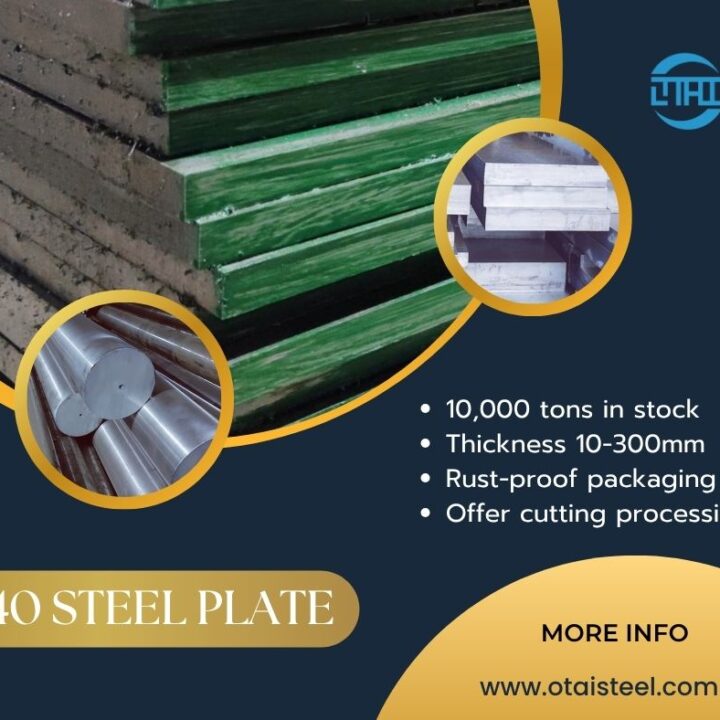
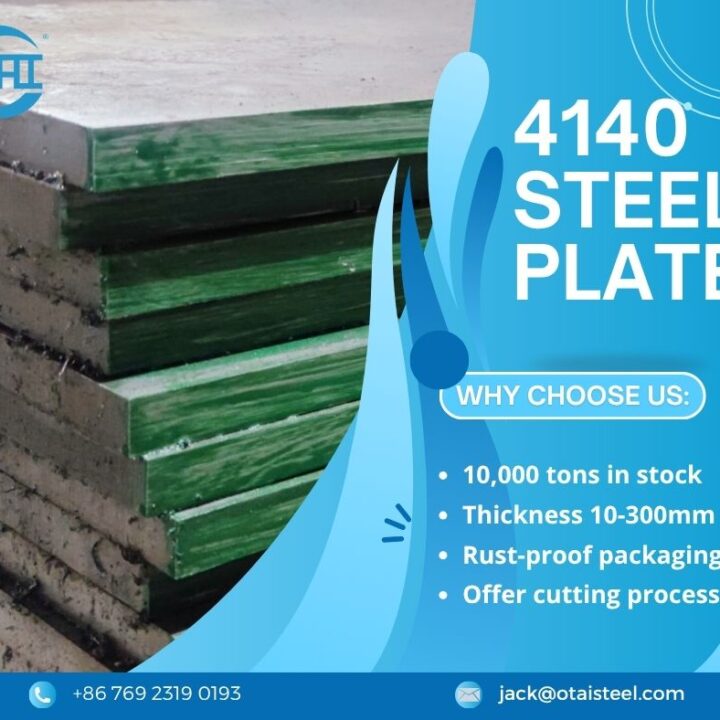
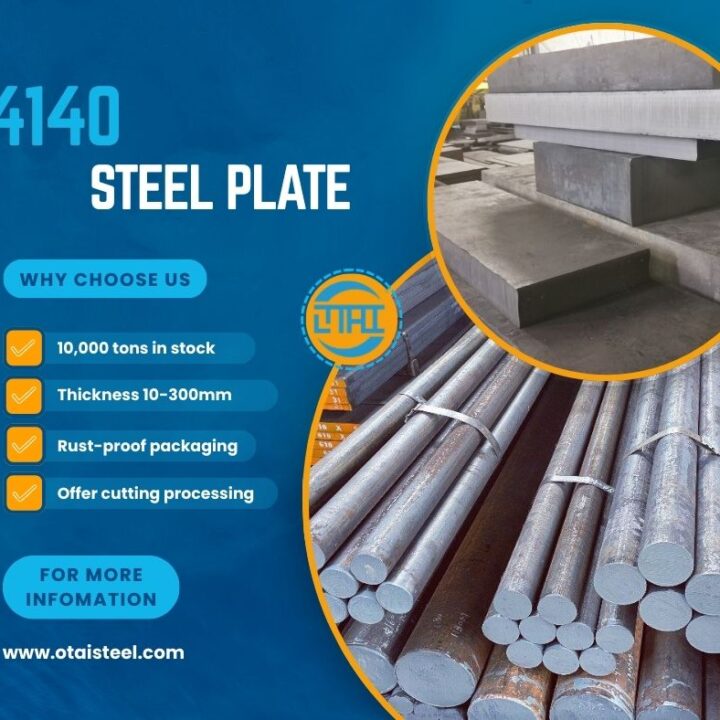
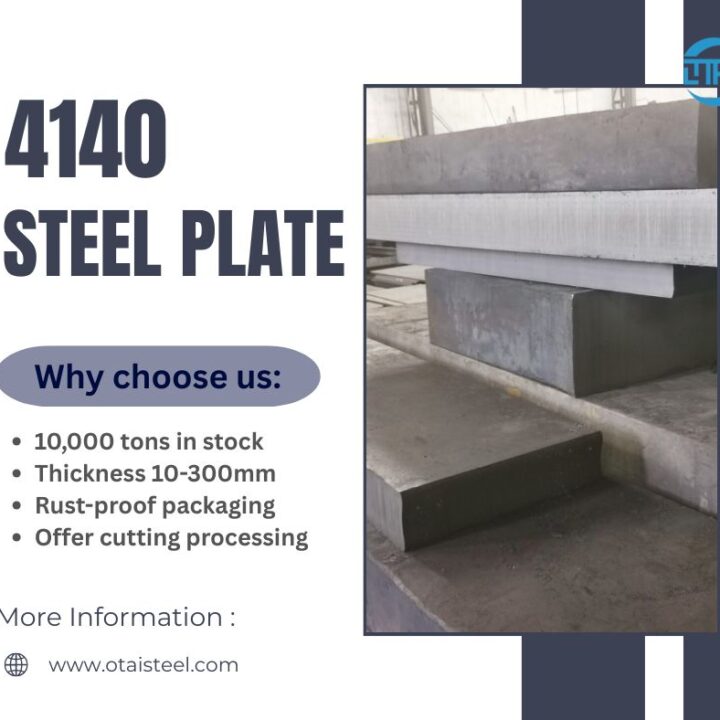
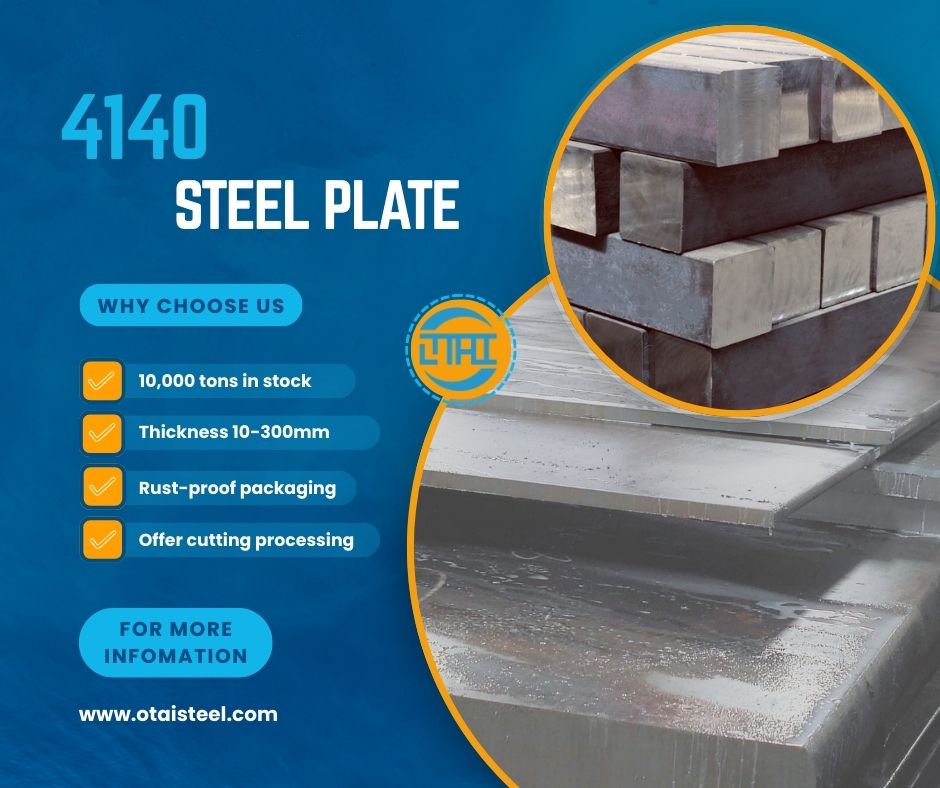
At Otai Special Steel, we supply high-quality alloy steels including AISI 4140 for global industrial customers.
Our advantages include:
- Over 10,000 tons of steel inventory available year-round
- Plate thickness range from 6 mm to 300 mm
- Professional custom cutting and processing services
- Strict ultrasonic testing (UT) quality control
- Complete chemical composition testing
- Long-term cooperation with international companies such as Thyssenkrupp, Borealis, and Schlumberger
Our expertise helps customers choose the right steel materials for demanding engineering applications.
❓ FAQ
1. What is the main difference between 4140 steel and 304 stainless steel?
4140 steel offers higher strength and hardness, while 304 stainless steel provides excellent corrosion resistance.
2. Which is stronger, 4140 steel or 304 stainless steel?
4140 steel is significantly stronger, especially after quenching and tempering.
3. Is 4140 steel corrosion resistant?
No, 4140 steel is not naturally corrosion resistant and usually requires protective coatings.
4. When should 304 stainless steel be used instead of 4140?
304 stainless steel is preferred in environments that require strong corrosion resistance, such as food processing or marine applications.