 Ultimate Shear Strength of 4140 Steel: Strength Limits and Engineering Applications
When designing mechanical components such as shafts, bolts, and gears, engineers must consider not only tensile strength but also shear strength. One key parameter is the ultimate shear strength of 4140 steel, which defines the maximum shear stress the material can withstand before failure.
AISI 4140 is a chromium-molybdenum alloy steel widely used in high-strength applications due to its excellent combination of toughness, wear resistance, and fatigue strength. Understanding the shear strength of 4140 steel in MPa helps engineers ensure safety and reliability in components subjected to torsion, cutting forces, and transverse loads.
In this article, we explore the shear strength values, influencing factors, calculation methods, and practical applications of 4140 alloy steel.
🔍 What Is Shear Strength?
Shear strength refers to a material’s ability to resist forces that cause internal sliding along a plane. Unlike tensile stress, which pulls material apart, shear stress acts parallel to the surface.
The ultimate shear strength of AISI 4140 steel value represents the maximum shear stress before fracture occurs.
In engineering design, shear strength is critical for:
- Shafts under torsional load
- Bolts and fasteners
- Gear teeth under load
- Structural joints
Understanding how to calculate shear strength of 4140 steel ensures proper material selection and component design.
📊 Typical Shear Strength of 4140 Steel
The typical shear strength of 4140 alloy steel depends on its heat treatment condition.
A commonly used approximation is:
τₘₐₓ≈ 0.58*σₜₑₙₛᵢₗₑ
Based on this relationship, the following values can be used:
| Condition | Tensile Strength (MPa) | Shear Strength (MPa) |
|---|---|---|
| Annealed | 850 | 490 |
| Quenched & Tempered | 950 – 1100 | 550 – 640 |
| Hardened | 1100 – 1300 | 640 – 750 |
These values provide a practical reference for the shear strength of 4140 steel in MPa in different working conditions.
⚙️ Mechanical Properties and Shear Behavior
The 4140 steel mechanical properties shear strength is closely related to its tensile strength and hardness.
| Property | Typical Range |
|---|---|
| Tensile Strength | 850 – 1300 MPa |
| Yield Strength | 655 – 1000 MPa |
| Hardness | 197 – 320 HB |
As strength increases through heat treatment, shear strength also increases. However, higher hardness may reduce ductility, which must be considered in design.
This relationship highlights the importance of 4140 steel tensile vs shear strength comparison when selecting materials for specific applications.
🔥 Effect of Heat Treatment
Heat treatment significantly affects the heat treated 4140 steel shear strength.
Annealed Condition
Lower strength but better machinability and ductility.
Quenched and Tempered
Balanced strength and toughness, commonly used in engineering applications.
Hardened Condition
Maximum strength and wear resistance but reduced ductility.
Proper heat treatment selection allows engineers to optimize shear performance for specific requirements.
🧮 How to Calculate Shear Strength
Engineers often estimate shear strength using empirical relationships.
The most common formula:
τ = 0.58 \σ
Where:
- (τ) = shear strength
- (σ) = tensile strength
This method provides a quick estimate for the ultimate shear strength of AISI 4140 steel value without complex testing.
For more precise calculations, engineers may use torsion tests or finite element analysis (FEA).
🏭 Engineering Applications
Because of its high shear strength, 4140 steel is widely used in components subjected to torsional and transverse forces.
Typical applications include:
- Drive shafts and transmission shafts
- High-strength bolts and studs
- Gear systems
- Oil and gas drilling tools
- Heavy-duty machinery components
Understanding the ultimate shear strength of 4140 steel helps engineers design safer and more reliable components.
🔍 Comparison with Other Materials
Comparing shear strength across materials provides better context.
| Material | Shear Strength (MPa) |
|---|---|
| AISI 4140 Steel | 490 – 750 |
| Mild Steel | 250 – 400 |
| Stainless Steel | 300 – 600 |
| Aluminum Alloys | 150 – 250 |
4140 steel offers significantly higher shear strength than many common engineering materials, making it ideal for heavy-load applications.
🌟 Company Advantages
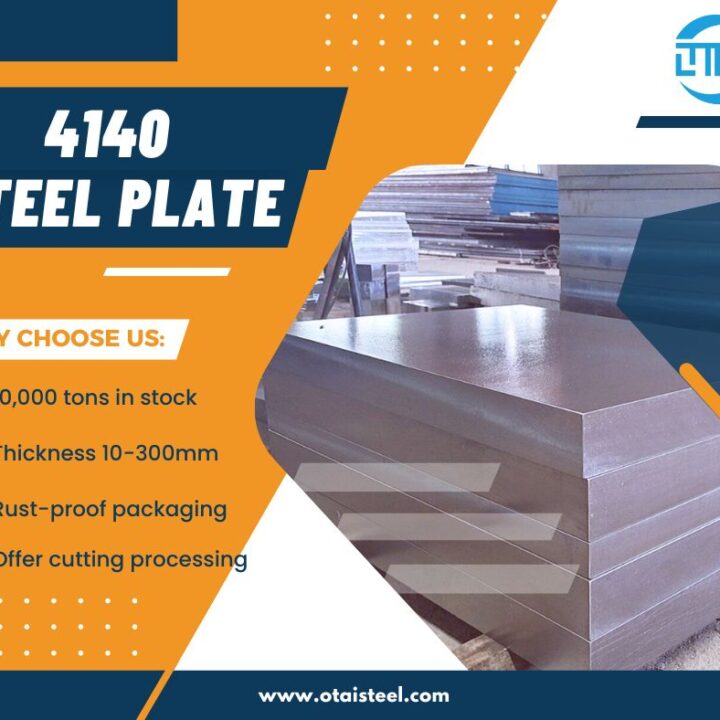
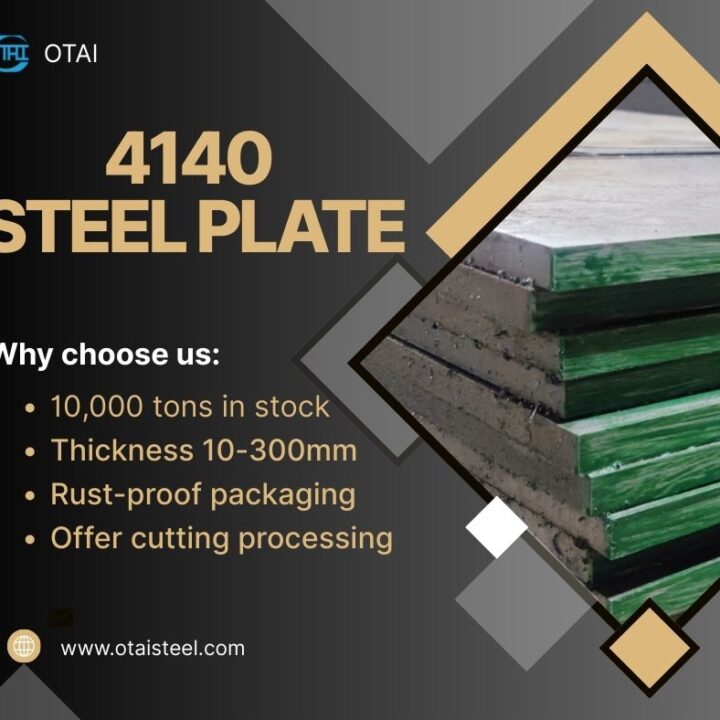
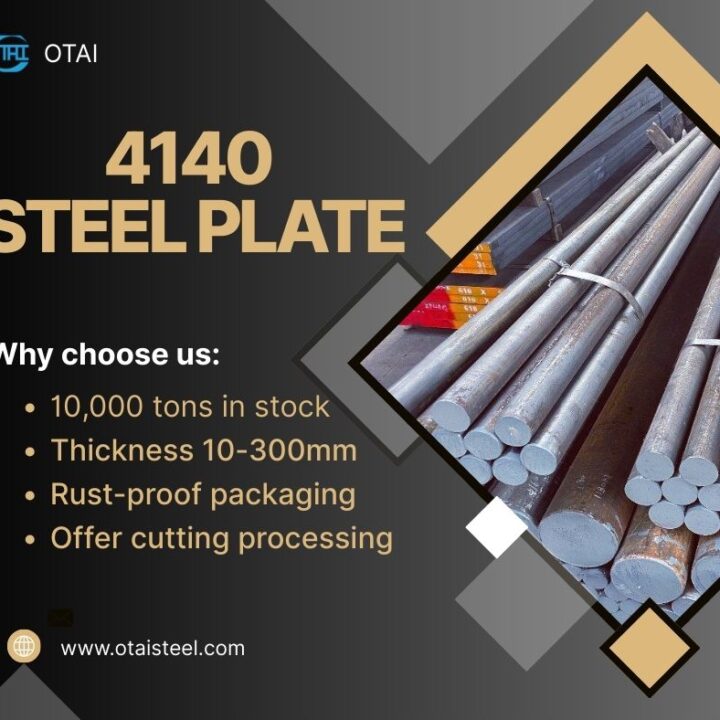
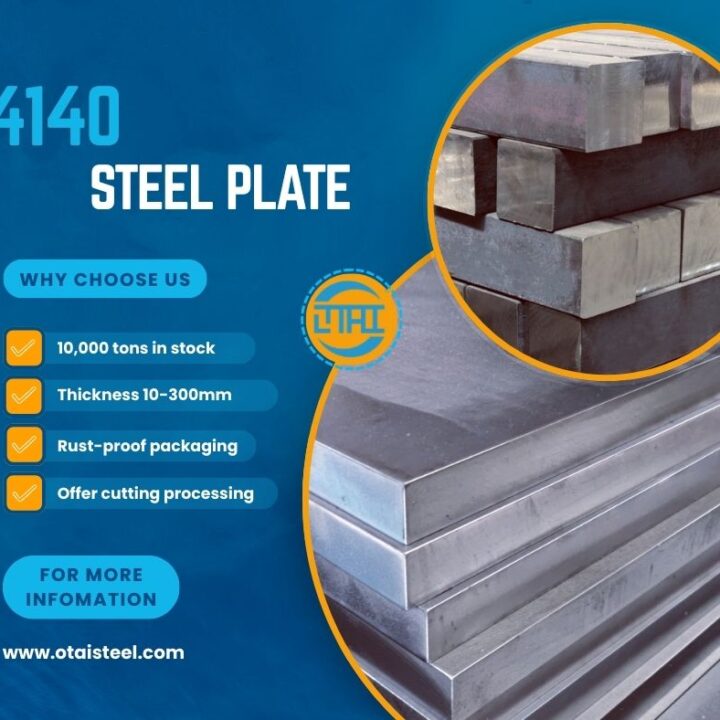
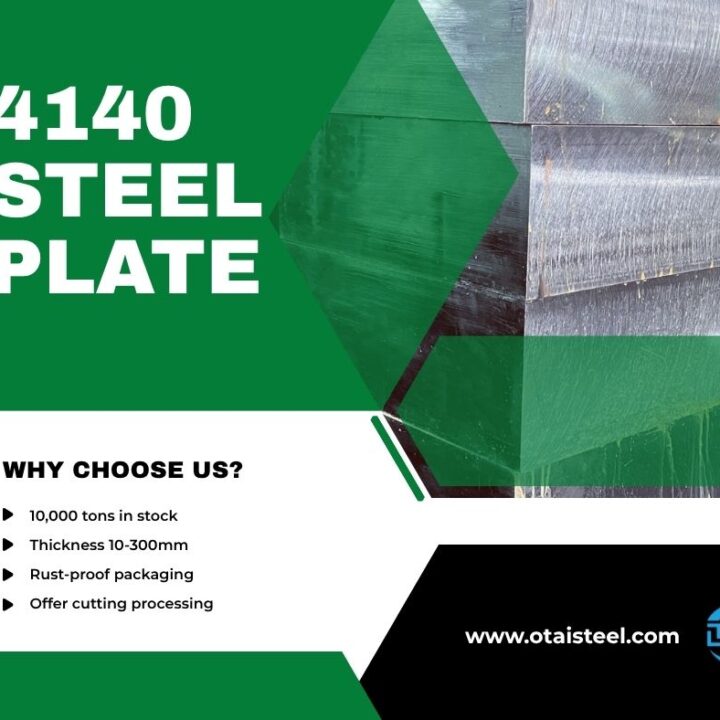
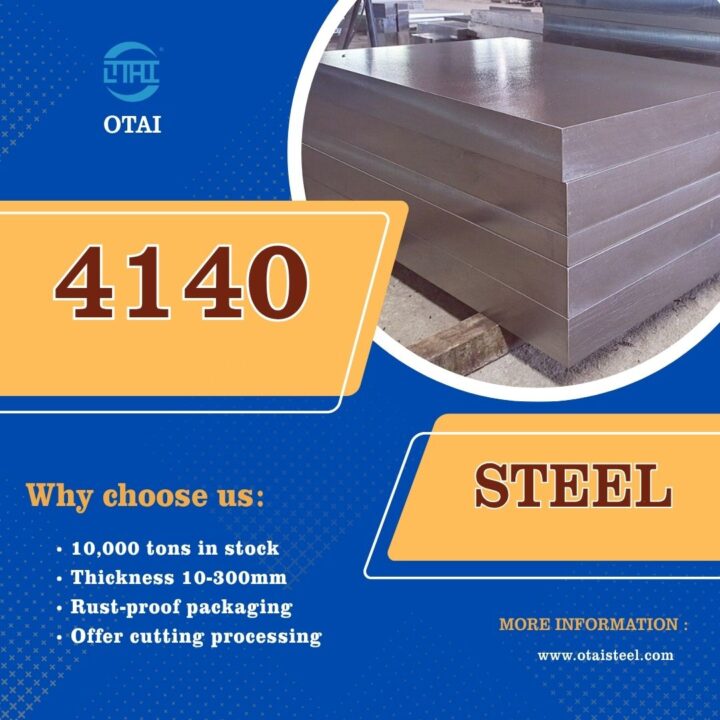
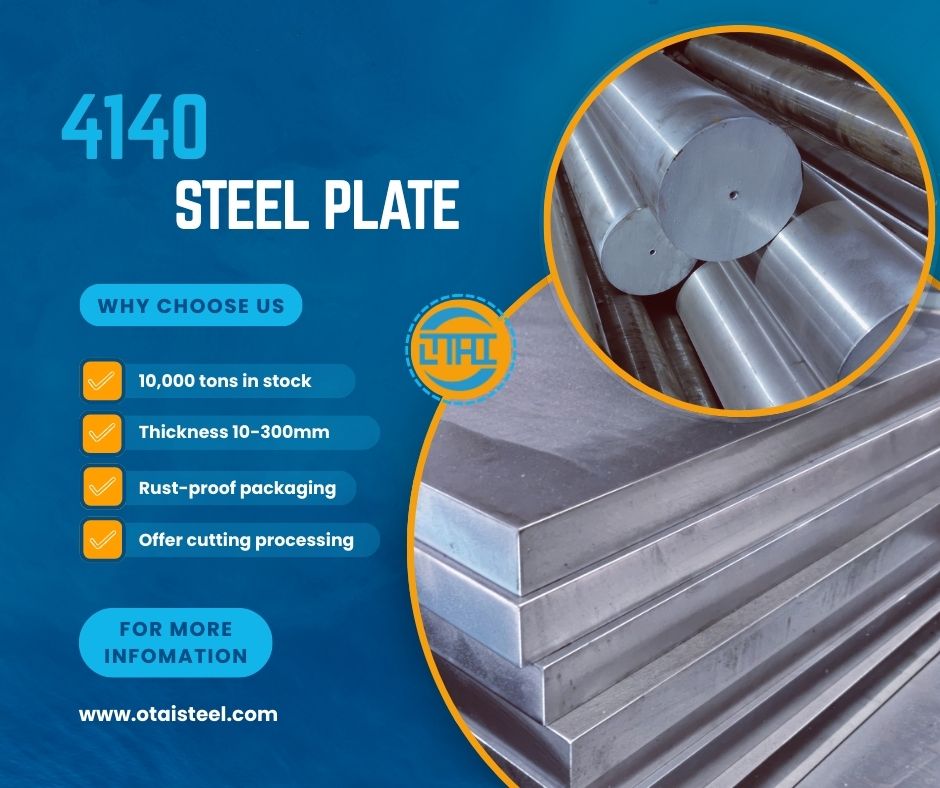
At Otai Special Steel, we supply premium-quality AISI 4140 alloy steel for global industries requiring high-performance materials.
Our advantages include:
- Over 10,000 tons of inventory available year-round
- Wide thickness range from 6 mm to 300 mm
- Precision cutting and machining services
- Strict ultrasonic testing (UT) quality assurance
- Complete chemical composition inspection
- Trusted by leading global companies such as Thyssenkrupp, Borealis, and Schlumberger
We support customers with reliable materials for demanding engineering applications.
❓ FAQ
1. What is the ultimate shear strength of 4140 steel?
It typically ranges from 490 MPa to 750 MPa, depending on heat treatment condition.
2. How is shear strength related to tensile strength?
Shear strength is usually about 58% of tensile strength, which provides a quick estimation method.
3. Does heat treatment affect shear strength?
Yes, heat treatment significantly increases shear strength by improving hardness and tensile strength.
4. Why is shear strength important for 4140 steel?
It is critical for components subjected to torsion, such as shafts and gears, ensuring structural safety and durability.