 5140 Steel vs 4140 Steel: Key Differences, Properties, and Applications
When selecting the right material for industrial applications, understanding the specific properties of different types of steel is essential. 5140 steel and 4140 steel are both medium-carbon alloy steels used in a wide range of demanding applications, from automotive to machinery. However, they have distinct differences in terms of composition, mechanical properties, heat treatment, and ideal uses. In this article, we will compare 5140 steel and 4140 steel, exploring their chemical compositions, mechanical properties, heat treatment processes, and applications.
🔍 What is 5140 Steel?
5140 steel is a medium-carbon alloy steel that contains chromium (Cr), manganese (Mn), and carbon (C). It is known for its strength, toughness, and wear resistance, making it ideal for parts subjected to high mechanical stress. It is commonly used in the automotive, machinery, and construction industries for components that need strength and resilience under pressure.
Chemical Composition of 5140 Steel:
| Element | Percentage (%) |
|---|---|
| Carbon (C) | 0.38–0.43 |
| Manganese (Mn) | 0.60–0.90 |
| Chromium (Cr) | 0.80–1.10 |
| Silicon (Si) | 0.20–0.35 |
| Phosphorus (P) | 0.035 max |
| Sulfur (S) | 0.035 max |
The presence of chromium in 5140 steel increases its resistance to wear, making it ideal for parts that experience frequent friction, such as gears, shafts, and bearing rings.
🔍 What is 4140 Steel?
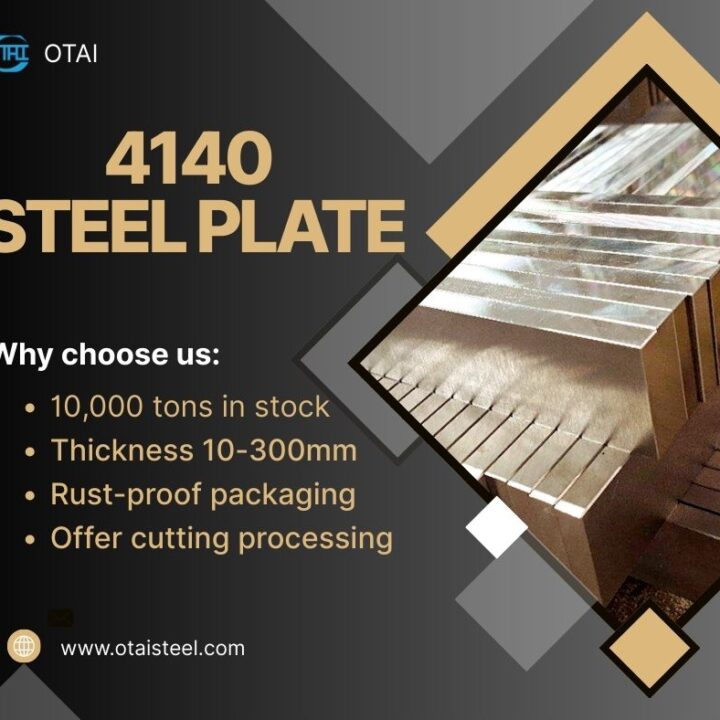
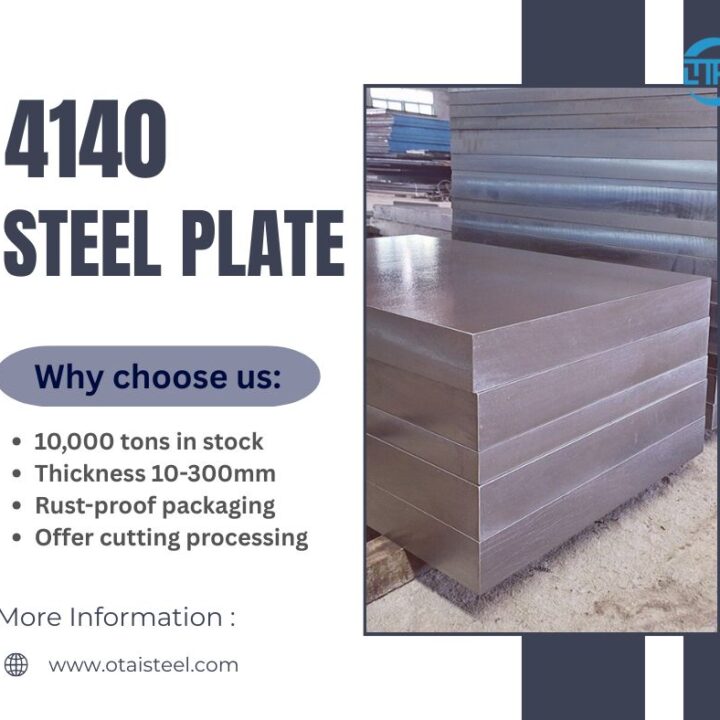
4140 steel is another medium-carbon alloy steel that contains chromium (Cr), manganese (Mn), and molibdenum (Mo). It is one of the most versatile steels and is widely used for components requiring high strength, toughness, and wear resistance. 4140 steel is particularly popular in machinery, automotive, and construction applications.
Chemical Composition of 4140 Steel:
| Element | Percentage (%) |
|---|---|
| Carbon (C) | 0.38–0.43 |
| Manganese (Mn) | 0.75–1.00 |
| Chromium (Cr) | 0.80–1.10 |
| Molybdenum (Mo) | 0.15–0.25 |
| Silicon (Si) | 0.20–0.35 |
| Phosphorus (P) | 0.035 max |
| Sulfur (S) | 0.035 max |
4140 steel offers a balanced mix of strength, toughness, and hardness, thanks to its molybdenum content, which improves hardenability and resistance to wear.
🧪 Mechanical Properties Comparison: 5140 vs 4140 Steel
While both 5140 steel and 4140 steel share similar properties due to their medium-carbon content, there are key differences in their tensile strength, yield strength, hardness, and impact toughness.
| Property | 5140 Steel | 4140 Steel |
|---|---|---|
| Tensile Strength | 800–1000 MPa | 750–1000 MPa |
| Yield Strength | 500–700 MPa | 430–700 MPa |
| Hardness (Brinell) | 197–235 HB | 197–235 HB |
| Impact Toughness | Moderate to High | High |
-
Tensile Strength: Both steels offer similar tensile strength but 5140 steel generally provides a bit more resilience under high-load conditions.
-
Yield Strength: Both steels show a similar yield strength, though 4140 steel is more commonly used for machinery and heavy-duty applications.
-
Hardness: Both 5140 and 4140 steel offer good hardness, which is essential for high-wear applications.
-
Impact Toughness: 4140 steel tends to perform better in high-impact situations, making it ideal for more demanding environments.
🔨 Heat Treatment Comparison: 5140 vs 4140 Steel
Both 5140 steel and 4140 steel can undergo various heat treatment processes that improve their mechanical properties, but the specific treatment methods vary slightly due to their different alloy compositions.
-
5140 Steel: Typically quenched and tempered to improve tensile strength, hardness, and wear resistance.
-
4140 Steel: Can also be quenched and tempered but is often chosen for high-performance applications due to its improved hardenability thanks to molybdenum.
Both steels can be surface hardened, improving their wear resistance, but 4140 steel generally performs better in terms of high hardness retention during stress and fatigue testing.
🧰 Applications of 5140 vs 4140 Steel
Both steels are versatile and commonly used in industries that require high-strength, tough, and wear-resistant materials. The specific use cases differ slightly due to the variations in their compositions.
| Application Area | 5140 Steel | 4140 Steel |
|---|---|---|
| Automotive | Drive shafts, gears, crankshafts | Drive shafts, axles, brake components |
| Aerospace | Landing gear, shafts | Landing gear, aircraft frames |
| Heavy Machinery | Gears, shafts, transmission parts | Machine tools, driveshafts, gears |
5140 steel is ideal for automotive components that need good wear resistance, such as drive shafts and gears. It is also widely used in heavy machinery for parts that are subject to high stress and wear. In contrast, 4140 steel is preferred for high-performance components, especially in environments where impact resistance and hardness retention are critical.
⚙️ Why Choose Otai Special Steel for 5140 and 4140 Steel?
At Otai Special Steel, we provide premium 5140 steel and 4140 steel products, ensuring they meet the highest industry standards. Our materials undergo rigorous quality control and can be customized to your specific needs. Whether you need shafts, gears, or other components, we offer the right materials to fit your requirements.
Company Advantages:
-
Premium Quality: We offer high-quality 5140 steel and 4140 steel, ensuring excellent mechanical properties and performance.
-
Large Inventory: Our extensive inventory allows us to offer quick delivery and minimal lead times.
-
Customized Solutions: We provide customized cutting, heat treatment, and surface finishing services.
-
Competitive Pricing: Our strong relationships with top mills allow us to offer cost-effective solutions.
❓ FAQ
Q1: What is the main difference between 5140 steel and 4140 steel?
-
A1: The main difference lies in their alloying elements. 5140 steel contains chromium and is more commonly used in automotive applications, while 4140 steel contains molybdenum, which improves its hardenability and impact resistance.
Q2: Which steel is better for high-wear applications?
-
A2: 4140 steel is often preferred for high-wear applications due to its better wear resistance and toughness, especially when exposed to high-impact forces.
Q3: Can both steels be heat-treated?
-
A3: Yes, both 5140 steel and 4140 steel can undergo quenching and tempering processes to improve their mechanical properties.
Q4: Which steel is better for automotive parts?
-
A4: 5140 steel is often chosen for automotive parts like drive shafts and gears due to its good balance of strength and wear resistance, while 4140 steel is ideal for high-stress components in demanding environments.