 4140 Steel vs 52100: Which Steel Should You Choose?
When selecting materials for a high-performance application, the right steel can make all the difference. Whether you’re working in automotive, aerospace, or industrial manufacturing, choosing the correct steel ensures durability, efficiency, and cost-effectiveness. In this article, we’ll dive into the key differences between 4140 steel and 52100 steel, helping you decide which steel is right for your specific needs.
Introduction: Why Compare 4140 Steel and 52100 Steel?
If you’ve ever had to choose between different steel grades, you know it’s not always a simple decision. 4140 steel and 52100 steel are both high-performance alloys commonly used in industrial applications, but they have unique properties that make them suited for different tasks.
For example, 4140 steel is well-known for its balance of strength, toughness, and affordability, while 52100 steel is favored for its exceptional wear resistance and hardness. Whether you’re working on shafts, gears, or bearings, understanding the differences between these two materials can save you time and money while improving your project’s performance.
Mechanical Properties Breakdown
To make an informed decision, it’s essential to look at the mechanical properties of 4140 and 52100 steel. These properties—like tensile strength, hardness, and yield strength—are the key factors that determine how well the material will perform under stress.
Comparison of Mechanical Properties
| Property | 4140 Steel | 52100 Steel |
|---|---|---|
| Tensile Strength | 850-1000 MPa | 1300-1600 MPa |
| Yield Strength | ~655 MPa | ~1700 MPa |
| Hardness (HRC) | 28-32 (after heat treat) | 60-65 (after heat treat) |
| Fatigue Resistance | Moderate | Excellent |
| Toughness | Good | High |
As seen in the table, 52100 steel has a significantly higher tensile strength and hardness compared to 4140 steel, making it ideal for applications where high wear resistance is needed. For example, 52100 steel is often used in high-performance bearings and other high-stress applications, while 4140 steel strikes a balance between toughness and strength, making it suitable for general manufacturing.
Applications: Where Does Each Steel Excel?
When it comes to choosing 4140 Steel vs 52100, understanding their applications is crucial.
4140 Steel
4140 steel is commonly used in applications that require moderate strength and toughness. Some of its key uses include:
- Automotive components: Drive shafts, axles, gears
- Industrial machinery: Structural components, frames
- Aerospace: Aircraft components
- Defense: Weapon systems
Due to its ability to be heat-treated to various hardness levels, 4140 steel is versatile and used across a range of industries.
52100 Steel
52100 steel, on the other hand, is designed for high-performance applications where wear resistance is critical. Its common uses include:
- Bearings: Automotive, aerospace, and industrial bearings
- High-performance gears: Aerospace and machinery
- Tooling: High-wear tooling in demanding environments
For instance, 52100 steel is ideal for bearing applications in the aerospace industry, where the material must withstand constant wear and tear under extreme loads.
Table: Applications for 4140 and 52100 Steel
| Industry/Use Case | 4140 Steel | 52100 Steel |
|---|---|---|
| Automotive | Drive shafts, axles, gears | Bearings, high-performance gears |
| Aerospace | Aircraft parts, fixtures | Aircraft bearings, turbine parts |
| Industrial Machinery | Structural components, frames | High-load, high-wear applications |
| Defense | Weapon components, mounts | Ballistic systems, gear drives |
Cost and Availability: Is 52100 Worth the Extra Price?
One of the key considerations when choosing 4140 Steel vs 52100 steel is cost. Generally, 52100 steel is more expensive than 4140 steel due to its higher hardness and superior wear resistance.
Cost Comparison
- 4140 steel: Less expensive, making it ideal for general applications where extreme wear resistance is not the primary concern.
- 52100 steel: More costly due to its superior performance in high-wear environments, especially in precision machining and high-performance bearings.
For many companies, 4140 steel provides a good balance between cost and performance, while 52100 steel is reserved for applications where extreme durability is crucial.
Machinability and Heat Treatment
The machinability of steel is a key factor in how easily it can be shaped and processed during manufacturing. 4140 steel is generally easier to machine than 52100 steel due to its lower hardness.
Machining 4140 vs 52100
- 4140 steel: Easier to machine, can be processed with standard cutting tools. It’s often used when manufacturing times are a concern.
- 52100 steel: Requires more advanced machining techniques due to its higher hardness. It often needs specialized equipment, especially for precision work.
Heat Treatment:
Both 4140 steel and 52100 steel benefit from heat treatment processes. 4140 steel can be easily heat-treated to adjust its hardness for different applications. 52100 steel, due to its high carbon content, requires more precise heat treatment to achieve optimal hardness without compromising other properties.
Durability: How Long Will Your Steel Last?
When it comes to durability, 52100 steel excels in high-wear applications due to its higher hardness and wear resistance. However, for general-use cases, 4140 steel is still a durable option.
Long-Term Durability
- 4140 steel: Performs well in applications where toughness and impact resistance are necessary, but it may not withstand extreme wear as well as 52100 steel.
- 52100 steel: Exceptional wear resistance and fatigue strength make it the go-to material for high-stress and high-wear environments, such as bearings and gears under constant operation.
By choosing the right steel, you can ensure longer service life and fewer replacements, saving money in the long term.
Why Choose Otai Steel for 4140 or 52100 Supply?
Here’s why hundreds of companies trust us with their alloy steel sourcing:
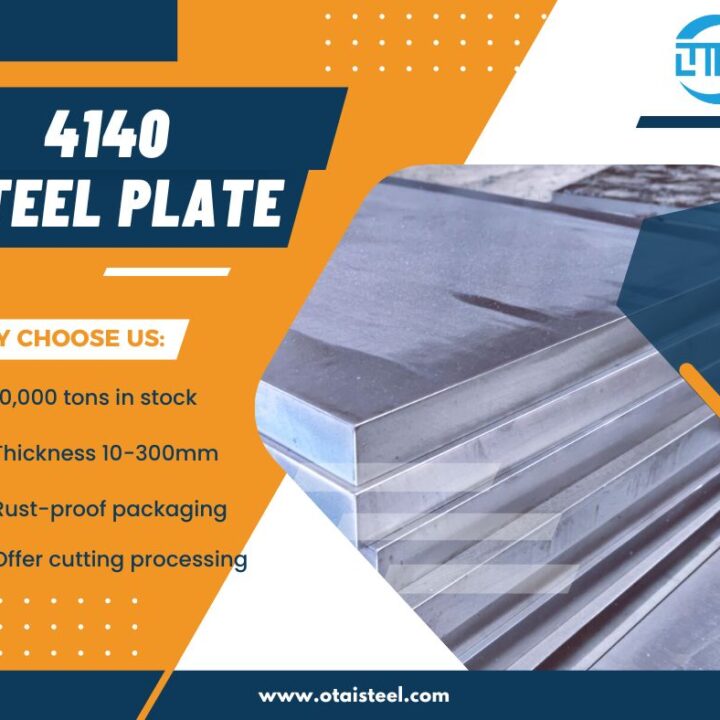
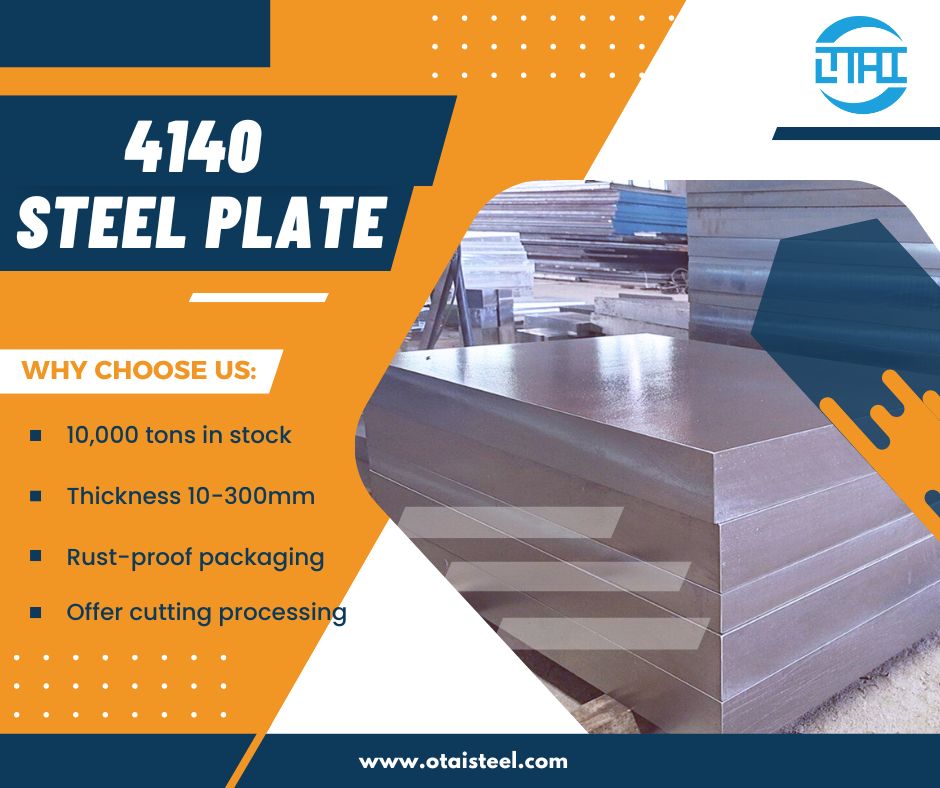
- Massive stock — over 10,000 tons in inventory
- Thickness range from 6mm to 300mm, cut to your size
- UT tested and chemically certified
- Custom heat treatment and precision machining are available
- Rust-proof packaging with wooden boxes or bundles
- 25+ years of experience with global clients
- We supply to Thyssenkrupp, Borealis, Schlumberger, and many others
- Fast shipping worldwide
We’re not just a steel trader—we’re your solution partner in steel.
Ready to Choose the Right Steel?
If you’re comparing 4140 and 52100 for your next project, don’t guess.
Contact us today for a free material consultation or a quick quote.
📧 jack@otaisteel.com
📱 +8676923190193 (WhatsApp)
We’ll help you make the right choice, and even suggest cutting, testing, or heat treating options to fit your needs.
FAQs
- Can I use 4140 steel instead of 52100 for bearings?
- Answer: 52100 is specifically designed for bearings due to its superior wear resistance. 4140 may be suitable for some bearing applications, but it won’t provide the same performance.
- Is 52100 steel worth the extra cost for automotive gears?
- Answer: If you require extreme durability and high-performance gears for racing or heavy-duty machinery, 52100 is a good choice. For standard automotive use, 4140 is sufficient and more cost-effective.
- How does the machinability of 52100 compare to 4140?
- Answer: 52100 is much harder to machine than 4140. You’ll need specialized equipment to work with 52100, while 4140 can be machined using standard tools.
- What industries use 52100 steel?
- Answer: 52100 is commonly used in aerospace, automotive (high-performance components), industrial machinery (bearings, gears), and other high-wear applications.
- What’s the best heat treatment for 4140 steel?
- Answer: 4140 steel is often heat-treated to increase hardness, with common processes including quenching and tempering to achieve optimal mechanical properties.