 16MnCr5 Alloy Steel: Properties, Applications, and Benefits
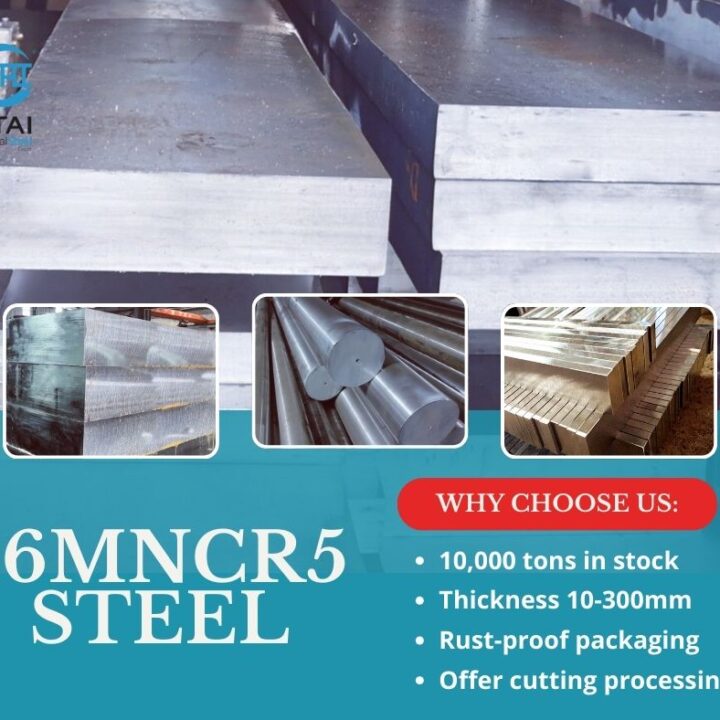
16MnCr5 is a highly versatile low-alloy steel that is renowned for its outstanding mechanical properties. It is extensively used in automotive, machinery, and engineering sectors, where durability, wear resistance, and strength are essential. By combining manganese and chromium, 16MnCr5 delivers enhanced mechanical performance, making it a popular choice for various industrial applications.
This article covers the key properties, heat treatment processes, applications, and benefits of 16MnCr5 alloy steel, as well as some potential alternatives.
🧪 Key Properties of 16MnCr5 Alloy Steel
16MnCr5 steel stands out due to several key properties that make it suitable for demanding applications. Let’s take a closer look at them:
1. High Strength
The high tensile strength of 16MnCr5 makes it ideal for components that need to withstand heavy loads and mechanical stresses. The manganese increases strength, while chromium improves wear resistance, making the steel even more reliable in challenging environments.
2. Good Hardenability
With the addition of chromium and manganese, 16MnCr5 boasts excellent hardenability. This means that the steel can achieve the desired hardness and strength even after heat treatment, including quenching and tempering processes.
3. Improved Wear Resistance
Thanks to the chromium content, 16MnCr5 offers superior wear resistance. This makes it especially useful for parts exposed to high friction and abrasive conditions, such as gears, shafts, and bearings.
4. Toughness and Ductility
Despite its strength, 16MnCr5 maintains a good balance of toughness and ductility. This balance helps it resist cracking and failure under dynamic loading or cyclic stresses, making it suitable for components subject to impact or vibration.
5. Machinability
16MnCr5 remains easy to machine even after heat treatment. The manganese content helps improve the steel’s machinability, allowing for efficient manufacturing processes and reducing production time.
⚙️ Heat Treatment of 16MnCr5 Alloy Steel
To unlock the full potential of 16MnCr5, specific heat treatment processes are essential. Here are the primary methods used:
1. Carburizing
Carburizing is a widely used method for 16MnCr5. It increases the surface hardness of the steel while maintaining a tough, ductile core. In this process, 16MnCr5 is exposed to a carbon-rich environment at high temperatures (900°C-950°C). This results in a surface hardness of around 58-62 HRC while preserving the toughness of the interior.
2. Quenching and Tempering
The quenching and tempering process significantly enhances the steel’s strength and toughness. The steel is heated to approximately 850-900°C, then rapidly cooled in oil or water (quenched). After this, it undergoes tempering at lower temperatures (150-200°C) to reduce brittleness and adjust hardness for the final application.
3. Annealing
Annealing softens 16MnCr5 steel, improving its machinability. The steel is heated to 750-800°C and then cooled slowly. This relieves internal stresses and makes the steel easier to work with.
🛠️ Applications of 16MnCr5 Alloy Steel
Thanks to its excellent combination of strength, wear resistance, and toughness, 16MnCr5 finds extensive use in various industrial sectors. Here are some common applications:
1. Automotive Industry
In the automotive sector, 16MnCr5 is widely used for manufacturing gears, axles, crankshafts, and transmission components. These parts experience heavy loads and wear, making 16MnCr5 the perfect material due to its high wear resistance and strength.
2. Machinery Manufacturing
16MnCr5 is essential in producing machine components like shafts, gears, and camshafts. These parts require high strength to withstand continuous mechanical stress. The wear resistance of 16MnCr5 makes it ideal for such applications.
3. Heavy Machinery
For heavy-duty equipment, 16MnCr5 is used in bearings, gears, and clutch parts where durability and toughness are critical. The steel performs well under harsh conditions, such as in earth-moving machinery and industrial presses.
4. Engineering Components
In the engineering field, 16MnCr5 is commonly found in valves, pistons, structural parts, and shafting. Its strength, toughness, and machinability make it suitable for components that require precision and high durability.
⚖️ Advantages of Using 16MnCr5 Alloy Steel
Here are the key reasons why 16MnCr5 is a preferred material for various industrial applications:
✔️ Cost-Effectiveness
Compared to other high-performance steels, 16MnCr5 offers a great balance of strength, wear resistance, and machinability at a relatively low cost, making it a cost-effective choice for many industries.
✔️ Excellent Wear Resistance
The chromium in 16MnCr5 significantly boosts its wear resistance, making it ideal for parts exposed to friction and abrasion. This property is essential for components like gears, shafts, and bearings.
✔️ Versatility
With its combination of high strength and wear resistance, 16MnCr5 is highly versatile. It is commonly used in many different applications, ranging from automotive parts to machinery components.
✔️ Improved Performance
16MnCr5 can withstand heavy-duty conditions, which improves the performance and longevity of the parts made from it. Its ability to handle mechanical stresses and wear makes it a reliable material for high-performance components.
🔄 Alternatives to 16MnCr5 Alloy Steel
While 16MnCr5 is widely used, several other materials offer similar mechanical properties and could be considered for specific applications:
| Material | Key Properties | Applications |
|---|---|---|
| 18CrNiMo7-6 | Increased carbon content, better fatigue resistance | Gears, crankshafts, axles |
| 20CrNiMo | Higher toughness, similar alloying elements | Automotive components, shafts |
| AISI 4140 | High strength, toughness, improved machinability | Shafts, gears, machinery parts |
| SAE 8620 | Carburizing steel, high surface hardness | Gears, shafts, bearings |
❓ Frequently Asked Questions (FAQ)
Q1: Is 16MnCr5 suitable for heavy-duty applications?
A1: Yes, 16MnCr5 is an excellent choice for heavy-duty applications. It offers a combination of high strength, wear resistance, and toughness, making it perfect for components subjected to heavy mechanical stresses, such as axles, gears, and bearings.
Q2: What makes 16MnCr5 different from other alloy steels like 4140?
A2: 16MnCr5 generally has higher chromium content than 4140, which improves its wear resistance. However, 4140 offers better strength and toughness, especially in applications involving high stress.
Q3: Can 16MnCr5 withstand high-temperature environments?
A3: 16MnCr5 is not designed for high-temperature environments. While it performs well under mechanical stress and wear, it may not maintain its properties at extreme temperatures. For such applications, high-temperature alloys may be more suitable.