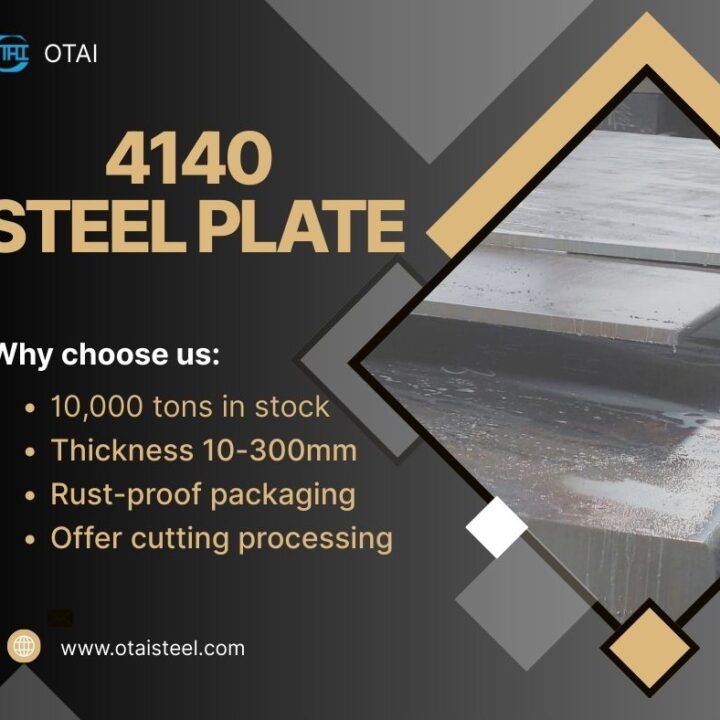
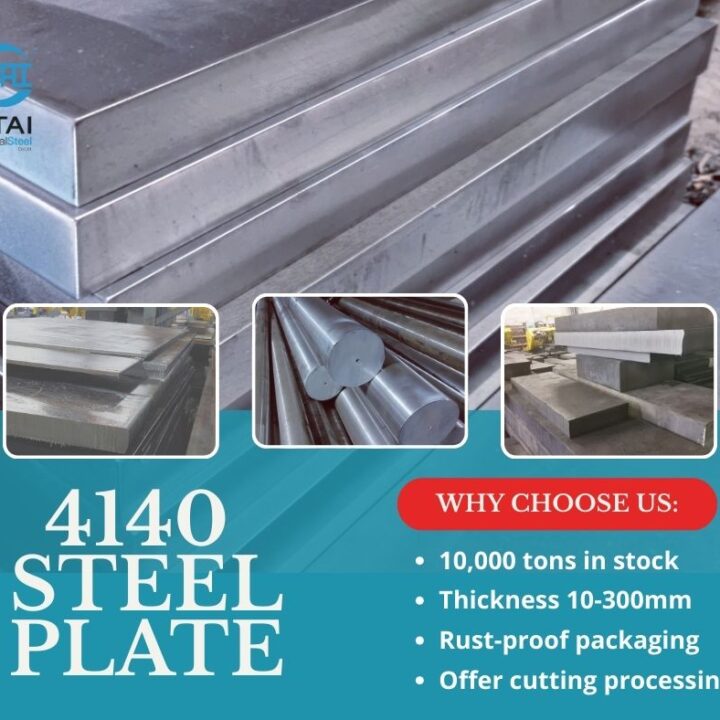
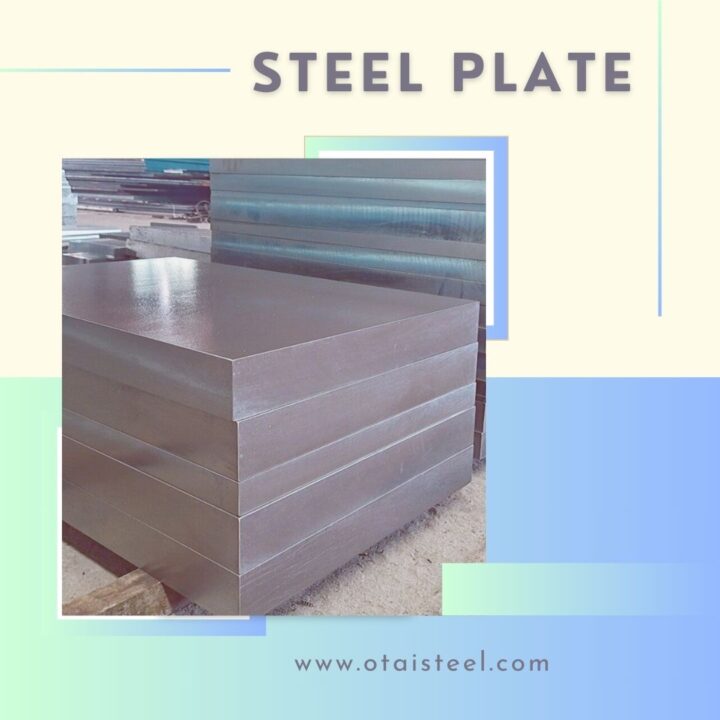
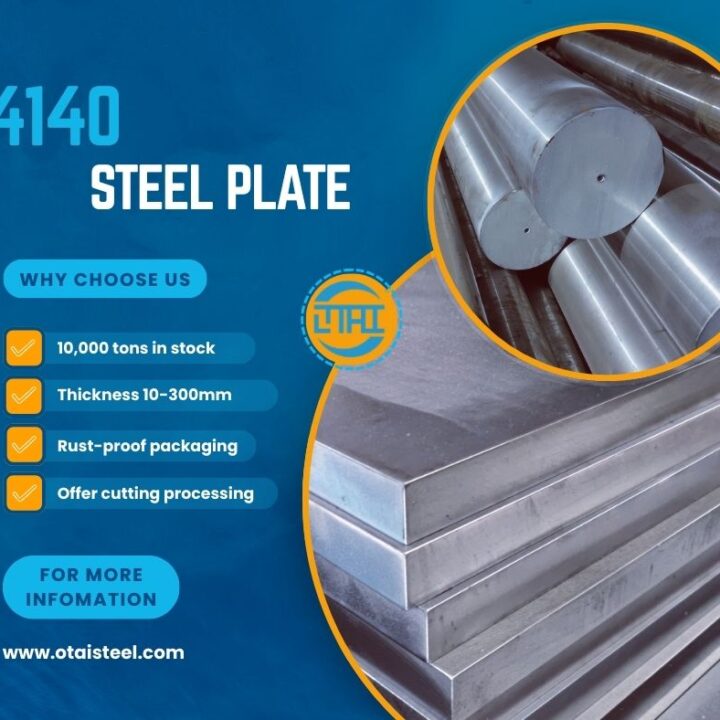
 1045 vs 4140 Steel: Which one is suitable for you?
When choosing the right steel for various industrial and manufacturing applications, 1045 and 4140 are two popular options. Both are carbon steels, but they differ in their alloy compositions, mechanical properties, and applications. In this article, we’ll compare 1045 steel and 4140 steel, focusing on their key properties, advantages, disadvantages, and suitable uses.
🔍 What Is 1045 Steel?
1045 steel is a medium-carbon steel that offers a good balance of strength, hardness, and machinability. With 0.45% carbon content, it is commonly used in applications where moderate strength and wear resistance are required, without the need for extreme toughness or resistance to high temperatures.
The chemical composition of 1045 steel typically includes:
-
Carbon (C): 0.45% (provides strength and hardness)
-
Manganese (Mn): 0.60-0.90% (increases tensile strength)
-
Phosphorus (P): ≤ 0.04% (limits in steel)
-
Sulfur (S): ≤ 0.05% (affects machinability)
🧪 What Is 4140 Steel?
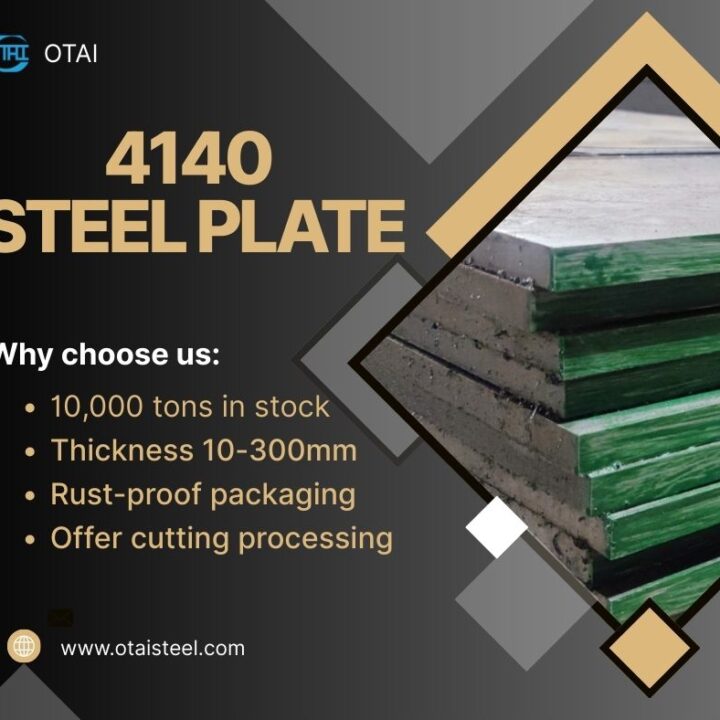
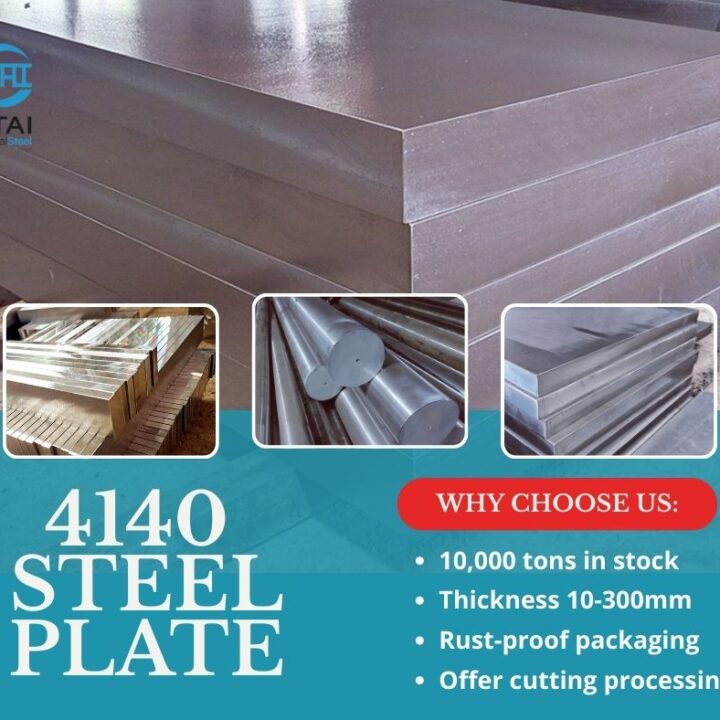
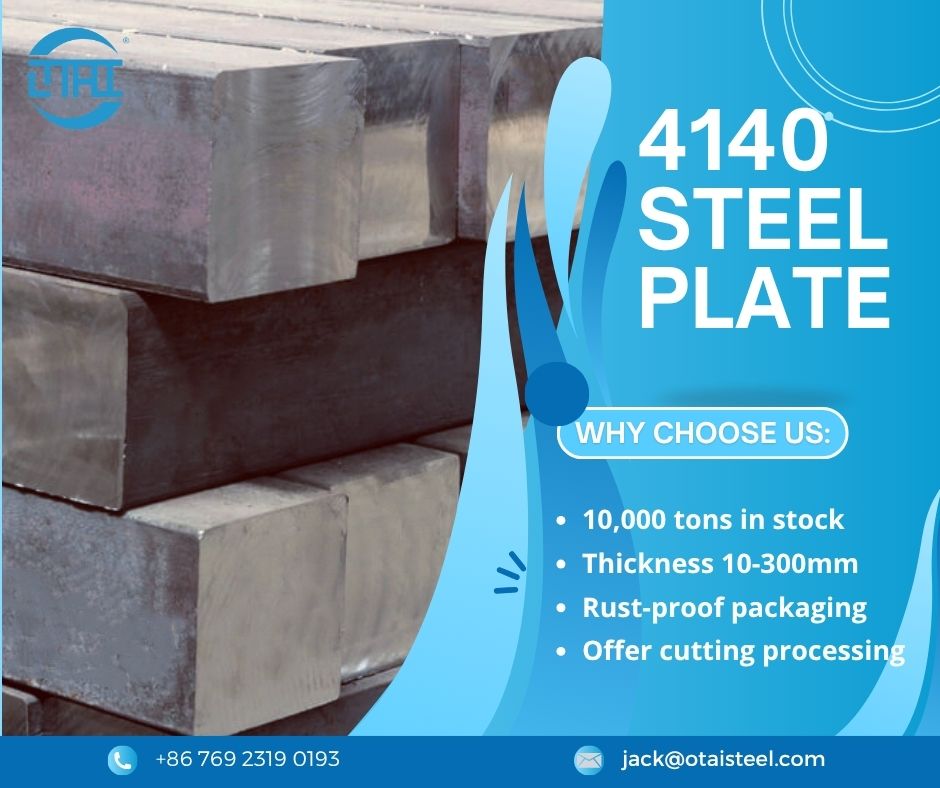
4140 steel is an alloy steel containing a blend of chromium (Cr) and molybdenum (Mo), along with carbon and manganese. This steel is known for its excellent toughness, high strength, and hardness, making it ideal for heavy-duty applications. With 0.40-0.50% carbon content, 4140 can be heat treated to reach higher hardness levels compared to 1045 steel.
The typical chemical composition of 4140 steel includes:
-
Carbon (C): 0.40-0.50% (increases strength and hardness)
-
Chromium (Cr): 0.80-1.10% (increases hardness and wear resistance)
-
Molybdenum (Mo): 0.15-0.25% (enhances hardenability and strength)
-
Manganese (Mn): 0.60-0.90% (improves tensile strength)
🧰 Key Properties Comparison
Let’s compare the mechanical properties of 1045 steel and 4140 steel to better understand how they perform under different conditions.
| Property | 1045 Steel | 4140 Steel |
|---|---|---|
| Tensile Strength | 570-700 MPa | 655-850 MPa |
| Yield Strength | 355 MPa | 415 MPa |
| Hardness (as rolled) | 170-210 HB | 197-235 HB |
| Hardness (heat treated) | 30-40 HRC | 28-35 HRC (quenching) |
| Impact Toughness | Moderate | High |
| Machinability | Good | Good |
Analysis of Mechanical Properties:
-
Tensile Strength: 4140 steel has a higher tensile strength (655-850 MPa) compared to 1045 steel (570-700 MPa). This means 4140 steel can withstand more stress before failing.
-
Yield Strength: The yield strength of 4140 is also higher (415 MPa) than 1045 steel (355 MPa), making it better for applications that require resistance to permanent deformation.
-
Hardness: After heat treatment, 4140 can achieve higher hardness than 1045, with 4140 reaching up to 58-62 HRC compared to 1045, which typically only reaches 30-40 HRC.
-
Impact Toughness: 4140 steel has significantly better impact toughness, making it more suitable for high-stress and high-impact applications.
-
Machinability: Both 1045 and 4140 are relatively easy to machine, though 4140 may require more care due to its alloying elements and higher hardness.
🛠️ Heat Treatment and Hardenability
Both 1045 and 4140 steel can undergo heat treatment to improve their hardness and mechanical properties, but they react differently due to their compositions.
-
1045 Steel Heat Treatment: This steel can be quenched and tempered to improve hardness and strength. However, its hardenability is limited due to the absence of additional alloying elements like chromium and molybdenum.
-
4140 Steel Heat Treatment: 4140 steel has superior hardenability due to its chromium and molybdenum content, meaning it can achieve higher hardness levels after quenching and tempering. It is also less prone to warping during heat treatment.
🏭 Applications of 1045 Steel
1045 steel is used for applications that require moderate strength and durability but do not involve extreme stresses. Common uses include:
-
Shafts and spindles
-
Machine parts (e.g., gears and axles)
-
Automotive parts like crankshafts and camshafts
-
Forged parts requiring moderate wear resistance
🏋️♂️ Applications of 4140 Steel
4140 steel, with its higher strength and toughness, is used in more demanding applications that require resistance to high stress, high impact, and wear. Common applications include:
-
Automotive components (e.g., crankshafts, gears, and axles)
-
Heavy machinery parts (e.g., dies, shafts, and spindles)
-
Aerospace components requiring high strength and durability
-
Tooling for industrial applications
⚖️ Comparison Summary
| Property | 1045 Steel | 4140 Steel |
|---|---|---|
| Cost | Lower | Higher |
| Tensile Strength | Moderate | Higher |
| Yield Strength | Moderate | Higher |
| Hardness (as rolled) | Softer | Harder |
| Heat Treatment | Limited hardenability | Superior hardenability |
| Applications | Moderate stress | High stress and impact |
❓ Frequently Asked Questions (FAQ)
Q1: What are the key differences between 1045 and 4140 steel?
A1: 1045 steel is a medium-carbon steel, ideal for moderate strength applications, while 4140 steel is an alloy steel known for higher strength, toughness, and wear resistance, making it better suited for high-stress applications.
Q2: Which steel is better for automotive components?
A2: 4140 steel is the better choice for automotive components due to its higher strength, toughness, and ability to withstand high impacts and stresses.
Q3: Can 1045 steel be heat-treated?
A3: Yes, 1045 steel can be heat-treated to improve its hardness and strength, but it has limited hardenability compared to 4140 steel.
🏁 Conclusion
In summary, 1045 steel is a good option for applications that require moderate strength and hardness without the need for extreme toughness or wear resistance. It is more affordable and easier to machine compared to 4140 steel. However, if you need higher strength, toughness, and better wear resistance, 4140 steel is the superior choice, particularly for high-stress and high-impact applications.
💪 Company Advantages
At Otai Special Steel, we offer a range of high-quality steels, including 1045 and 4140 alloy steels. Here’s why you should choose us:
-
Large Inventory: We maintain over 10,000 tons of various steel products available year-round.
-
Custom Solutions: We offer cutting, heat treatment, and packaging services tailored to your specific needs.
-
Rigorous Quality Control: Our products undergo ultrasonic testing (UT), chemical composition analysis, and third-party inspections to guarantee top-quality steel.
-
Global Presence: We serve major international clients in a variety of industries, ensuring fast and reliable delivery.